 Copy Link
 X
X
 Facebook
 LINE
LINE
 LinkedIn
 Pinterest
 WhatsApp
 KakaoTalk
 NAVER
NAVER
 Weibo
Weibo
 WeChat
 Mail
Mail
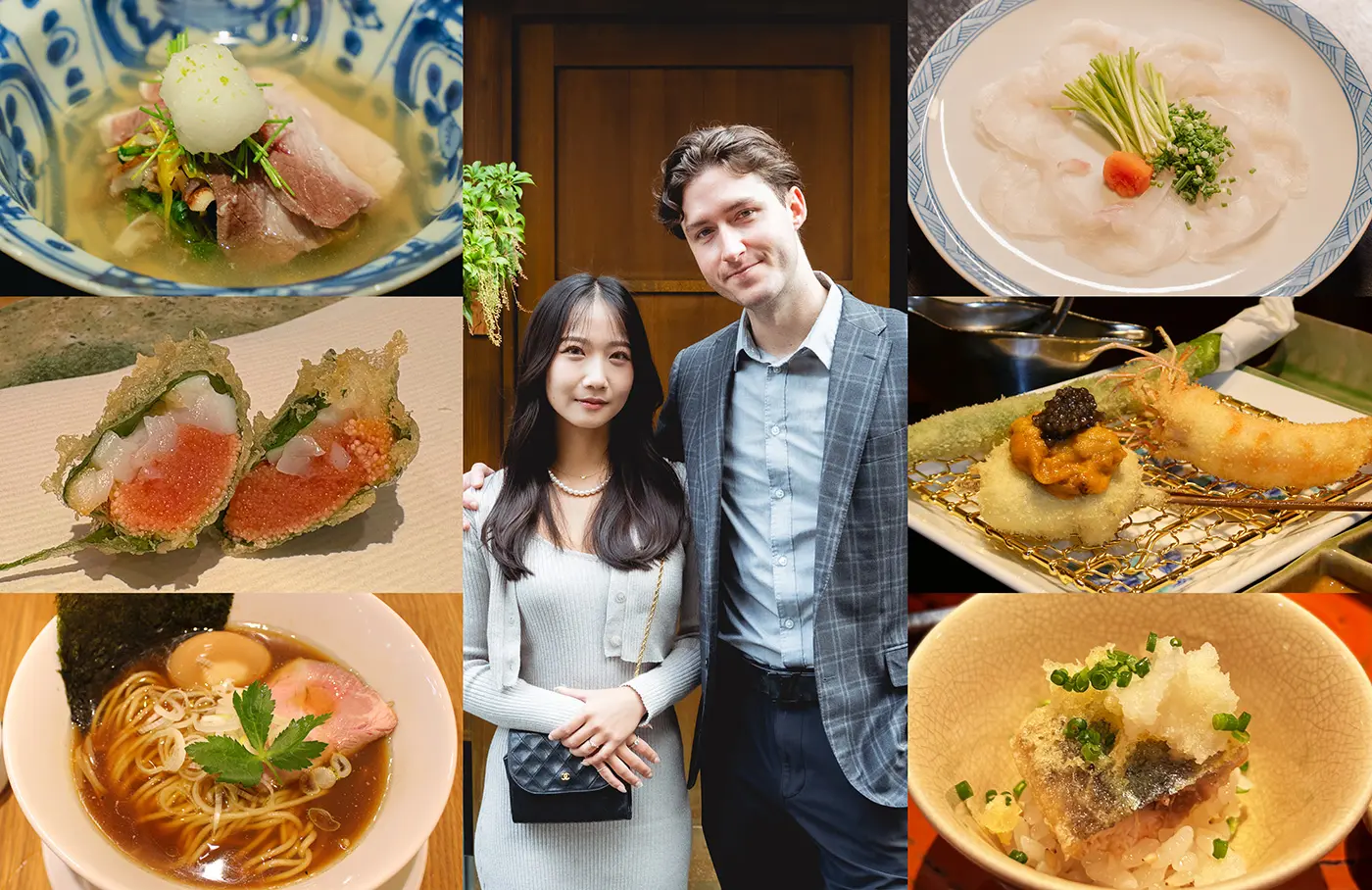
If you're visiting Osaka and want to splurge a little to enjoy some truly Osakan-style gourmet food, then a restaurant listed in the Michelin Guide is a must. This time, a Swedish husband and Japanese wife, hugely popular on TikTok, experience the craftsmanship of fugu (pufferfish) cuisine and a kappo (traditional Japanese restaurant) omakase (chef's choice) course. We'll also introduce a bowl of sake that encapsulates the exquisite flavors of Japanese cuisine and Osaka's proud "dashi (broth) culture."
Osaka has long been known as a city of gluttony, and delicious food abounds from its bustling shopping streets to its charming back alleys. While popular local dishes like takoyaki and kushikatsu are certainly appealing, the city also takes pride in the many culinary traditions that originated in Osaka, such as the masterful "fugu cuisine" and the omakase (chef's choice) meals offered at "kappo" restaurants.
From among the Michelin Bib Gourmand restaurants that embody the essence of Osaka's refined culinary spirit, we have selected five highly acclaimed establishments. Each one is a renowned restaurant that is particular about its ingredients and techniques, and that exudes a spirit of hospitality.
This time, I visited with a Swedish-Japanese couple who are very popular on TikTok, and enjoyed a special meal while also experiencing Osaka's unique food culture.
Guide

Tetchiri Yunagibashi Takoyasu
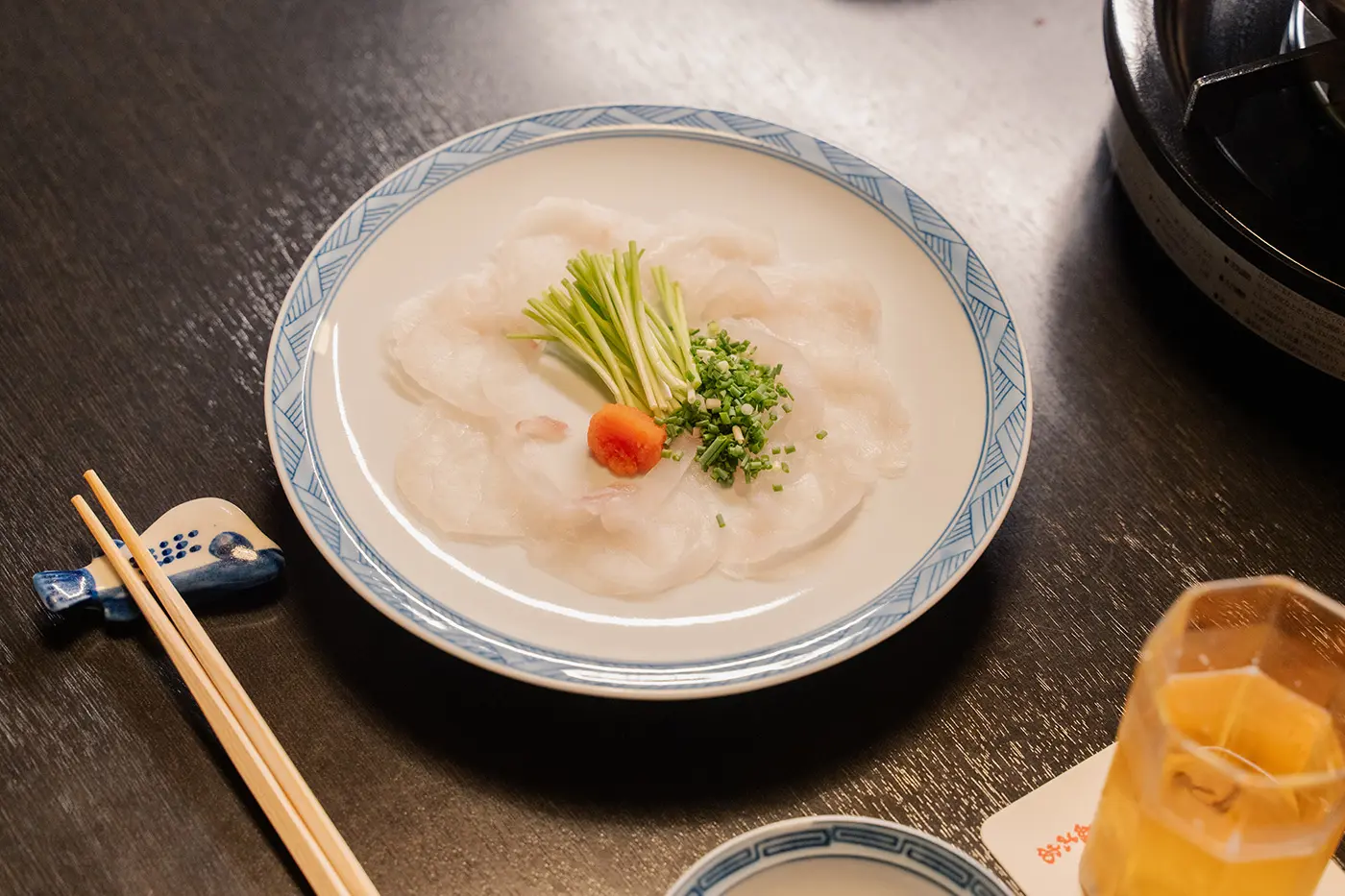
A renowned fugu (pufferfish) restaurant that serves dishes using traditions and techniques passed down from the first generation.
Did you know that Osaka is known as the "city of pufferfish" because of its deeply rooted culture of eating pufferfish? Although the number of specialty restaurants has decreased, there are still many "enthusiasts" who crave pufferfish dishes, especially when the weather gets cold.
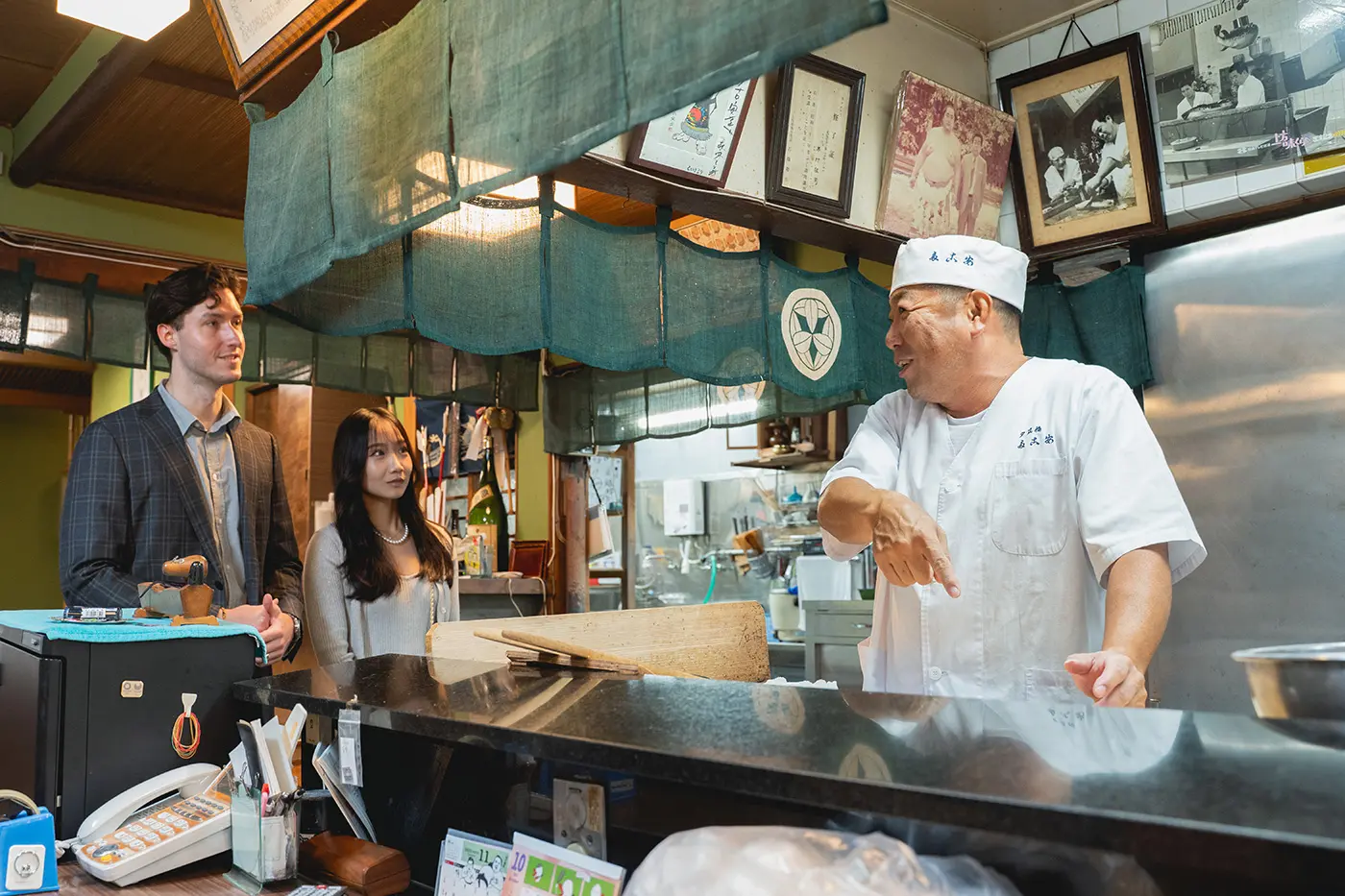
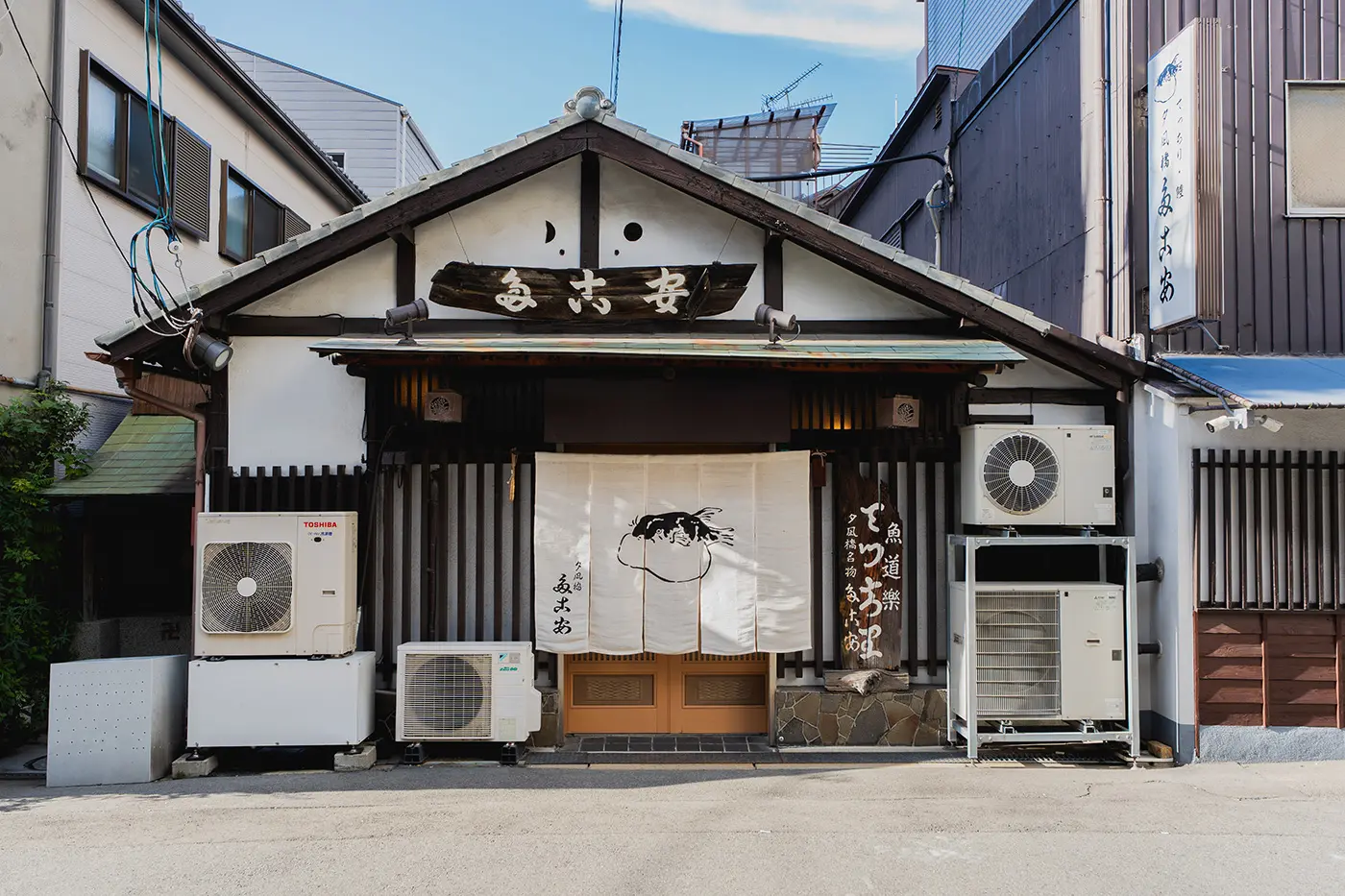
The restaurant we're introducing today, Tetchiri Yunagibashi Takoyasu, is a long-established restaurant that has been in business in Asashiobashi, Osaka since 1929. The owner, who has a deep understanding of pufferfish, a winter delicacy, has been showcasing his craftsmanship for generations, and it is a renowned pufferfish restaurant that has been loved by locals and has earned two Michelin stars.
Stepping through the noren (traditional Japanese curtain) feels like a time slip back to the good old Showa era. It's a space where you can feel that both those who serve the food and those who are served have cherished and valued the time they spend here.
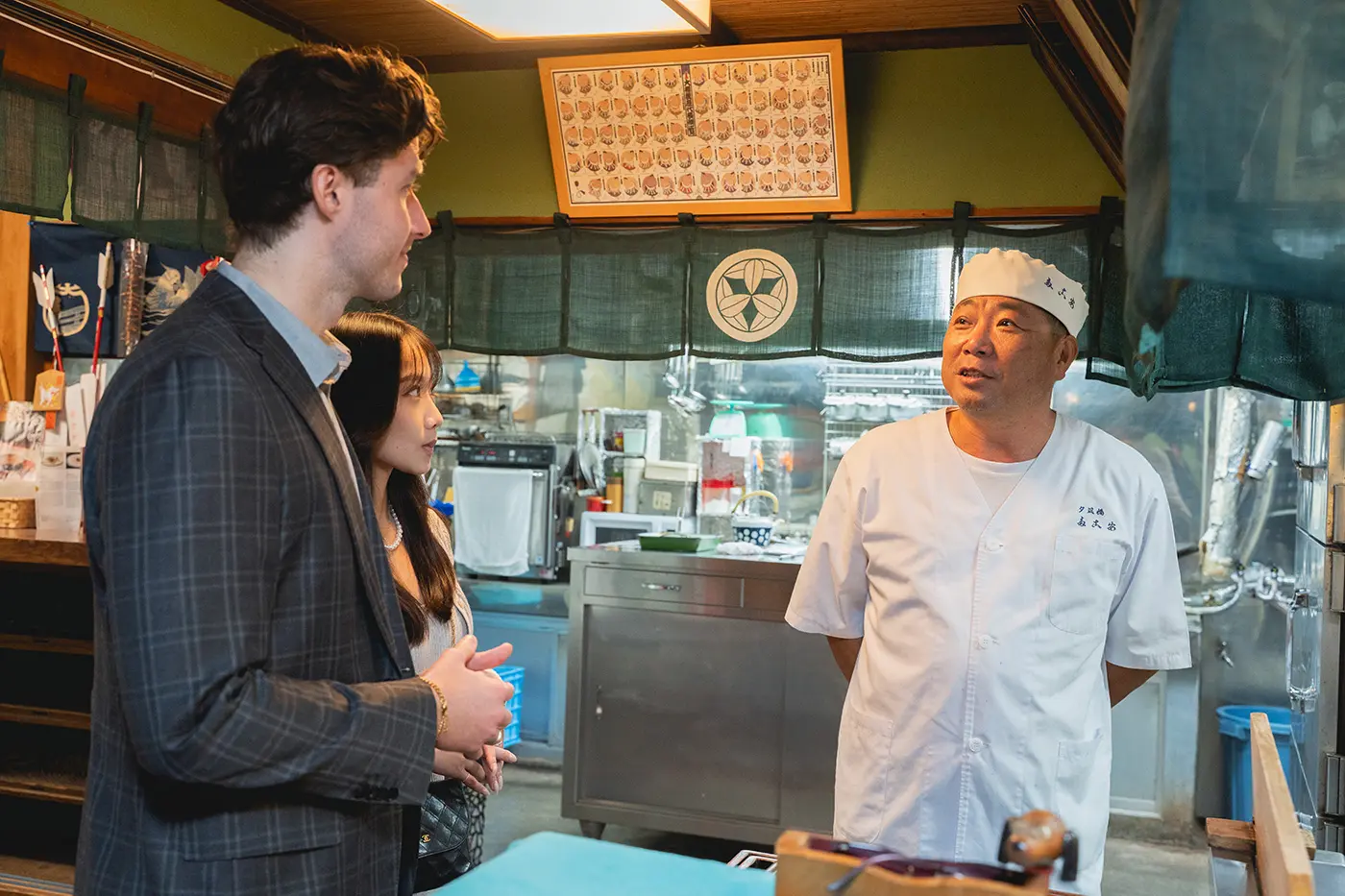
"Actually, there's something that's been bothering me for a while," Vincent began. "Pufferfish are highly poisonous, aren't they? When I first came to Japan, I was terrified of them, and even now my mother, who lives back home, worries about me, asking, 'Is it really okay to eat pufferfish?' I want to know why they're safe to eat."
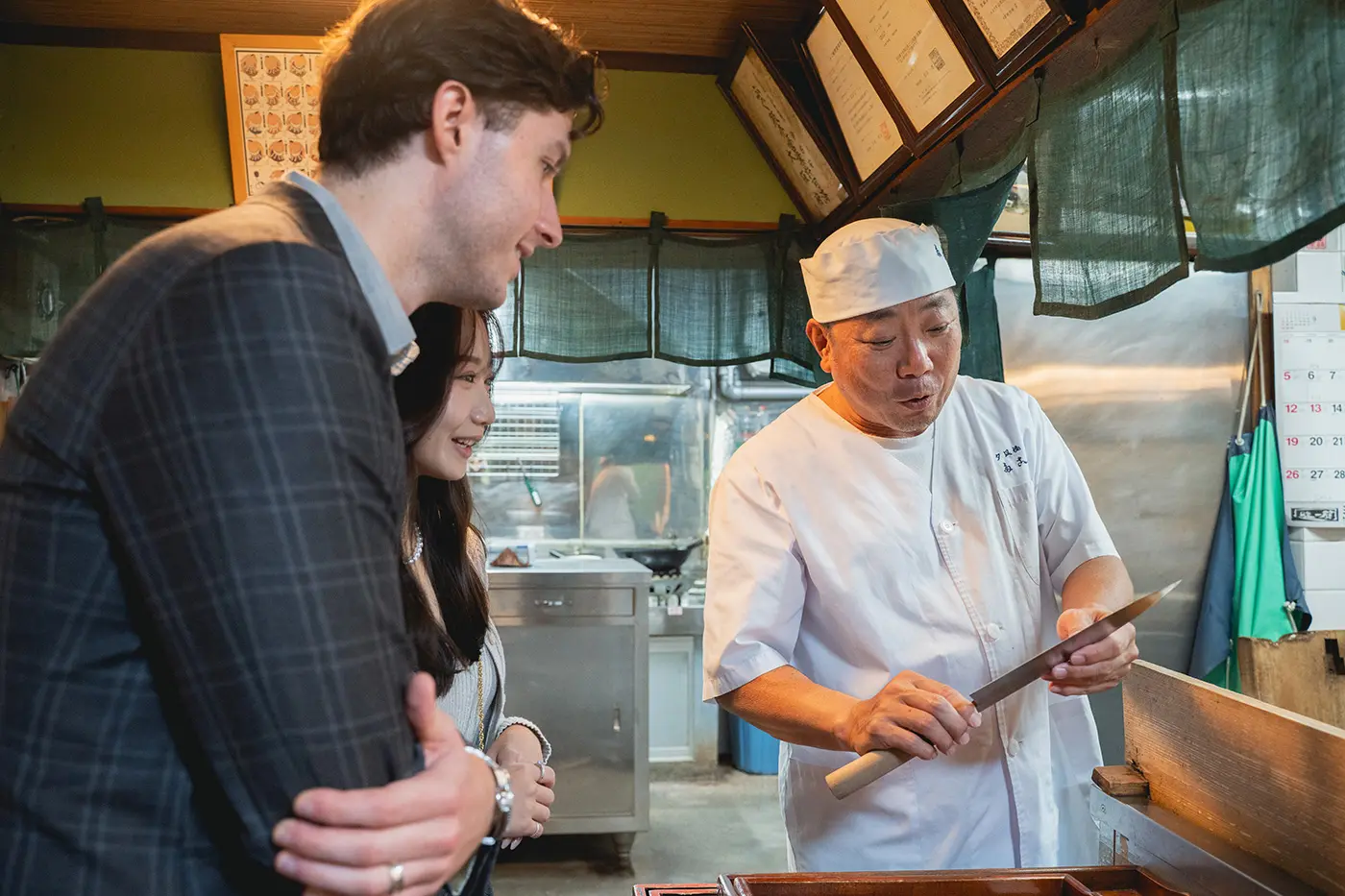
As if to alleviate Vincent's anxieties, the owner actually led him to the kitchen. He explained how to prepare the pufferfish to serve it safely and deliciously, and the different knives used for each part of the fish. Holding a knife whose blade had been sharpened to its absolute limit by years of use, he conveyed the weight of preserving tradition.
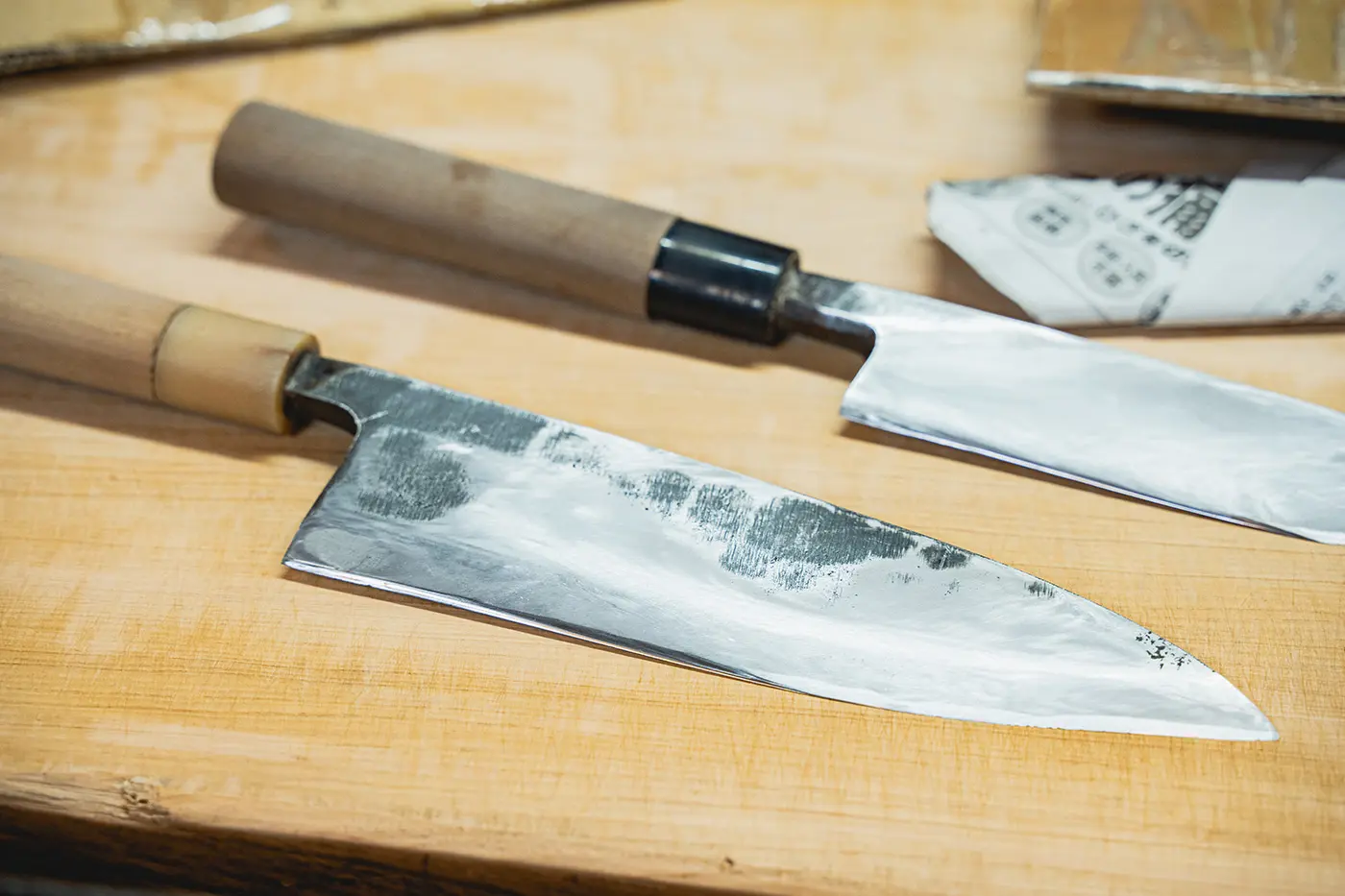
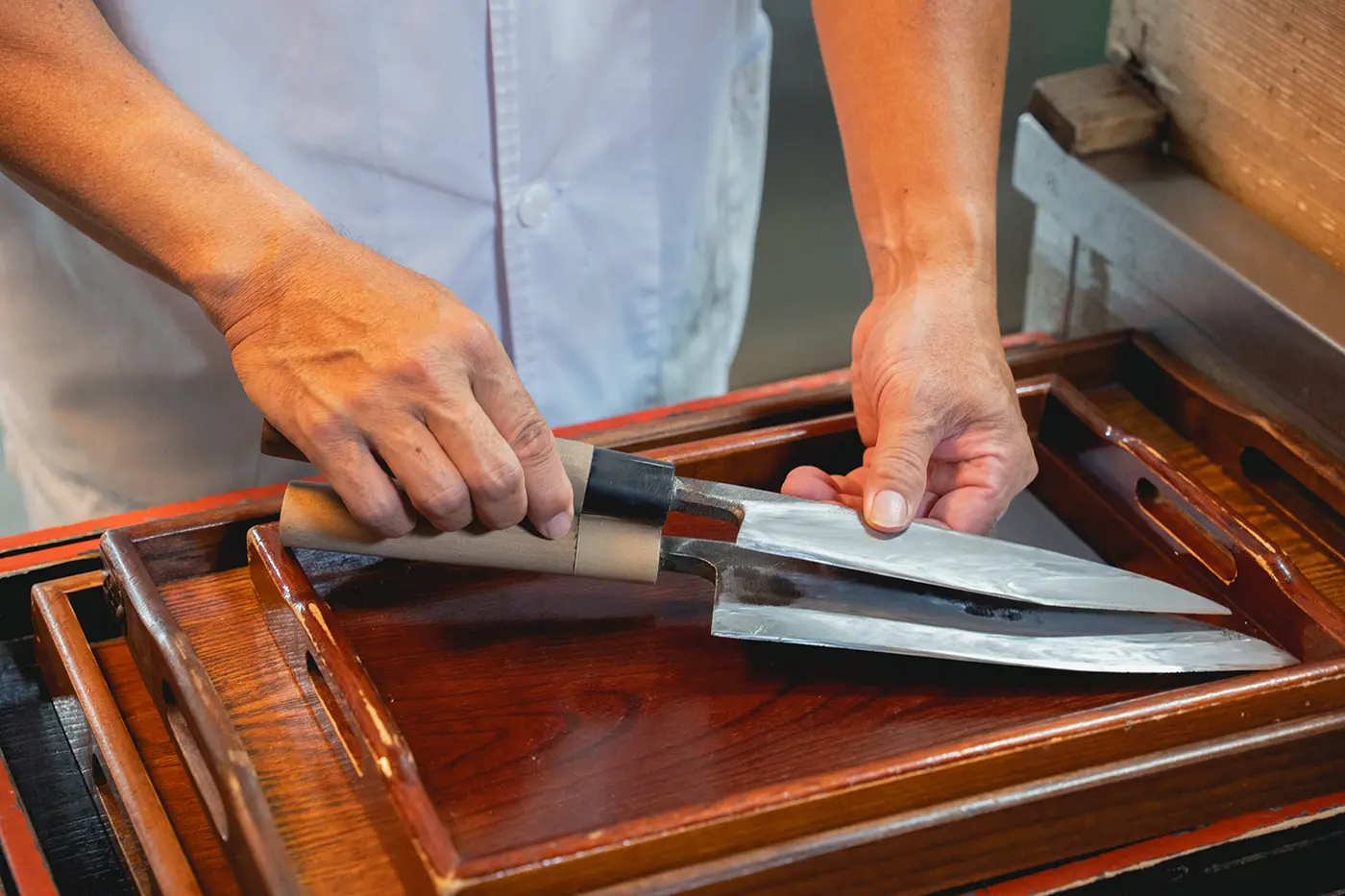
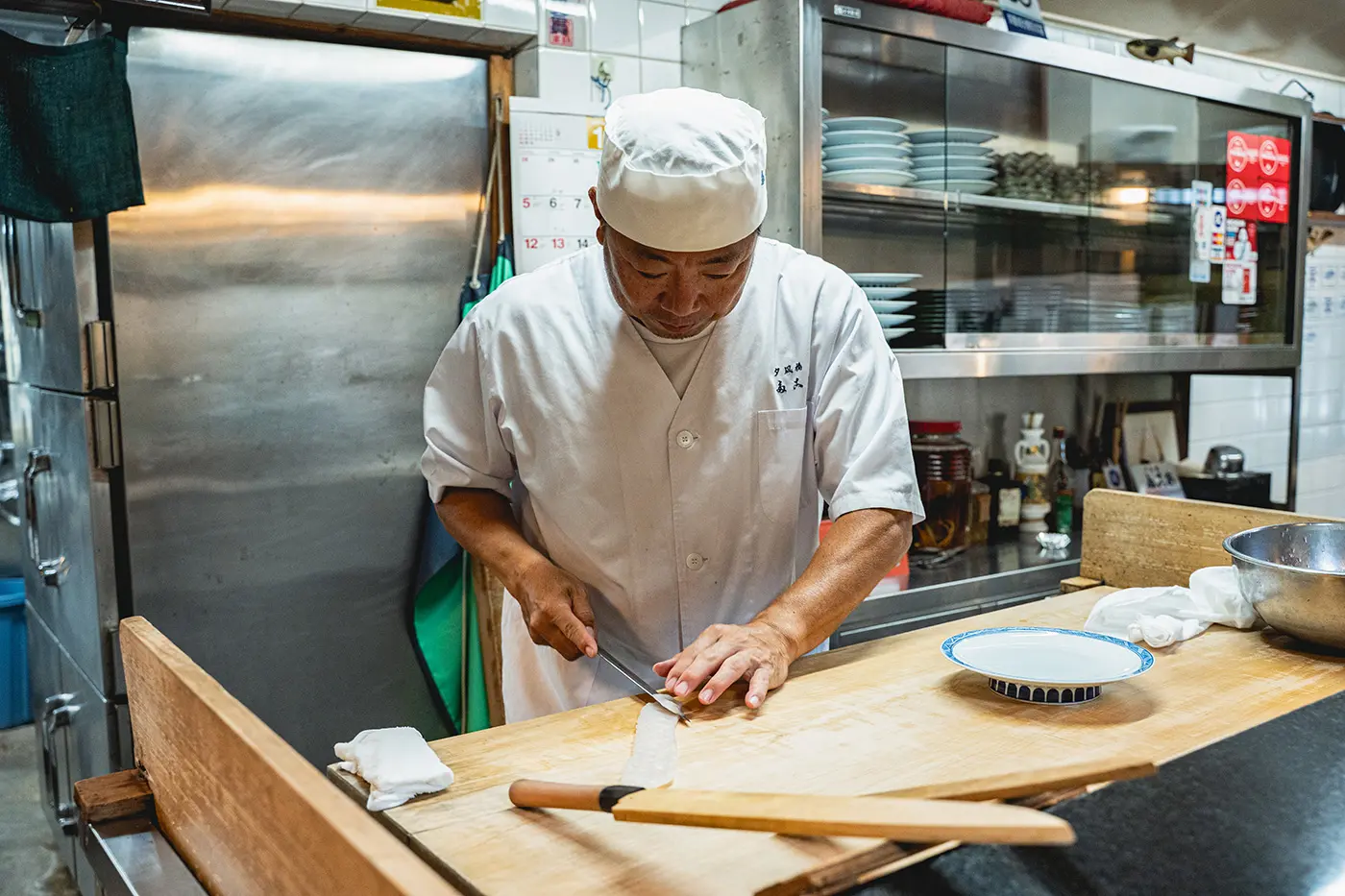
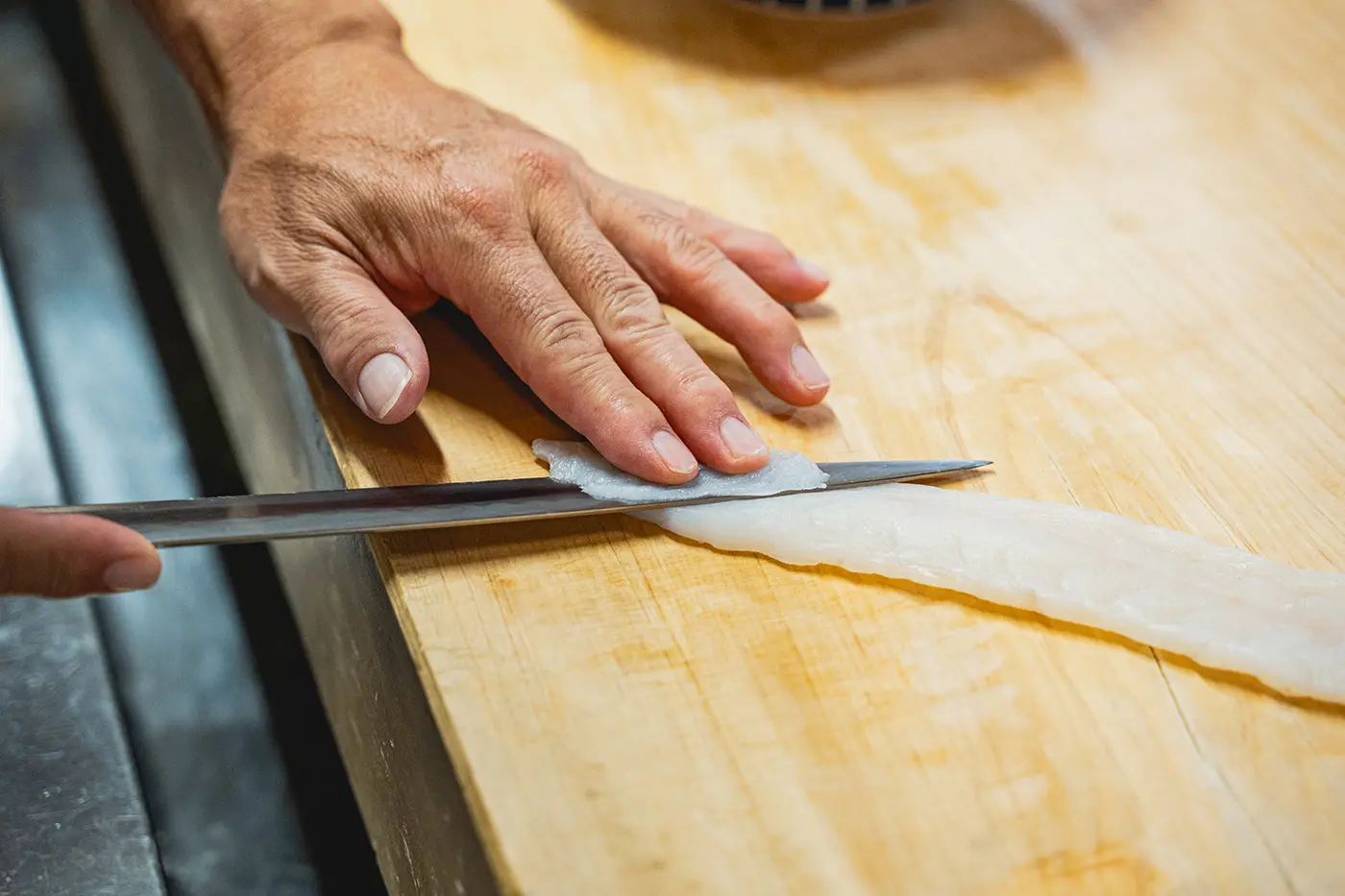
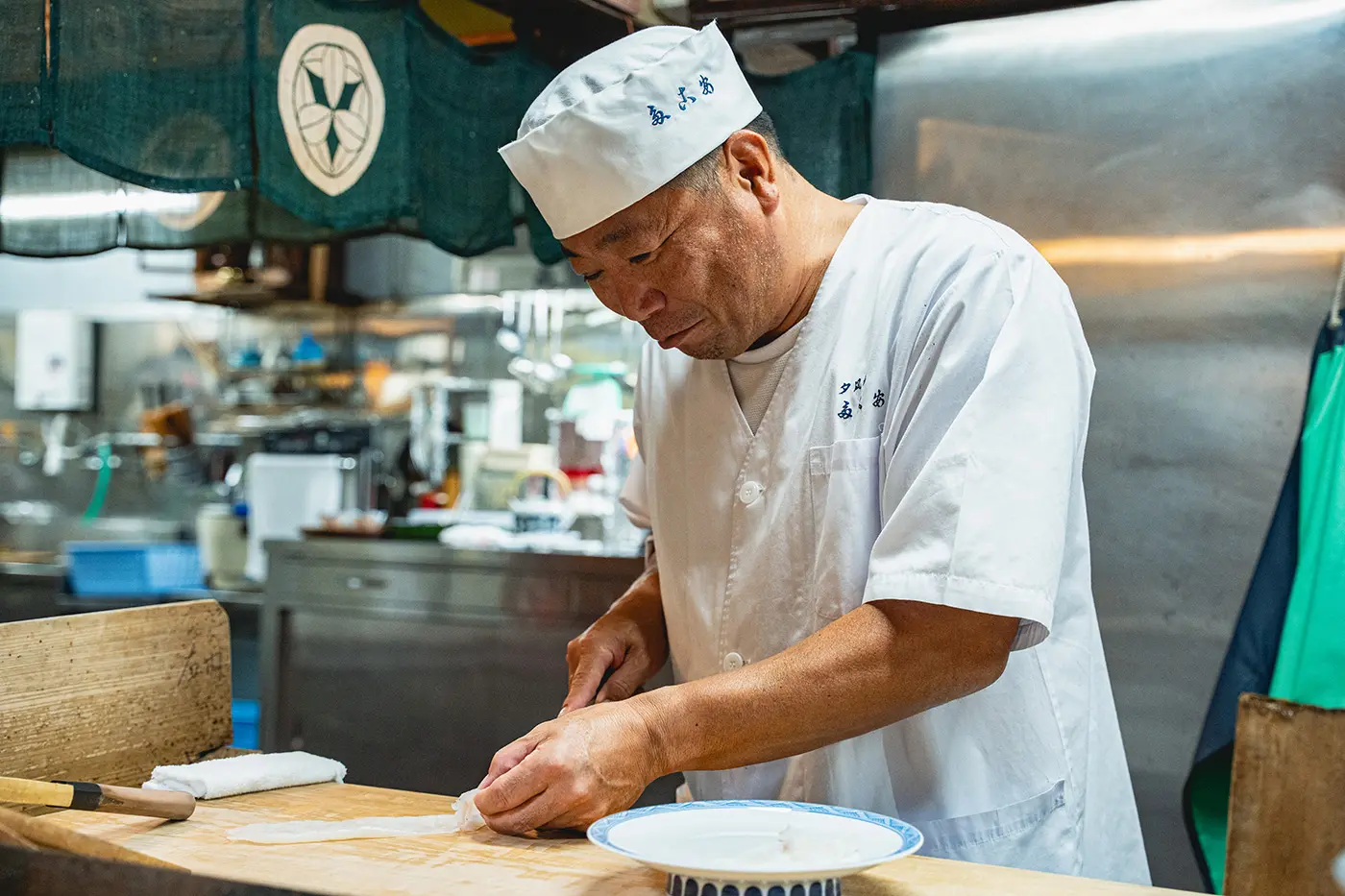
"Our tessa (pufferfish sashimi) is special," says the owner. "We slice it so thinly that you can see the plate through it, because otherwise the pufferfish meat is elastic and tough. We age it so that it remains tender even when sliced thickly."
After listening to the shop owner's explanation, the two recalled the fugu sashimi they had eaten before, and said, "I wonder what thick-cut fugu sashimi is like," and "I can't wait to try it," and immediately headed to the room that had been prepared for them.
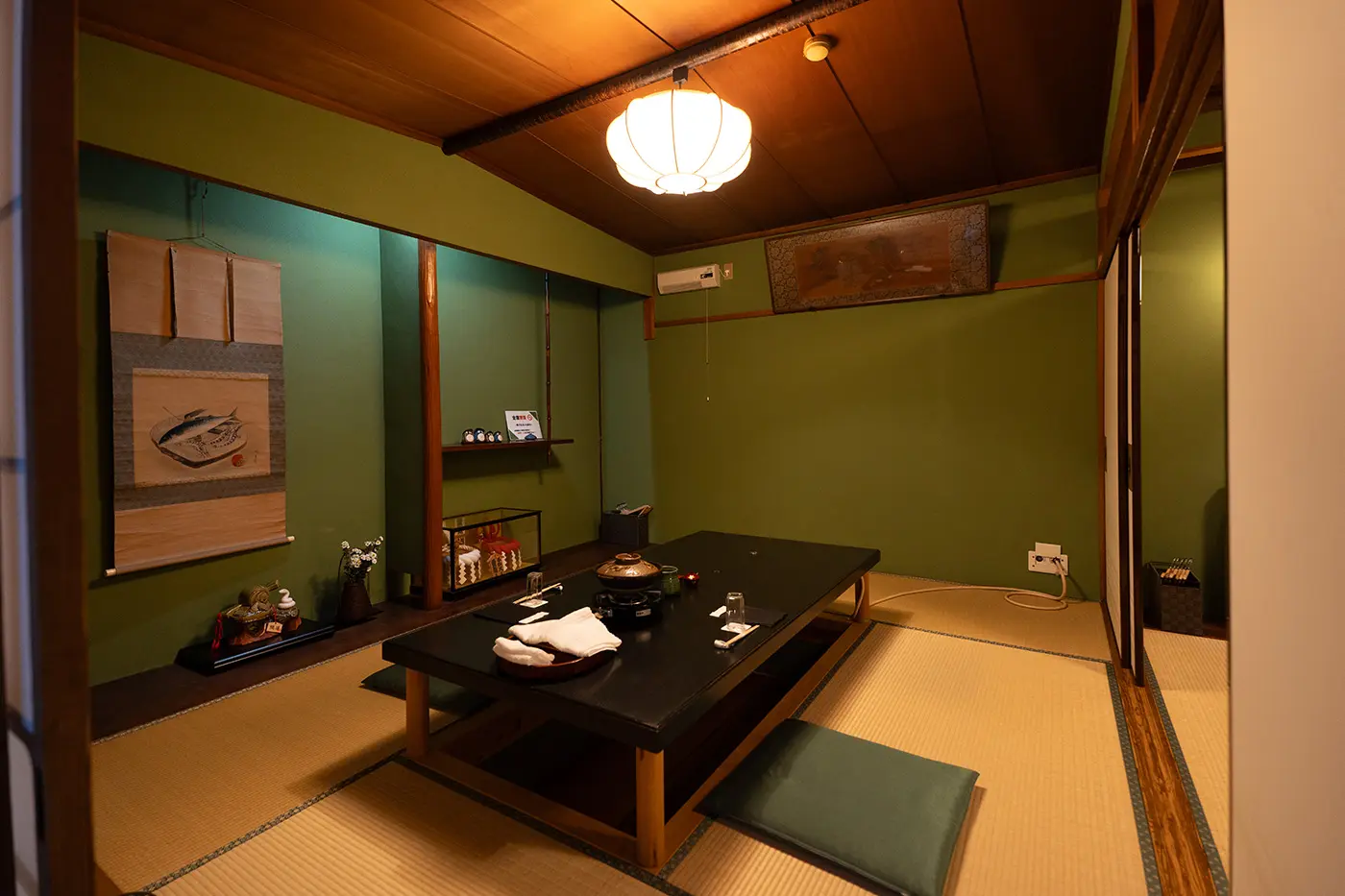
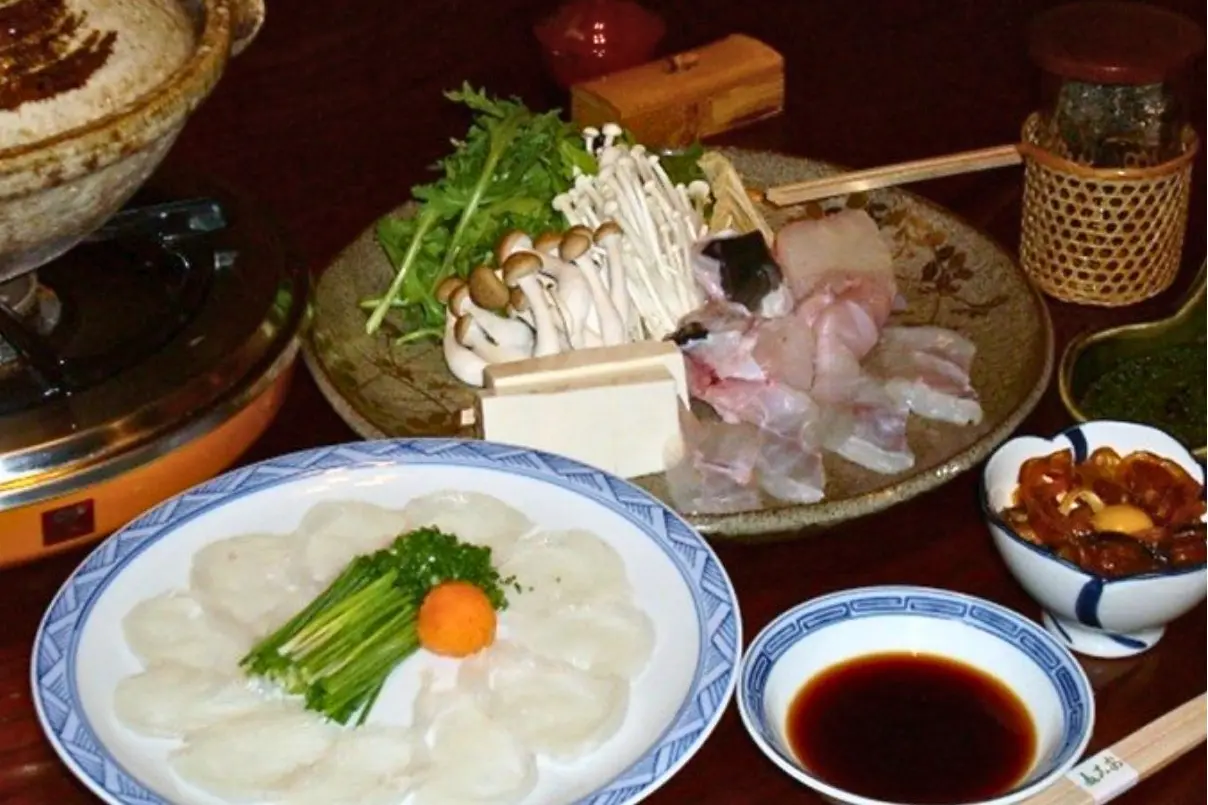
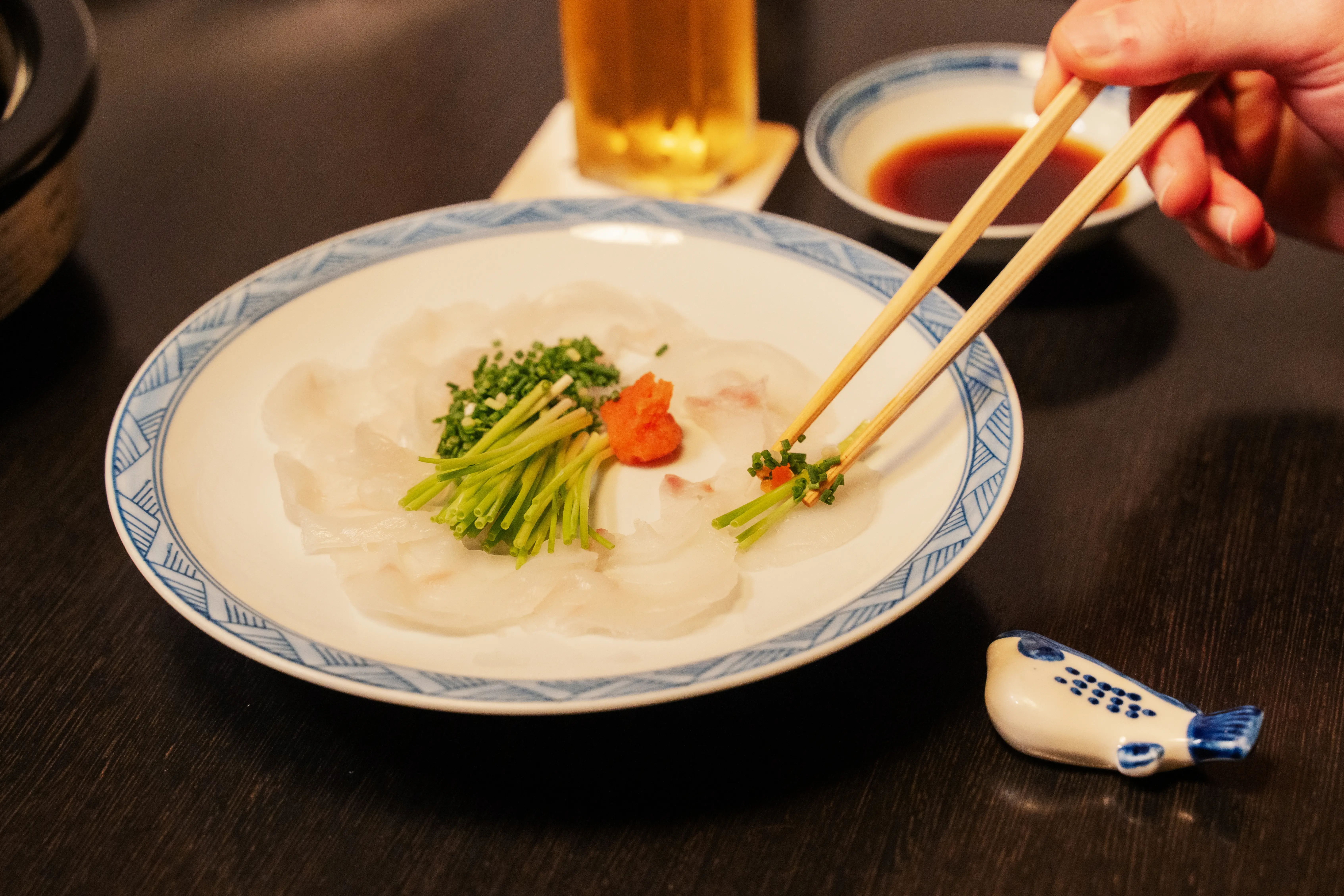
This is the restaurant's signature dish, "tessa," which is made from pufferfish sashimi. Compared to traditional tessa, which is often sliced so thinly that the pattern of the plate is visible through it, this is considerably thicker. When you pick it up with chopsticks, you really get a sense of its thickness.
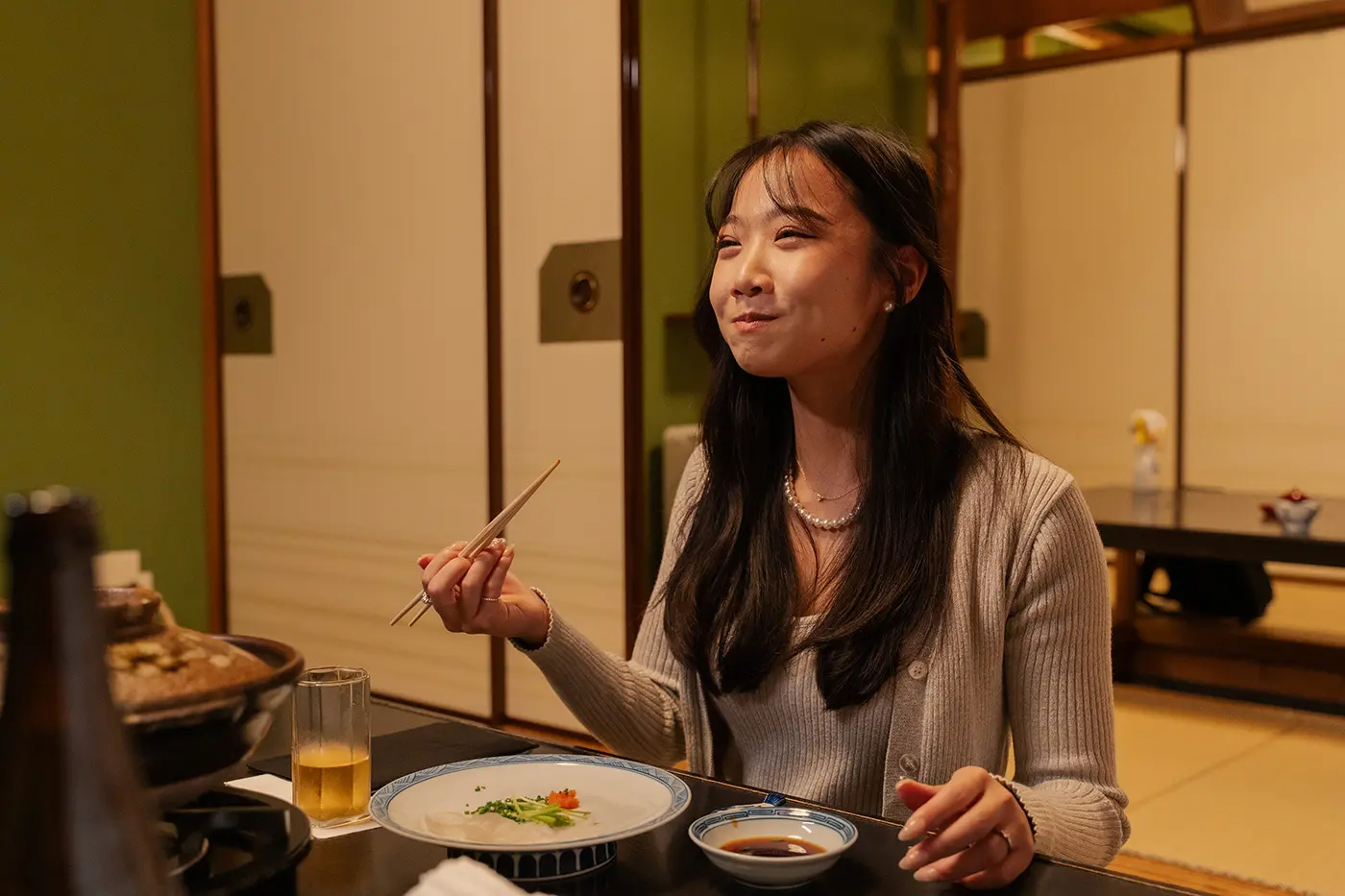
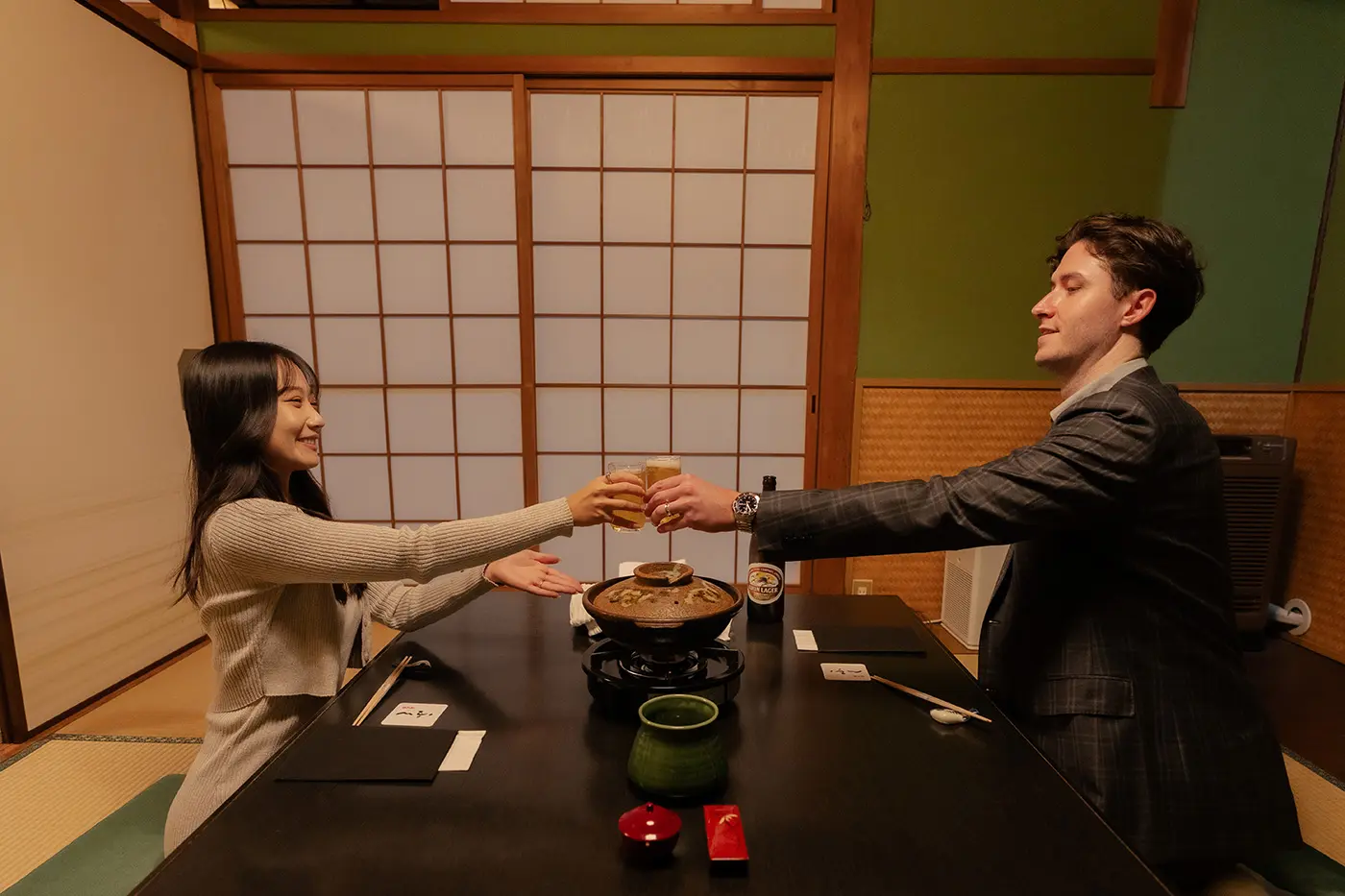
Futaba watched with a smile as Vincent happily devoured the sashimi, and then she reached for her chopsticks and took a bite. "You're right, this fugu sashimi is firm yet surprisingly tender, and I think I could get addicted to it," she said with a big smile.
*Fugu sashimi is usually served as part of a set course meal (25,300 yen including tax and service charge). Fugu is available from late September to around May each year.
From winter to spring, pufferfish is the star of Takoyasu, but in early summer, conger eel becomes available. Both are high-end ingredients with specific seasons and limited availability, but the restaurant's relaxed, homey atmosphere may be what allows you to enjoy a special meal without feeling intimidated. The unpretentious hospitality is also very Osaka-like and appealing, and it comes across clearly along with the food.
Having experienced the chef's skill and warm hospitality, the two seemed to have completely fallen in love with the fugu (pufferfish) dishes served at the restaurant.
Yes, it's incredibly delicious! It's definitely thick, and you can really taste the texture of the pufferfish, which is mild yet has a unique flavor. The ponzu sauce that comes with it doesn't overpower the flavor of the pufferfish at all. It also goes perfectly with the condiments. It's easy to eat! Among the hot pot dishes that we crave during the cold season, tecchiri (pufferfish hot pot) is something special, and we only eat it once a year with our family during the New Year's holidays. The tecchiri, prepared with the chef's discerning eye and expert technique, tasted exceptionally delicious!
Kappo Kurubushi cuisine Kurubushi (Japanese restaurant)
Enjoy the exquisite flavors of Japanese cuisine with our "chef's choice" course.
In the mid-Taisho era, "kappo" restaurants emerged as a more casual alternative to traditional high-end restaurants. This style, said to have originated in Osaka, is a testament to Osaka's food culture that emphasizes the natural flavors of its ingredients and its spirit of service. Unlike traditional high-end restaurants with their kitchens located in the back, the true charm of kappo lies in the conversation with the chef, the lively atmosphere of the cooking process unfolding across the counter, and the careful savoring of each freshly prepared dish as it is finished right before your eyes.
"Kurubushi," nestled on a quiet street in Naniwa-cho, is another establishment that weaves together such refined moments.
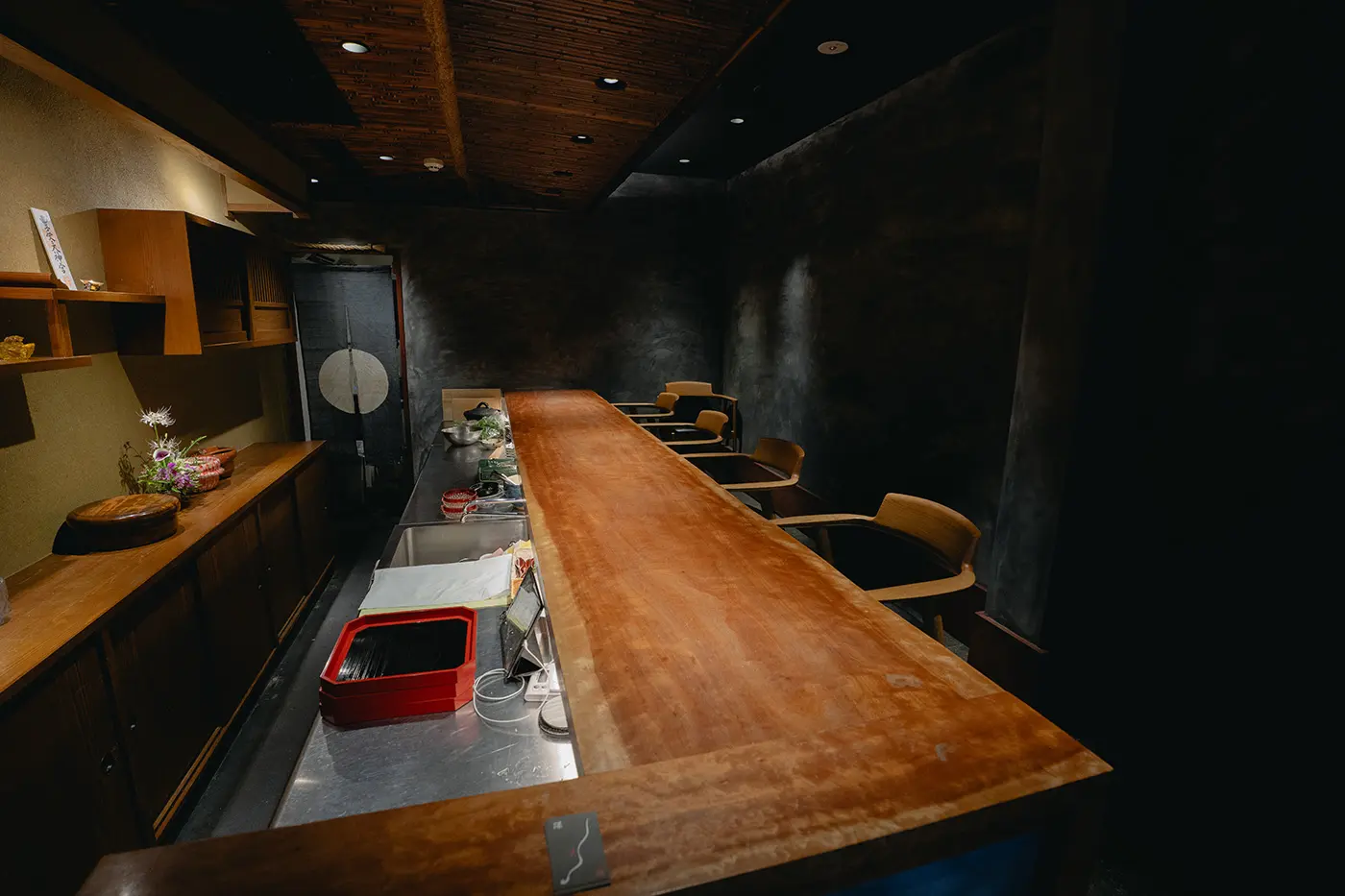
Stepping through the noren (traditional Japanese curtain), you see the counter seating area, which is filled with a sophisticated and tranquil atmosphere befitting a hidden retreat for adults.
On this day, the two experienced the uniquely Japanese "omakase" style of dining. This is a style unique to Japan where the chef assesses the seasonality and condition of the ingredients and serves the dishes in the most delicious way possible for the customers.

On this day, we were able to sample three standard dishes from the chef's choice course.
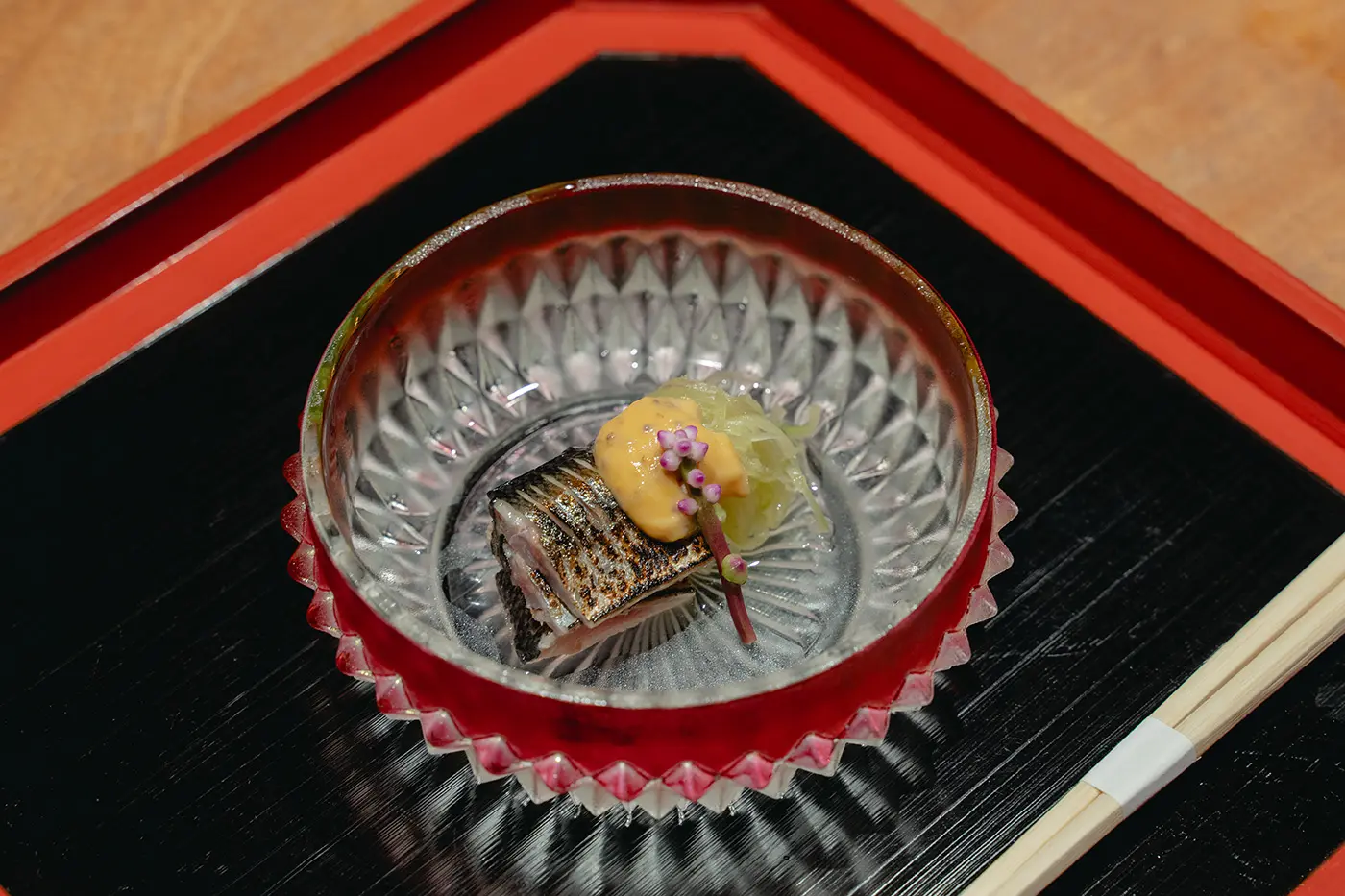
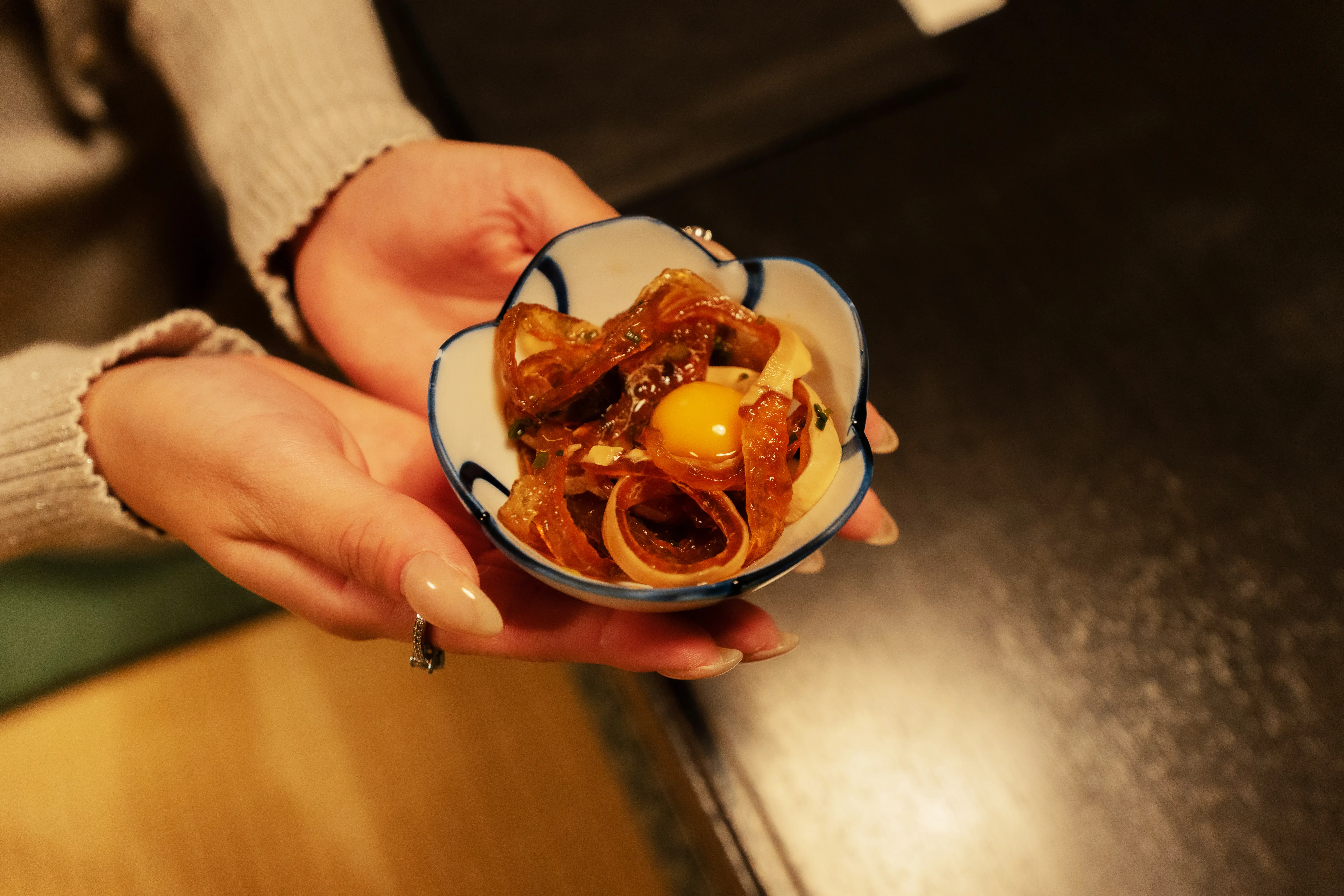
Let's start with the appetizer. It's a small bowl of bite-sized seared fish seasoned with a refined broth and garnished with a mild egg yolk vinegar dressing. Served in a glass dish, the plate reflects light brilliantly, resembling a beautiful work of art. The delicate umami and gentle acidity harmonize perfectly, conveying the profound depth of Japanese cuisine with just one bite.
Although it's Japanese cuisine, the dish showcases professional techniques that are difficult to replicate at home, leaving the two of them in awe.

"It's so beautiful. May I take a picture?" After asking the shop owner, Vincent takes out his smartphone and tries to take a photo himself.
Next, a dish served in a bowl was brought to our table. When we opened the lid, we found a luxurious bowl of soup containing daikon radish simmered slowly in a white broth, garnished with seared matsutake mushrooms.
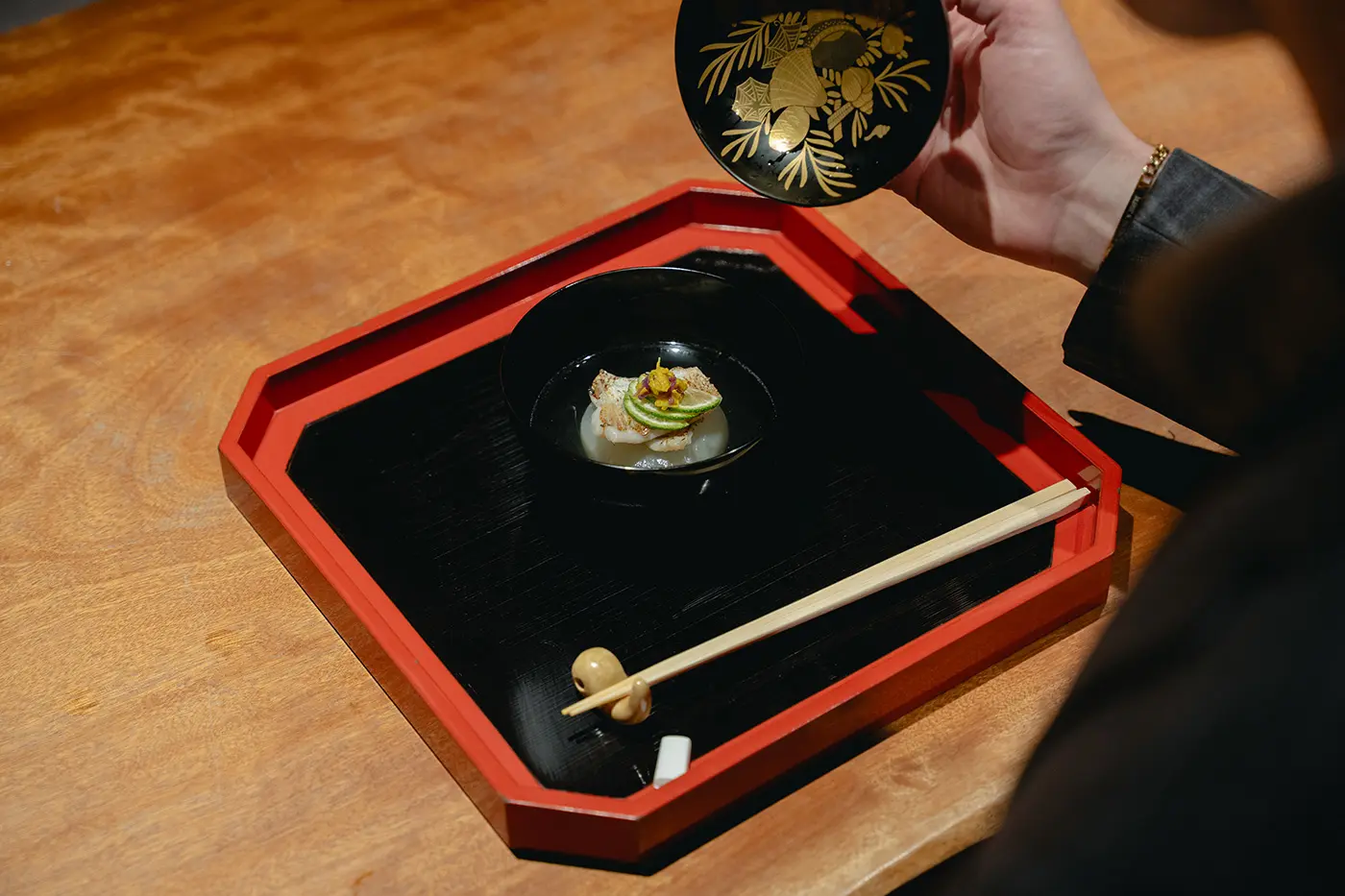
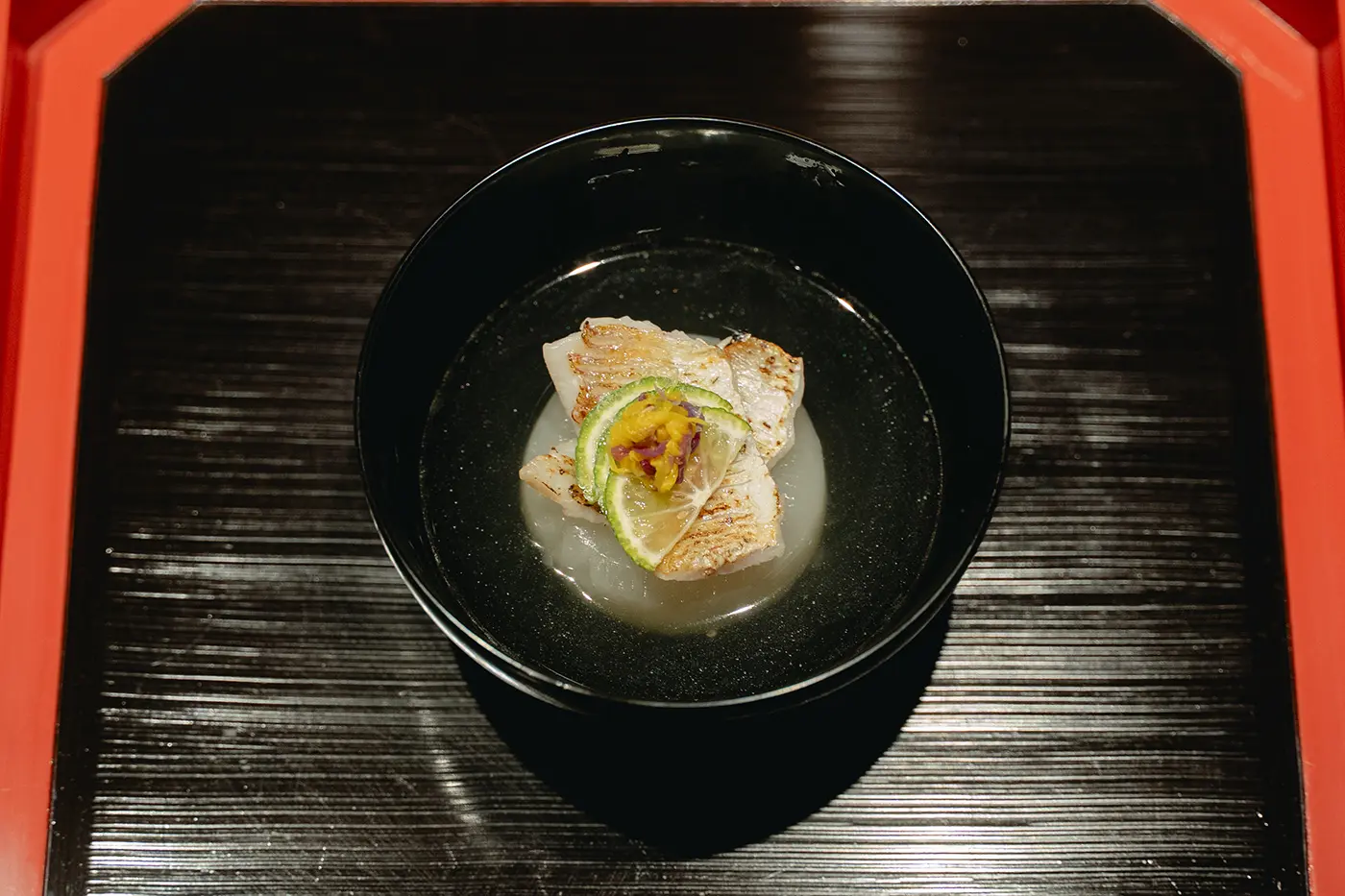
They finished eating almost simultaneously and commented, "It's simple, yet the flavor is profound." The husband said, "The combination of ingredients and broth is perfect," to which the wife replied with a smile, "The way it's cooked and the seasoning are both refined."
Next, the bonfire was brought out.
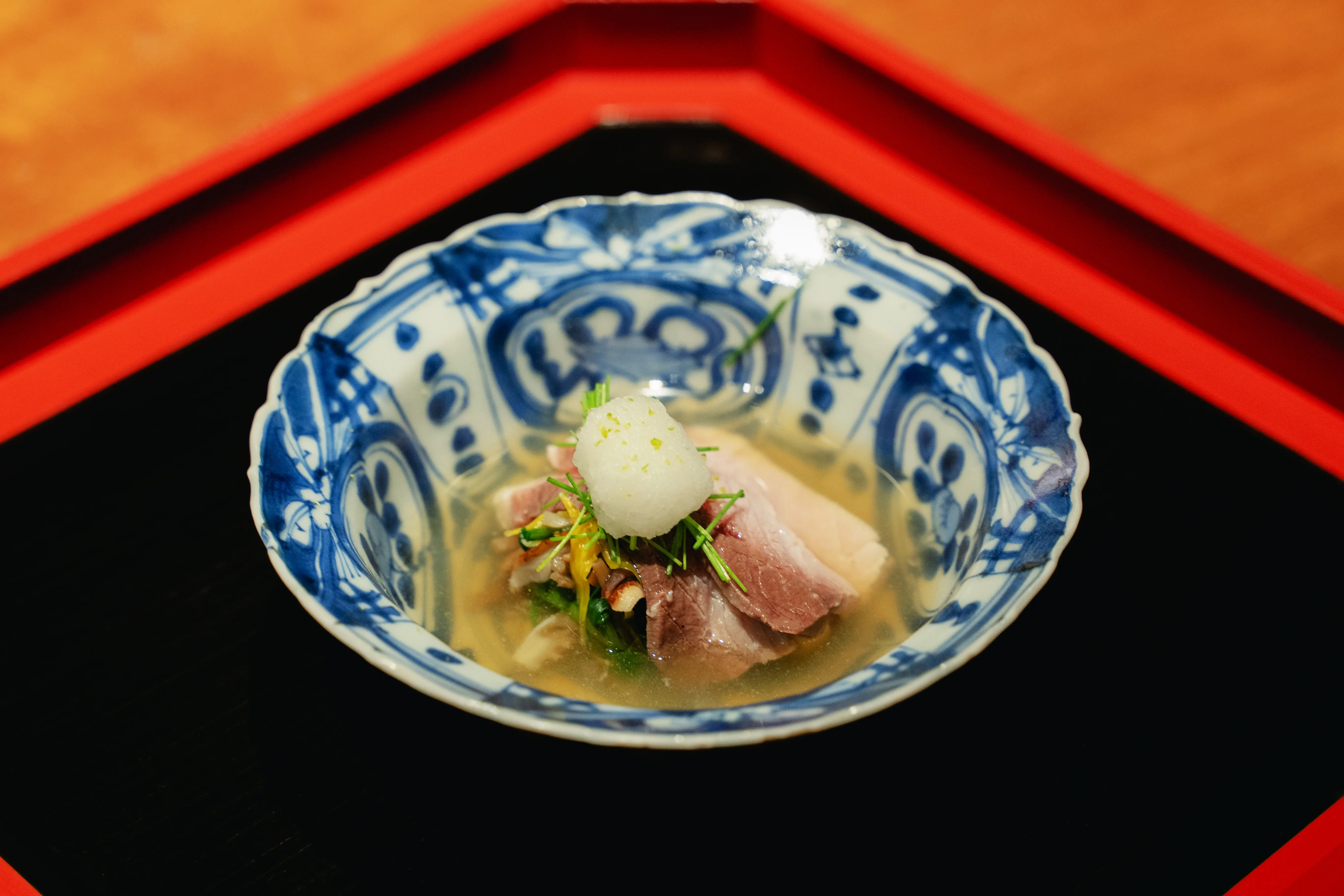
This elegant dish features tender yellowtail simmered slowly without breaking apart, infused with a subtly sweet broth. The flesh crumbles easily with chopsticks, and the rich, savory flavor of the yellowtail's fat lingers deliciously.
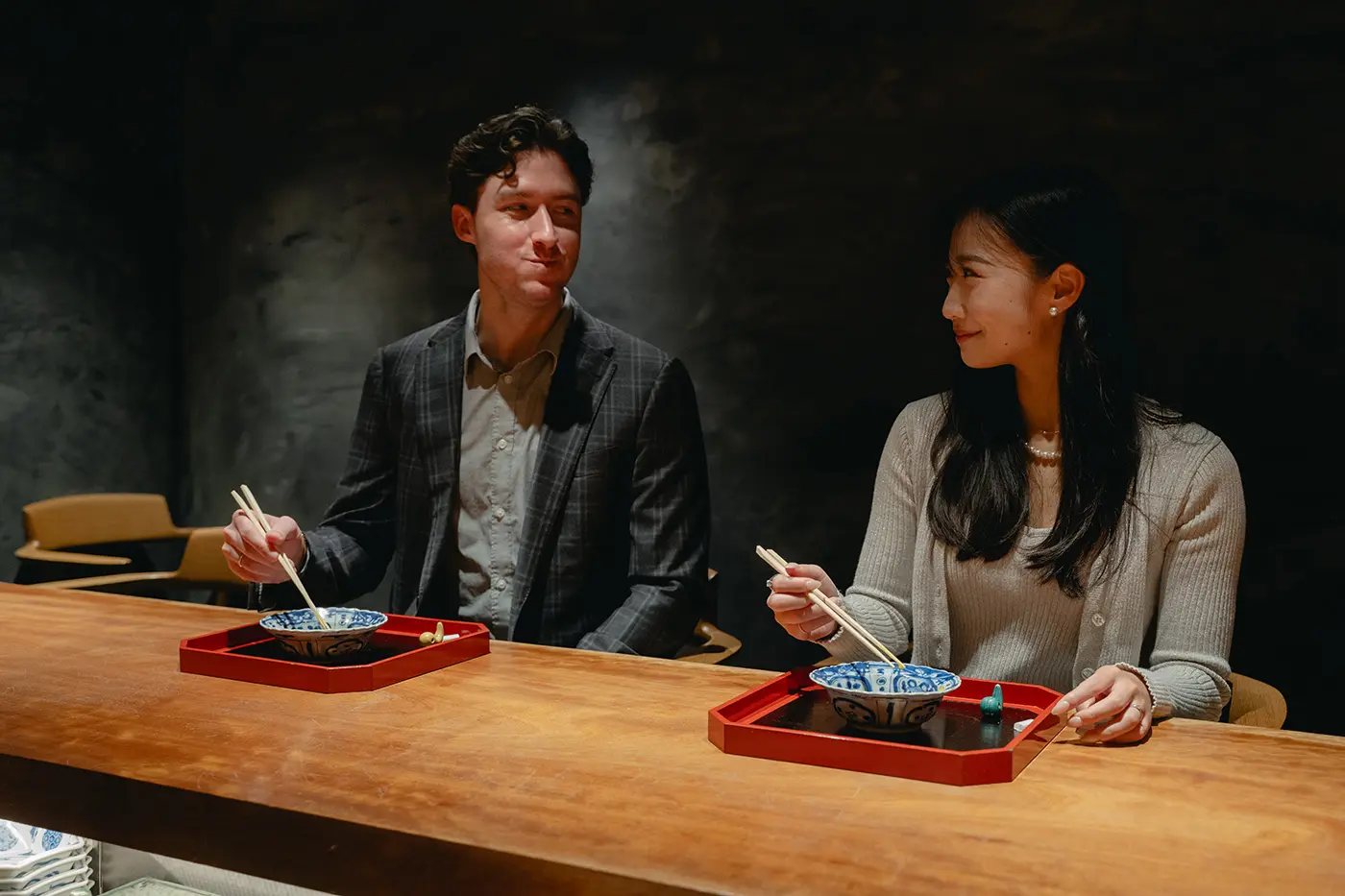
"Leaving it up to the chef is a wonderful tradition, isn't it?" Futaba said. Vincent nodded in agreement.
The real charm of "omakase" (chef's choice) lies in being able to enjoy the chef's culinary philosophy more fully by "entrusting" the dishes to them rather than "choosing" them. The beautiful presentation to be enjoyed with the eyes, the broth and aromas that tickle the nose, the texture and umami that spread the moment it enters the mouth—the two of them took their time to savor each dish, trying to fully feel the chef's thoughts and sense of the season that were put into each and every dish.

I was impressed by how carefully each dish was prepared. Every dish was very elegant, with delicate seasoning. The broth had thoroughly permeated the ingredients, and in my mouth, the flavors of the ingredients themselves and the umami of the broth harmonized and spread. The sauces and condiments that were subtly added also played a role, bringing the overall flavor together perfectly. I thought it was incredibly delicious!
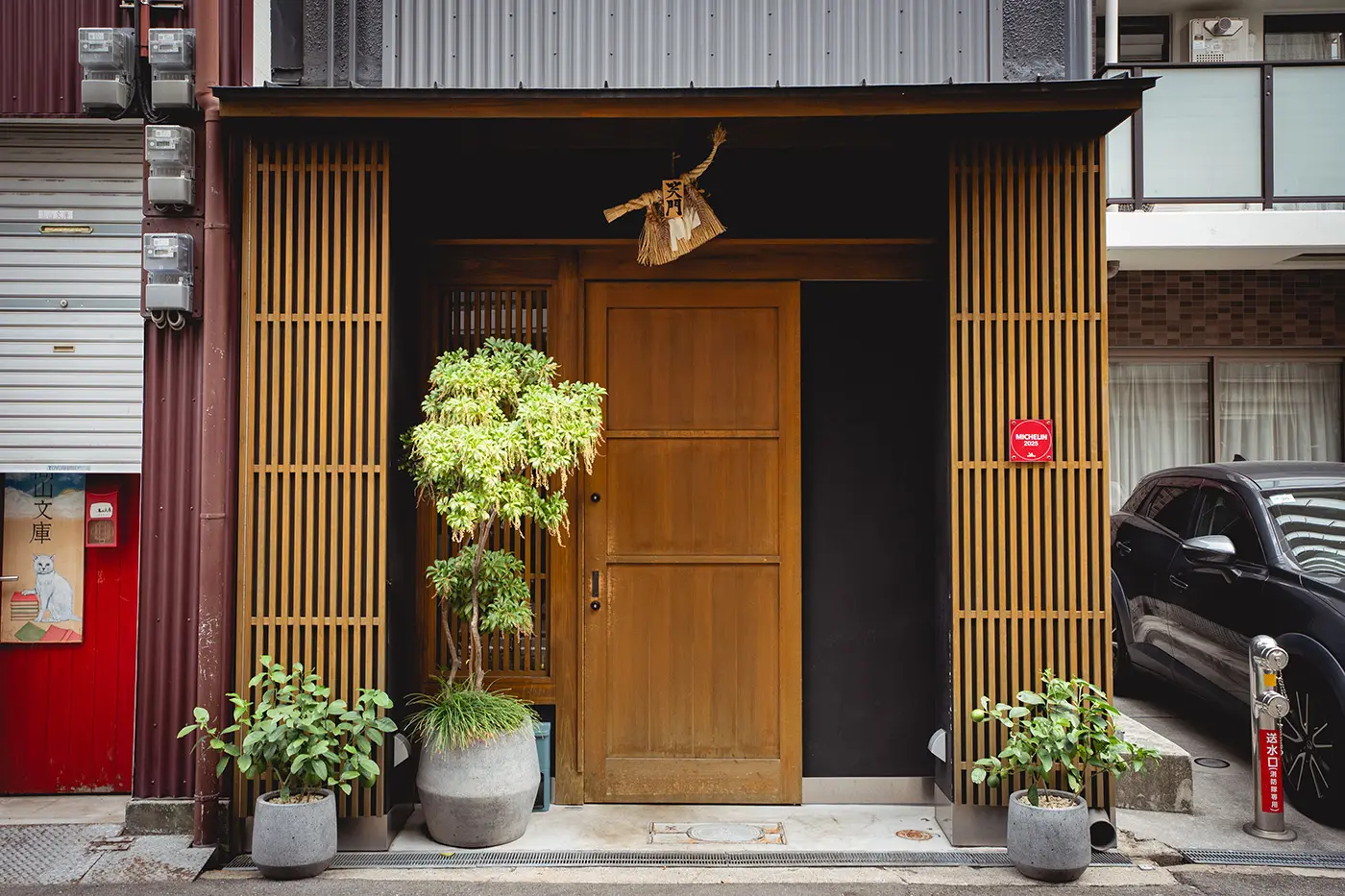
Kitashinchi Kushikatsu Bon
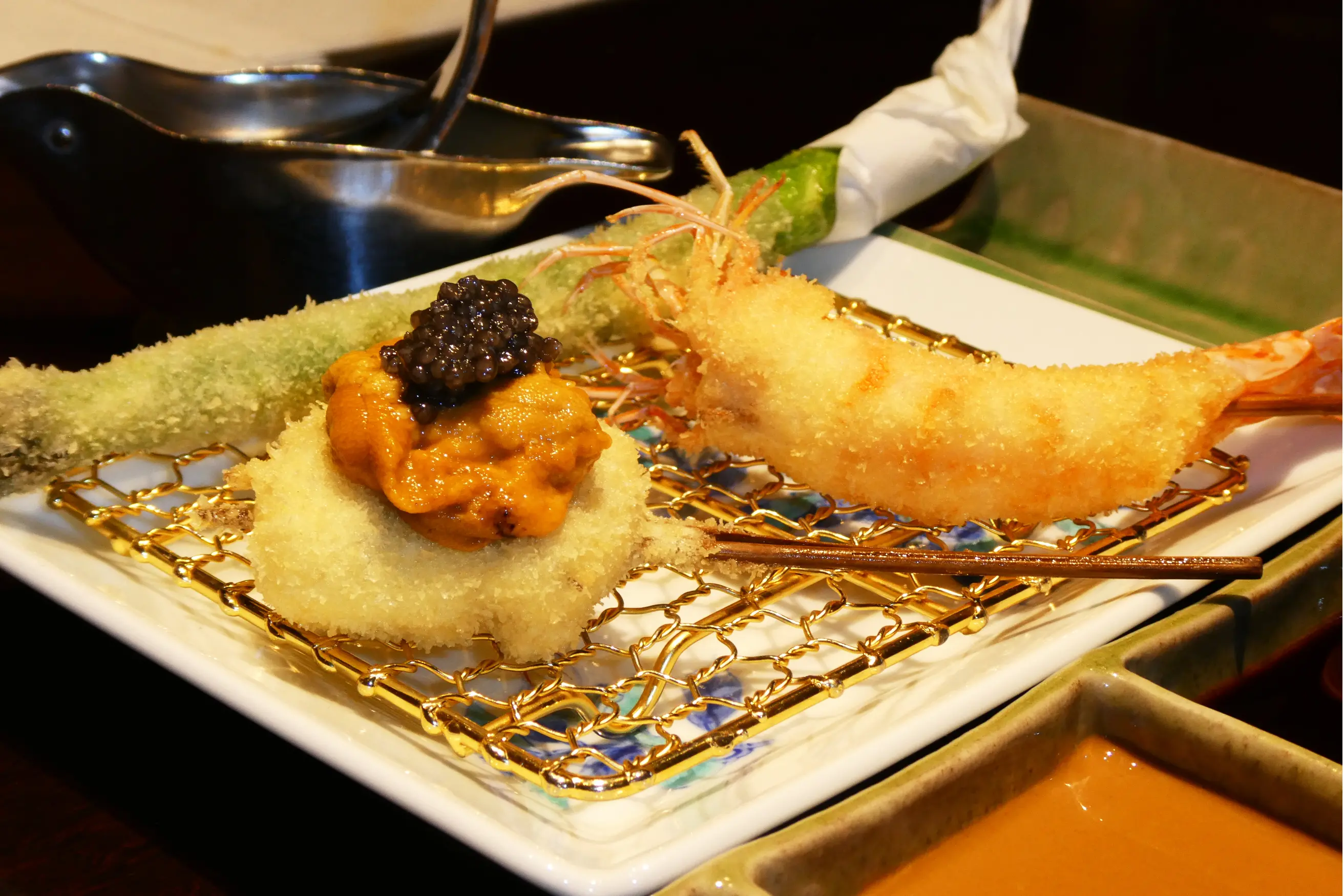
The artisan's aesthetics and the essence of their creativity are embodied in the skewers.
Kitashinchi Kushikatsu Bon is a renowned restaurant located in a building housing restaurants in Kitashinchi, with both a main building and an annex. This restaurant offers a luxurious "omakase course" (chef's choice) of kushikatsu (deep-fried skewers) created by combining seasonal ingredients and flavors with the skill and sensibility of the chef.
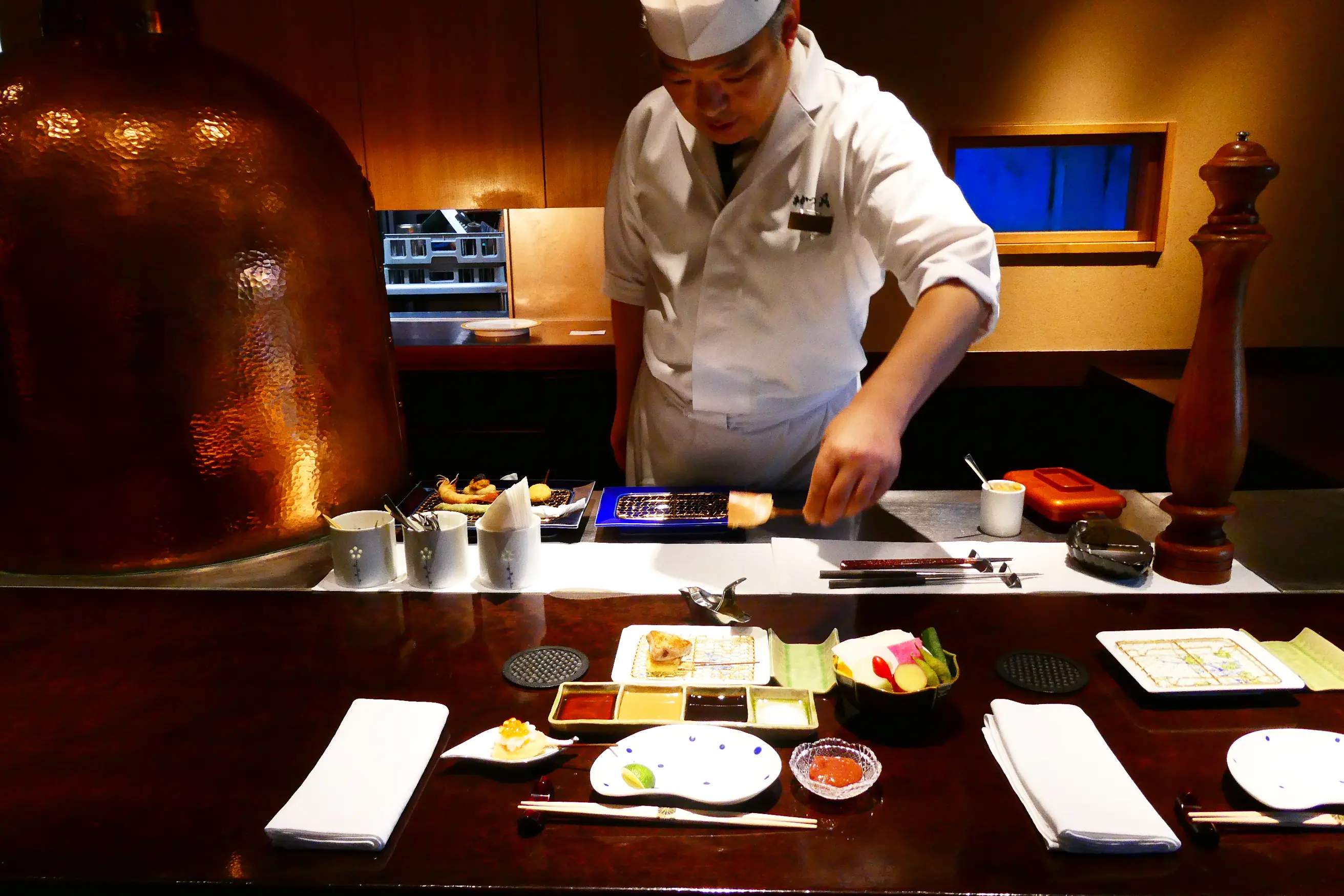
Enjoy a variety of luxurious skewers that transcend the boundaries of Japanese and Western cuisine, including Kuroge Wagyu beef fillet Chateaubriand, wild kuruma prawns, Hokkaido sea urchin and caviar, Fukui Prefecture's Kokuryu Ginjo pork fillet with Italian truffles, and Hungarian foie gras, served until the customer says "STOP!" (up to 25 skewers). The sea urchins are transported after being removed from their shells after being caught, immersed in water with the same salinity as seawater. Because no alum is used, you can fully enjoy the rich, authentic flavor of the sea urchin.
You can enjoy the live experience of watching each skewer being carefully fried one by one in the fryer right in front of you and served at the perfect moment. By frying them in a thin batter using a unique blend of oils based on cottonseed oil, known as the "king of oils," the oil drains well, resulting in a light and refreshing taste that makes it easy to eat too much.
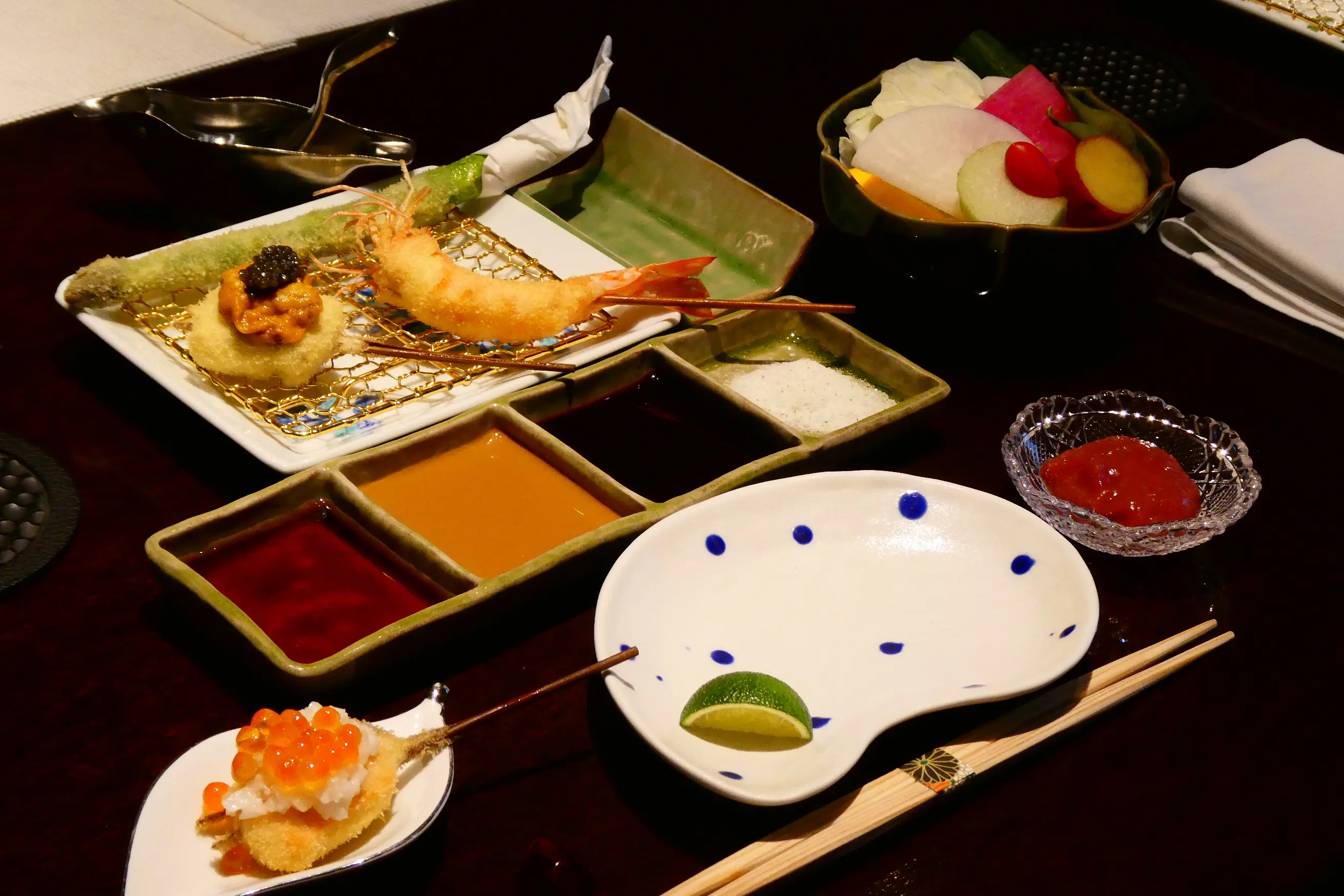
While every skewer is exceptional and truly special, the one featuring hollowed-out cherry tomatoes filled with basil cheese and wrapped in Spanish cured ham is particularly creative. A single bite releases a complex array of aromas and flavors, and it's visually stunning as well.
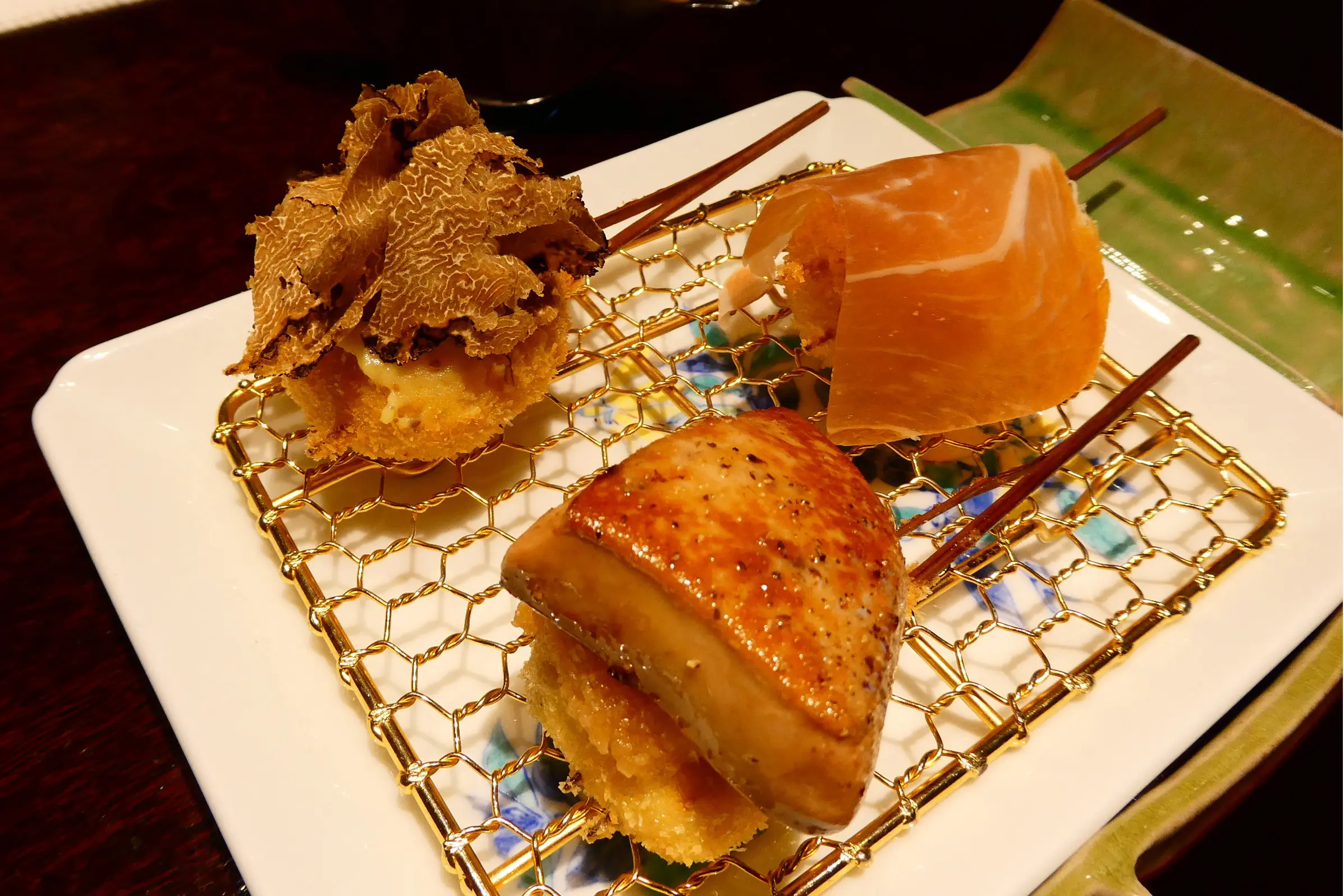
The contents of the "Chef's Choice Course" can be customized according to your preferences, such as requesting more meat or more fish, or if you feel that 25 skewers is too many, you can request up to 16 skewers.
The chef brings out the unique characteristics of each ingredient, pouring skill and heart into every single skewer—that's the essence of Bon's "omakase" (chef's choice) menu, and truly a luxury for adults.
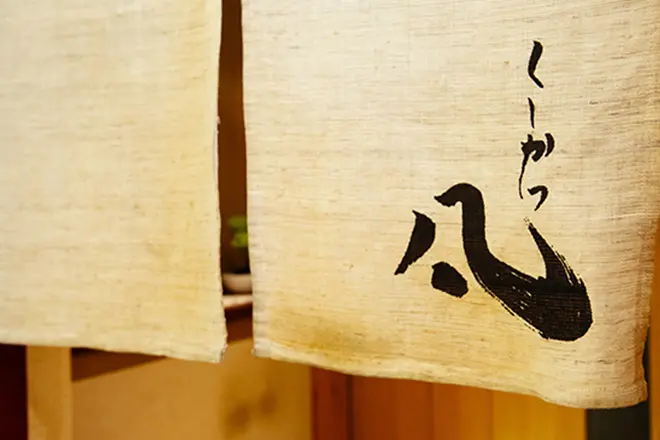
Tempura Tenboshi
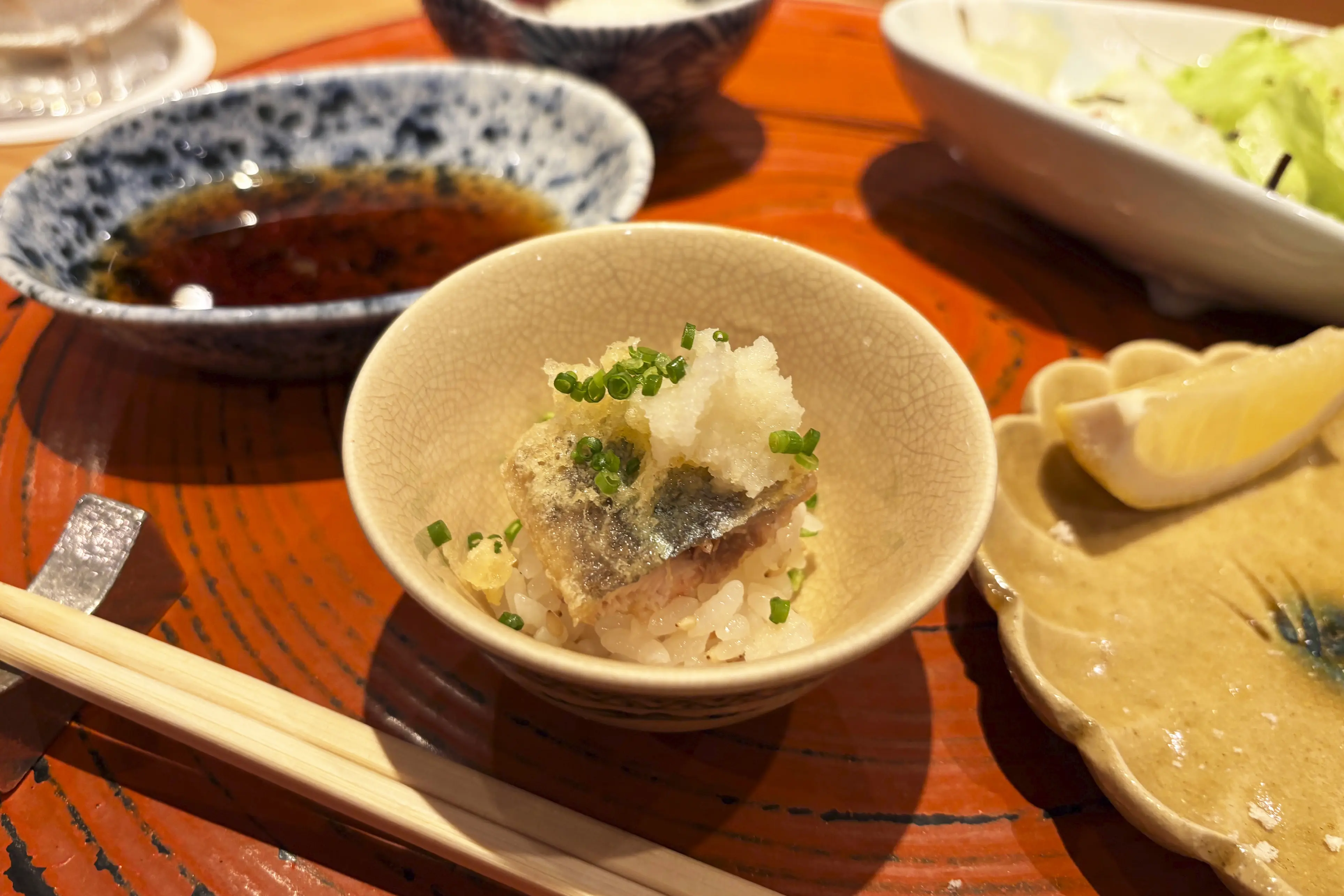
The exquisite tempura is simple yet profoundly deep.
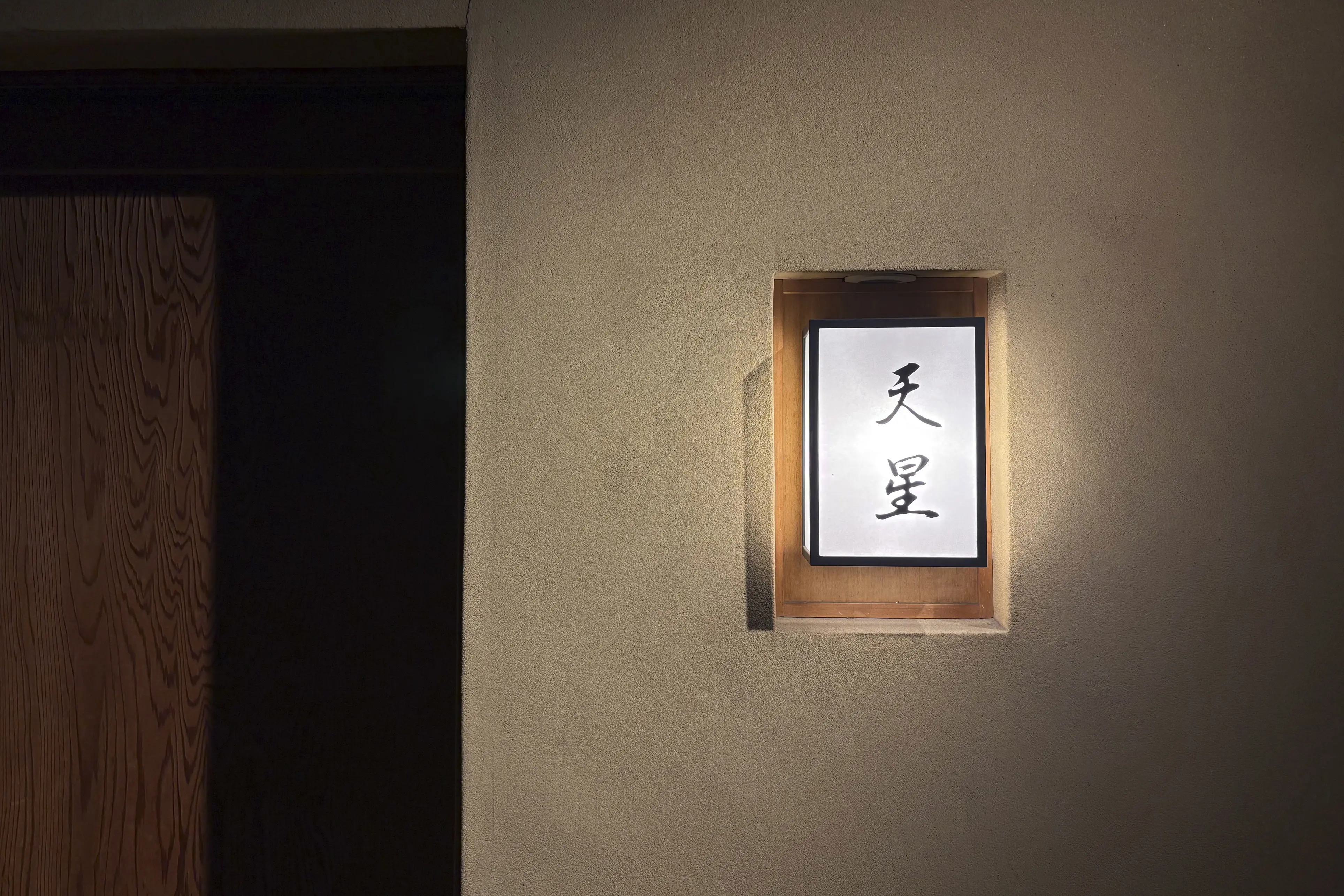
Next up is Tenboshi, a renowned restaurant that shines in the world of tempura, considered the most delicate form of Japanese cuisine. Tucked away in a quiet alley just off Tenjinbashisuji, this wooden building houses a tranquil space with only 10 counter seats. Being surrounded by the sounds and aromas of tempura being fried right before your eyes allows you to experience the allure of tempura with all your senses—a unique pleasure of sitting at the counter.
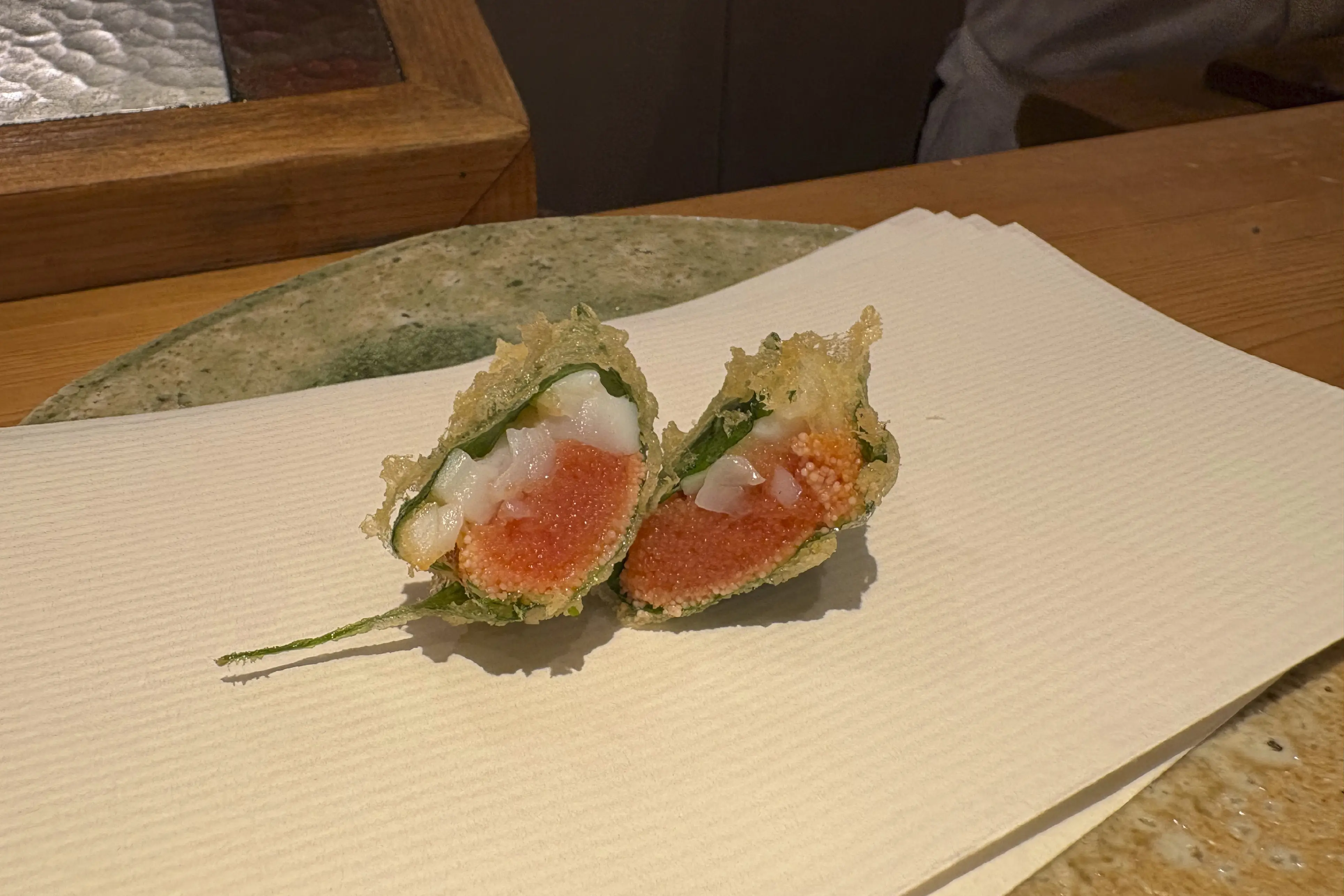
Using fresh fish directly delivered from Amakusa, Kumamoto, the owner's hometown, and carefully selected seasonal vegetables from all over Japan, the tempura is prepared with the skilled techniques and imagination of a master chef to bring out the maximum flavor of the ingredients. The batter is light and fragrant, and the carefully selected frying oil leaves a clean aftertaste, allowing you to fully enjoy the flavor of the ingredients themselves.
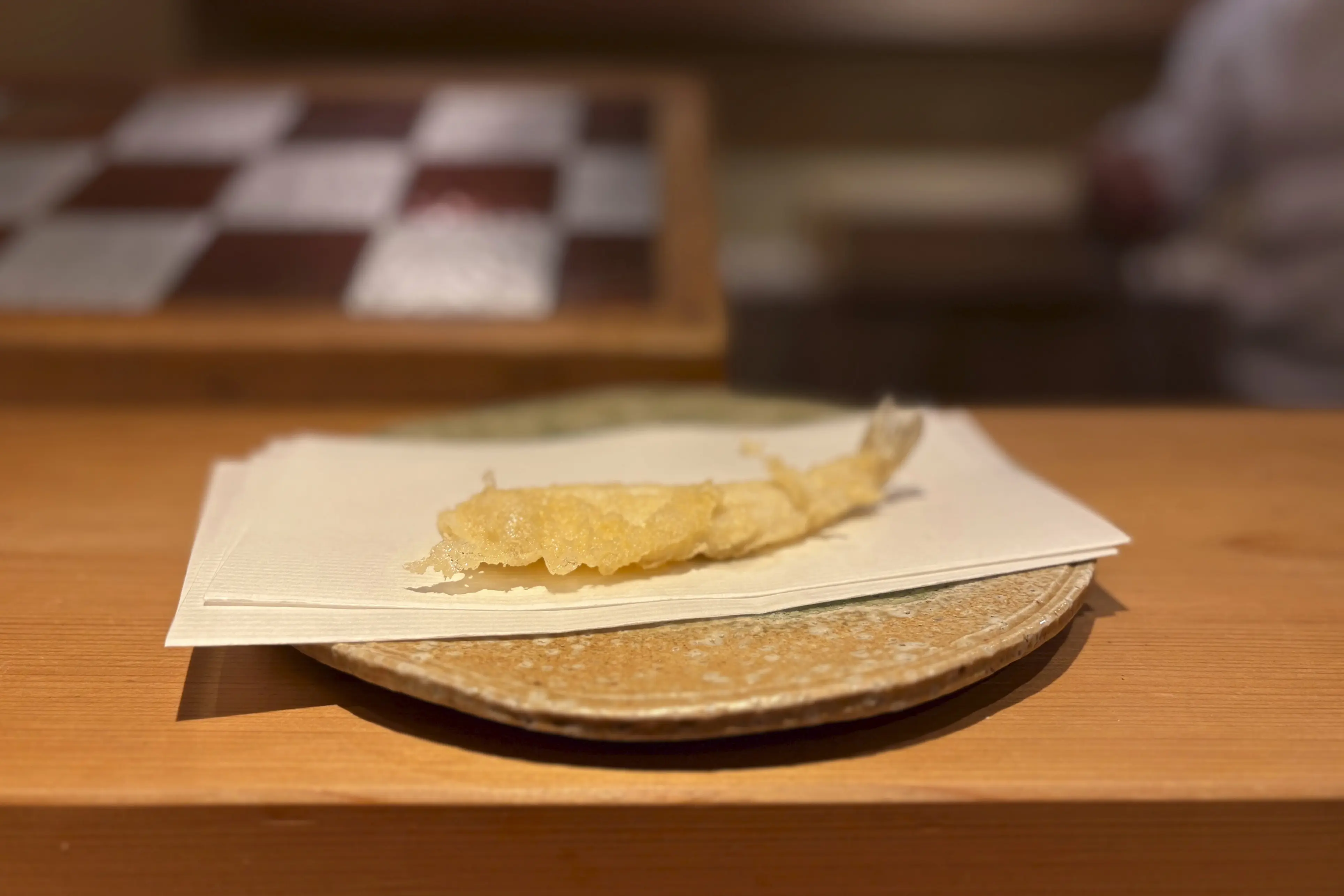
The monthly "Omakase Course" offers seasonal seafood and vegetables in a perfectly timed sequence. Cleanse your palate with the firm texture of kuruma prawns, savor the umami of conger eel and seasonal fish, and add a variety of aromas and textures with vegetables such as shishito peppers, maitake mushrooms, and pumpkin. Depending on the season, fresh fish delivered directly from Amakusa may also be included, making for a truly special experience where you can enjoy the aroma of freshly fried food, the crispness of the batter, and the temperature with all your senses.
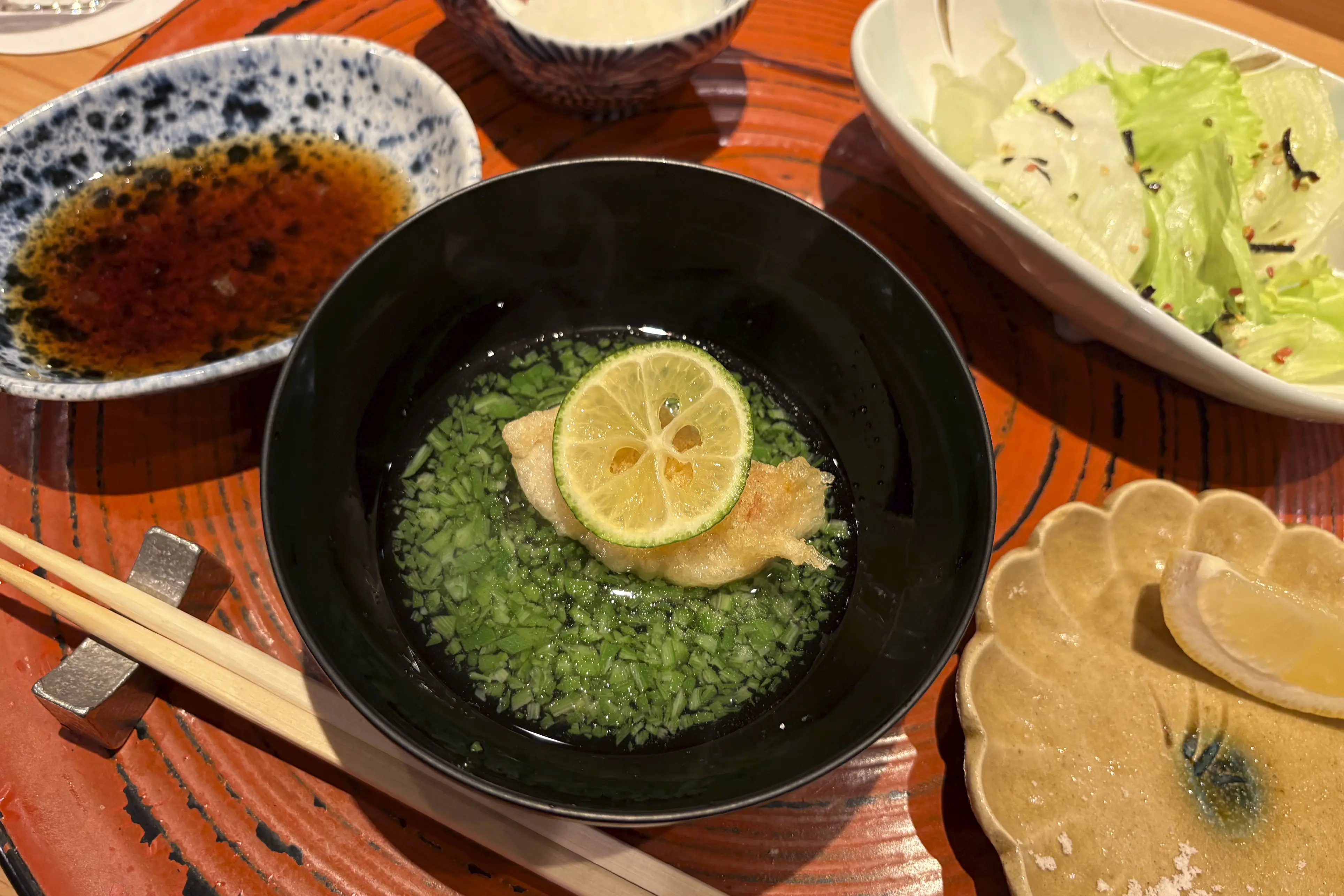
The accompanying tempura dipping sauces are also unique and enhance the flavor of the ingredients, adding depth to the taste. The meal concludes with a choice of rice dishes or desserts. If you like, you can also try Kumamoto's famous horse sashimi.
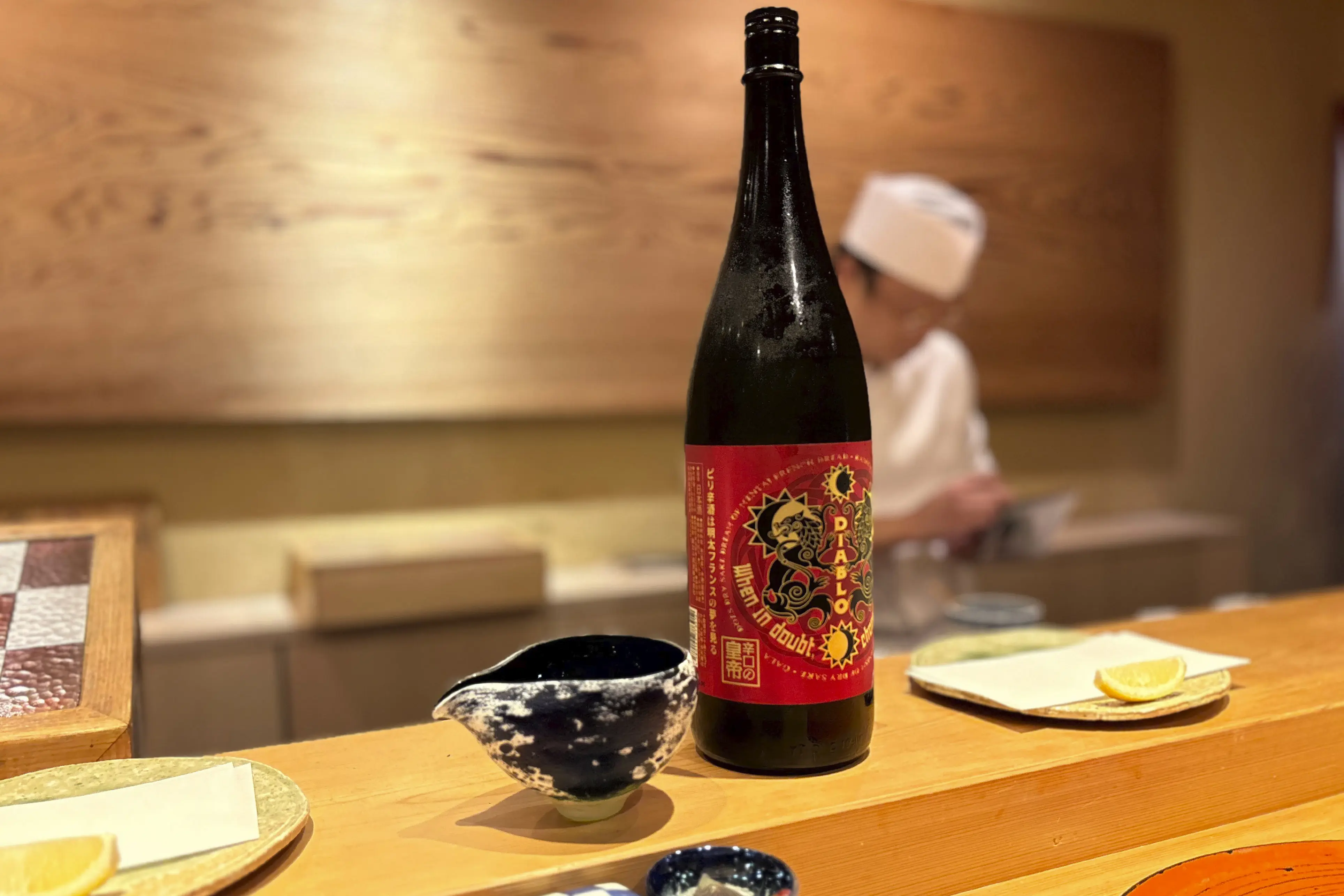
Why not enjoy tempura with a drink that pairs well with it, such as sake, shochu, wine, or champagne?
Honmachi Noodle Factory (Hommachi Soba Kobo)
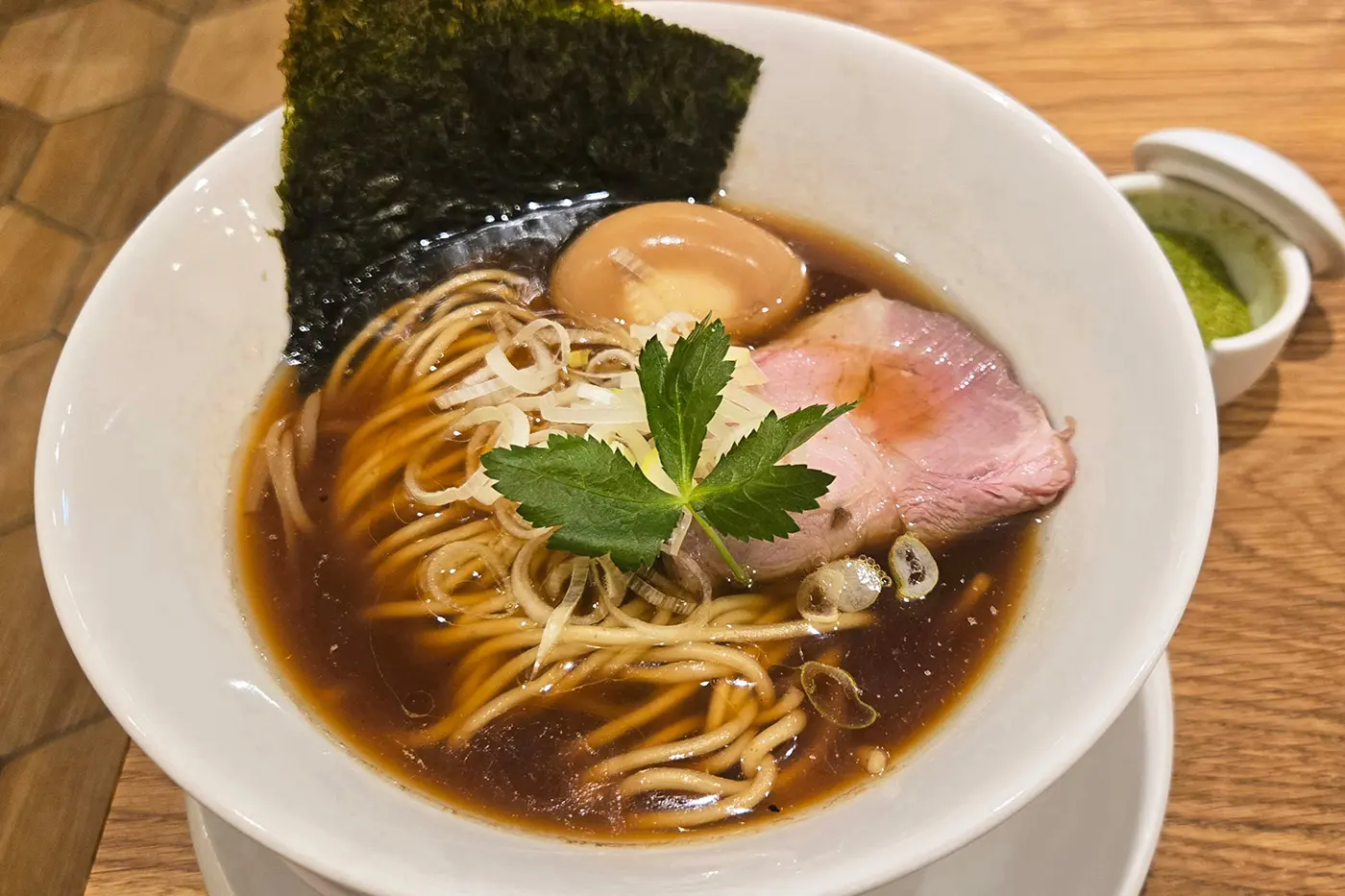
I was truly impressed by the delicious flavor of the carefully prepared broth and the texture of the homemade noodles.
Lastly, we'd like to introduce Hommachi, a Chinese noodle shop that delivers a "special bowl" of ramen with meticulous attention to both the broth and the noodles.
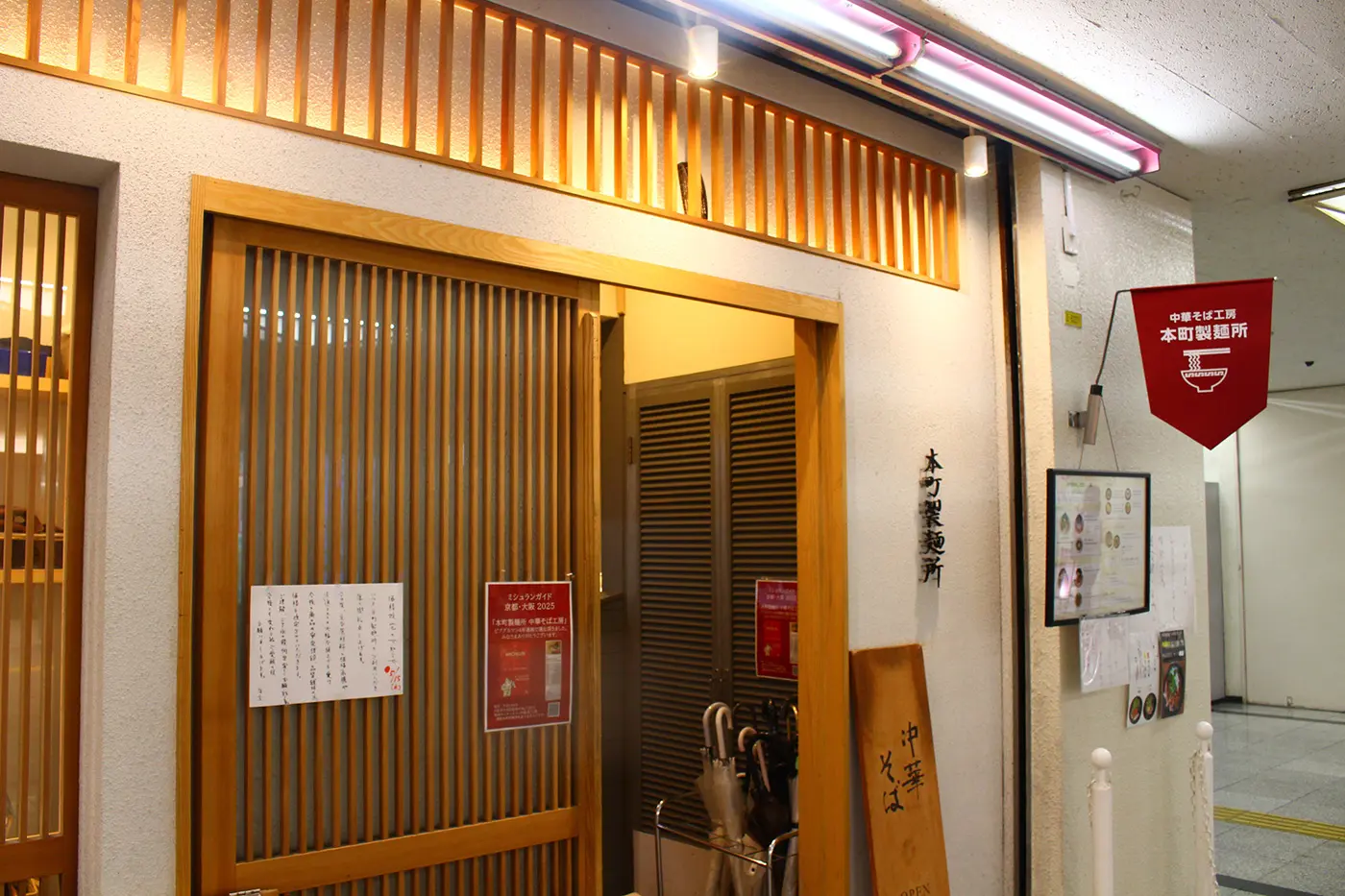
Located right outside the ticket gates of Osaka Metro's Sakaisuji Hommachi Station, this restaurant was opened by the Yamacho Shoten Group, a dried goods wholesaler in Kuromon Market, with the aim of "conveying the deliciousness of dashi (broth)." Since its opening in 2016, it has captivated noodle lovers, and in 2021 it moved to its current location. Since then, it has been known as a renowned restaurant, having been selected for the Bib Gourmand for three consecutive years.
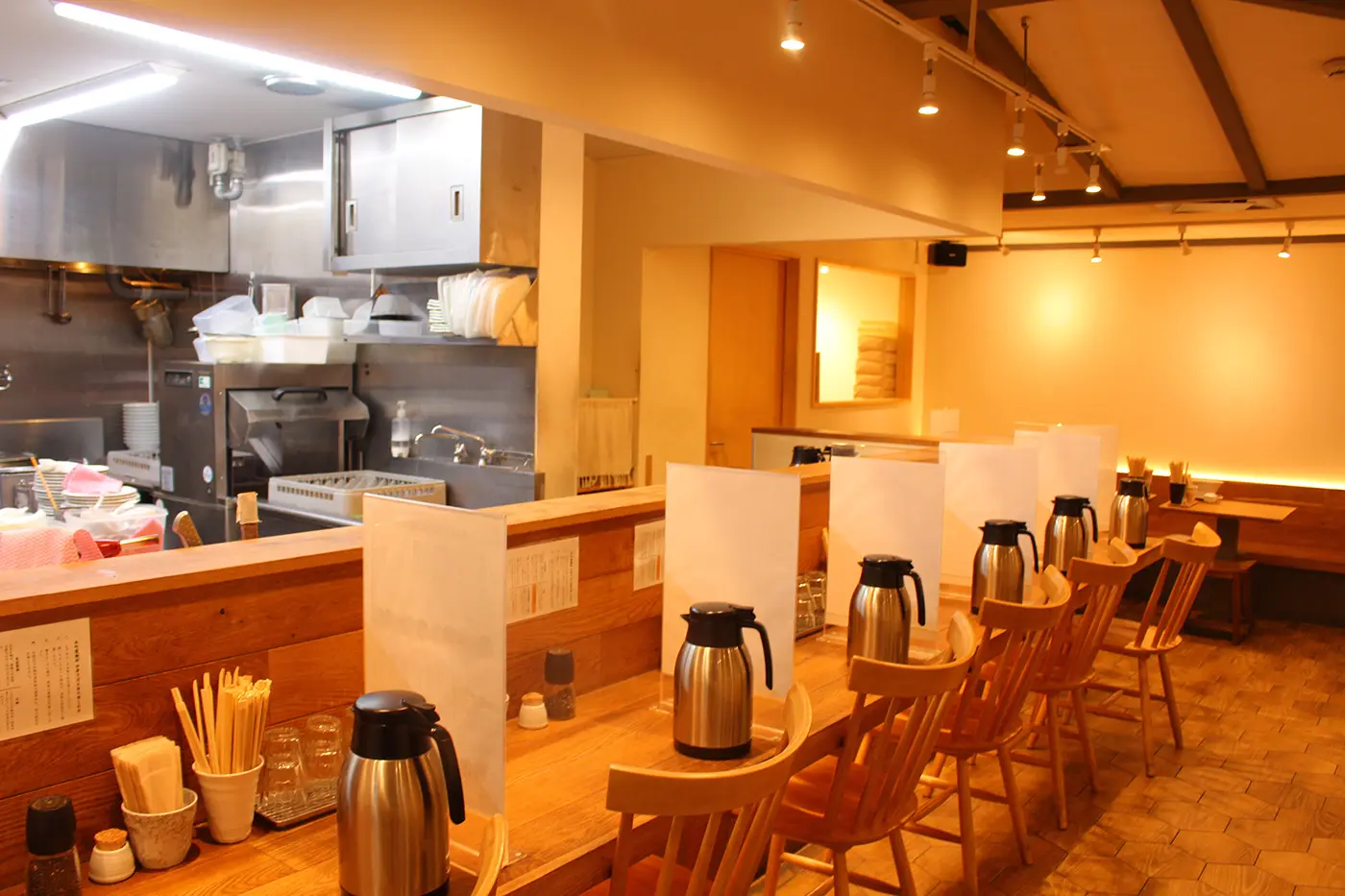
The restaurant's exterior resembles a high-end Japanese restaurant rather than a typical ramen shop, exuding a calm and refined atmosphere. It's the perfect setting to enjoy a truly exceptional bowl of ramen.
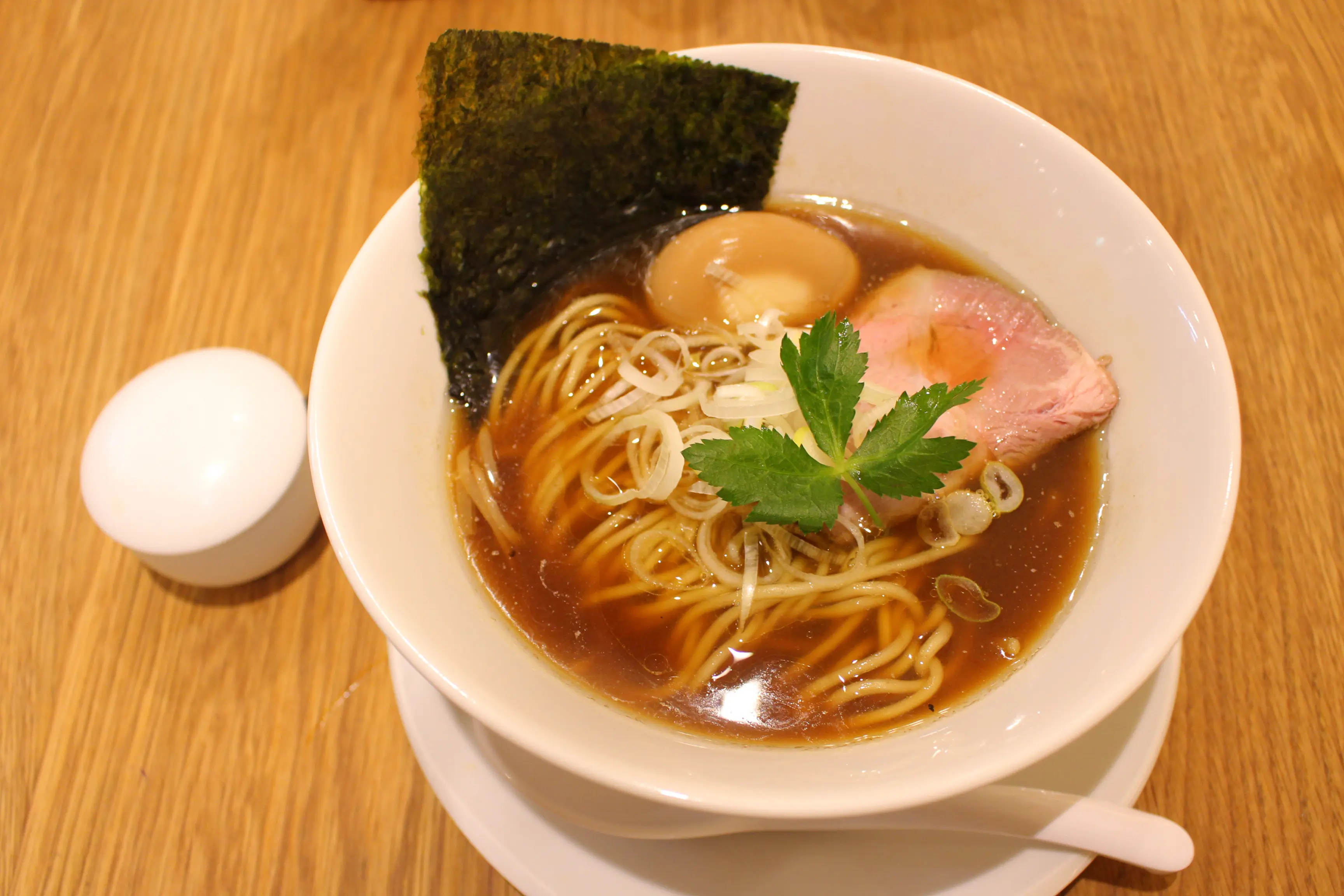
The signature dish, "Specialty Chinese Noodles," features a broth made from a combination of various dried bonito flakes, kelp, conger eel, and chicken bones, along with a richly fragrant soy sauce-based soup. The aroma of the broth alone is enough to whet your appetite. The noodles are homemade, and you can choose between two types—round noodles and flat noodles—depending on how well they pair with the soup and your preferred texture.
According to the shop owner, "Even with the same amount of water and the same boiling method, the finished product changes depending on the temperature and humidity each day." Every morning, they check the condition of the noodles to determine the optimal boiling time, and they also operate on a "sold out noodles" system, closing once the day's supply of noodles is sold out. This straightforward approach, focused on freshness, is one of the reasons why they attract so many customers.
Adding sansho pepper to taste will give the soup a refreshing kick, enhancing its flavor and aroma.
Experience Osaka's sophisticated food culture through delicious cuisine!
The restaurants Takoyasu and Kurubushi, which Mr. and Mrs. Vincent visited, are renowned establishments where you can truly feel the skills honed by the craftsmen, their respect for the materials, and their attentiveness to the customers.
In every restaurant, beneath the flashy and lively facade, you can see the subtle touches of refined service. You can experience the joy of entrusting yourself to the chef rather than simply choosing your dishes. Even in popular Japanese dishes like ramen, kushikatsu, and tempura, the careful selection of ingredients and attention to broth, characteristic of Osaka, the city of gluttony, shines through.
This place is perfect for travelers who want to enjoy a leisurely meal while also experiencing Osaka's unique food culture!
*The information in this article is current as of March, 2026. As details may have changed, please check the official websites of the facilities and stores for the latest information.
Photo: Motoki Ninomiya
Edited by: Weekly Osaka Nichinichi Newspaper
Direction: Ningen Henshusha
