 Copy Link
 X
X
 Facebook
 LINE
LINE
 LinkedIn
 Pinterest
 WhatsApp
 KakaoTalk
 NAVER
NAVER
 Weibo
Weibo
 WeChat
 Mail
Mail
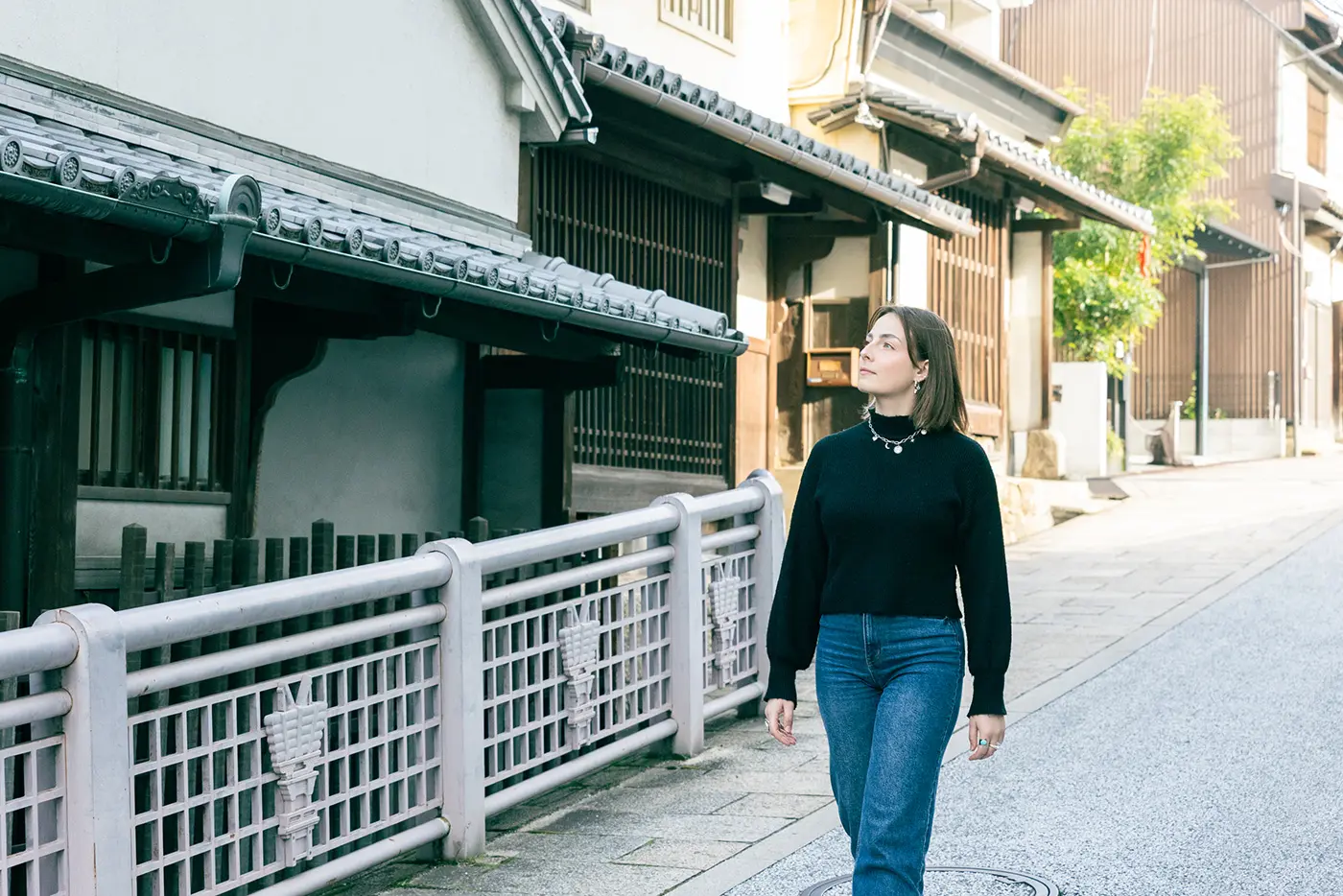

In what is now Kaizuka City, Osaka Prefecture, the religious autonomous Kaizuka Jinaicho developed from the Sengoku period through the Edo period. It was ruled by followers of the Jodo Shinshu sect of Buddhism, and remnants of this can still be seen throughout the town. In this article, we will walk around Kaizuka Jinaicho with Lucile, a French national with an interest in traditional Japanese architecture, and interact with the local people.
Related Tours
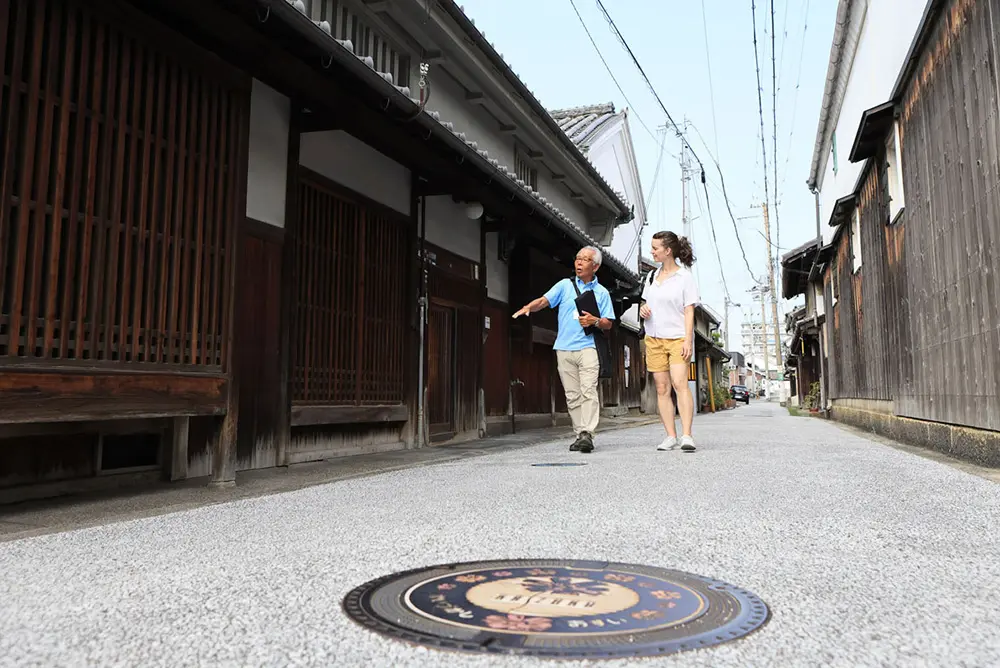
Kaizuka Walking Tour: Historic Jinaicho & Local Food
Explore the Kaizuka Jinaicho that has existed since the Sengoku period! Visit important cultural properties such as temples and traditional townhouses.
Enjoy freshly fried croquettes and local specialty, Mizunasu eggplant, while strolling around! Savor the flavors loved by the locals.
Take a break while admiring the beautiful garden, enjoying local Kaizuka sweets and matcha tea.
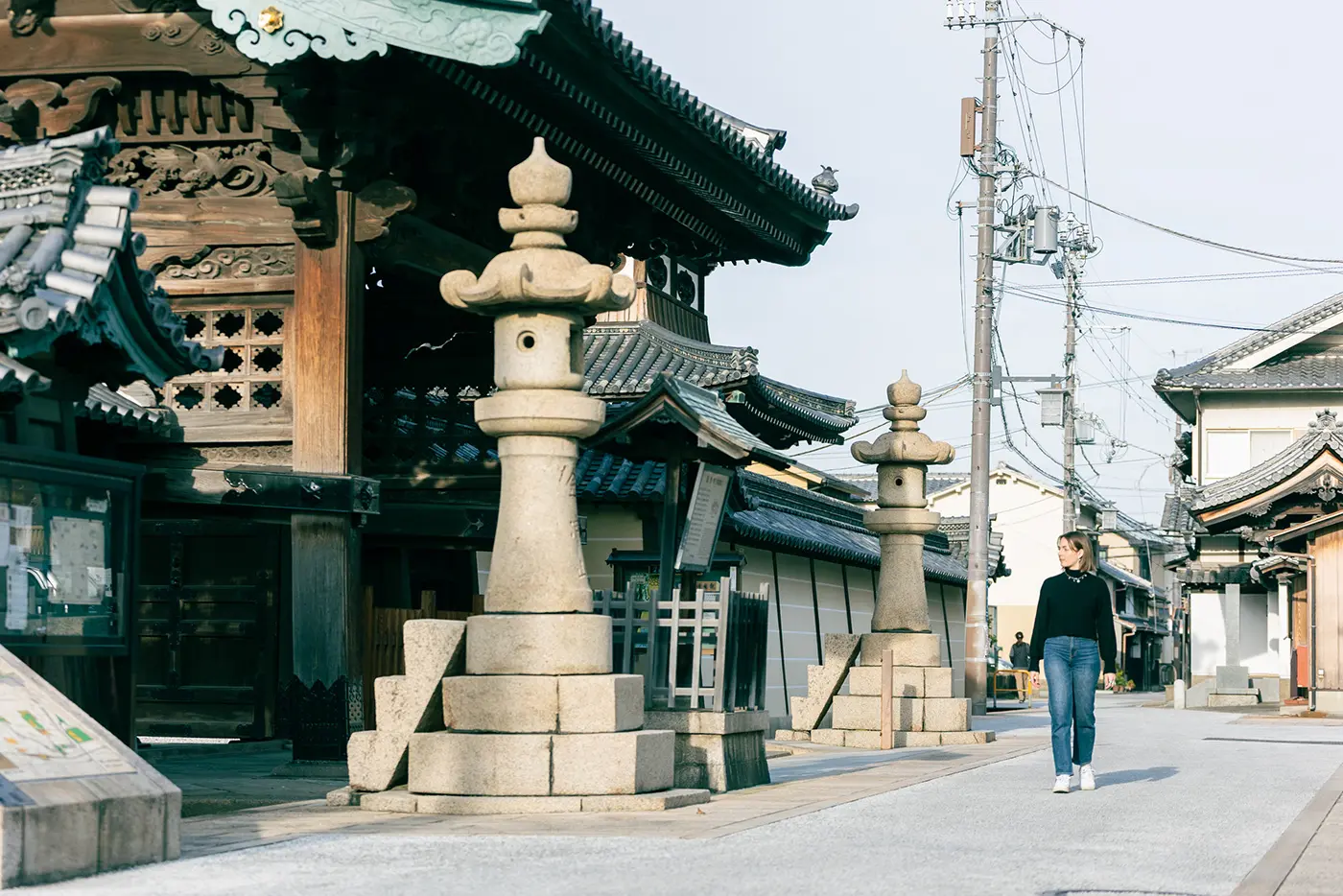
Kaizuka City , located in southern Osaka and accessible from Osaka city in less than an hour by train, is a town rich in nature and history. In particular, the area known as "Kaizuka Jinaicho " on the west side of Nankai Kaizuka Station is home to a townscape that evokes history dating back to the Warring States period, and many old buildings remain, including Gansenji, an Important Cultural Property, and townhouses that are registered as cultural properties.
The old buildings around Kaizuka Jinaicho are not only preserved as cultural assets, but are also used as residences and shops. In addition to making the most of the traditional wooden architecture, the shop owners offer unique experiences, such as gourmet food made with an abundance of local ingredients.
Lucile, whose job is to plan travel products, says, "Whenever I go out, I can't help but notice historical buildings and motifs," and together they visit the temples and restaurants in the center of Kaizuka Jinaicho . They embark on a journey that allows them to feel the unbroken flow of time.
Guide
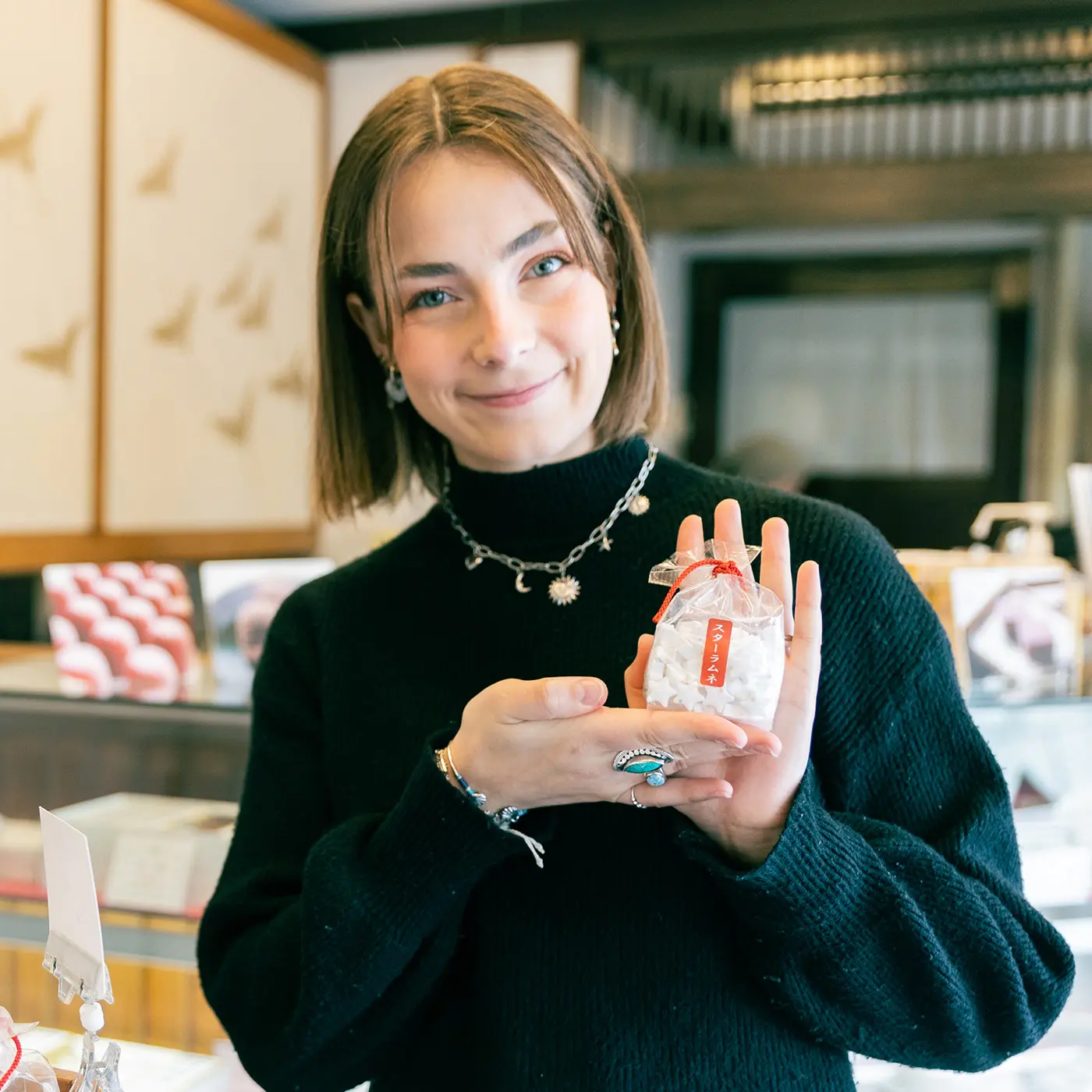
Originally from France, she currently lives in Osaka City. She came to Japan to study at Osaka University and currently works at an advertising agency in Kitahama. She is in charge of planning travel products for foreign tourists. Her hobby is collecting "manhole cards," which are distributed all over the country.
Japan's Vatican!? Gansenji , the center of the religious autonomous city of Kaizuka Jinaicho
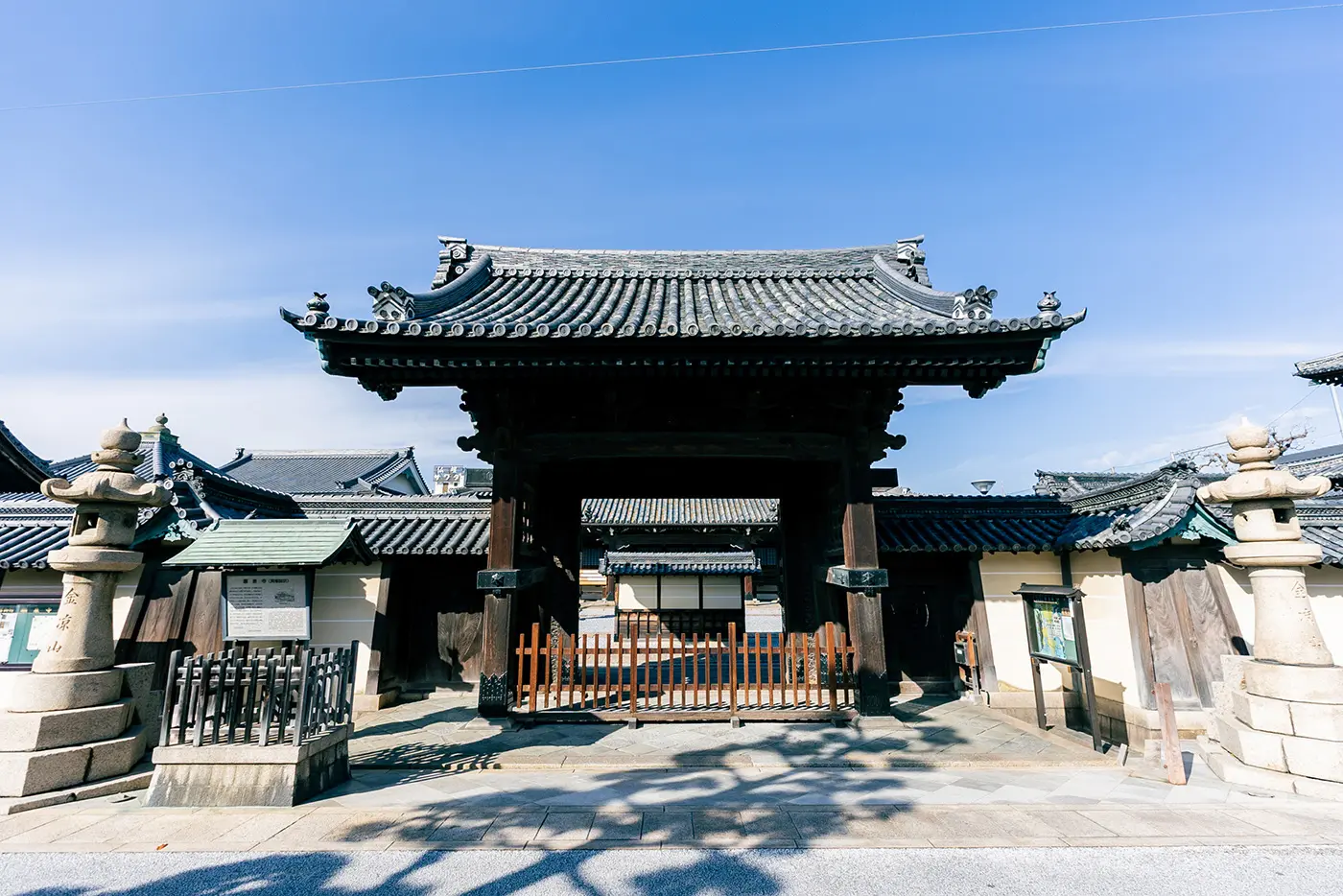
The first place we visited was Gansenji , about a six-minute walk from Nankai Kaizuka Station . Gansenji is said to have originated as a thatched hut (a simple hut) built by a high priest during the Nara period. It was rebuilt as a Jodo Shinshu temple during the Sengoku period (16th century).
In the midst of the war between followers of Jodo Shinshu and Oda Nobunaga, the Honganji Temple, the head temple of Jodo Shinshu, was located here for a time, and Kaizuka became the center of the sect. This led to the town of Kaizuka becoming increasingly prosperous and lively. In the Edo period, the head priest of Gansenji came to rule the town as its lord. The town continued to develop through commerce and trade, and Gansenji was the center of faith and politics. The existing main hall and other buildings were built during the Edo period and are designated as Important Cultural Properties.
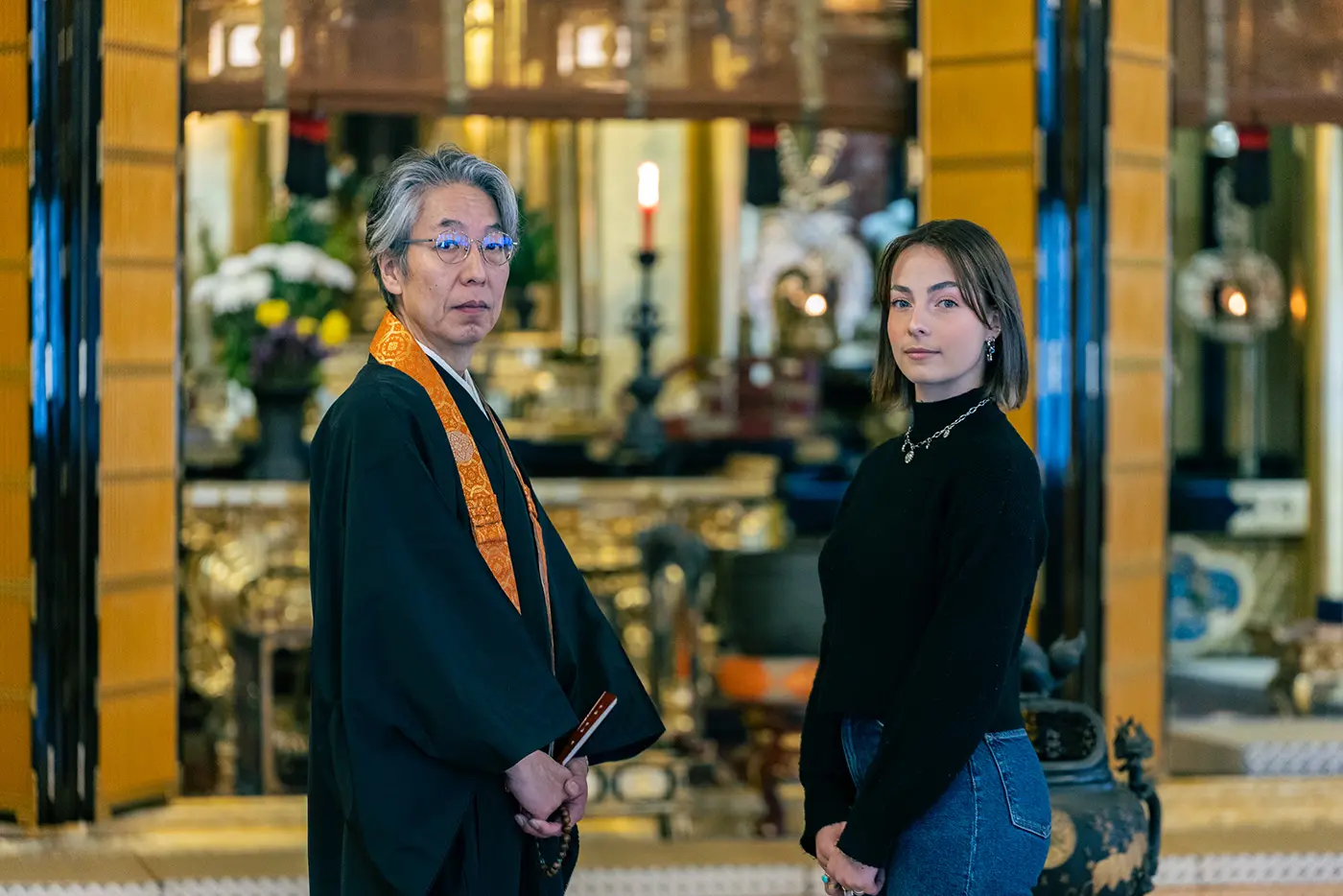
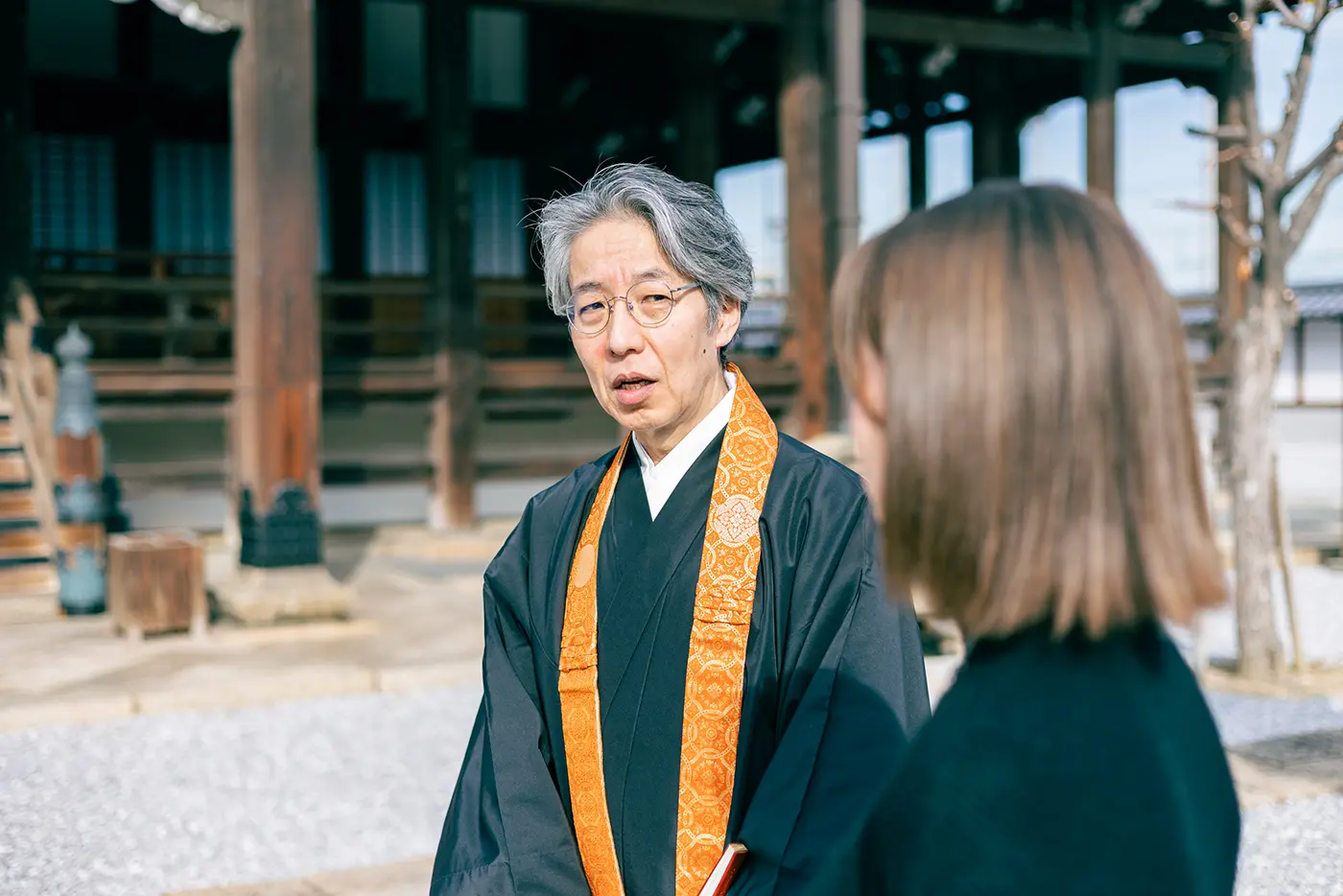
First, we greeted the 17th Bokuhan priest, Mr. Bokuhan Ryoken, who gave us a tour of the temple grounds while teaching us proper etiquette for visiting the temple.
Gansenji is not open to tourists and is strictly a religious facility. Bokuhan says, "Anyone can visit, but just as with a church or shrine, we would appreciate it if you would show respect for the space and the believers. Prayer beads are not required, but if you have them at home, please bring them with you."
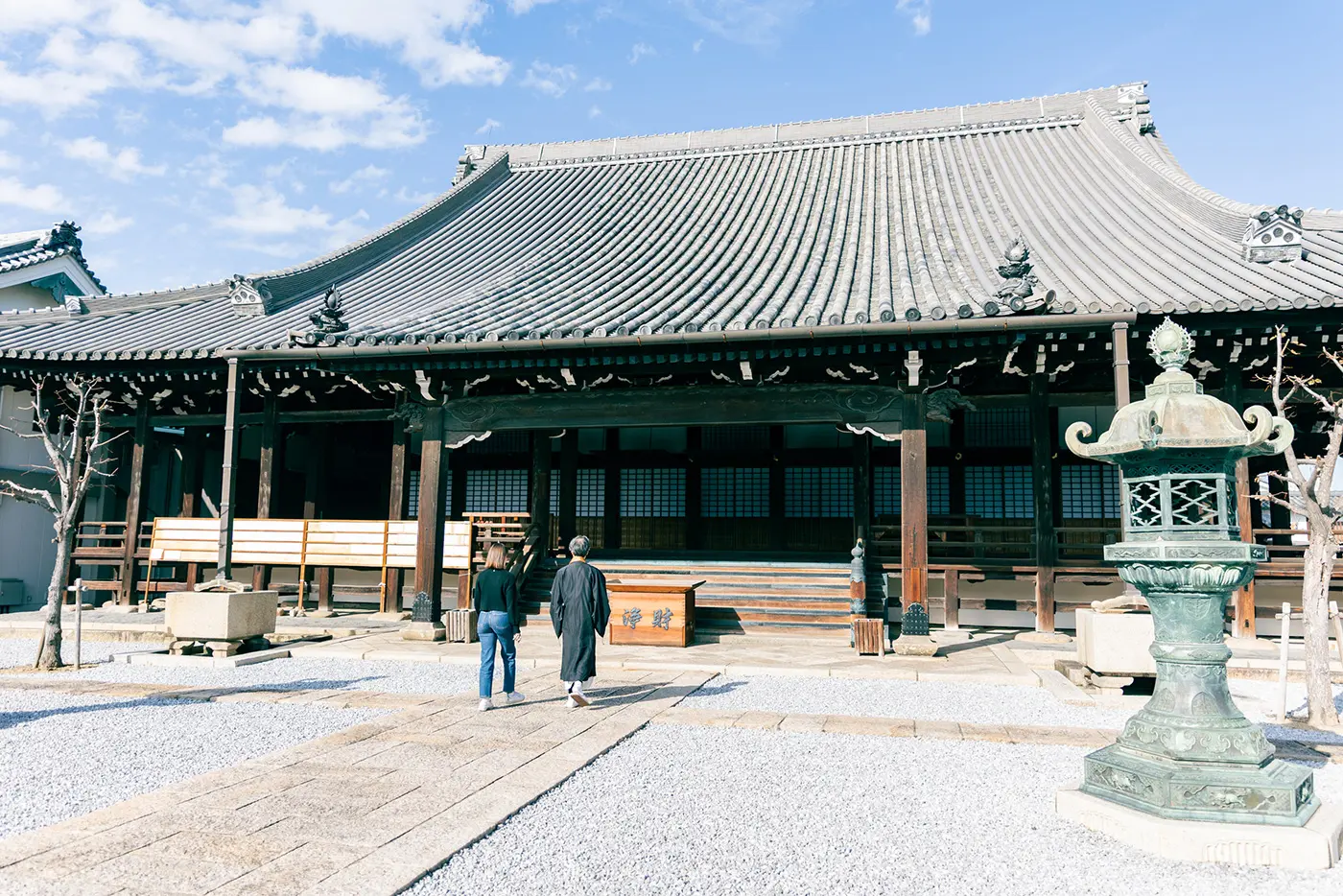
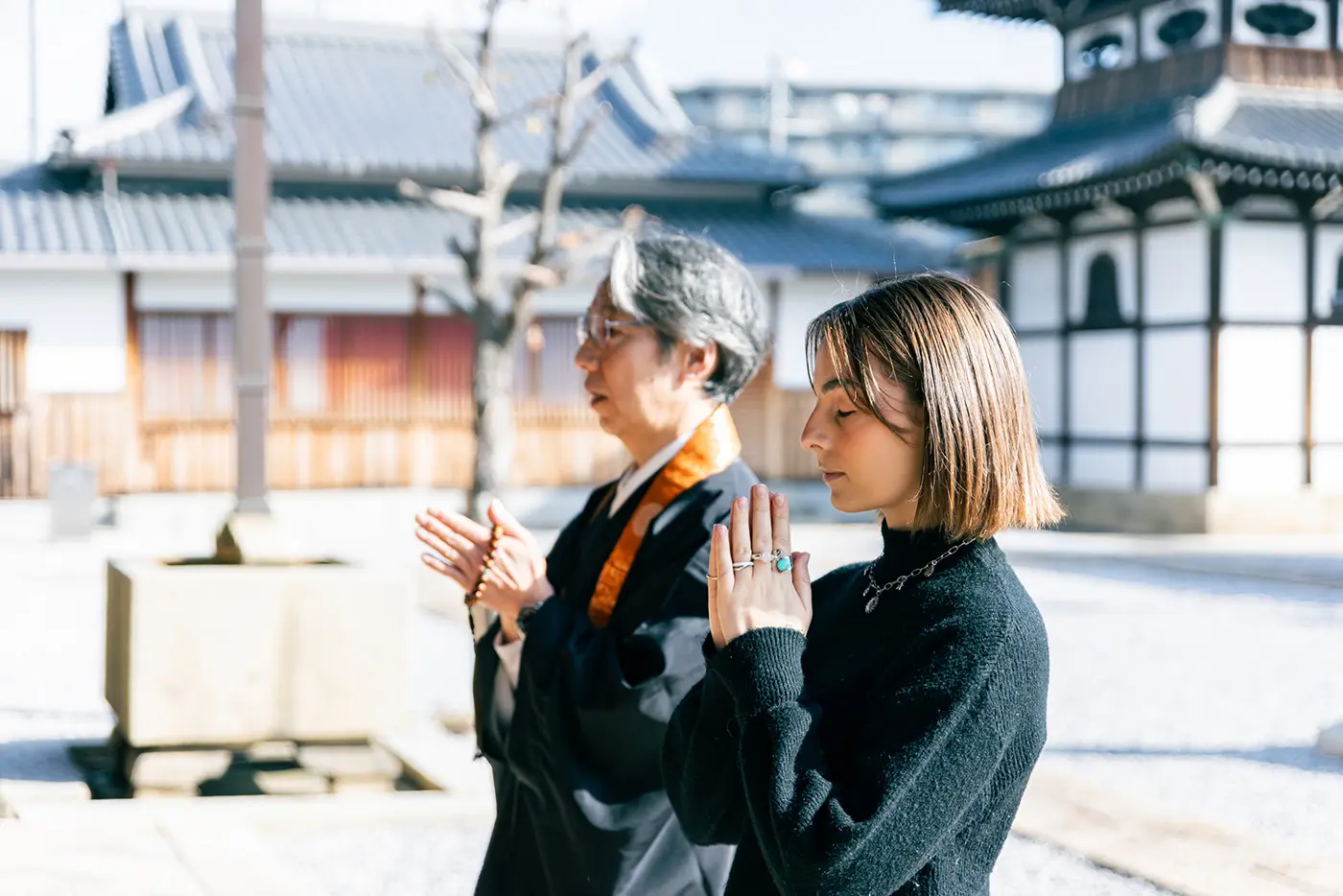
Lucile:
I was surprised when a large roof suddenly appeared on my way from the station. Gansenji is quite large for a temple in the city, isn't it?
Bokuhan:
Although it was only temporary, it was the head temple of the Jodo Shinshu sect, so the building itself and the layout of the grounds are comparable in scale and style to the head temple.
Lucile:
Many believers lived around the temple. I heard that the district remains the same as it was in the past, but what kind of town was it?
Bokuhan:
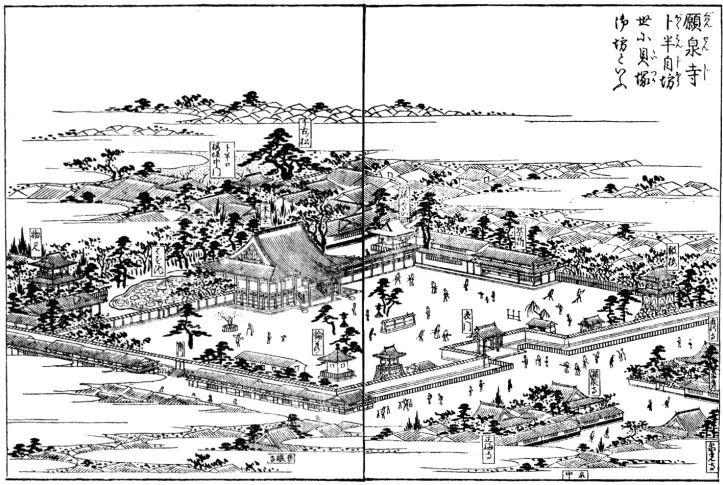
This Kaizuka Jinaicho was a religious autonomous city run primarily by Gansenji, with the temple having police, tax and judicial powers. People and wealth gathered in the surrounding area, and commerce and industry flourished from the Sengoku period through to the Edo period. In that it was governed independently and centered around religious facilities, it may resemble the Vatican in Italy.
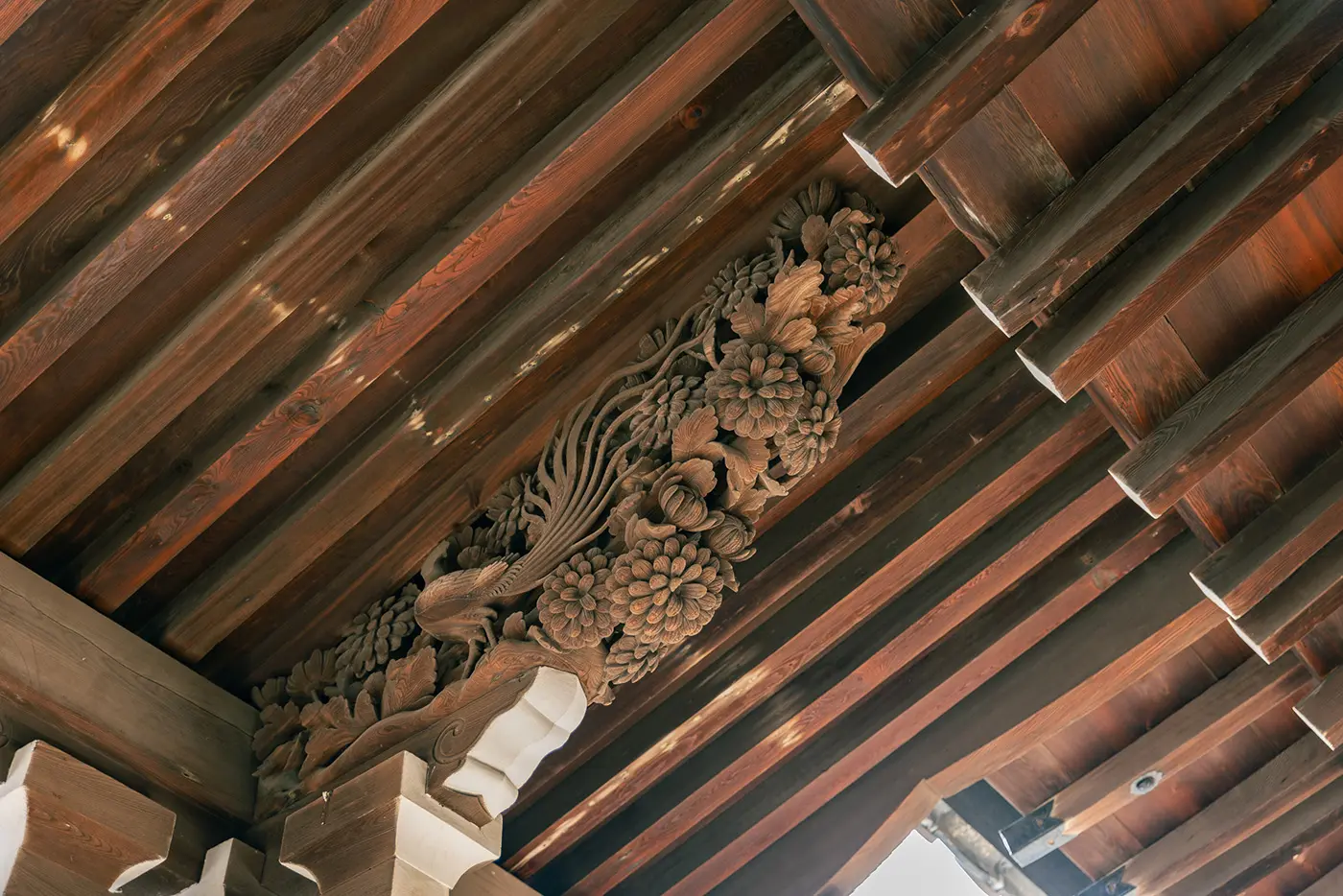
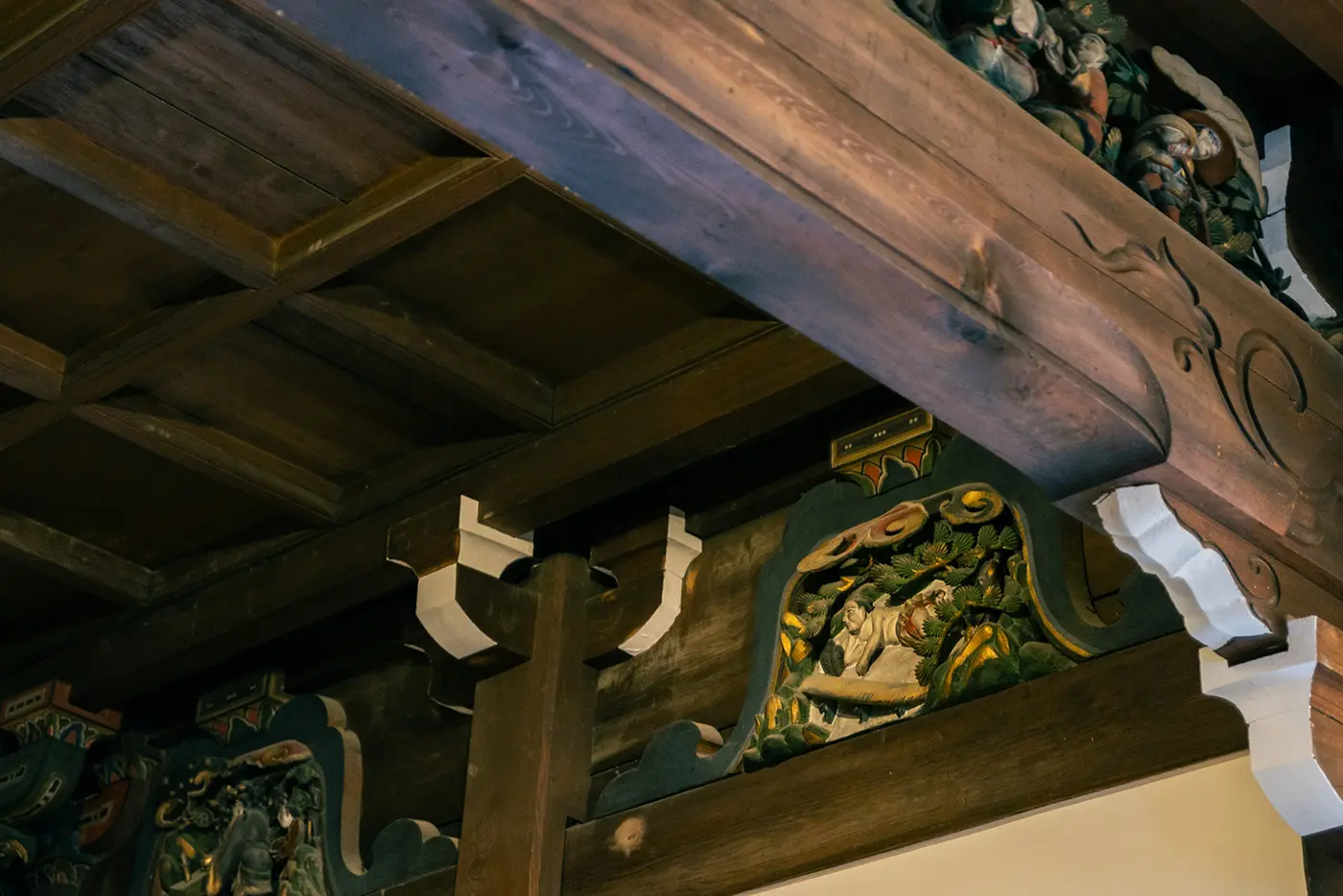
Check out the intricate carvings with animal and plant motifs!
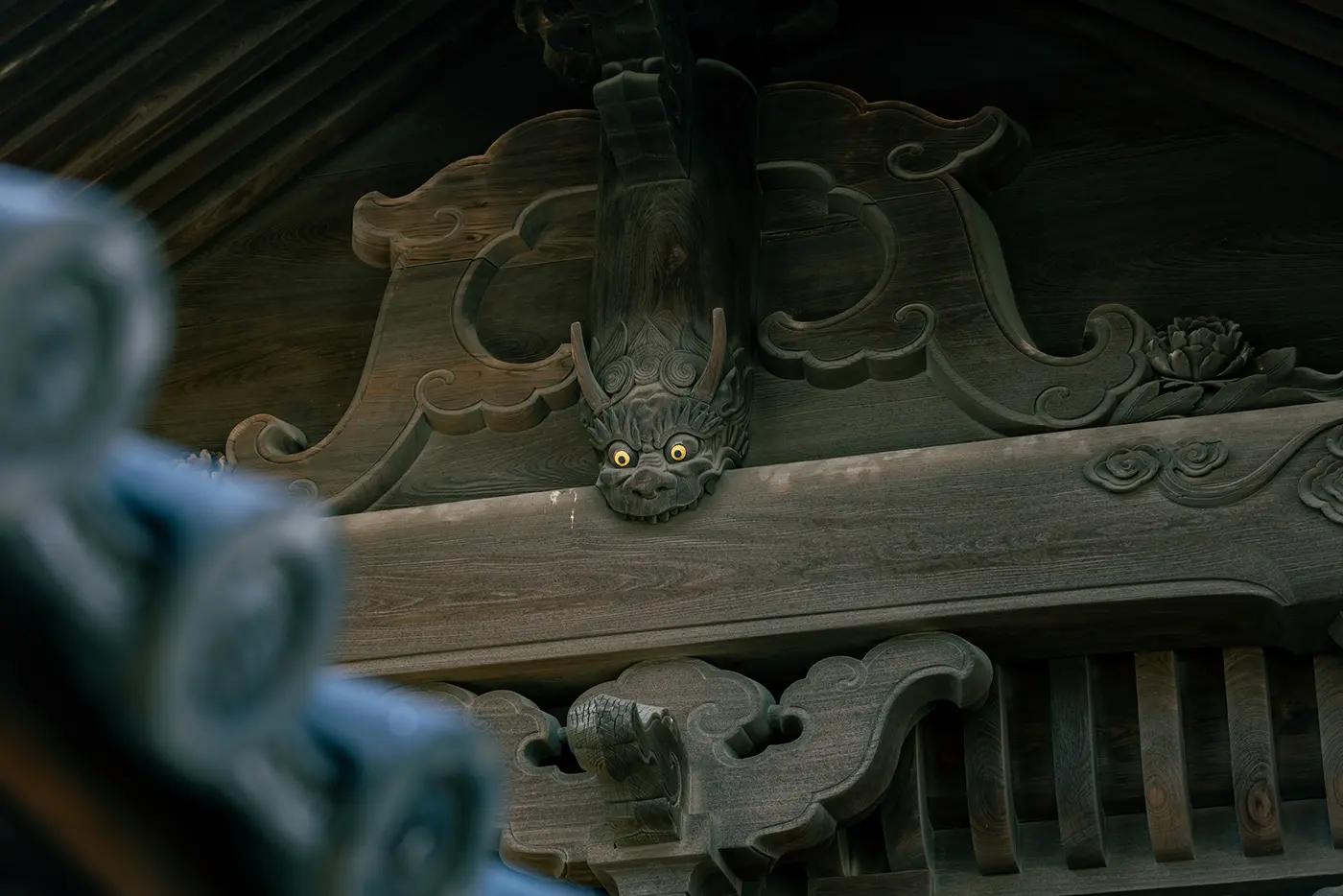
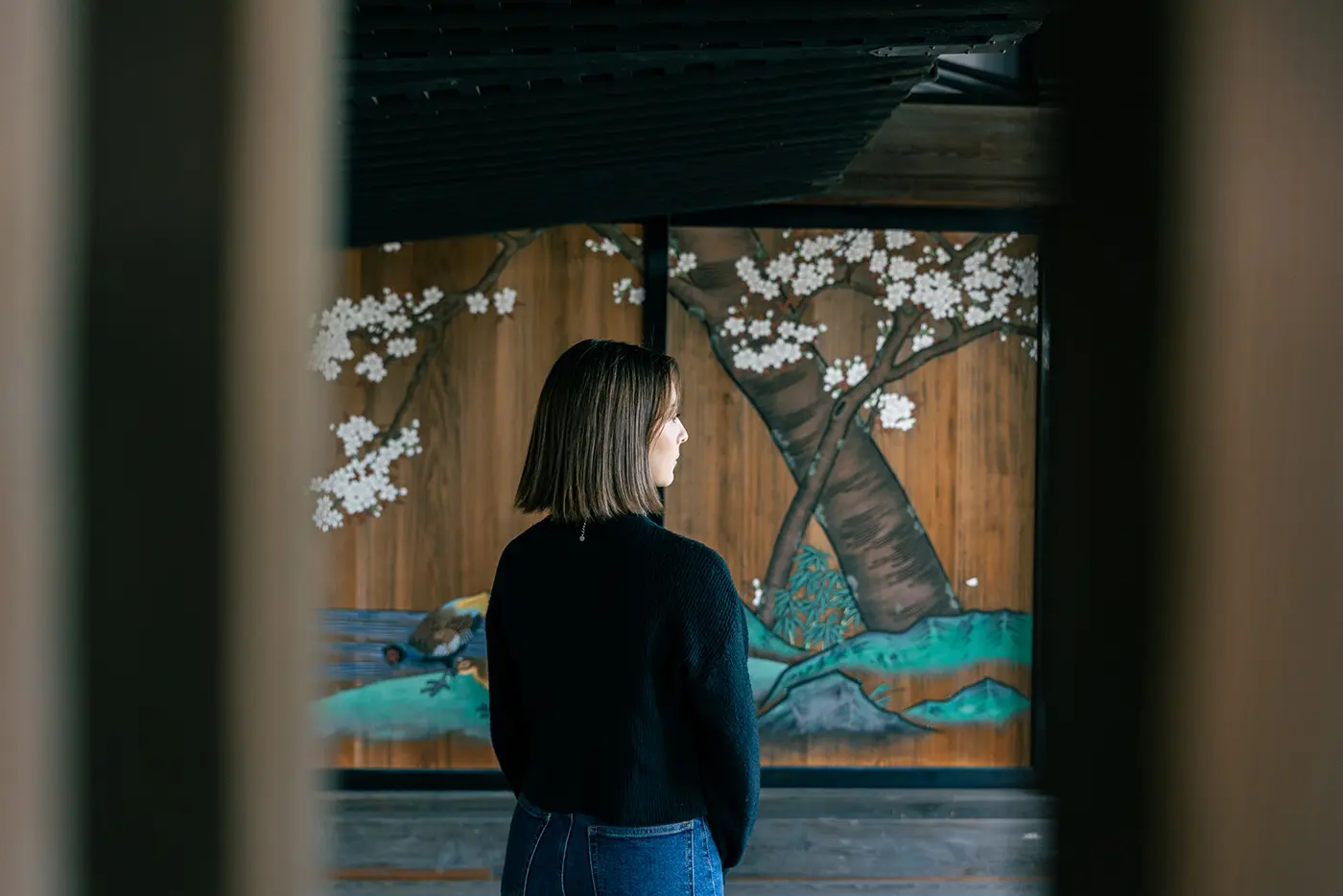
Gansenji is a structure that still retains the architectural techniques and decorations of the Edo period. As we walked around the main hall, Bokuhan-san explained the sights scattered throughout the temple.
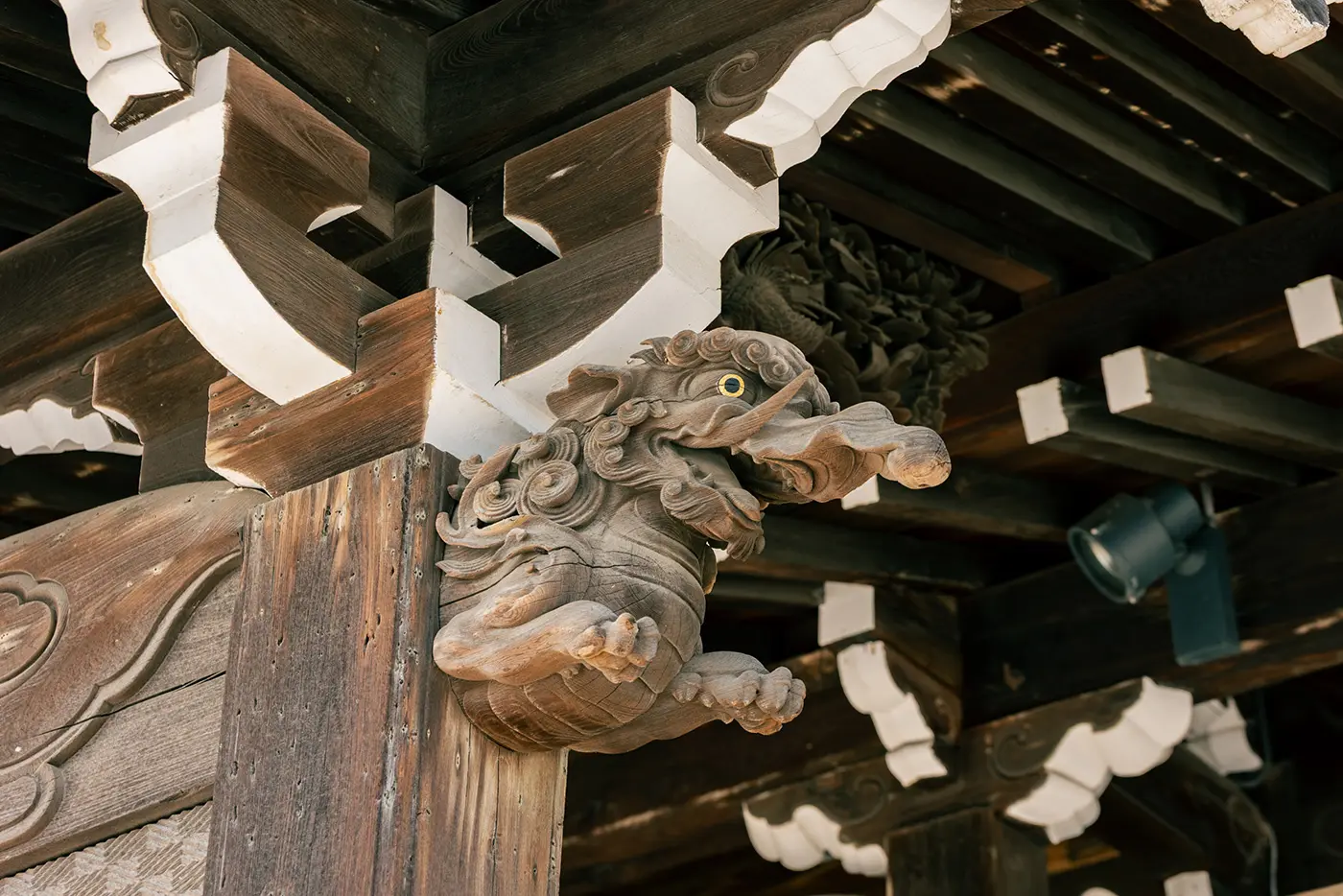
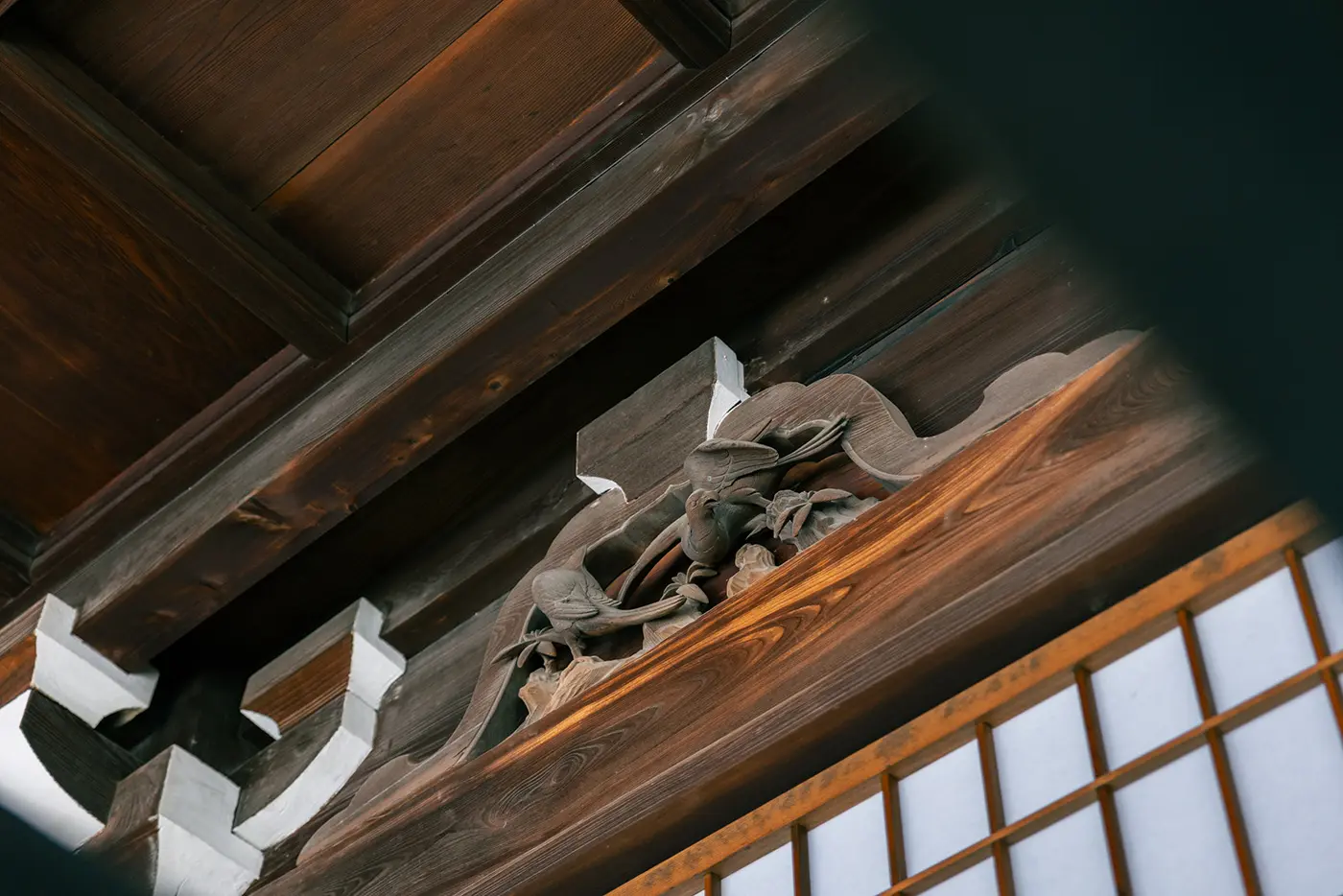
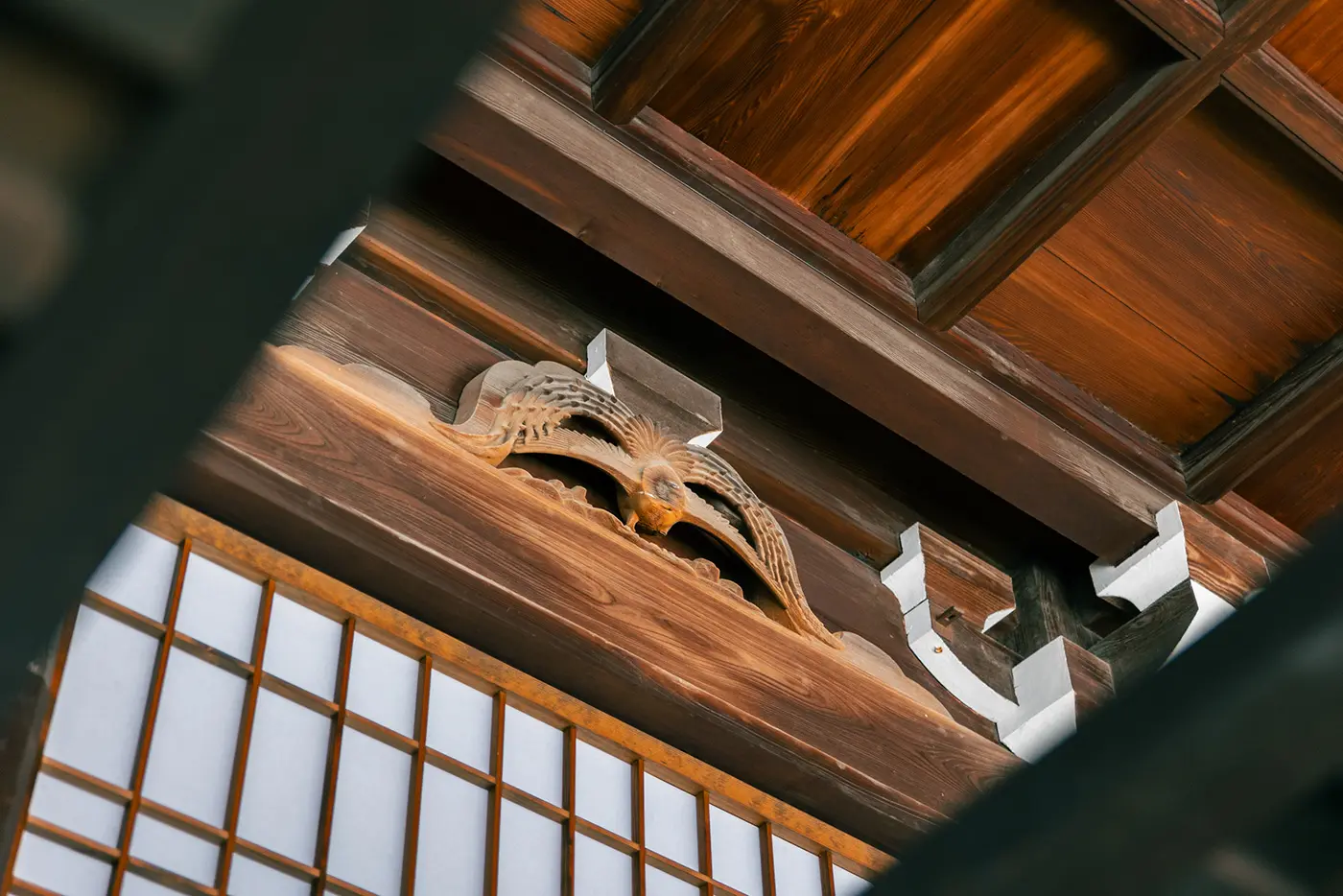
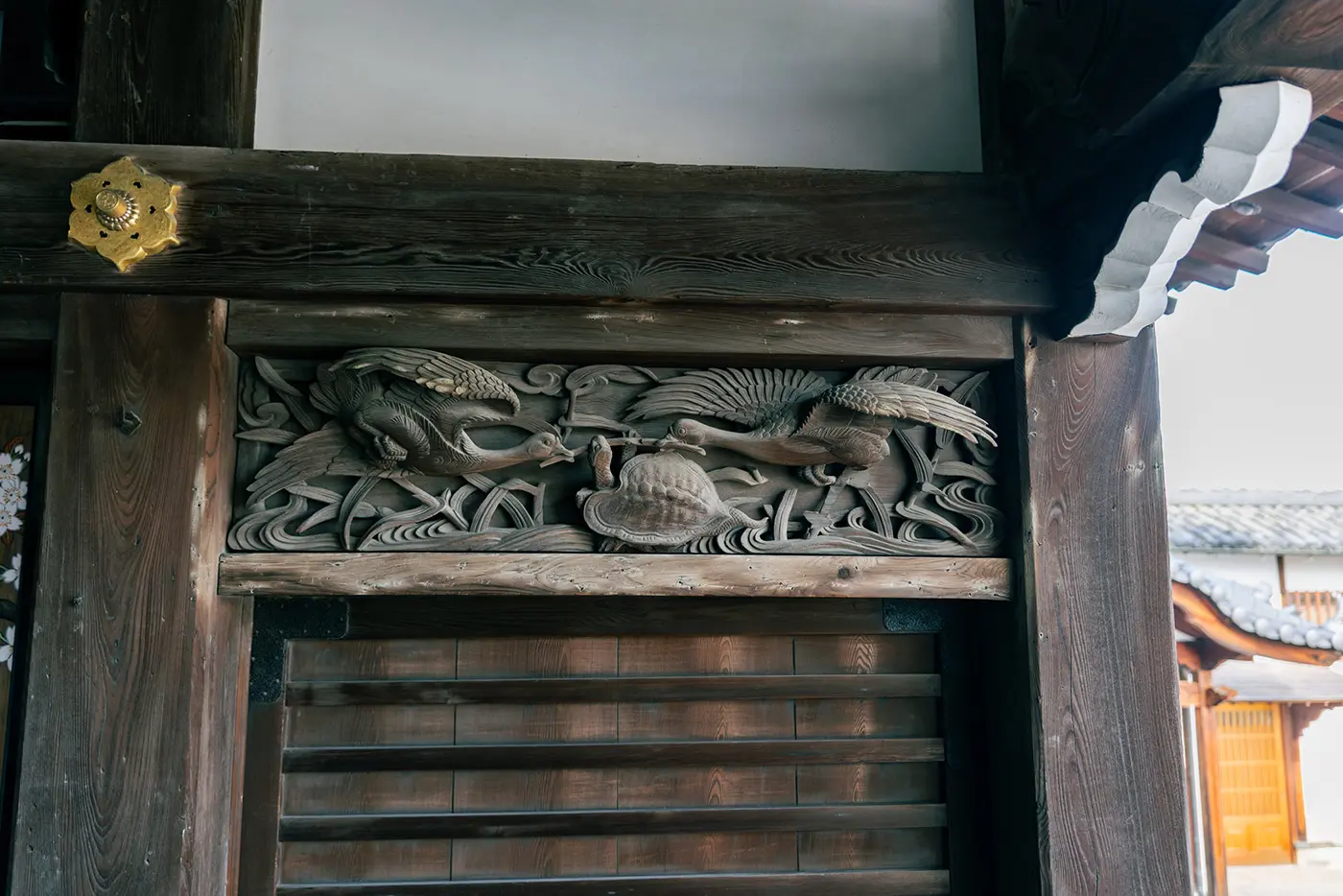
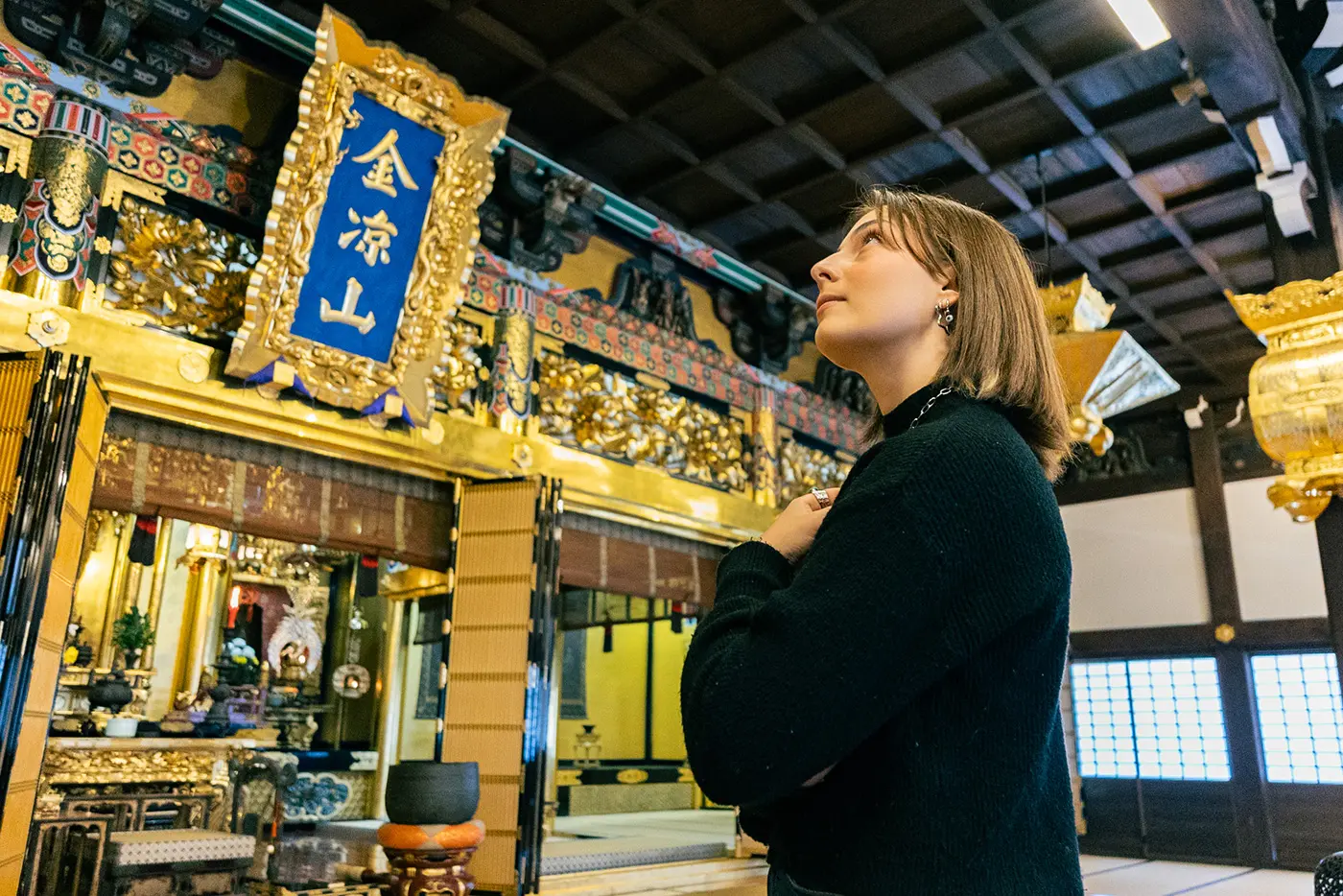
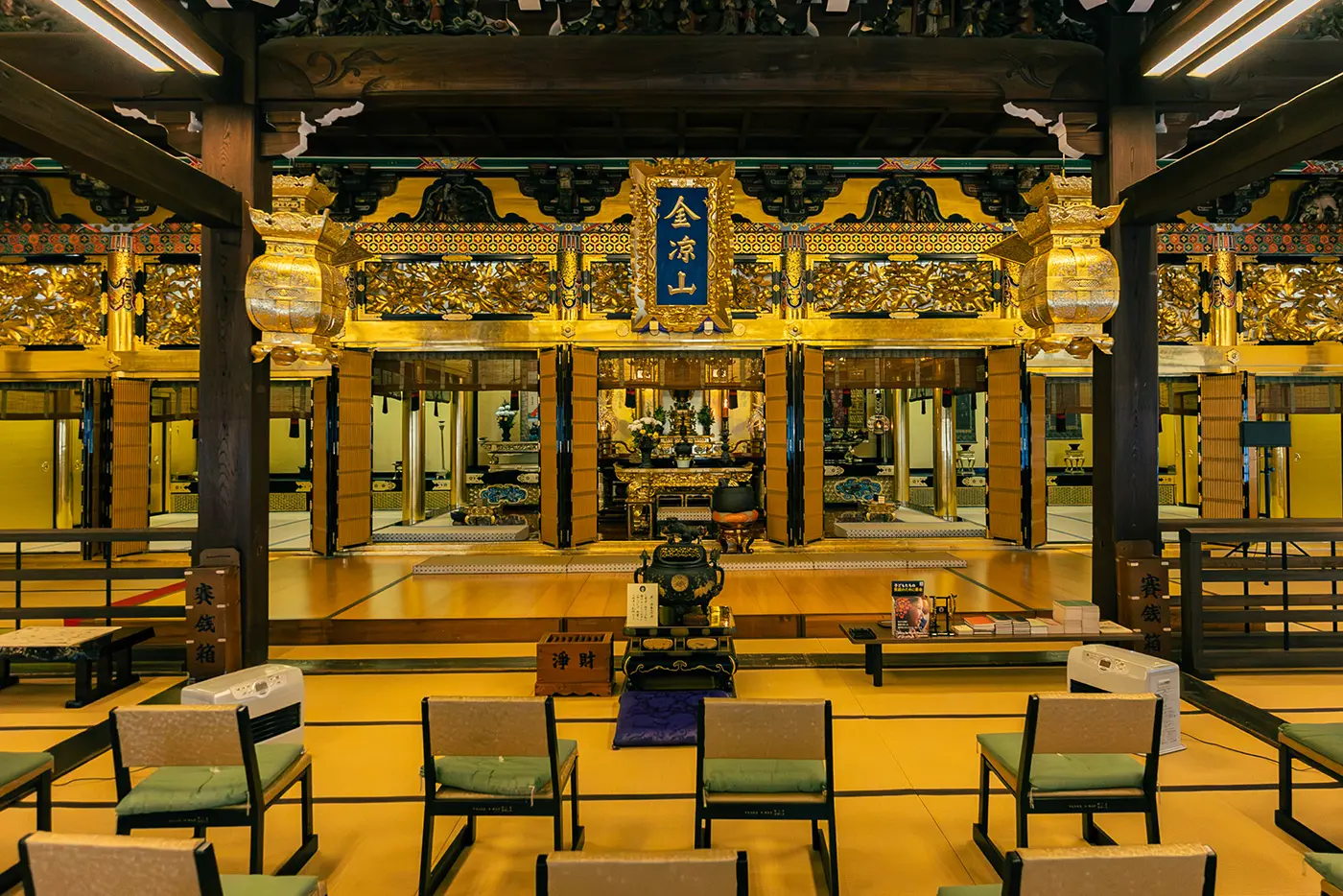
Enter the main hall, which is usually closed to the public. Enjoy the magnificent art.
This time, we were given special permission to tour the inside of the main hall.
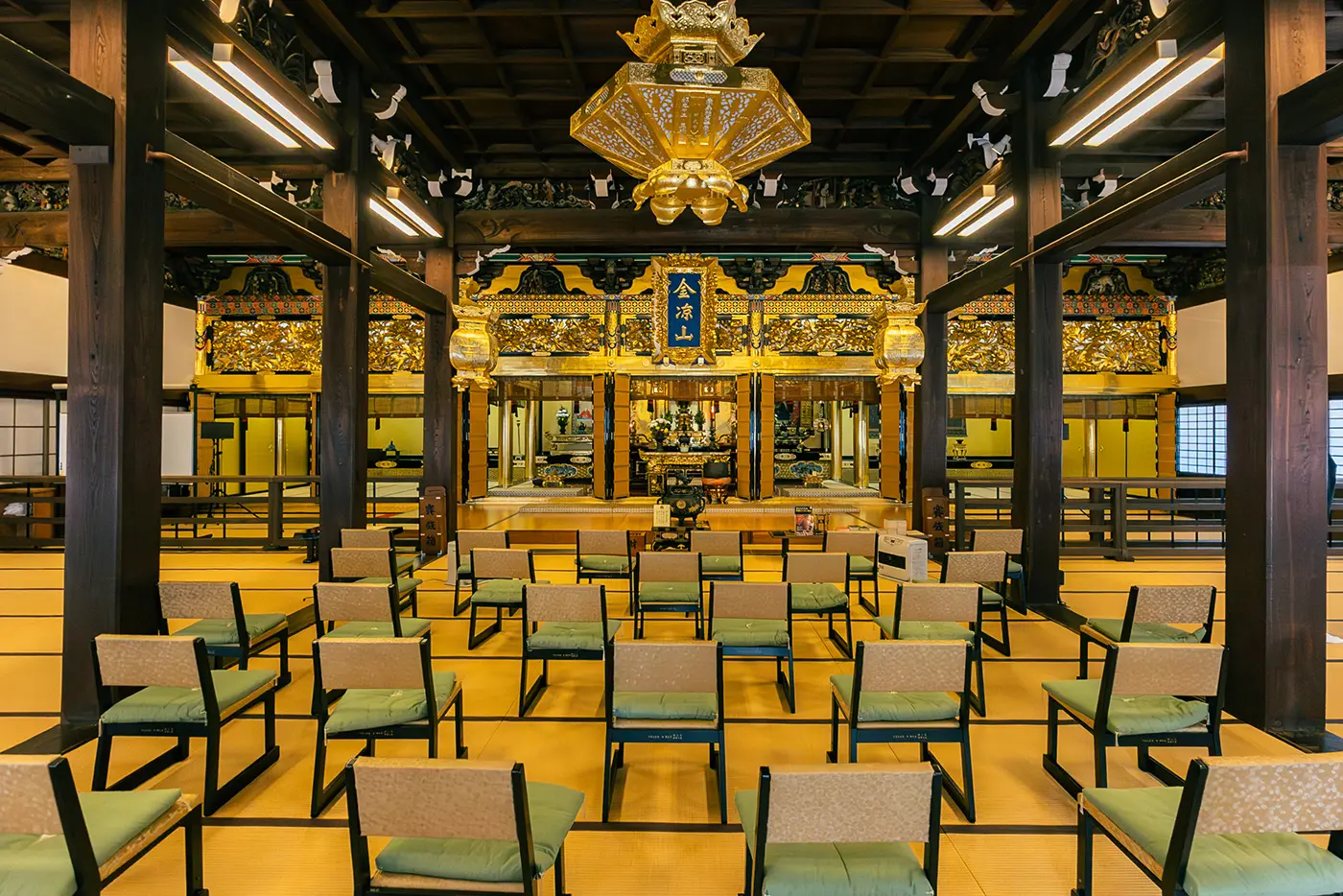
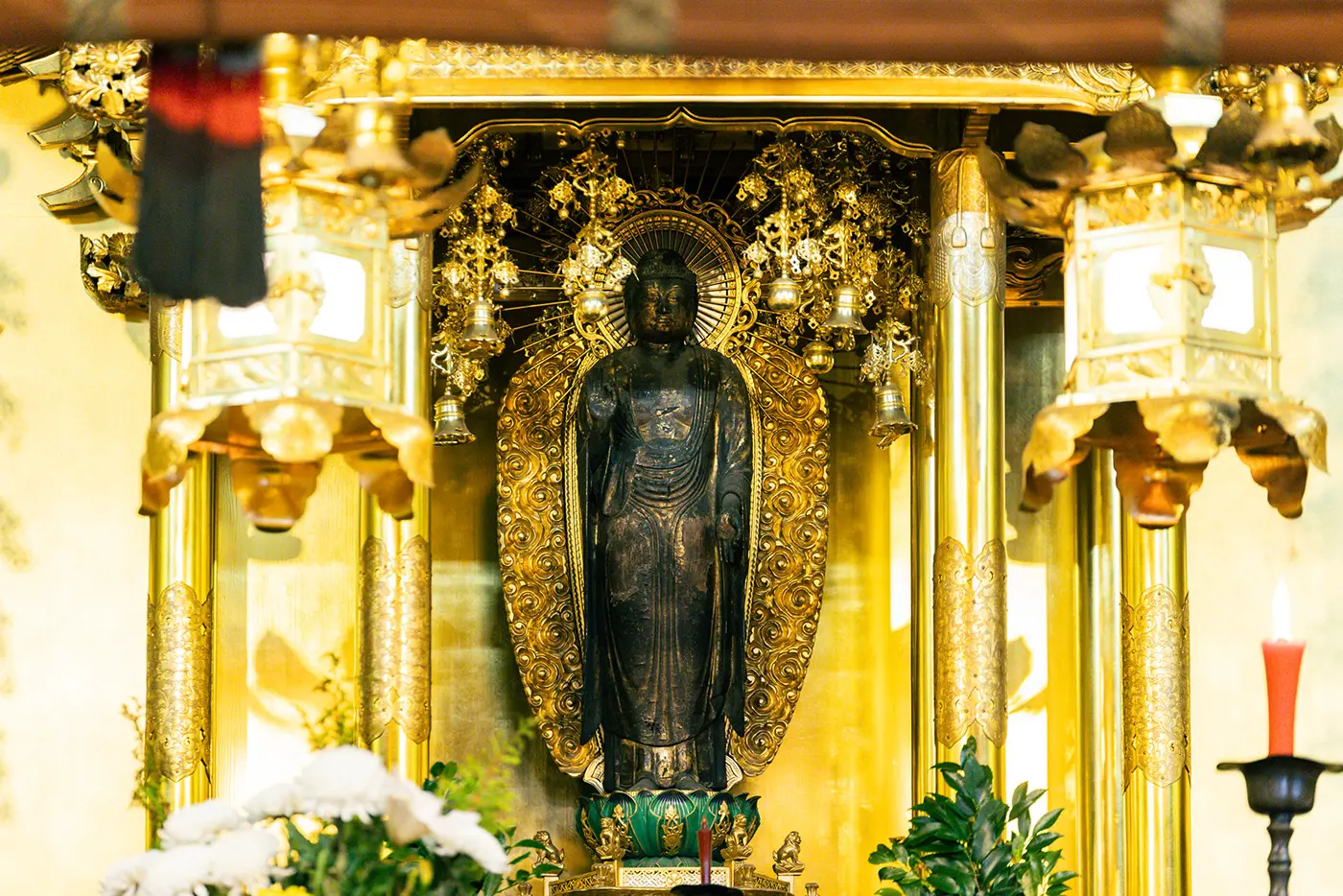
Lucile:
The inside of the building is gorgeous and full of color. It has a very different image from the outside, where there is a lot of dark wood and roof tiles.
Bokuhan:
The interior of the main hall is divided into two large spaces, and the space we are in now is the worshipper's space. The principal image of the temple, Amida Buddha, is enshrined in a raised space at the back. Because it is a sacred place, it is decorated with majestic ornaments such as gold leaf.
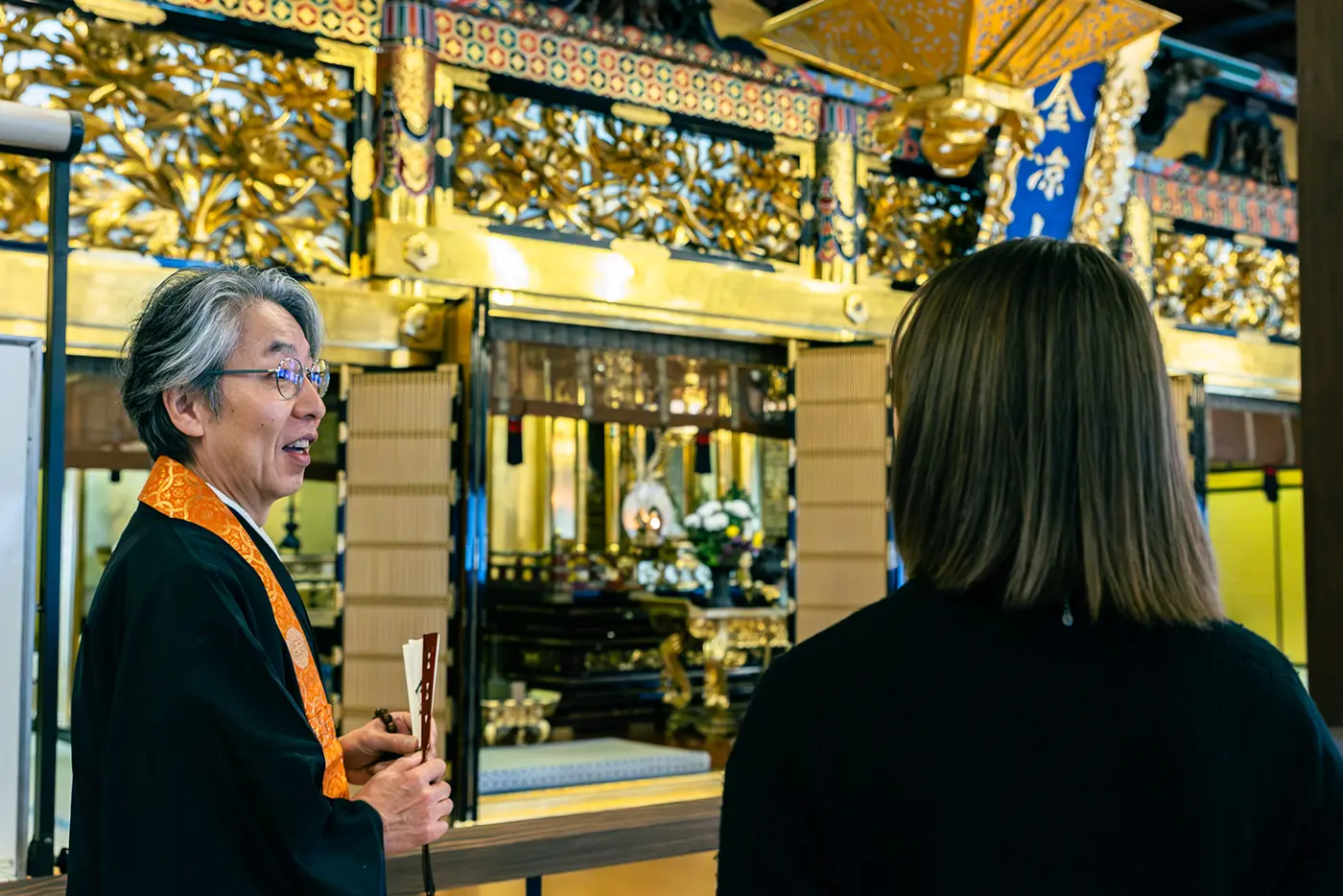
Lucile:
Does the "Namu Amida Butsu" we just chanted also refer to Amida Buddha?
Bokuhan:
That's right! Namu Amida Butsu means "I entrust everything to Amida Buddha." It represents the essence of the teaching of "original vows and other power," entrusting everything to Amida and seeking salvation. Instead of praying with a wish in mind, chant it with a feeling of gratitude.
Lucile:
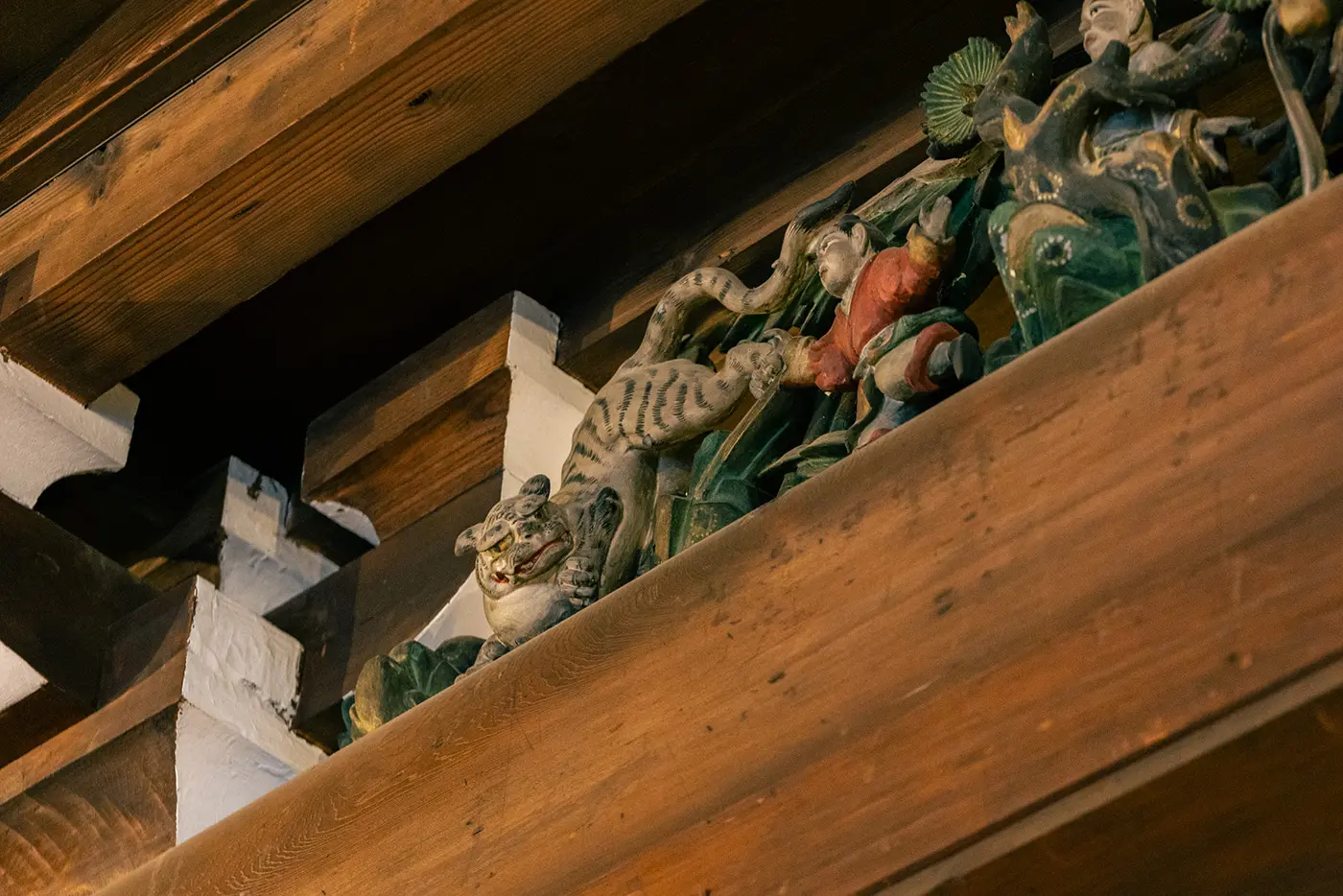
The idea of "leaving it to us" is unique, but it also seems to be connected to the humility of the Japanese. There are sculptures of people inside the room. Is this a Buddhist teaching?
Bokuhan:
No, these are based on the ancient Chinese book "Twenty-Four Filial Piety." It features 24 people who were particularly filial to their parents, and they are often seen in temple decorations. However, a temple that has all 24 sculptures is quite rare even nationwide.
Visit the registered cultural properties remaining in Kaizuka Jinaicho and walk along the cobblestone streets
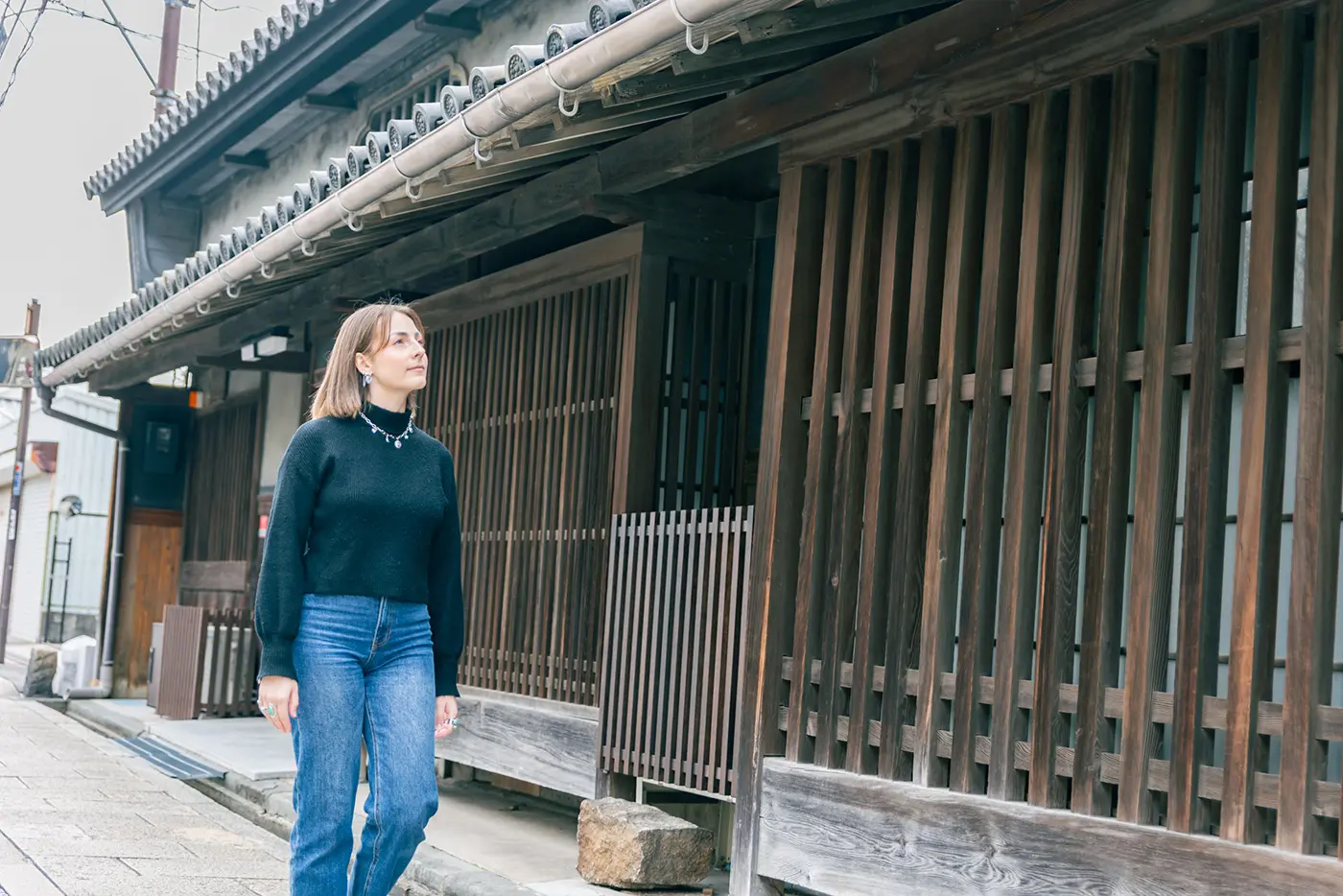
Leaving Gansenji behind, we strolled through the surrounding Kaizuka Jinaicho. Old townhouses line the stone-paved streets, creating an atmosphere that makes you feel as if you have traveled back in time.
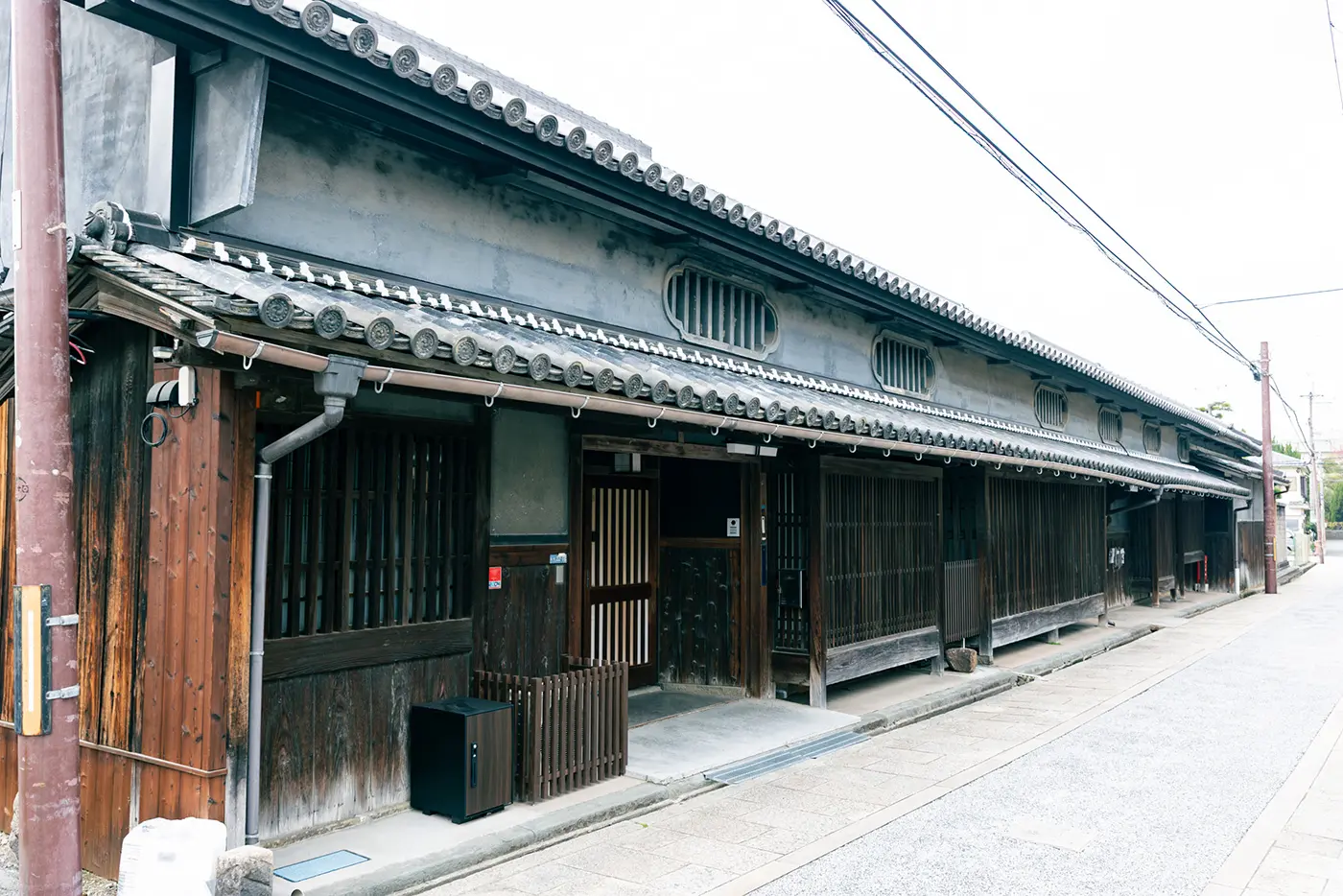
Kaizuka Jinaicho is dotted with townhouses that are registered cultural properties. Among them, the Hiromike Residence is a building from the late Edo period that gives a glimpse into the prosperity of the shipping wholesaler. It is characterized by its wide frontage, which is over 30 meters. The main interior is usually not open to the public, but music events and other events are occasionally held there.
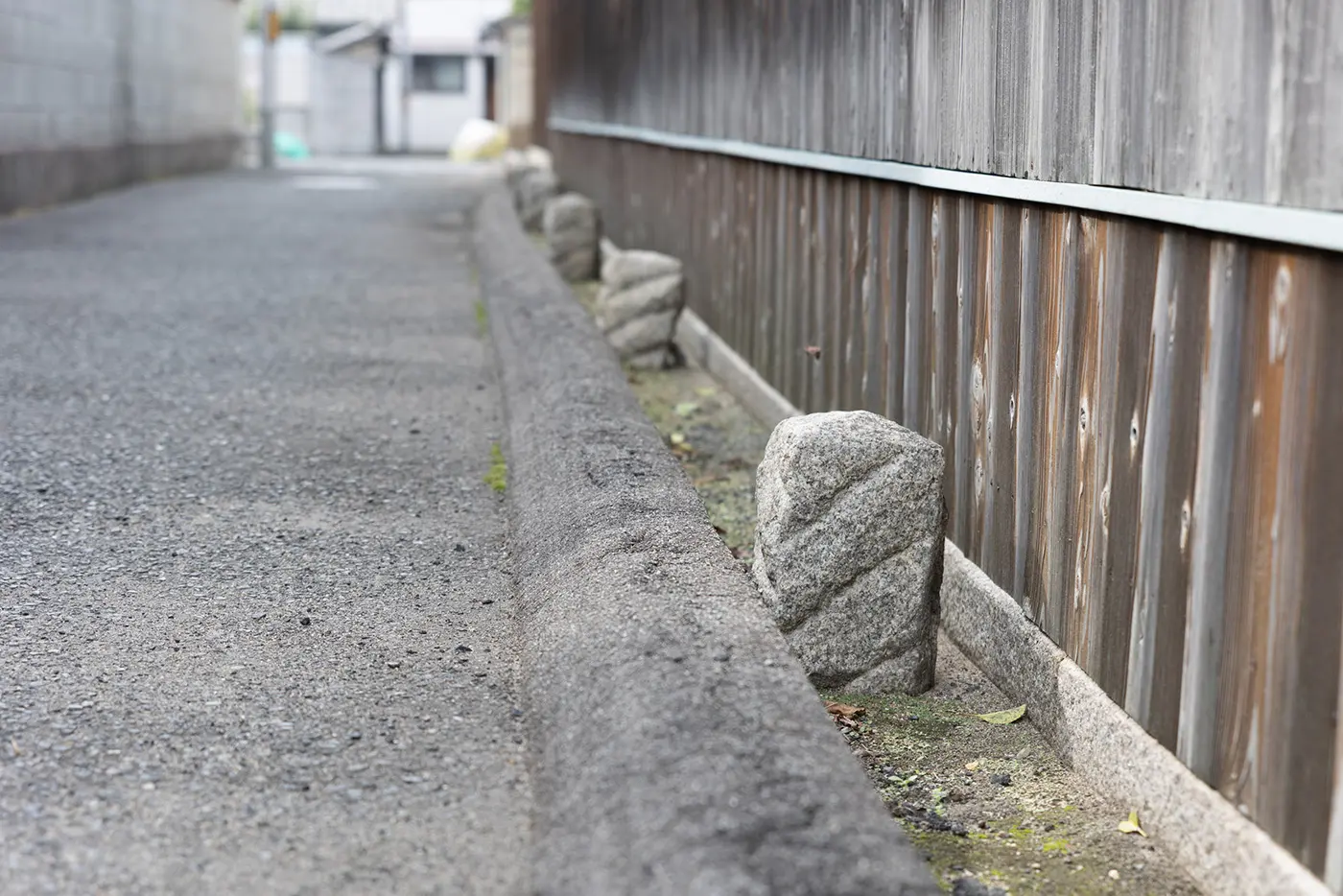
There is a stone next to the building where visitors can tie up their horses.
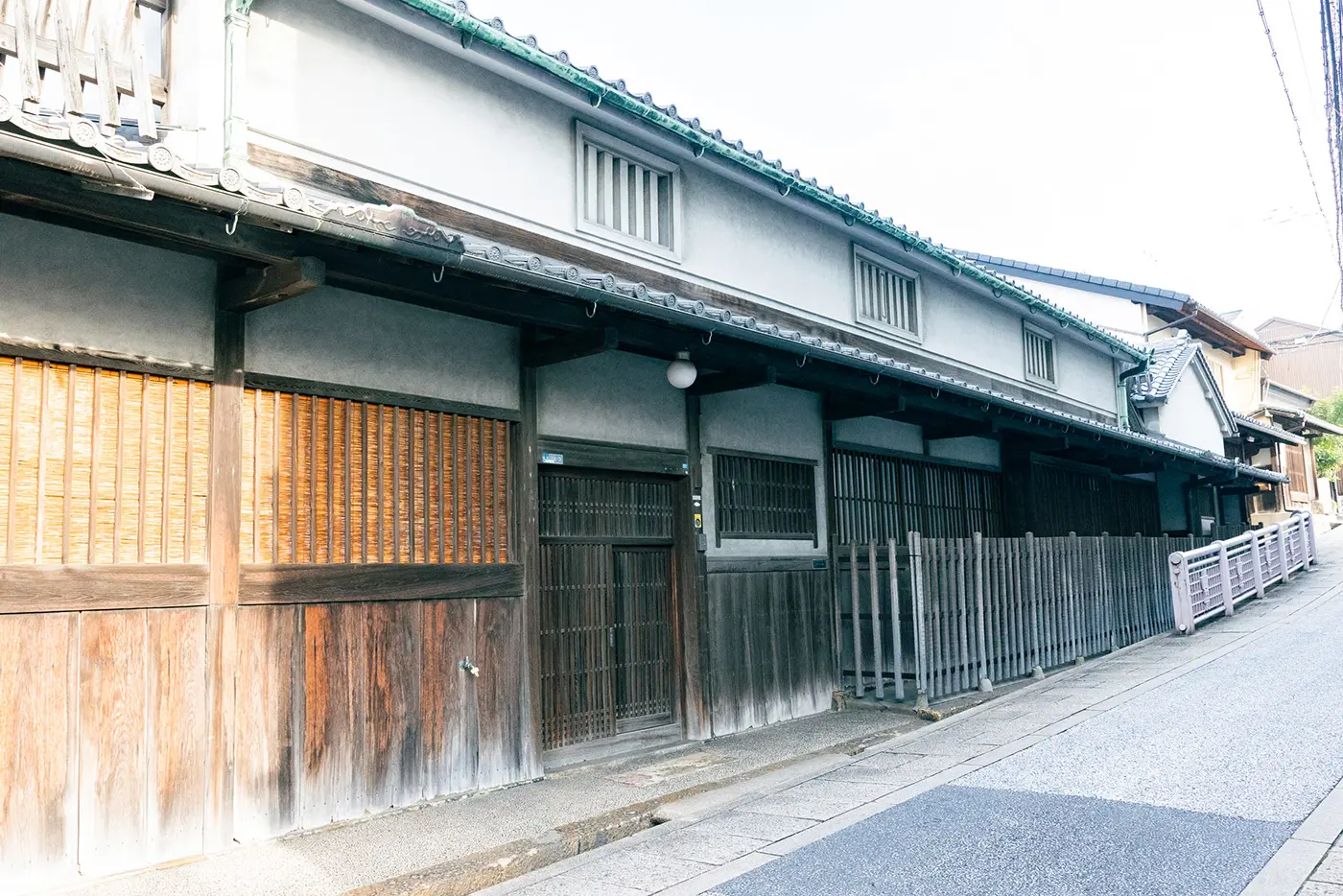
Next, we visited the Risai Residence, whose main house is even older, having been built in the mid-Edo period. It is said to be the oldest remaining townhouse in Kaizuka Jinaicho. For generations, the family has run a drug wholesaler dealing in herbal medicines.
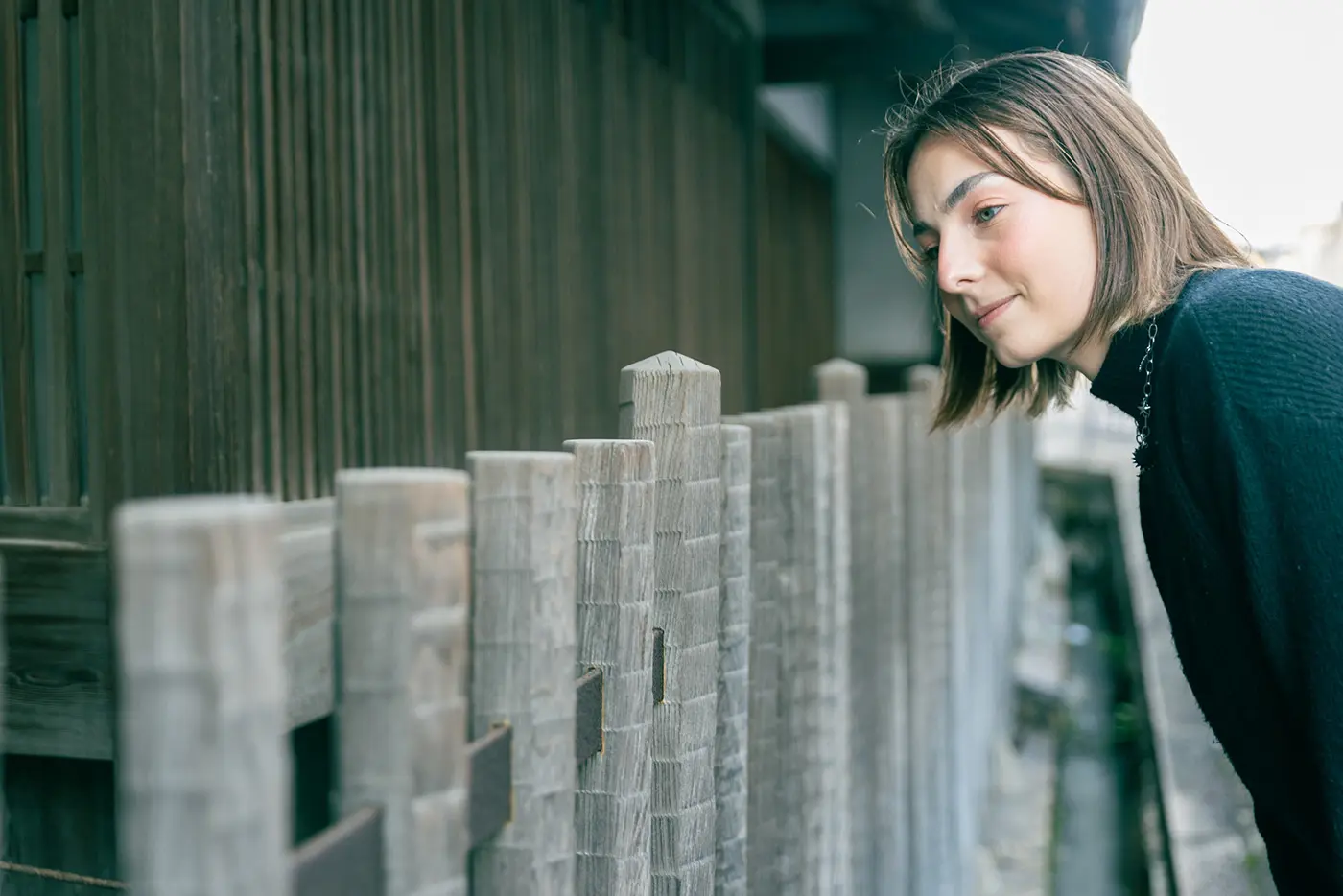
The Risai family home has a fence called a "komayose." It marks the boundary between the road and the property and protects the building from dirt. It is characterized by a finishing technique called "naguri," which uses a traditional tool to create unevenness in the materials, and Lucile was very interested in this.
*These townhouses, which are registered as tangible cultural properties, are still inhabited by their owners, and the interiors are not open to the public. Please observe good manners when visiting the town.
Take home the gentle-tasting "Murasame" confectionery, a representative Kaizuka treat.
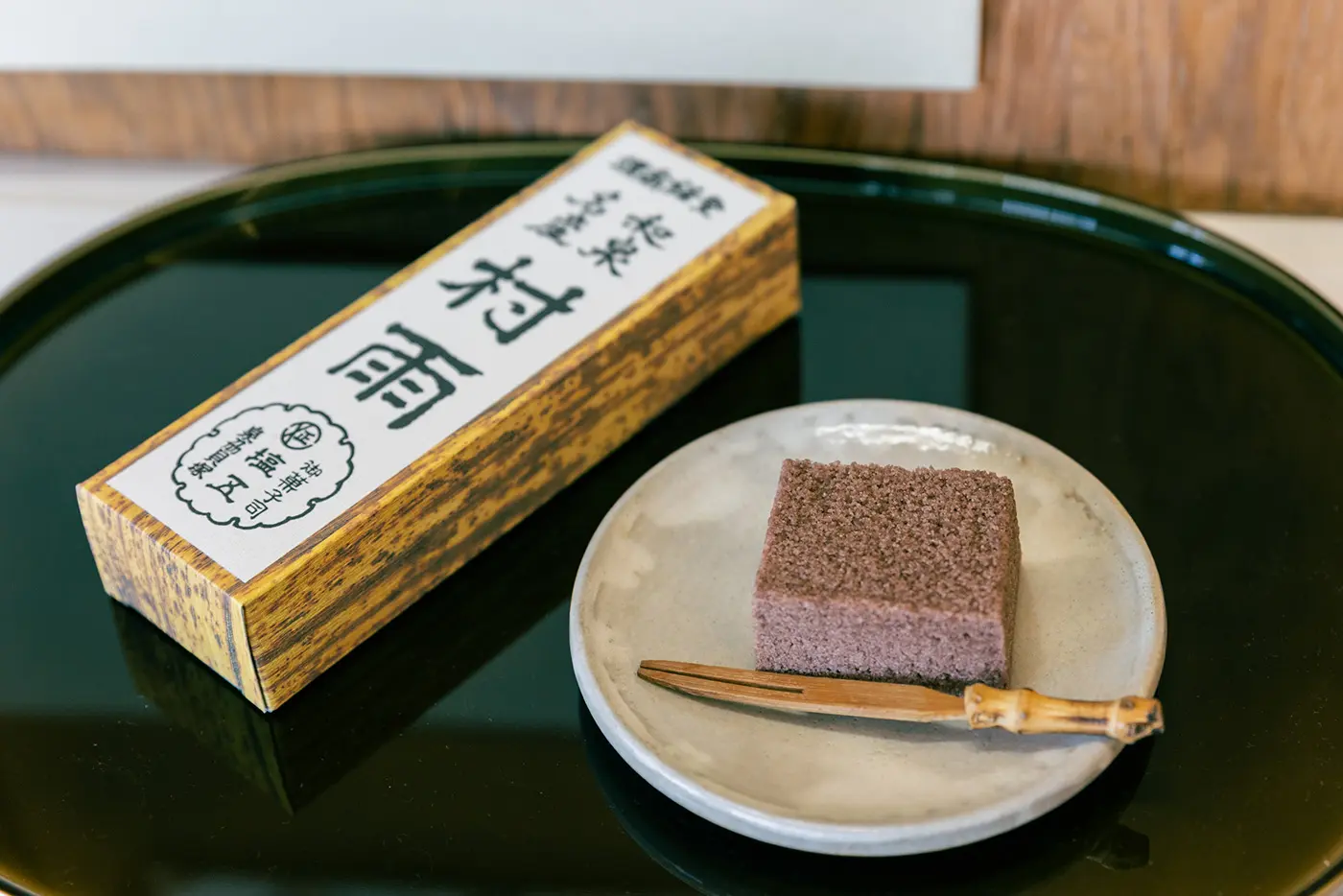
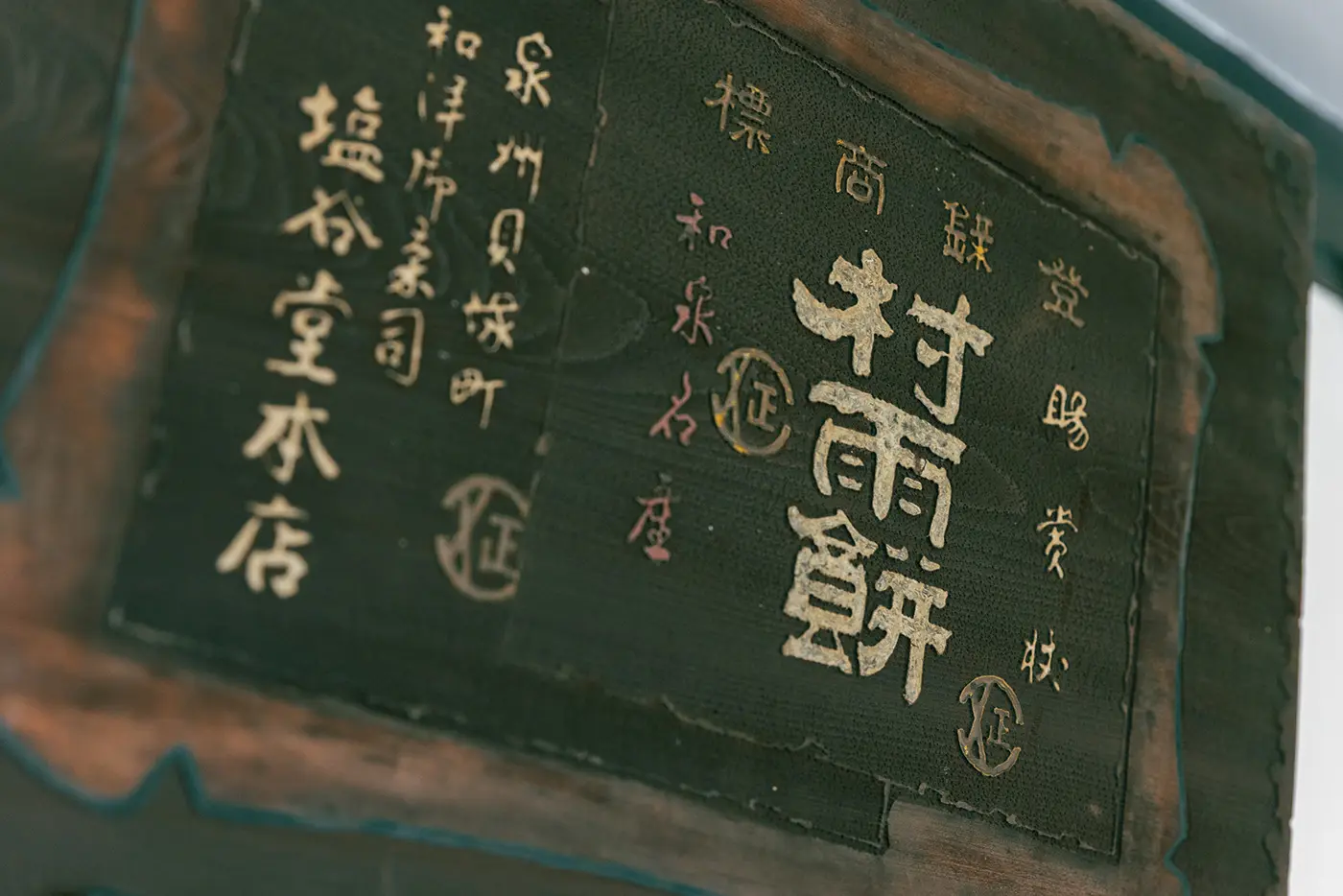
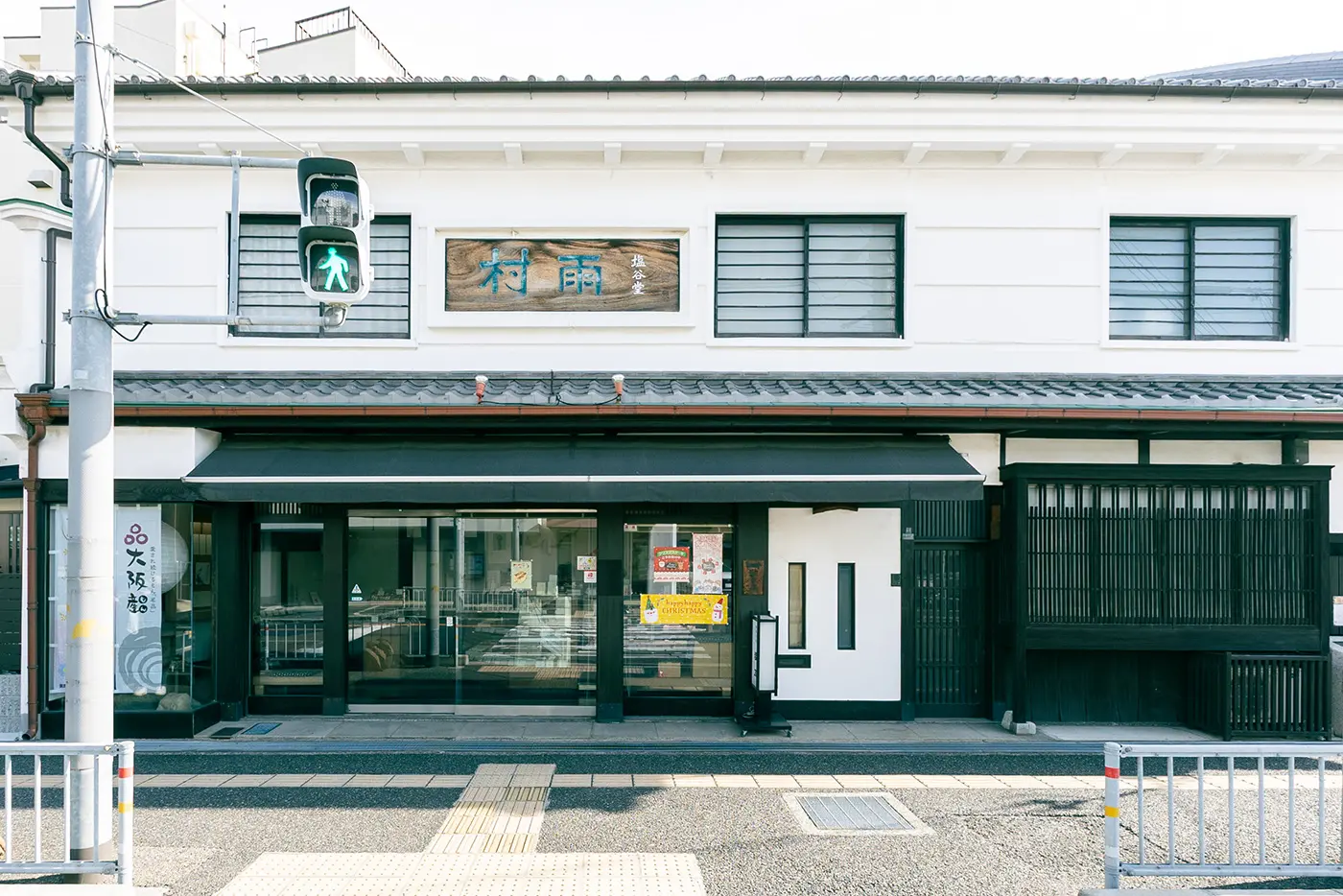
Nearby is Shiogo, a confectionery shop founded at the end of the Edo period. Its signature product is the traditional steamed confectionery Murasame.
This fresh confectionery is made by mixing red beans, rice flour, and sugar into a crumbly consistency and steaming it, and is characterized by its light texture and chewy mouthfeel.
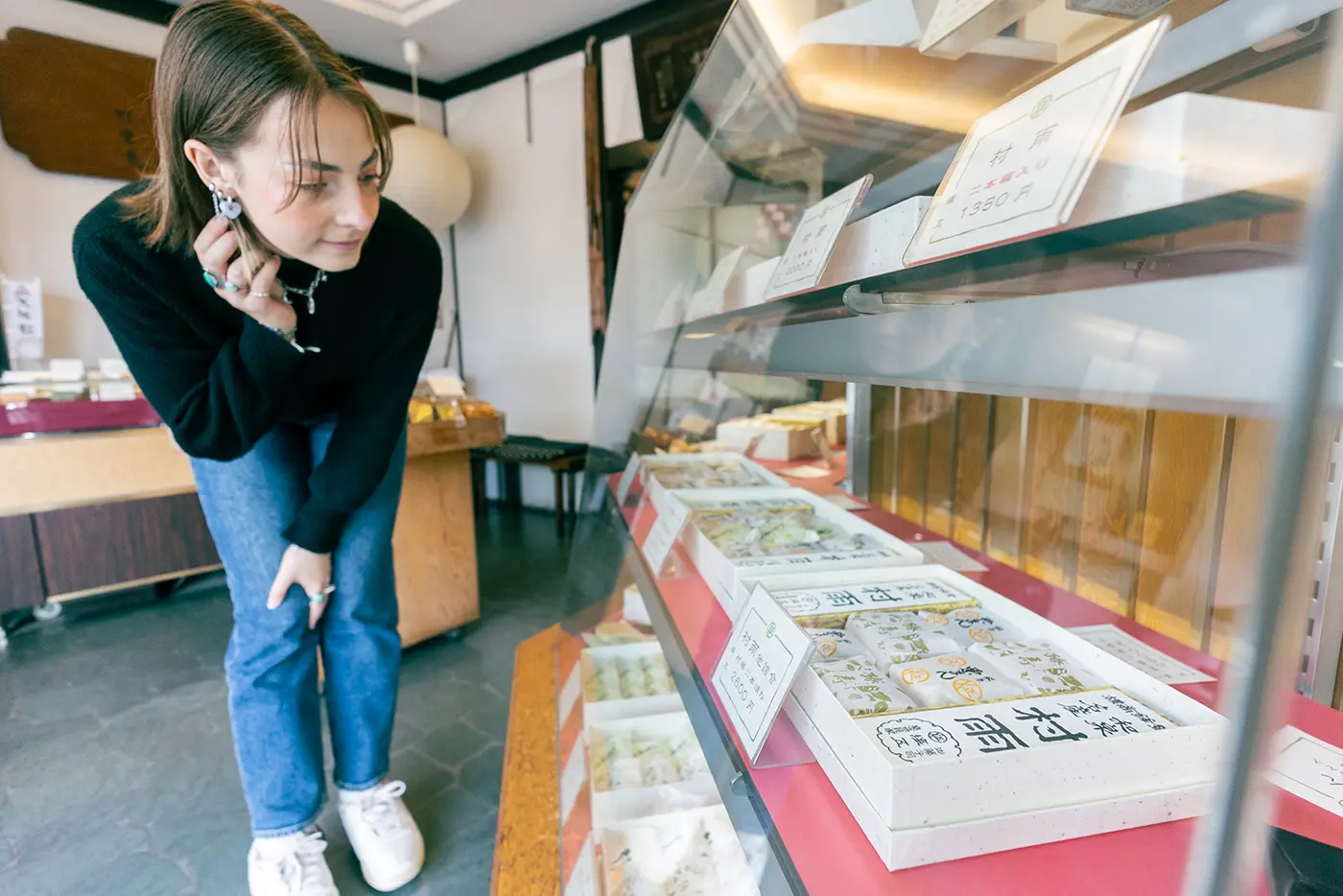
There are many set products lined up in the display case. Lucile peers into the display case and says, "The traditional packaging is cute."
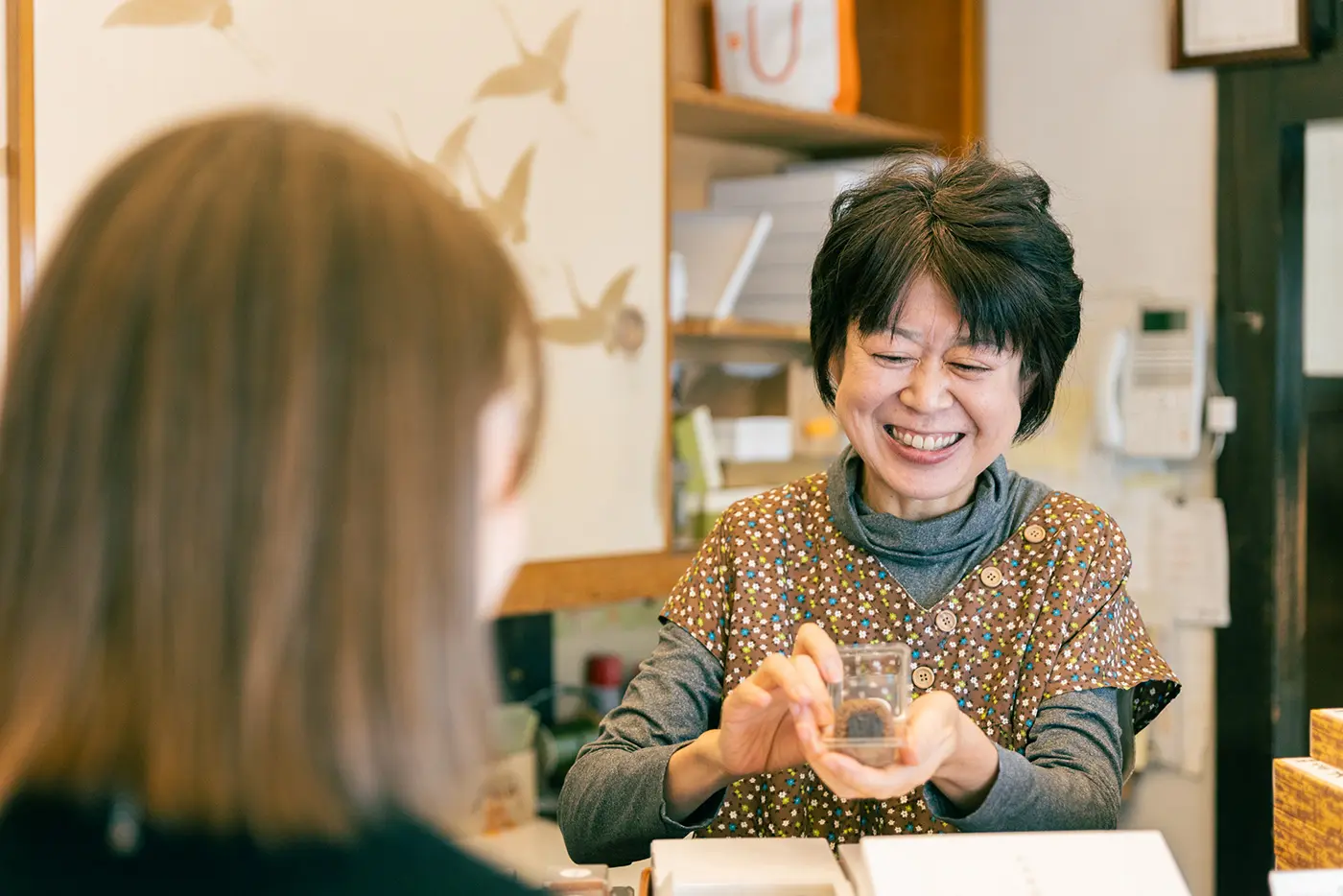
"Murasame only uses three ingredients. The recipe is simple, so we are particular about making it carefully and using the best ingredients," a shop staff member told us. Another popular item is the "Murasame Manju," a sweet bean paste bun wrapped in murasame paste. It was apparently invented by the current owner, the sixth generation.
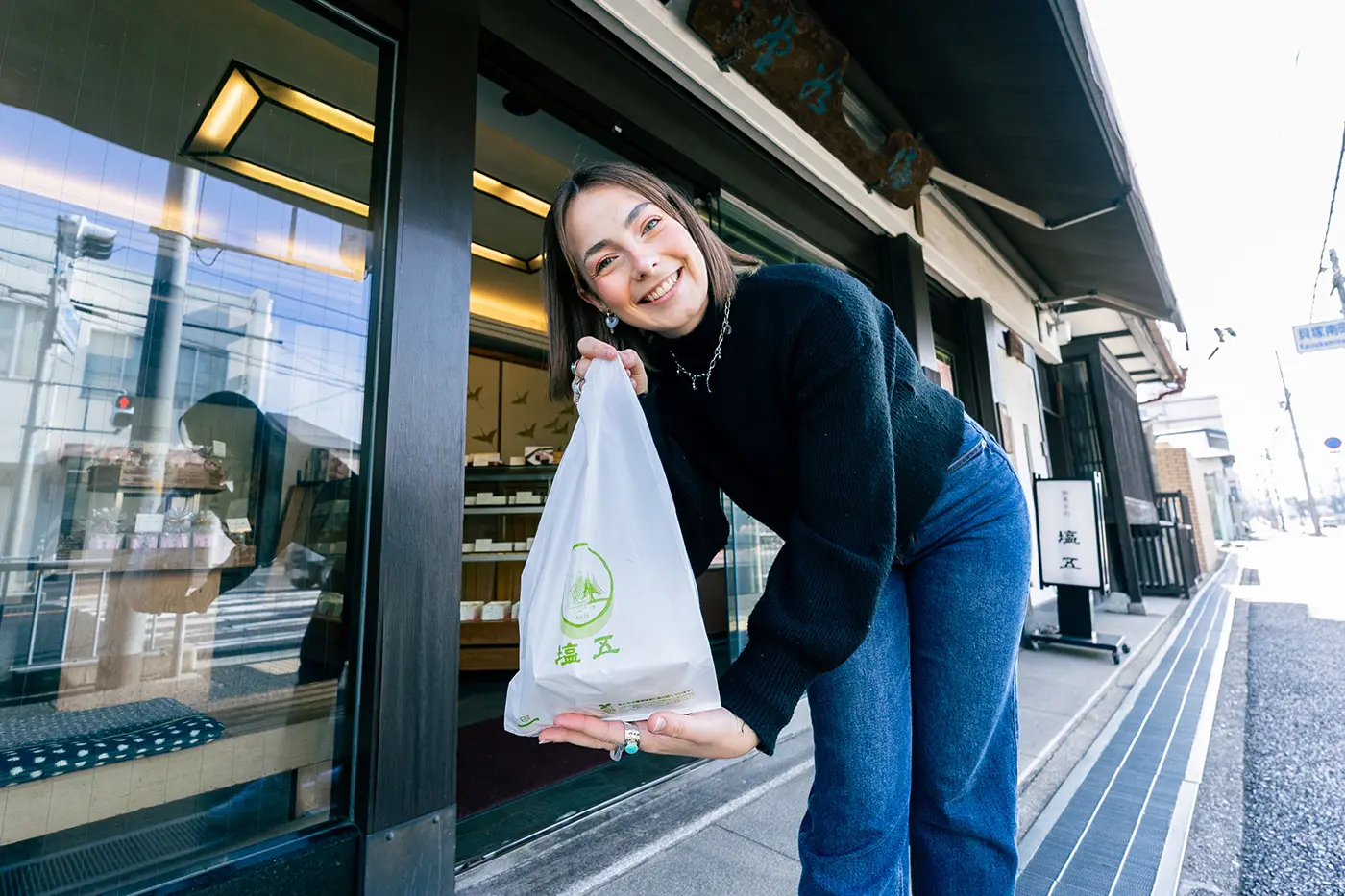
Murasame looks like a cake, but when I tried it, I was surprised at how moist it was. Perhaps because it uses limited ingredients, it has a simple yet elegant taste. Not only will you never get tired of it, but you'll probably want to eat it again and again! Another great thing about it is that it's gluten-free.
Have lunch in an area of renovated old houses lined with popular shops
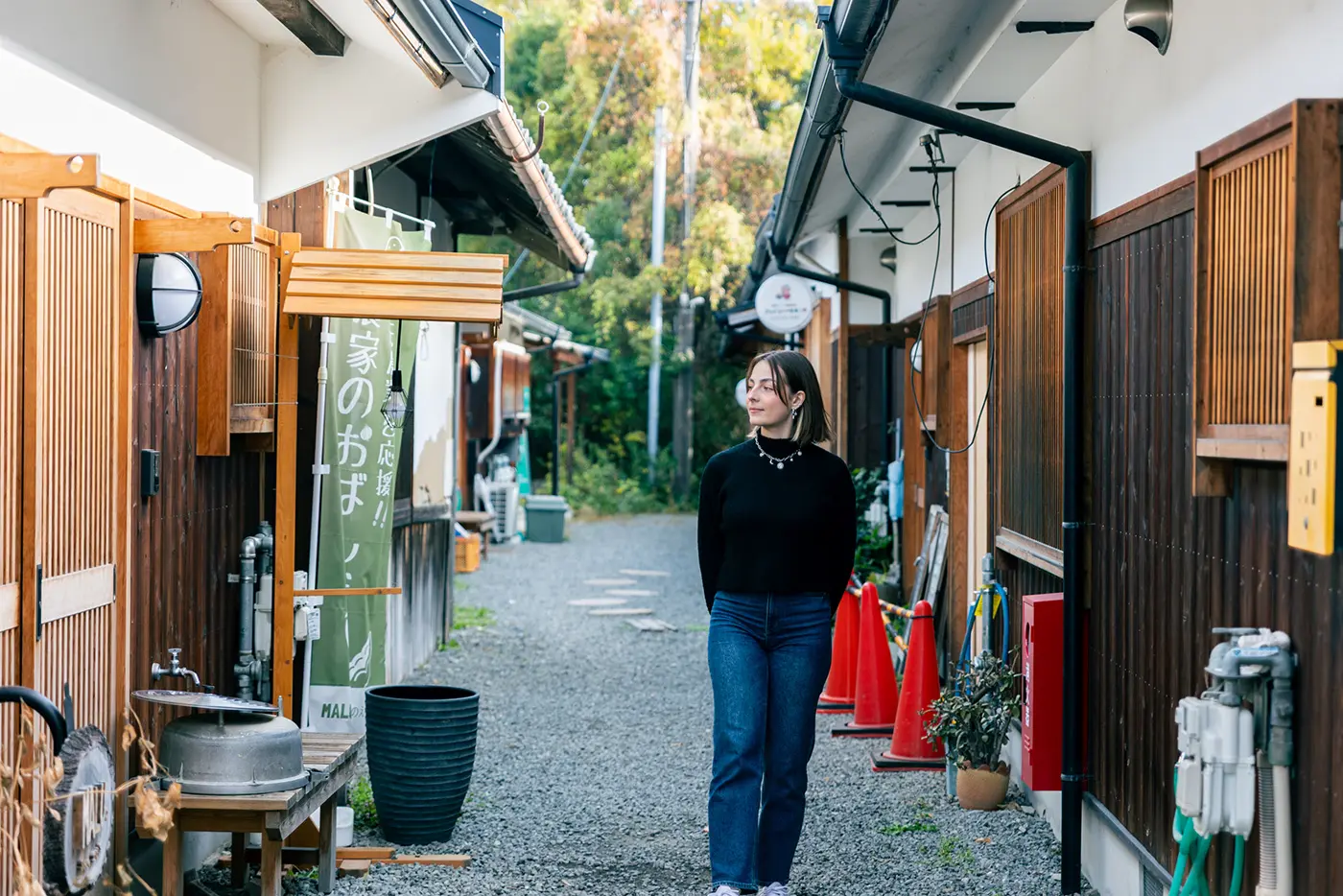
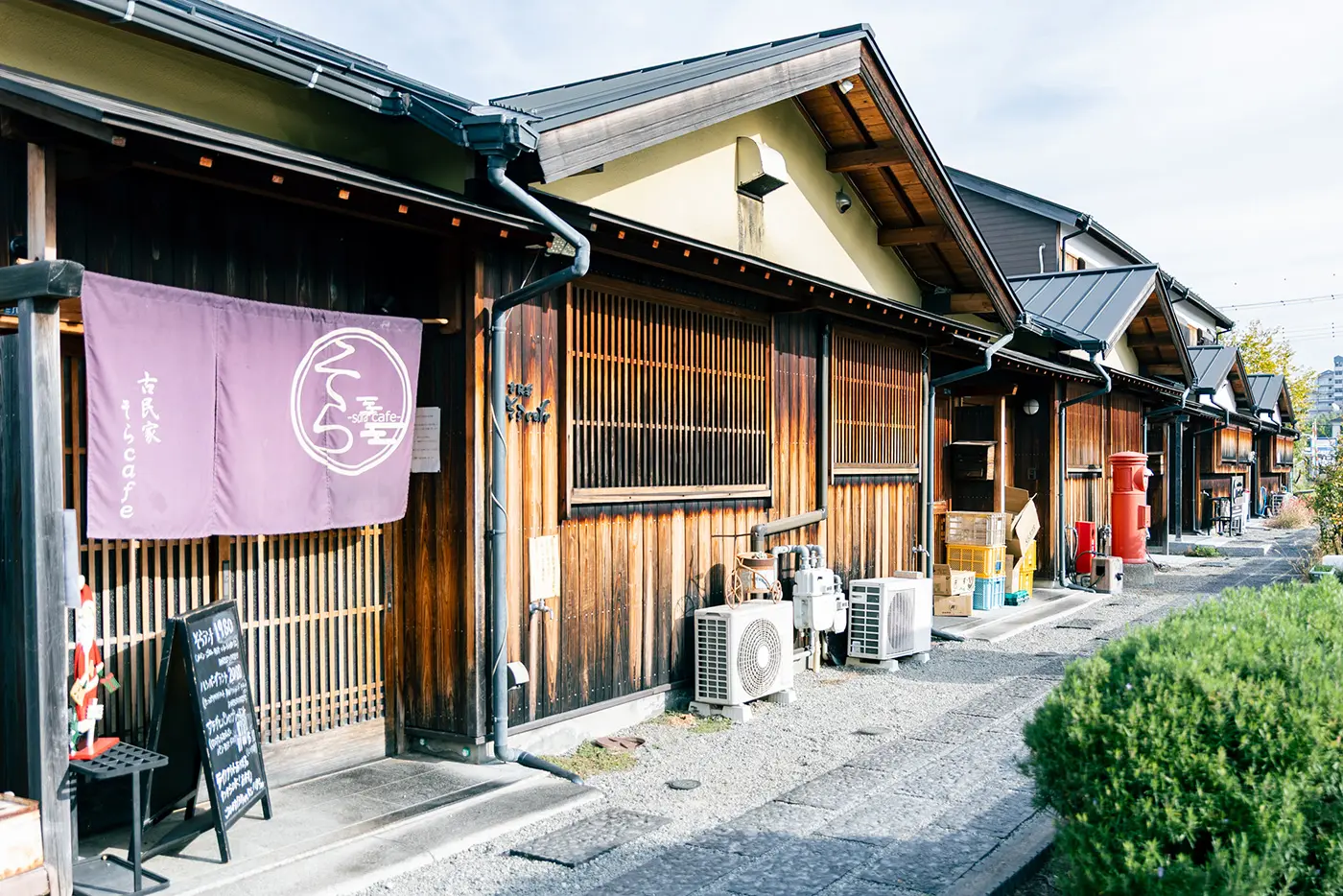
If you walk further southwest from Shiogo, you will come across a charming row house. It is located near the Terada Family Residence, a registered tangible cultural property, and because of its connection to the Terada zaibatsu, the area has been renamed the "Terada Family Row House" and is being used as both a store and a residence.
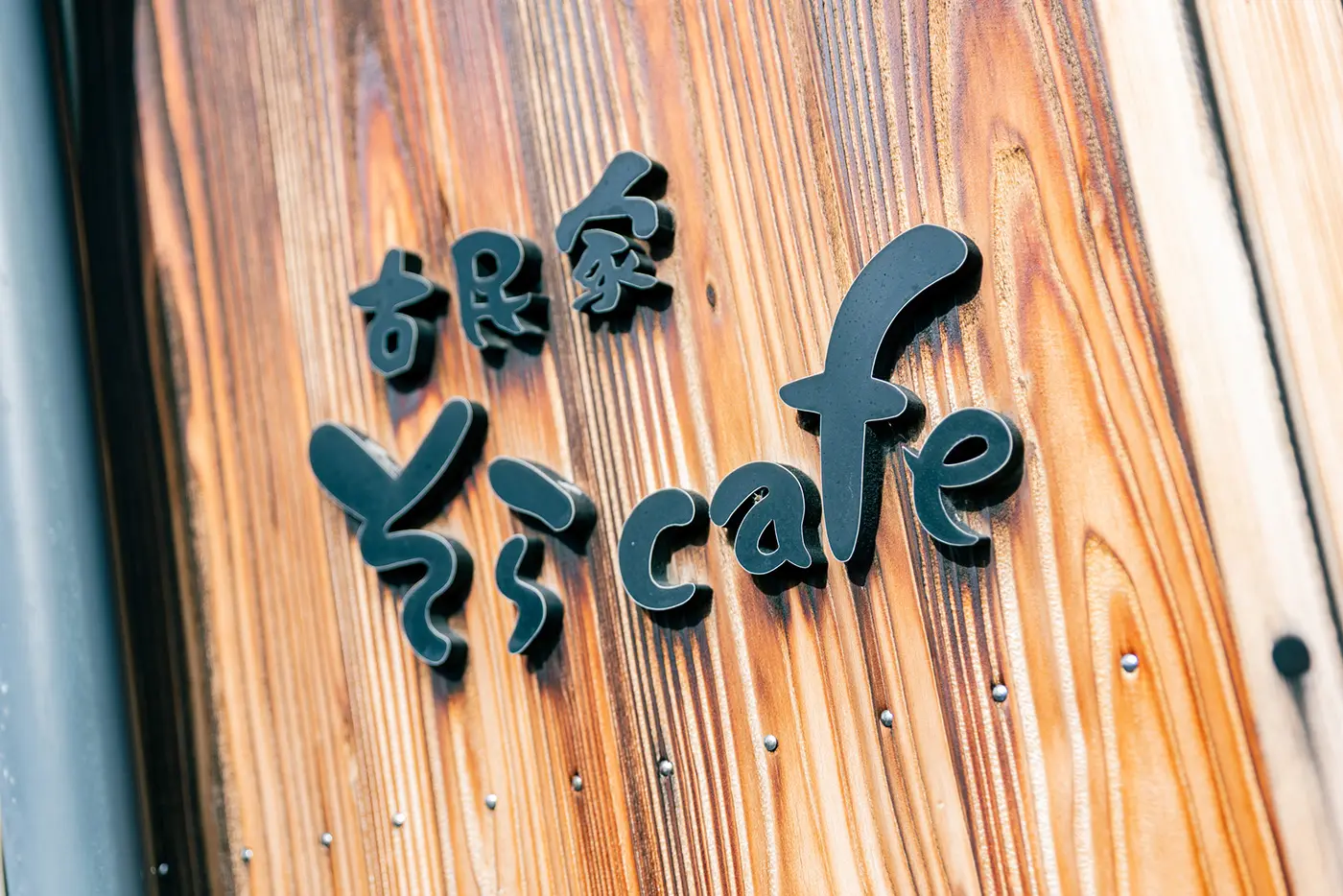
Kominka Sora Cafe was one of the first to open in this row house area, opening in 2012. It has an open space while making use of the traditional structure of a 70-year-old row house. Its menu features an abundance of local vegetables, and it is crowded with people even on weekdays.
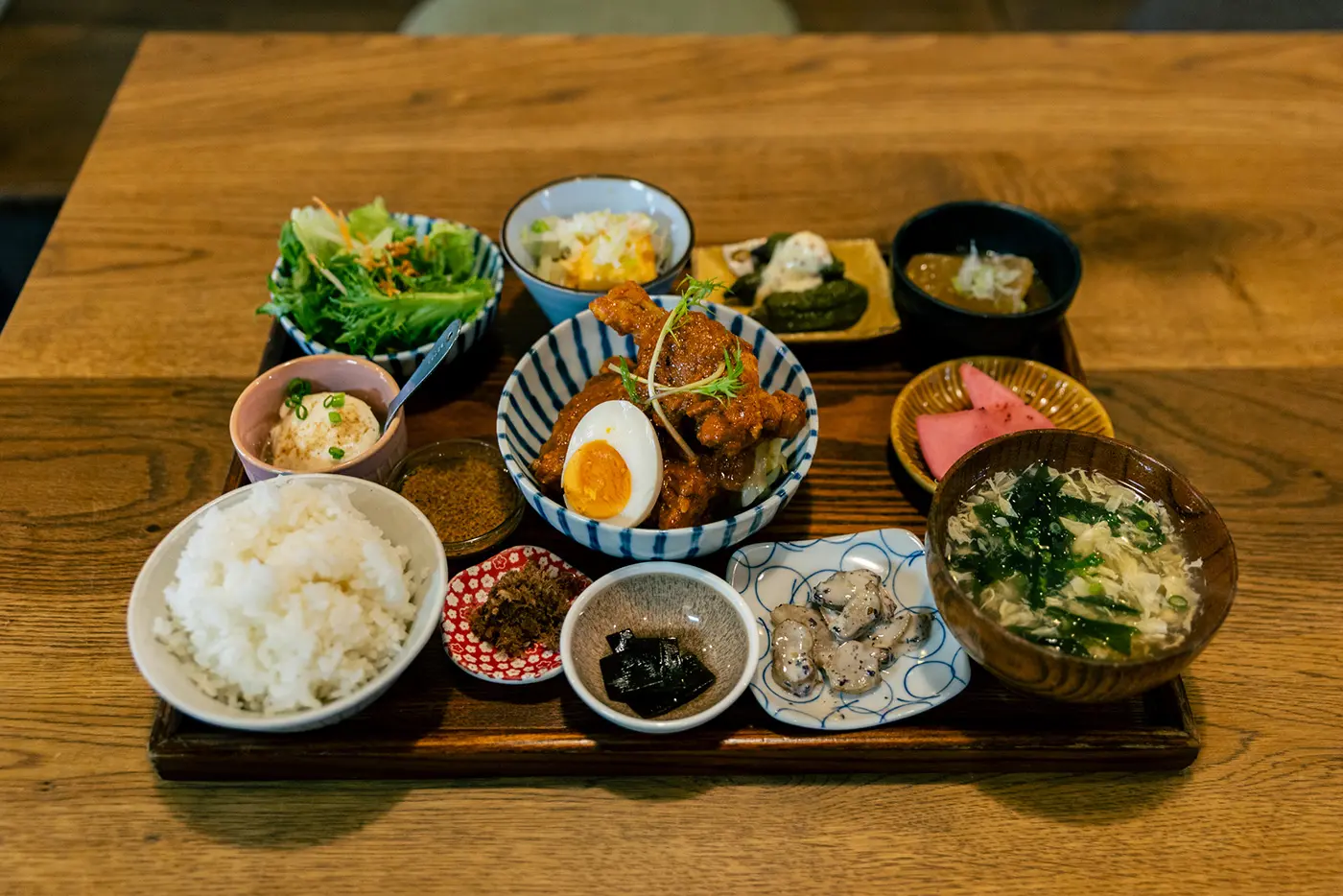
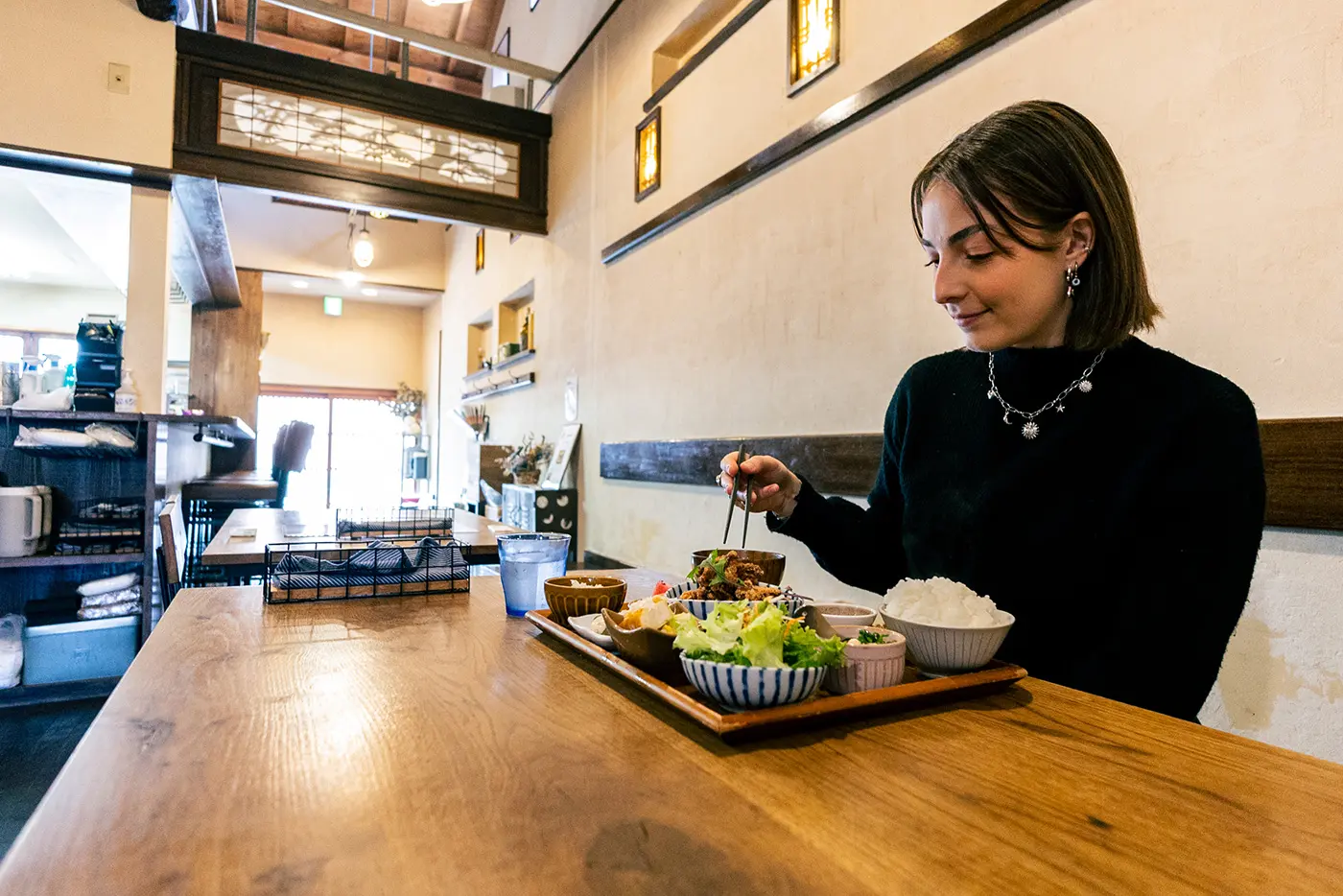
The food was beautifully presented, and I had a hard time deciding where to start (lol). There were lots of vegetables, and it was filling and very satisfying. The renovated space was lovely, while still retaining a Japanese feel. It's interesting that traditional Japanese apartment buildings stretch horizontally rather than vertically.
We also recommend the handmade soba noodles served in a renovated storehouse.
Another popular restaurant is "Teuchi Soba Sentaro," located in the same Terada family tenement house as Kominka Sora Cafe. They source the best buckwheat seeds for each season from all over the country, grind them themselves in-house, and hand-make the noodles. They have a wide selection of sake, so you can drink during the day too. They also have a wide variety of dishes other than soba.
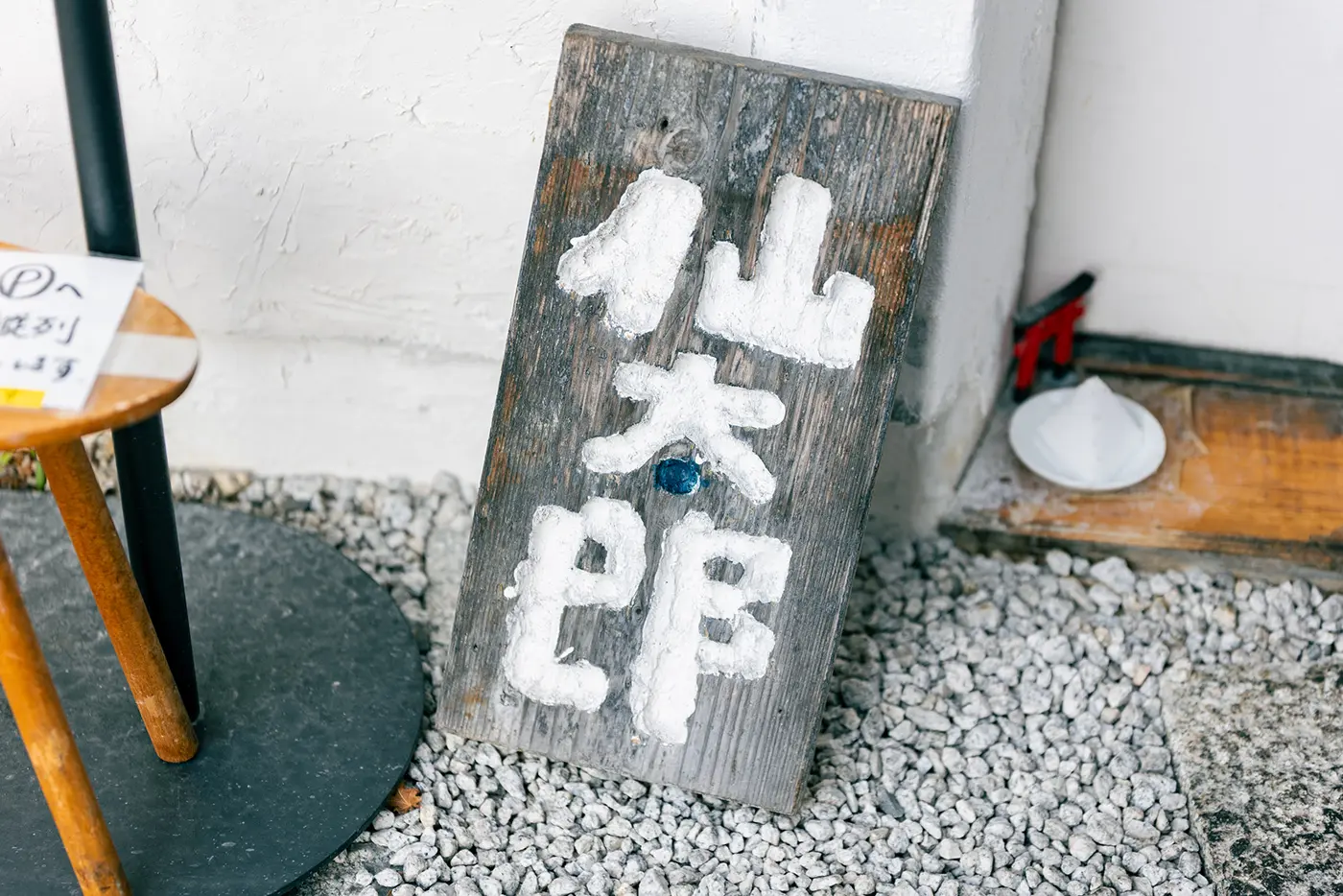
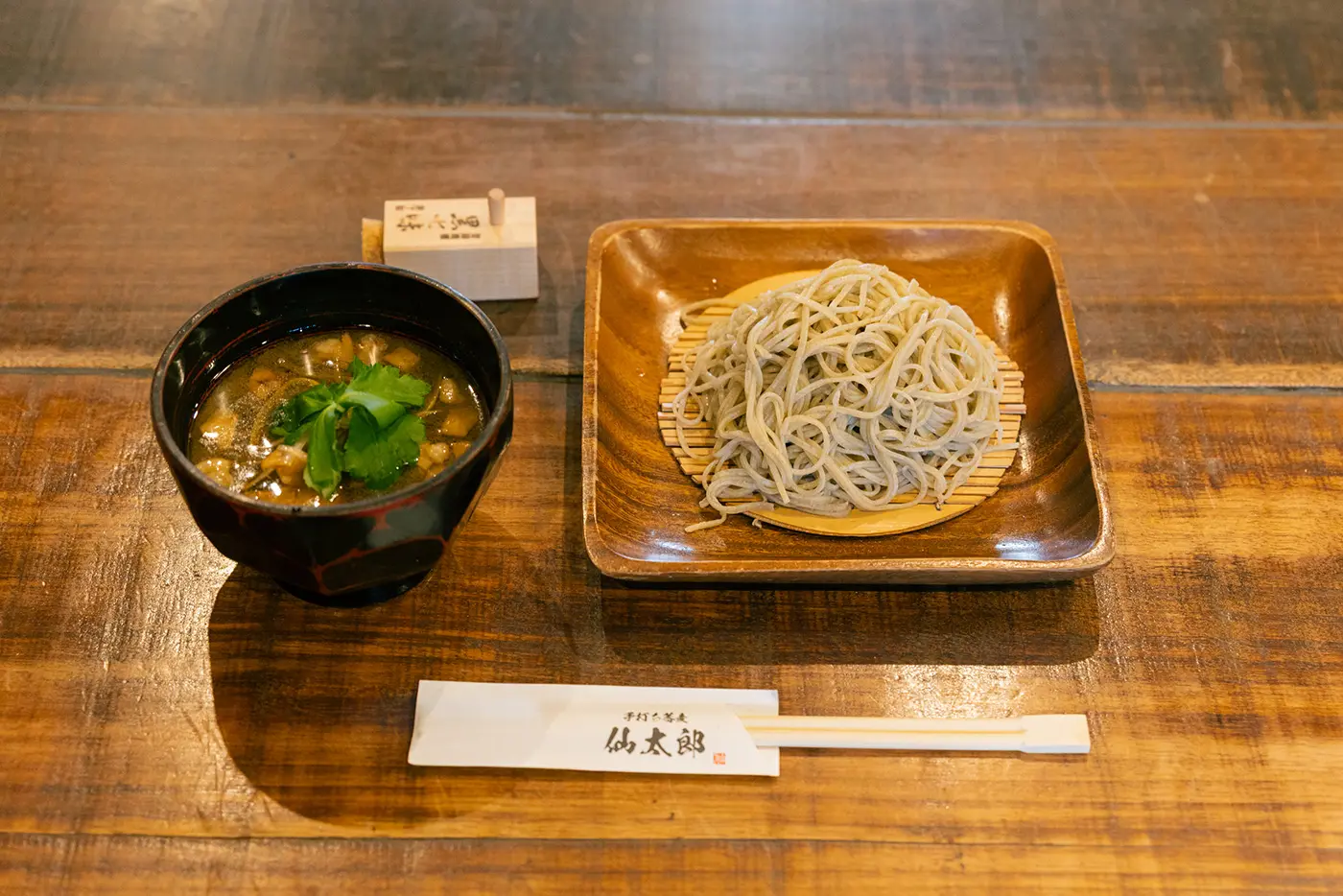
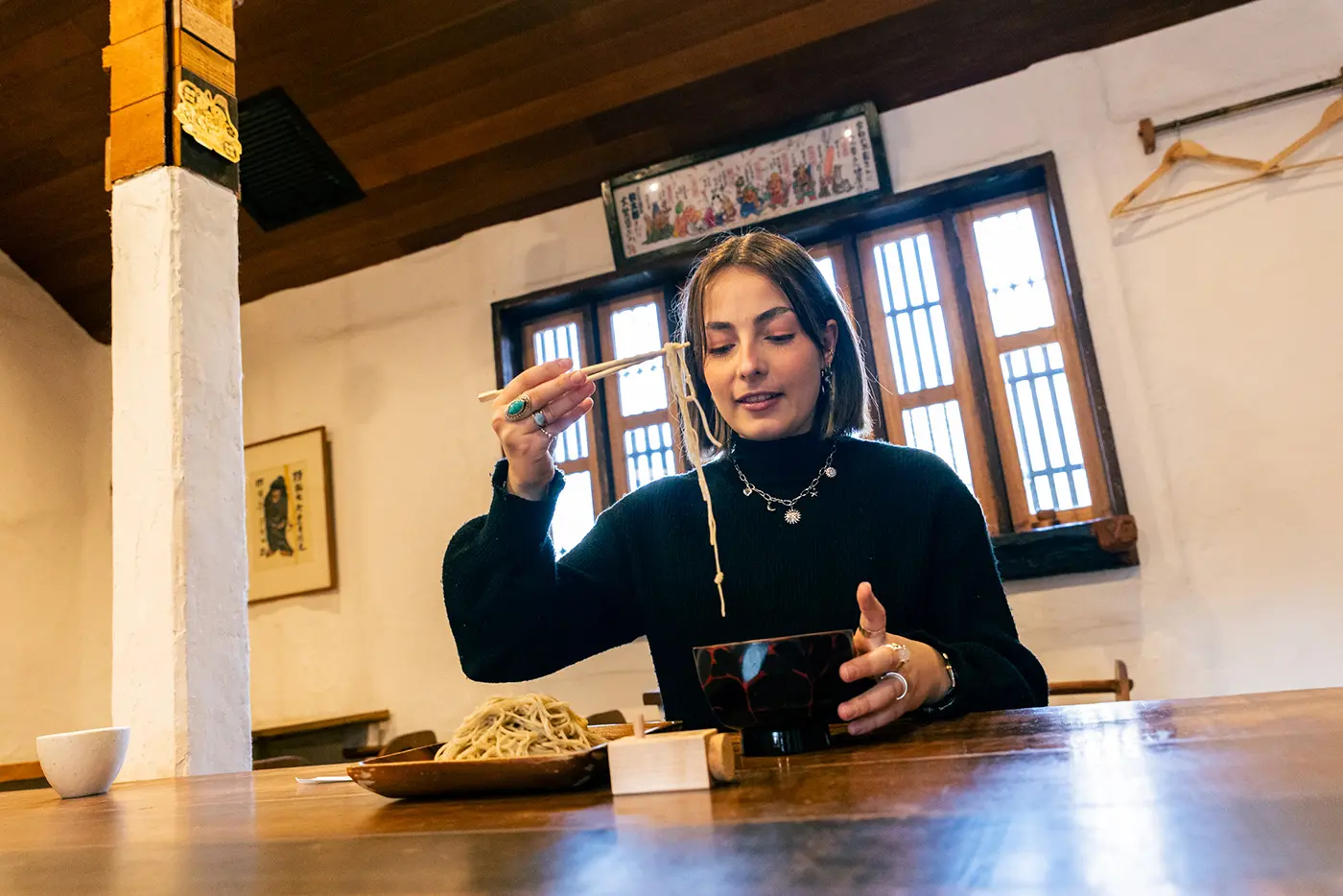
It's nice to be able to eat authentic soba noodles while walking around town. I was impressed by the rich flavor of the duck dipping sauce and the equally strong aroma of the soba noodles! I heard that the interior design here is based on a ship. Even restaurants in the same area have their own distinct personalities.
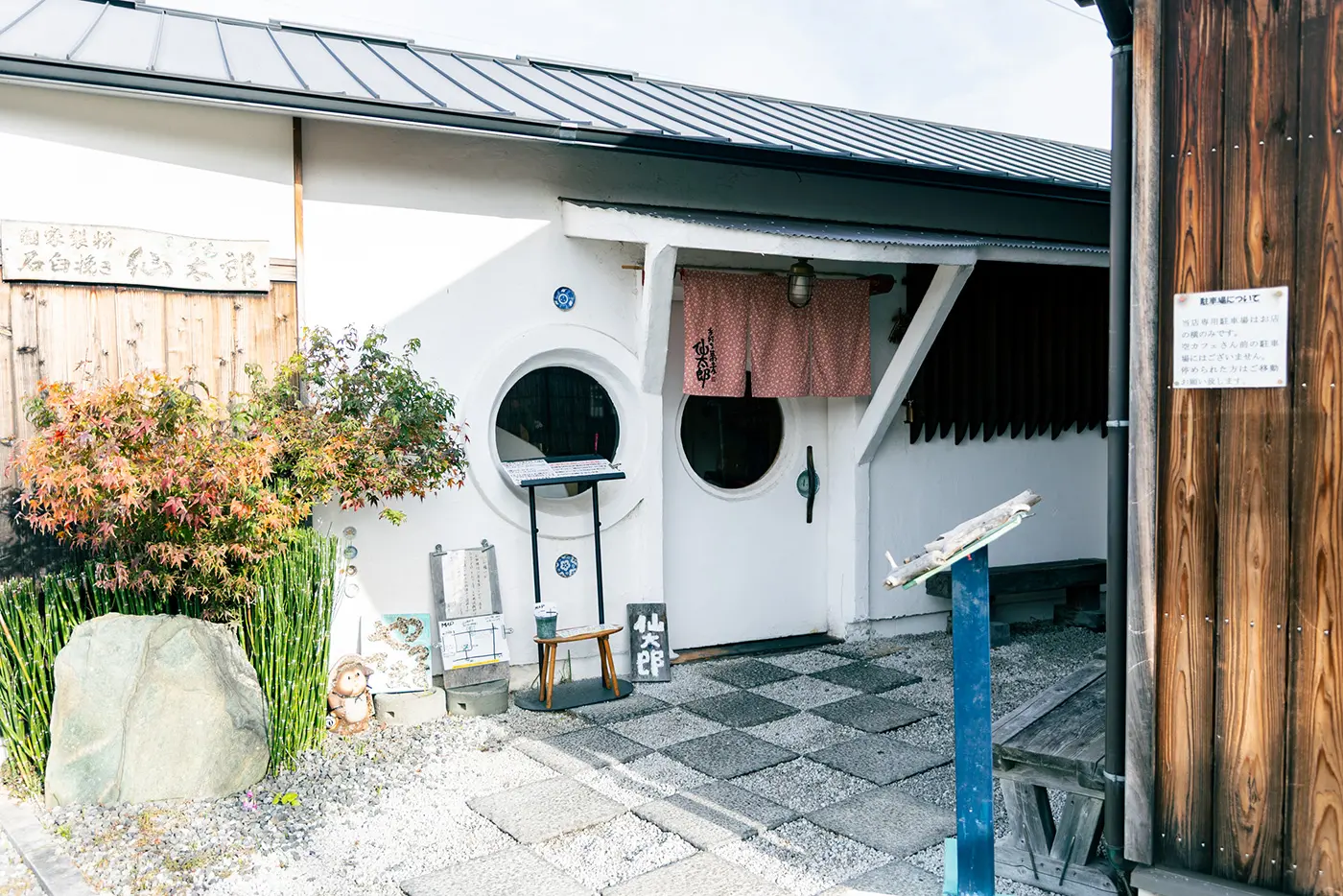
Relax with specialty coffee at this renovated tenement house cafe
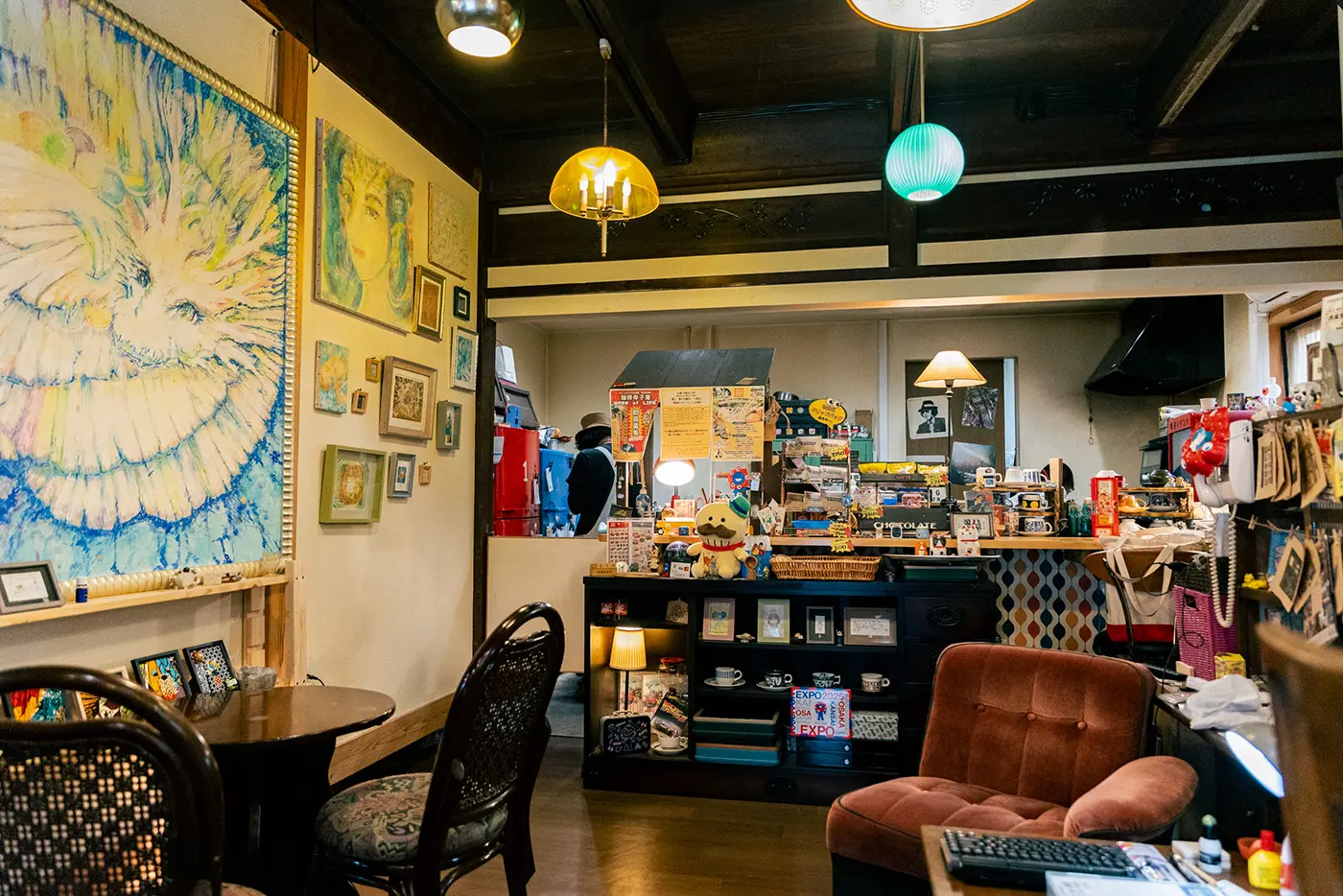
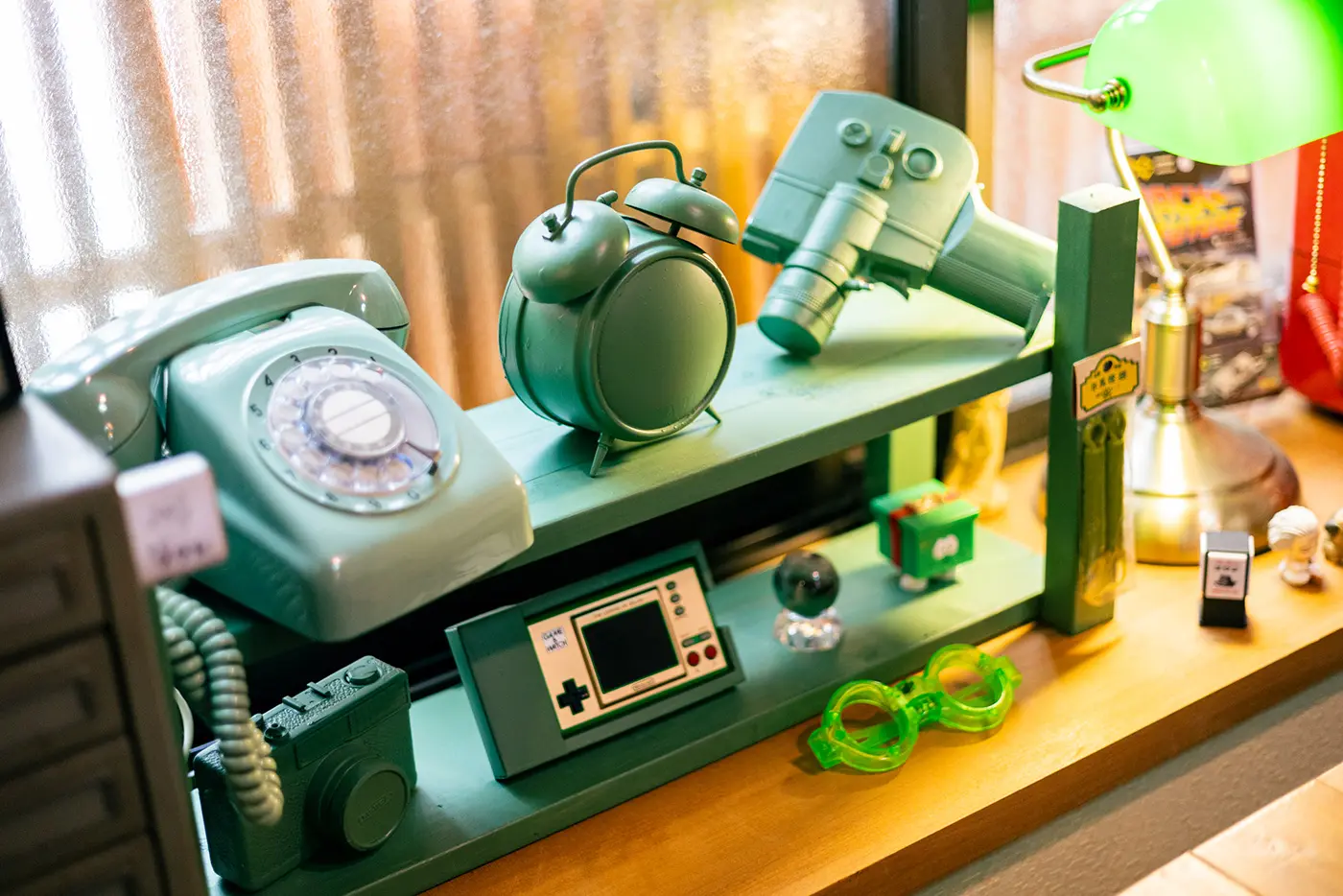
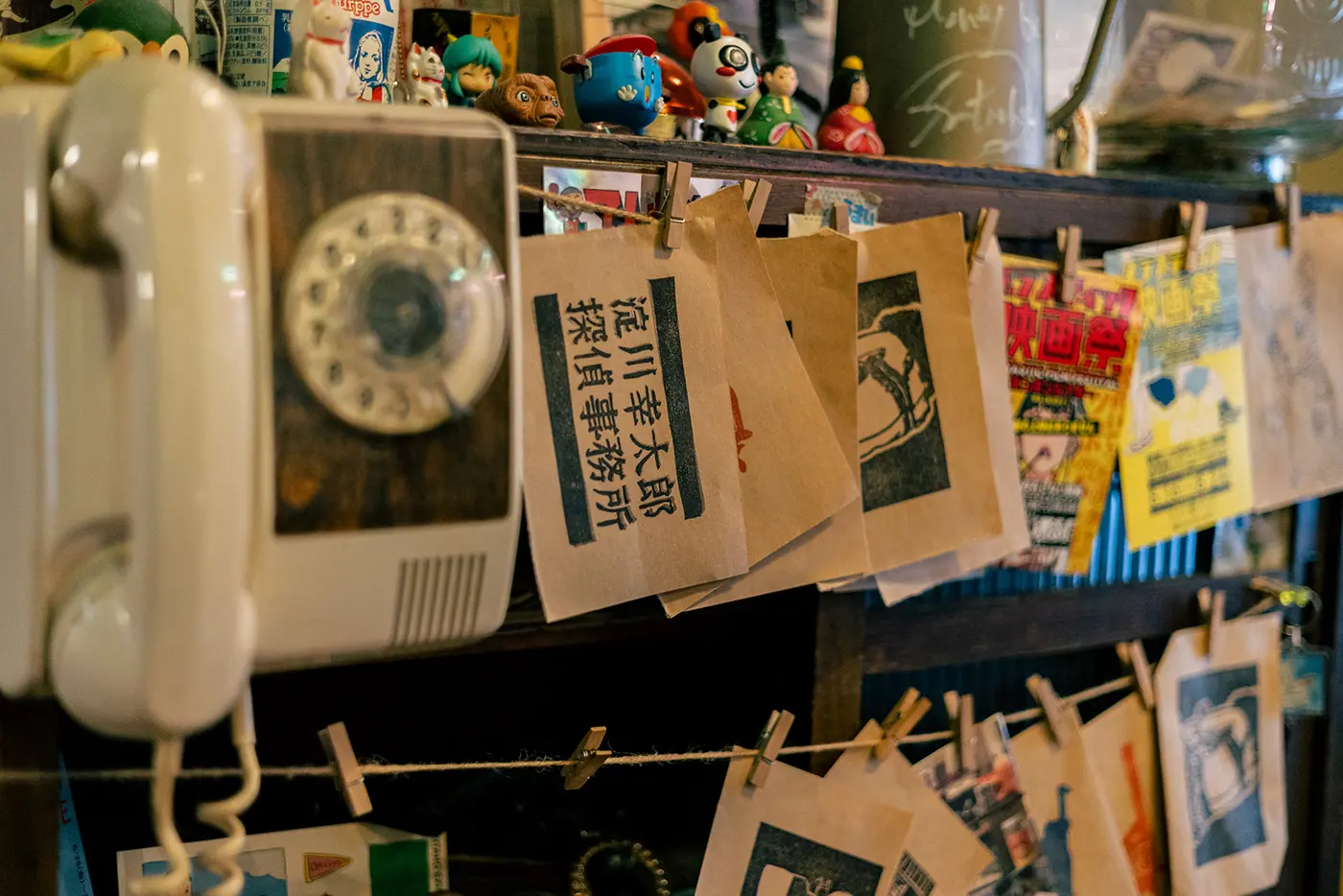
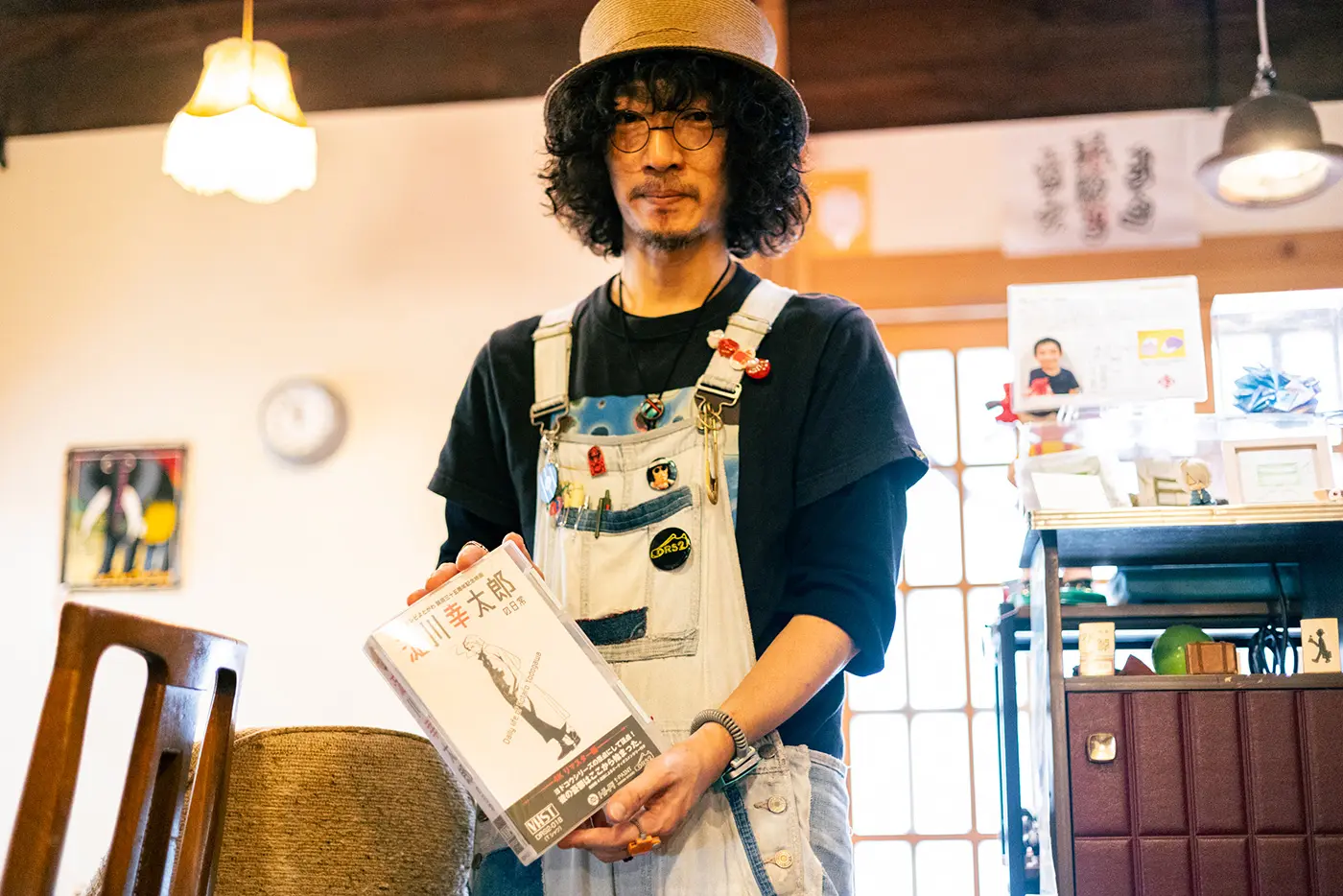
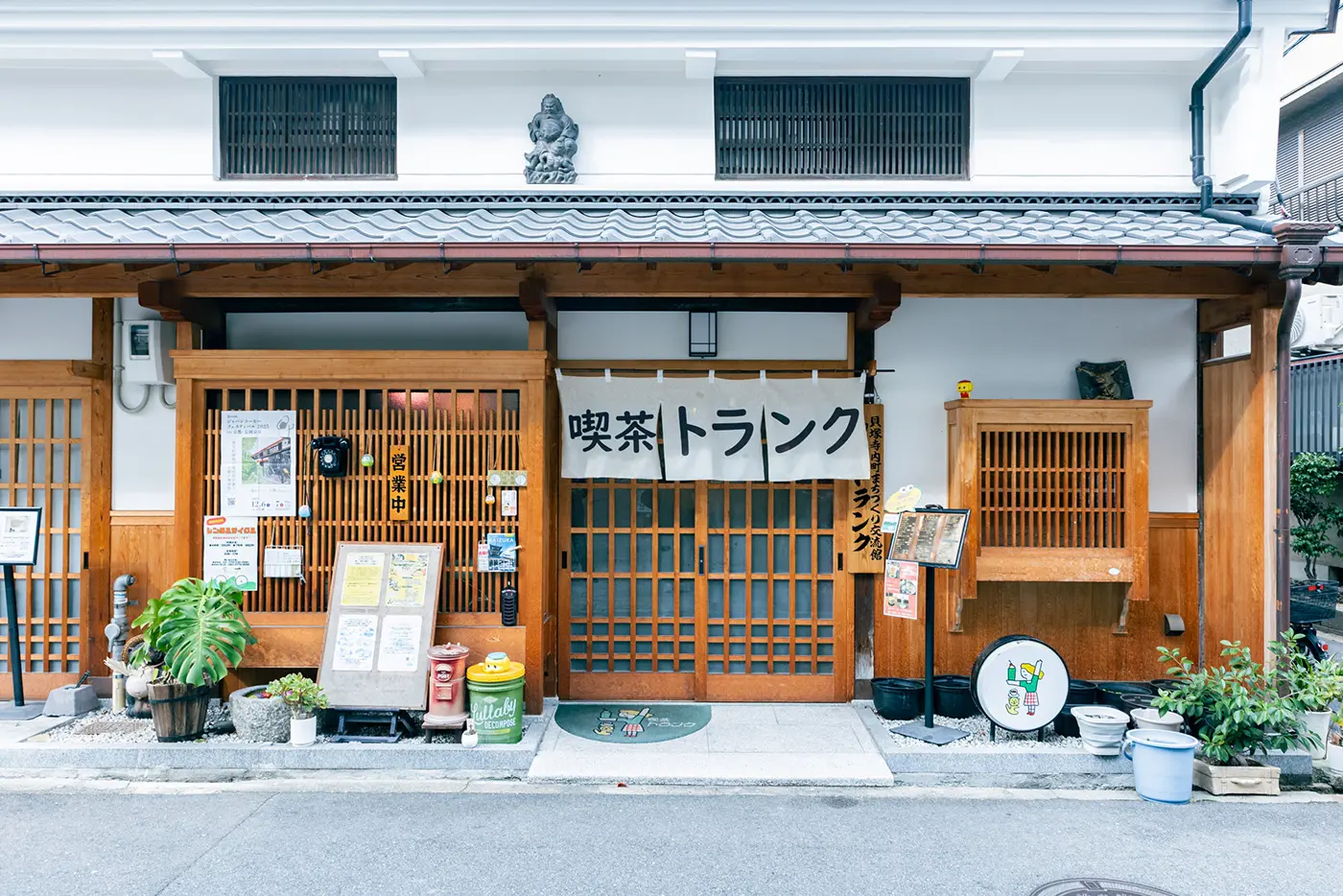
Finally, we returned to Kaizuka Jinaicho for a break. "Kissa Trunk" is a cafe renovated from a tenement house built between the end of the Edo period and the Meiji period. The interior was designed by the owner, who is a fan of movies, dramas, and music, based on the image of a detective agency from a movie. The interior is decorated with not only movie merchandise, but also retro items from a variety of genres.
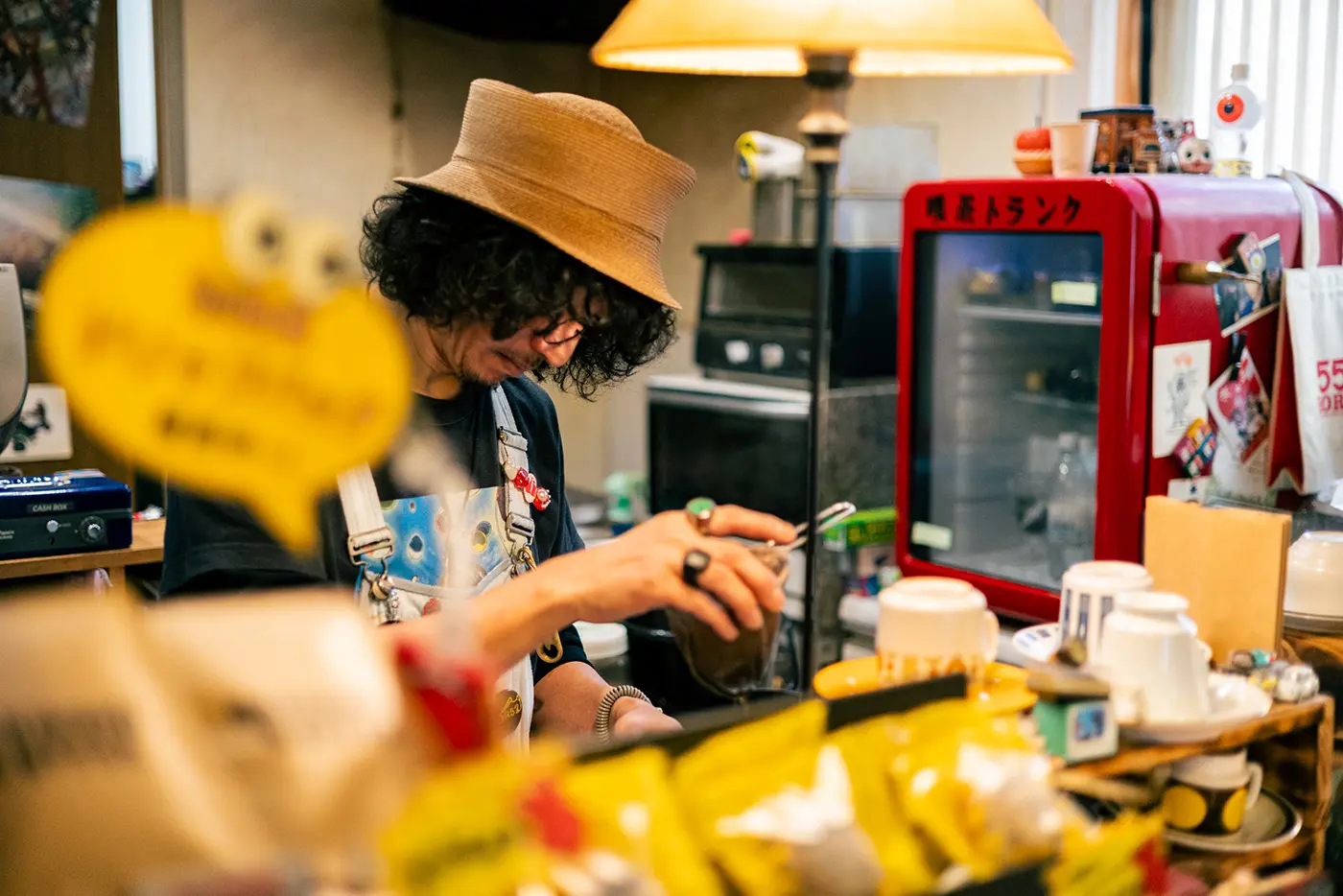
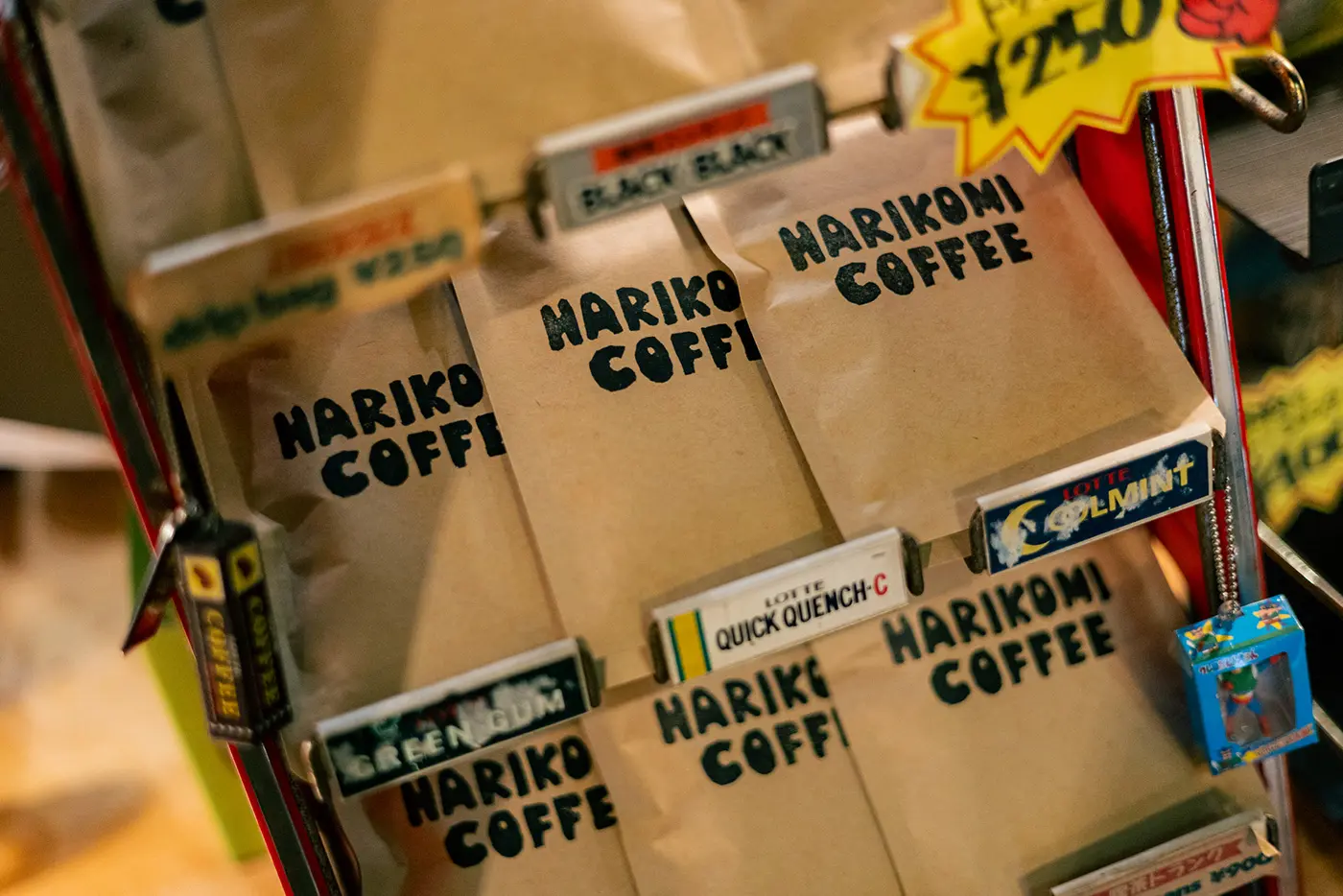
By using a cloth filter to extract the dark roasted coffee beans that they roast themselves, "not only does it have a rich bitterness, but it also has a mellowness due to the oils," says Terauchi. The shop is a mix of coffee lovers and locals.
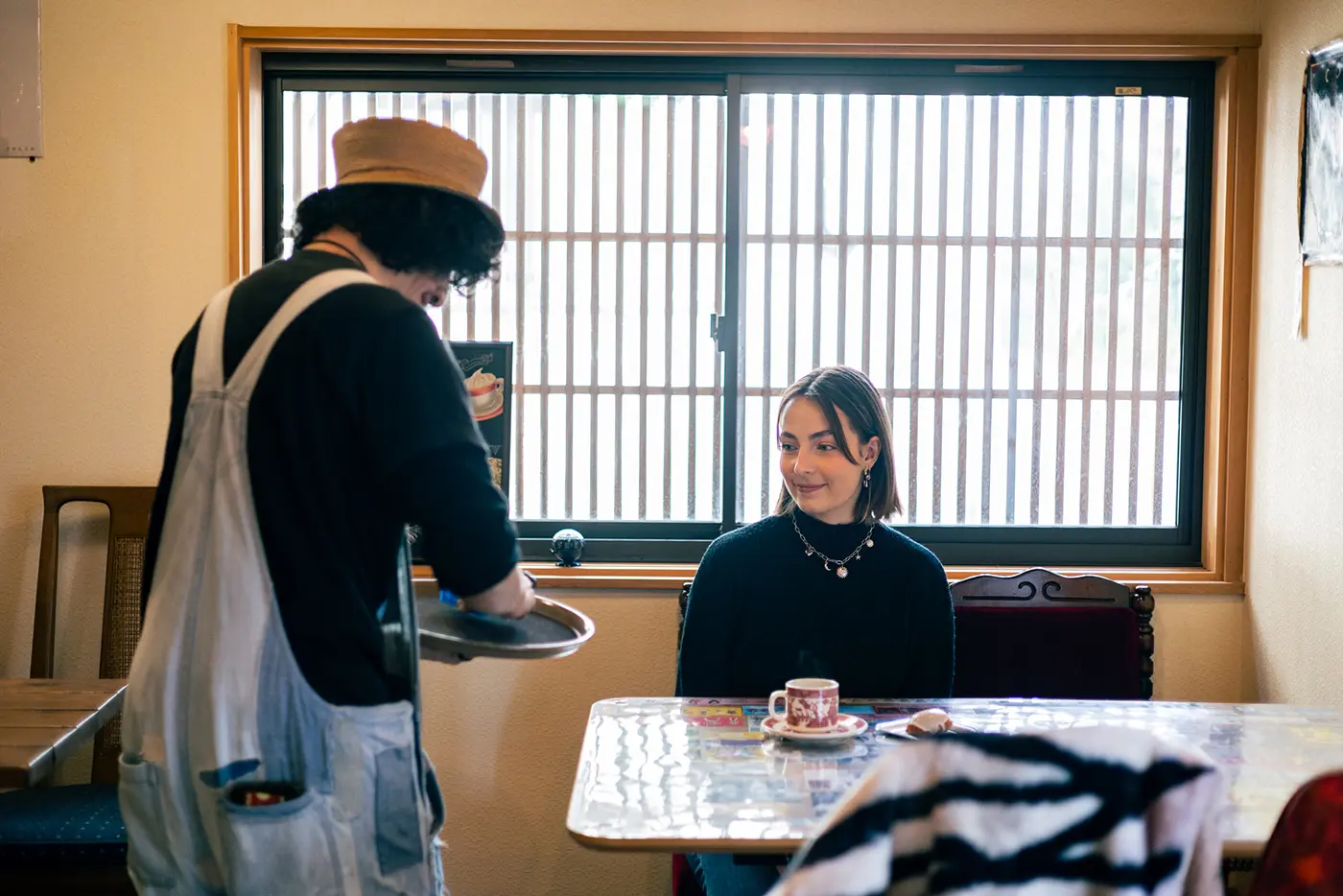
While enjoying the retro Showa-era decor, coffee was brought to us. Popular items on the cafe menu include Naporitan and pudding.
Lucile:
What prompted you to open a cafe in this building?
Terauchi:
We were originally operating in another area of Kaizuka City. The mom who runs the place with me also works to support children who are refusing to go to school, but it was gradually becoming too small. That's when I found out that the owner of this place was looking for tenants.
Lucile:
It was such a coincidence!
Terauchi:
I sympathized with the idea of "making use of an old townhouse." However, the interior looks like this, and it feels like a mix of different eras (laughs).
Lucile:
It's a strange feeling not knowing what era you're in! What's more, it's fun to learn about different cultures. Anime is familiar to foreigners, but it's rare to find a place where you can experience older Japanese movies and music.
Take a mini trip to the historical and atmospheric Kaizuka City
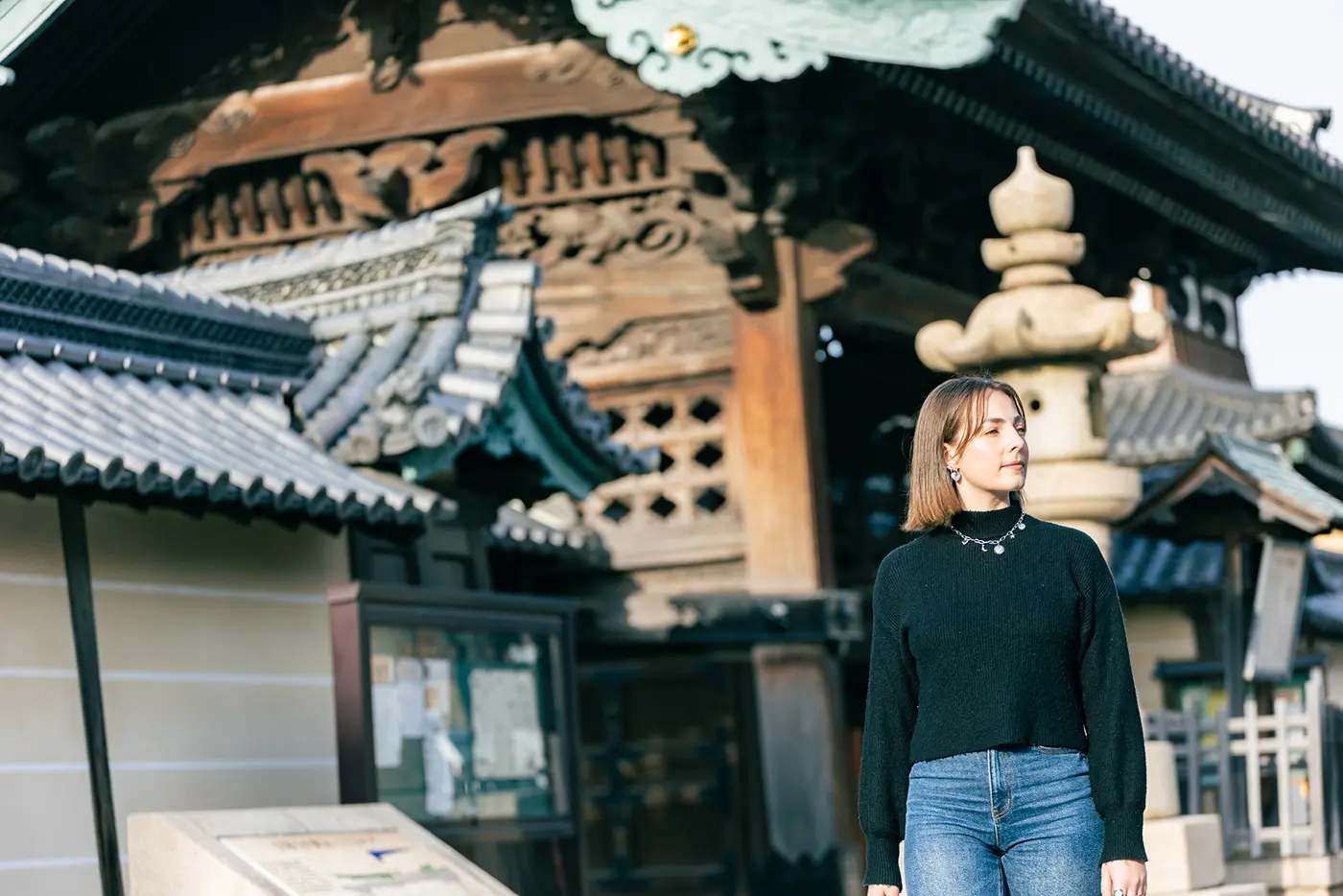
Lucile, who was originally interested in historical sites and traditional architecture, said that the opportunity to see so many cultural assets built during the Edo and Meiji periods in one place was a rare one. "I was surprised to find that there was so much to see in an area so easily accessible from Osaka city, and so close to the station. What was also impressive was that at every spot, it was clear to see that everyone loved their town and its culture," she recalled.
Kaizuka City that has a unique look, with a rich mix of history, culture, and the activities of its people. Be sure to visit and enjoy a stroll through the city as if you were traveling back in time.
*The information in this article is current as of February, 2026. As details may have changed, please check the official websites of the facilities and stores for the latest information.
Photo: Yuji Takatsu
Edited by Yuji Takatsu
Direction: Ningen Henshusha
Related Tours
Kaizuka Walking Tour: Historic Jinaicho & Local Food
Explore the Kaizuka Jinaicho that has existed since the Sengoku period! Visit important cultural properties such as temples and traditional townhouses.
Enjoy freshly fried croquettes and local specialty, Mizunasu eggplant, while strolling around! Savor the flavors loved by the locals.
Take a break while admiring the beautiful garden, enjoying local Kaizuka sweets and matcha tea.
