 Copy Link
 X
X
 Facebook
 LINE
LINE
 LinkedIn
 Pinterest
 WhatsApp
 KakaoTalk
 NAVER
NAVER
 Weibo
Weibo
 WeChat
 Mail
Mail
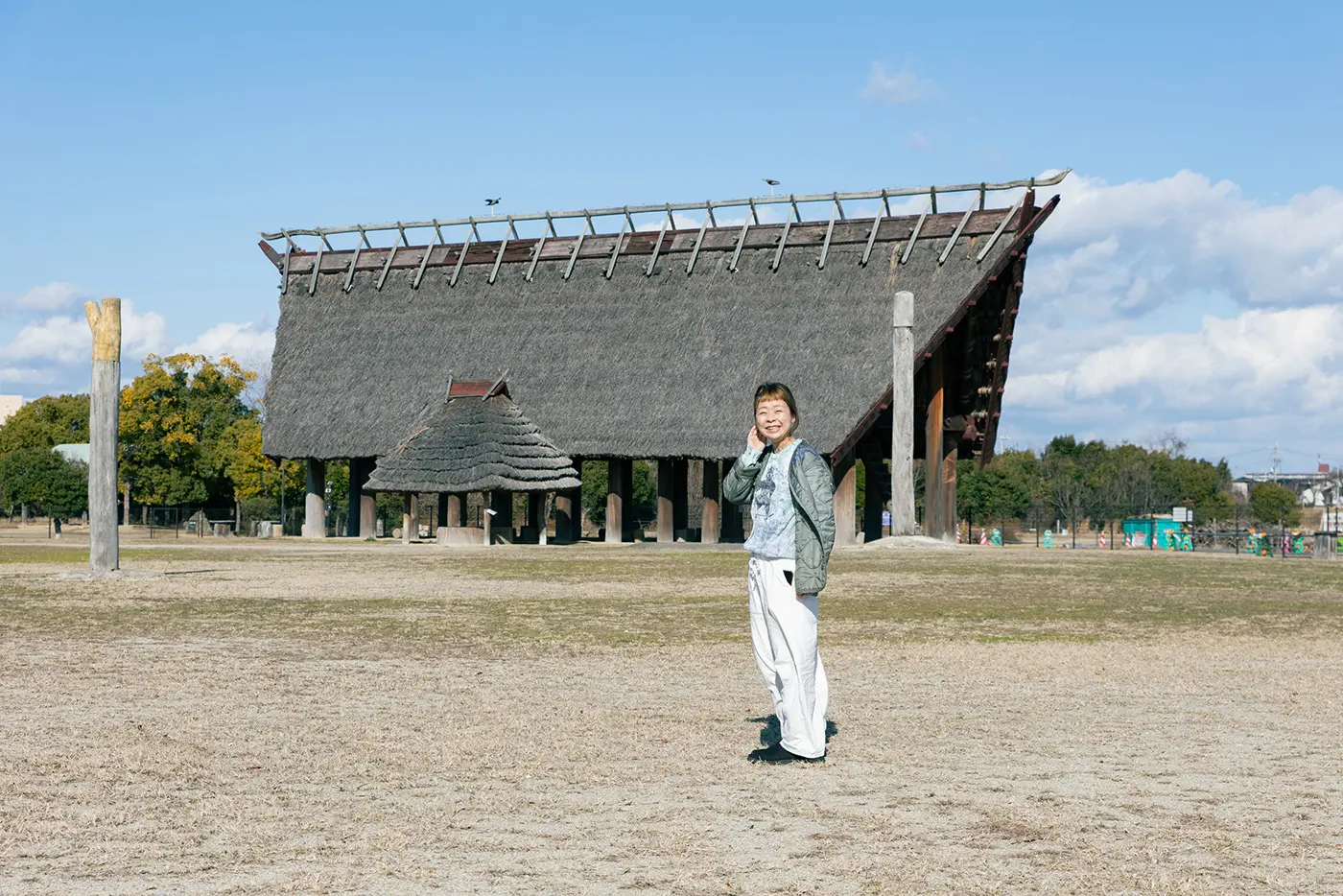

It has been approximately 120 years since the discovery of the Ikegami Sone Ruins, one of Japan's largest moated settlements, which stretches across Izumi-otsu and Izumi-shi. Excavations have made the site's historical value widely known, and both cities are attracting attention as places where you can experience the lifestyle and culture of the Yayoi period. This time, we visited Izumi-otsu with Watanabe Aya, a ceramic artist with a love of ancient times.
Related Tours
Osaka: Travel back in time 2000 years. Jade magatama and bronze mirror crafts and a tour of ancient historical sites
- Experience crafting jade magatama and mirrors, symbols of power
- Visit the exhibit of creatures, tools, and other artifacts excavated 2,000 years ago
- See the remains of the original ancient foundations and pillars
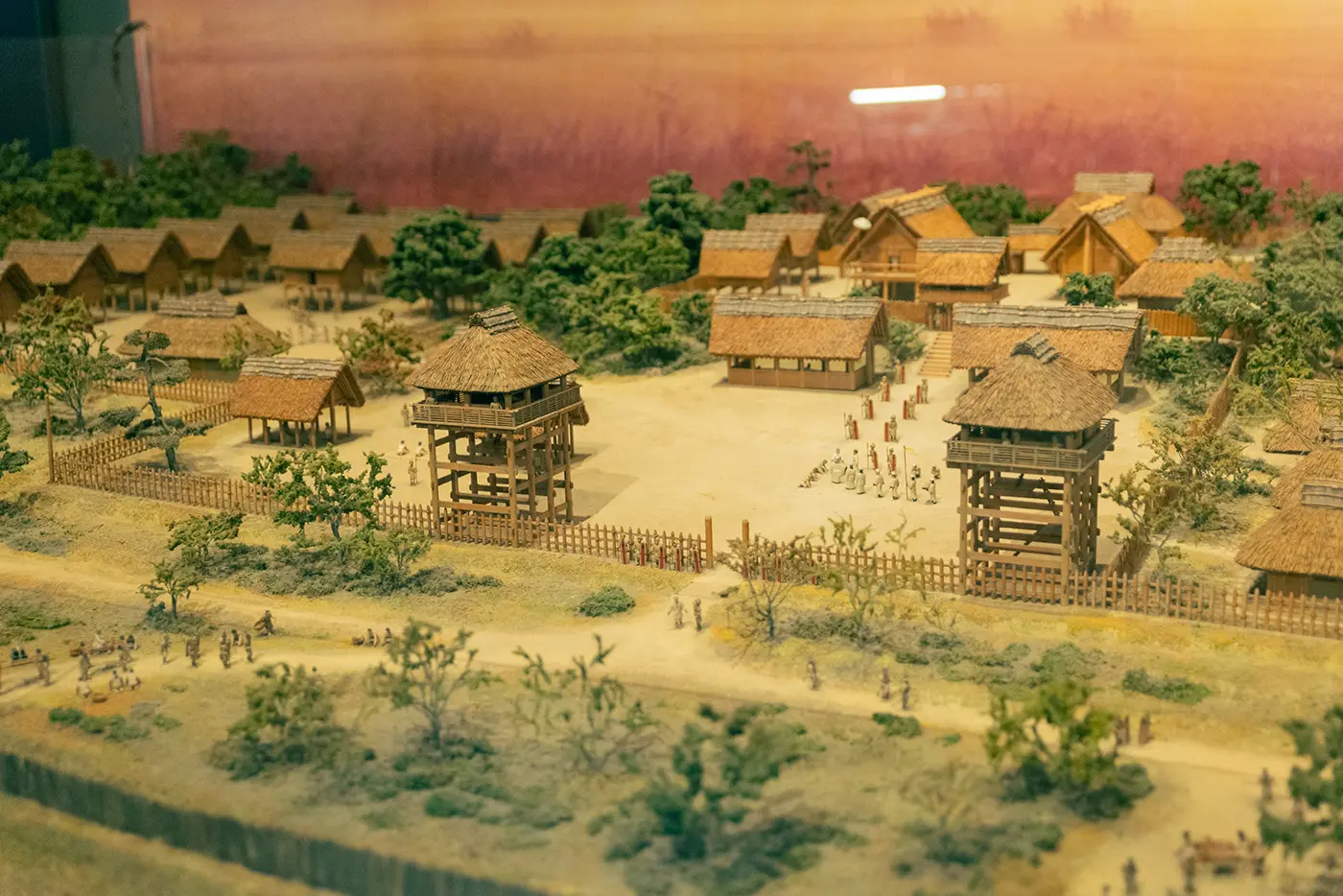
Located in the southern part of Osaka, about 20 minutes by train from central Osaka, Izumiotsu City is a city where the history and traditional industries of the Yayoi period (approximately 2,500 to 1,900 years ago), when agricultural society began in Japan, are alive and well. For example, there is the Ikegami-Sone ruins, one of Japan's largest moated settlements. This settlement, where Yayoi people are said to have lived for about 500 years, allows you to get a real feel for the atmosphere of that time through the dwellings that have been restored based on excavation surveys.
The northwestern part of the city faces Osaka Bay, and is blessed with the bounty of the sea. In the past, it flourished as a cotton-growing region, and the textile industry developed. And we must not forget the blanket industry. Izumiotsu City was the first in Japan to develop the blanket industry, and it has grown to boast the largest production scale in Japan. A unique culture has been cultivated in this city, where the vitality of a fishing town and the spirit of artisans coexist.
We were guided around Izumi-otsu city, which is full of such diverse charms, by ceramic artist Watanabe, who creates works themed around the Jomon period (a hunter-gatherer era that began approximately 13,000 to 15,000 years ago and lasted for over 10,000 years).
Guide
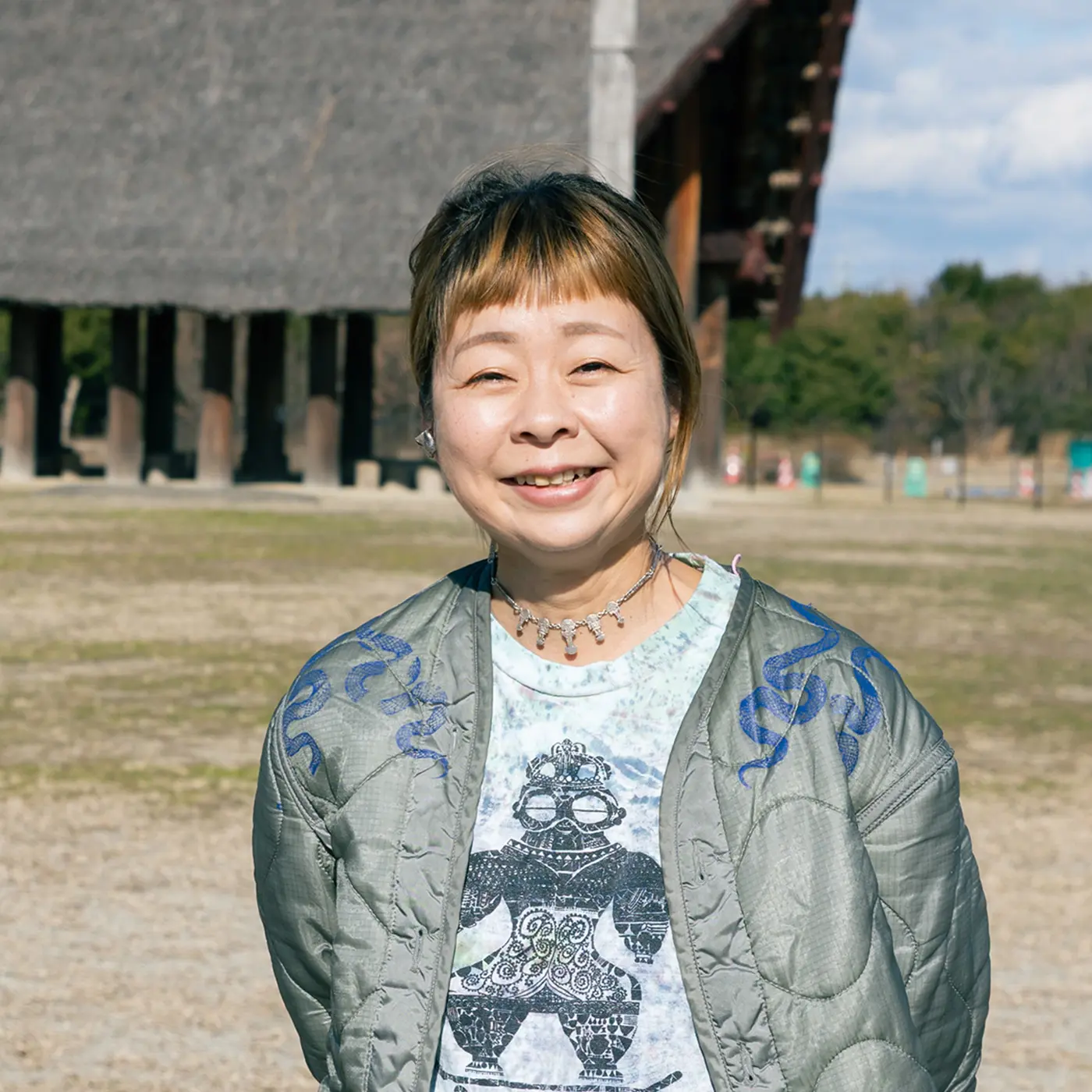
Originally from Sakai City, she is a ceramic artist who creates works that sublimate Jomon period pottery with his own unique interpretation, such as a skateboard-riding clay figurine and colorfully glazed flame pottery. In fact, when she was in high school, she used to walk to school near the Ikegami-Sone ruins.
Visit Ikegami Sone Historical Park, one of Japan's largest Yayoi period settlement sites
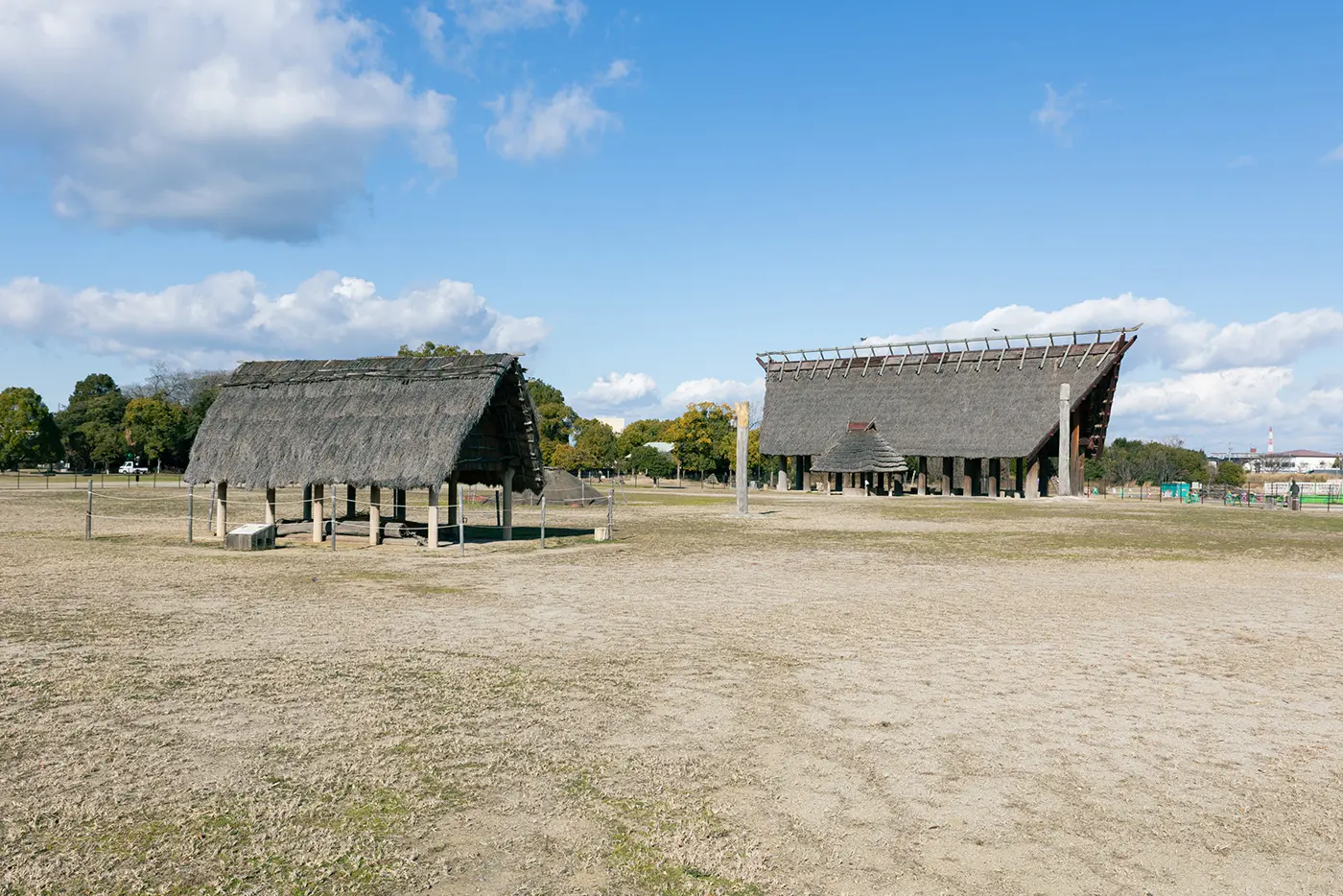
First, we visited the Ikegami-Sone ruins, one of the largest moated settlements in Japan, which Watanabe used to pass by on his way to school as a high school student. The entire ruins, which extend across Sone-cho, Izumiotsu City, and Ikegami-cho, Izumi City, are known to be a vast moated settlement (a village surrounded by a moat) stretching approximately 1,500m north to south and 600m east to west.
The Ikegami-Sone ruins were discovered in 1903 when Shigenori Minami, a resident of Ikegami-cho (Izumi City), discovered fragments of relics buried in the earthen wall of his house and became curious about them, which she investigated. Subsequent excavations by the Izumi-otsu Prefectural High School Geography and History Club and the Second Hanwa National Highway Ruins Research Association revealed the existence of a large settlement. In 1976, it was designated a National Historic Site as it was one of the largest settlements in the Kinki region.
"It's romantic that this magnificent history was revealed because of one man's curiosity," says Watanabe.
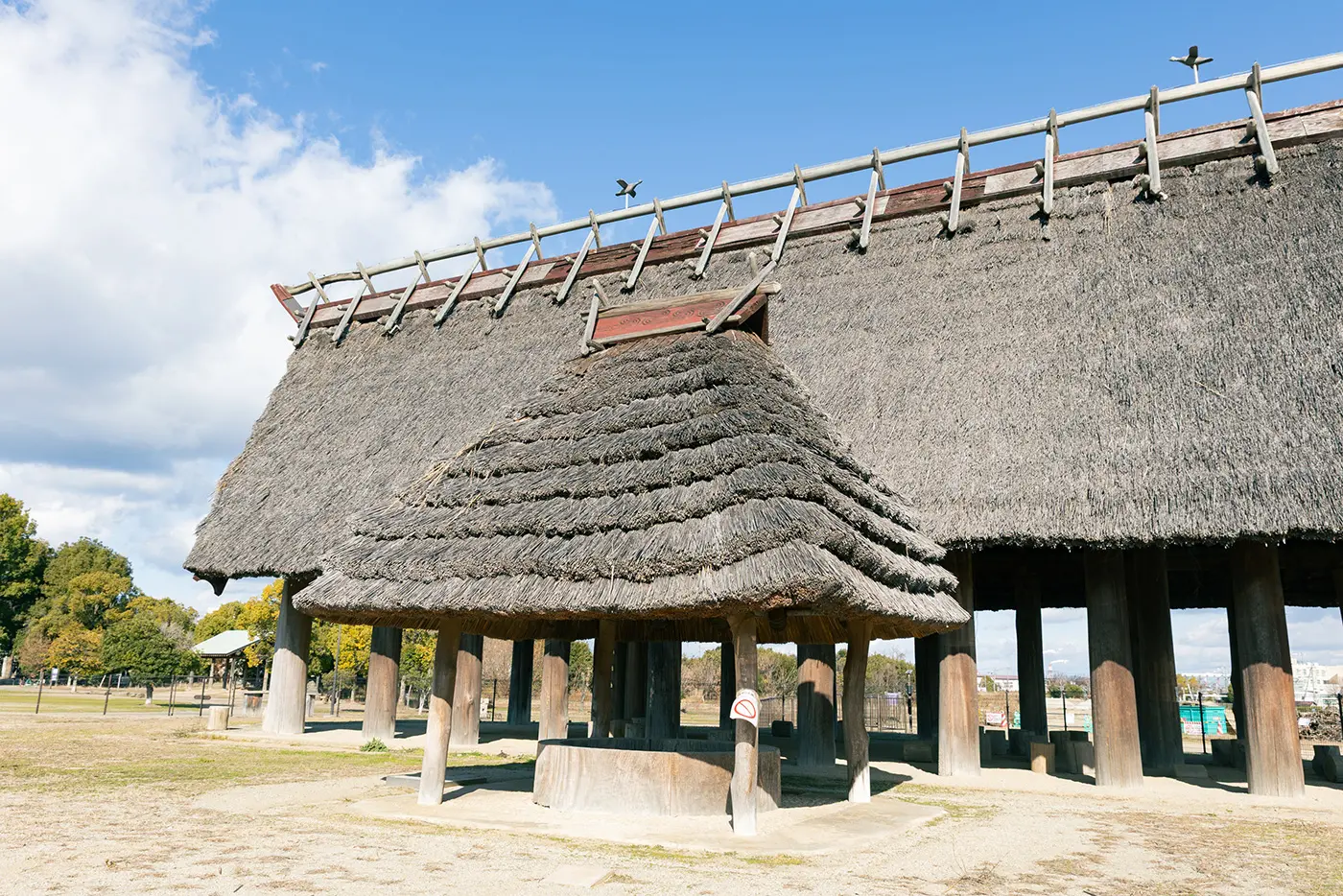
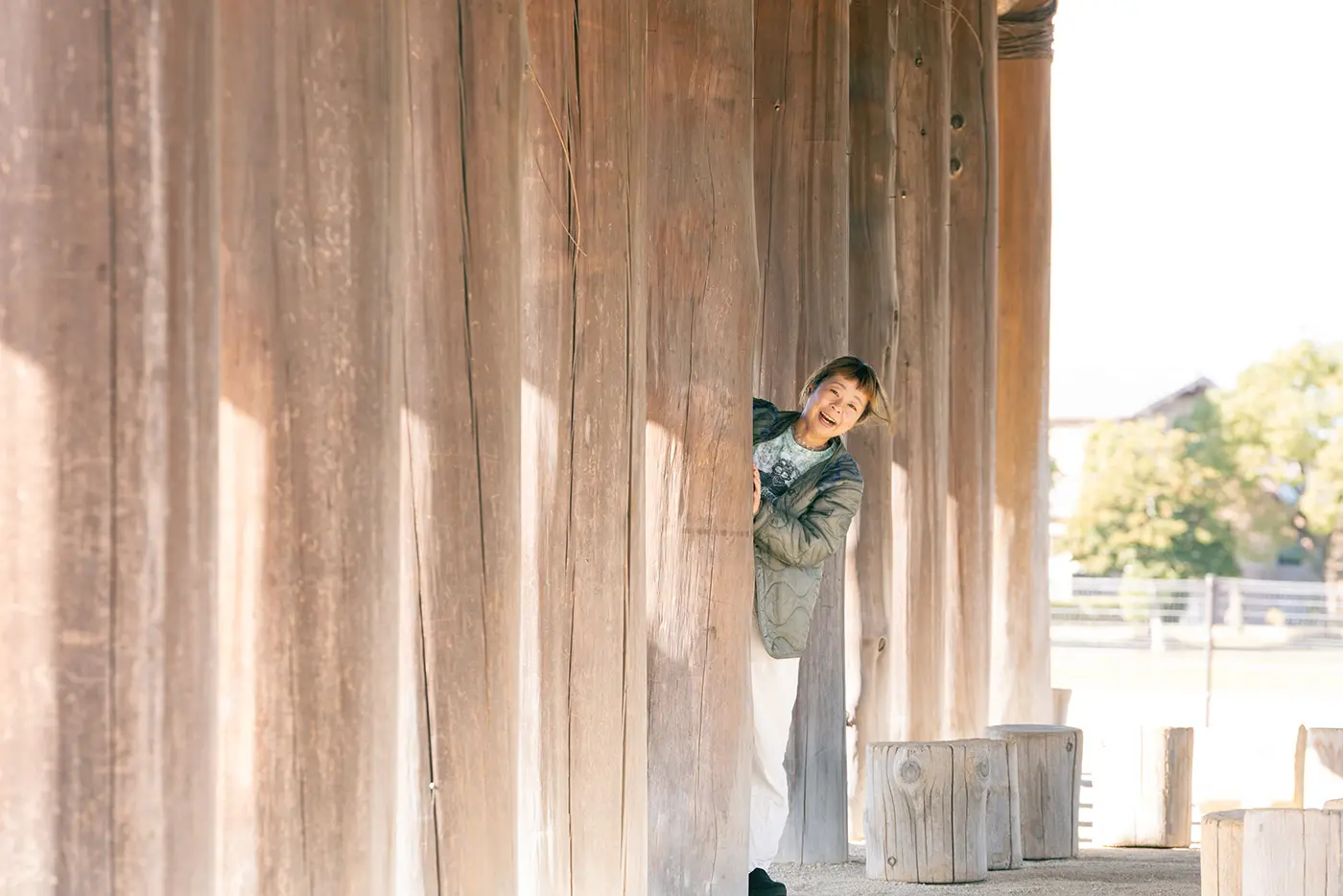
At the Ikegami-Sone ruins, the following buildings and wells have been restored: a large post-hole building (Izumi no Takadono), a large hollowed-out well (Yayoi no Oido), a post-hole building, and a pit dwelling. "It's amazing that you can see, touch and experience the dwellings of that time," says Watanabe, fascinated. It has been discovered that the large post-hole building (Izumi no Takadono), located in the centre of the village, was adjacent to a large hollowed-out well (Yayoi no Oido) made from camphor wood.
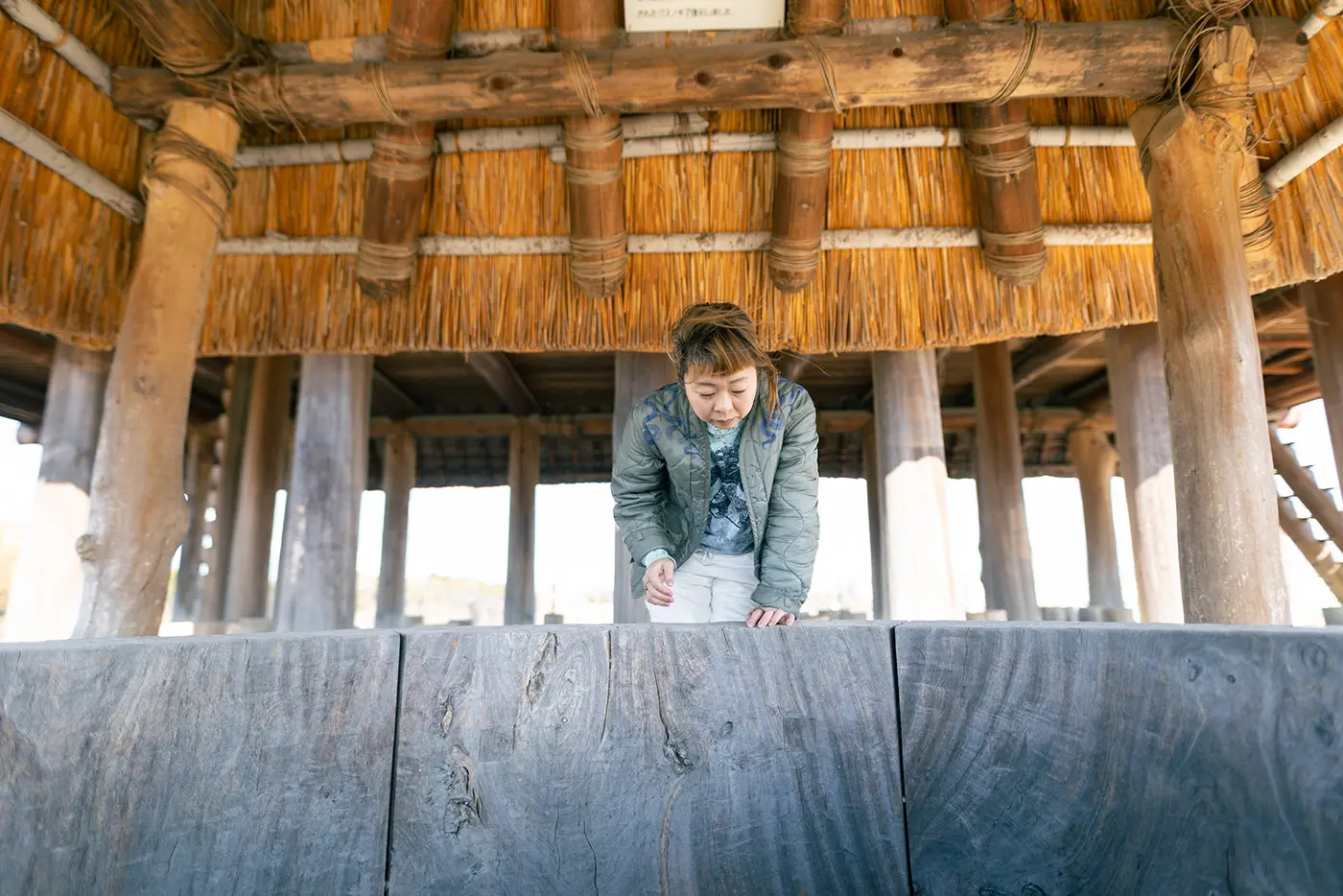
It is thought that the camphor tree has a strong smell known as camphor, so the well was not used for drinking water. It is thought that people in the Yayoi period believed that camphor trees had the power to purify evil spirits, so they purified the water in this well and then held rituals and ceremonies in the adjacent "large post-hole building."
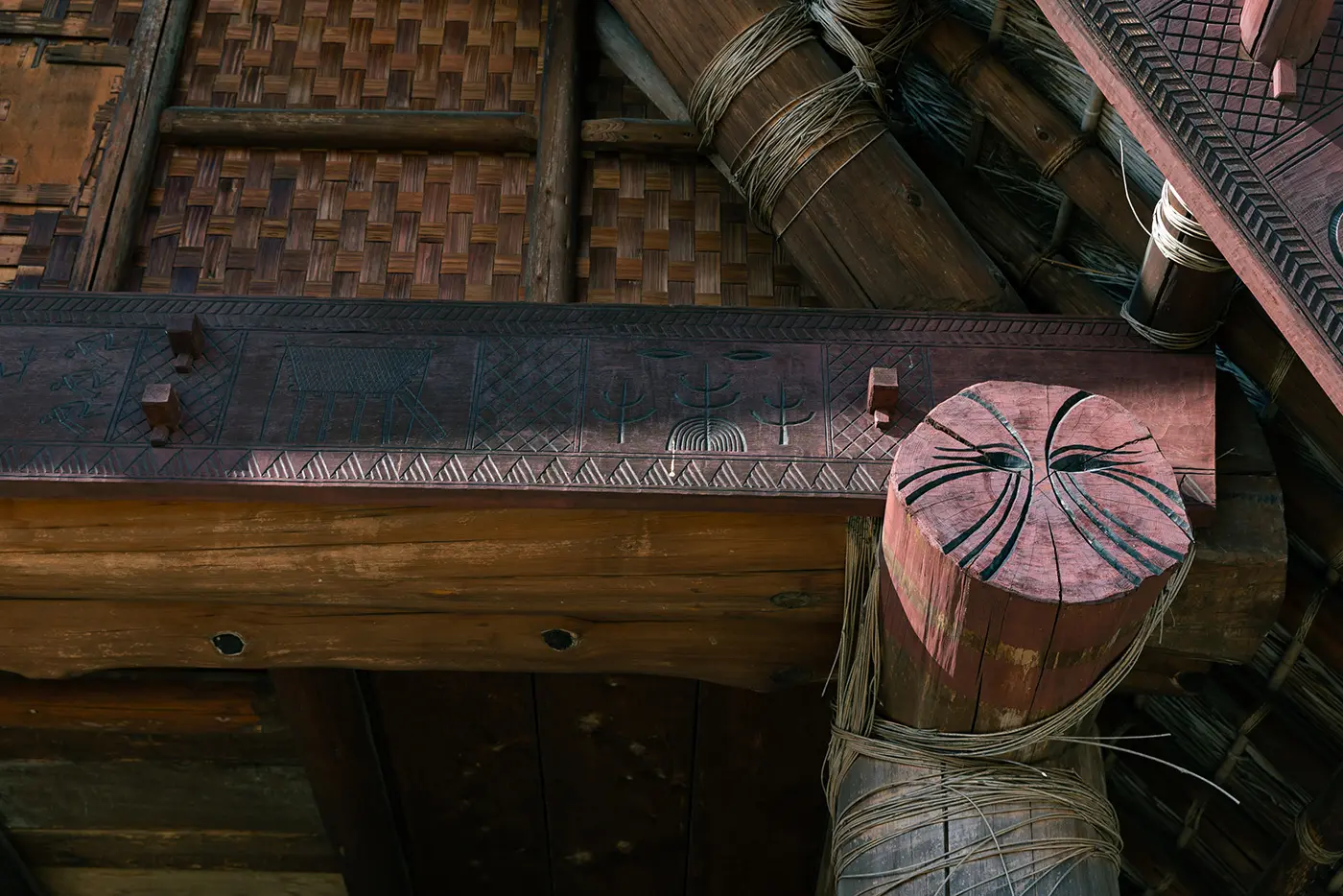
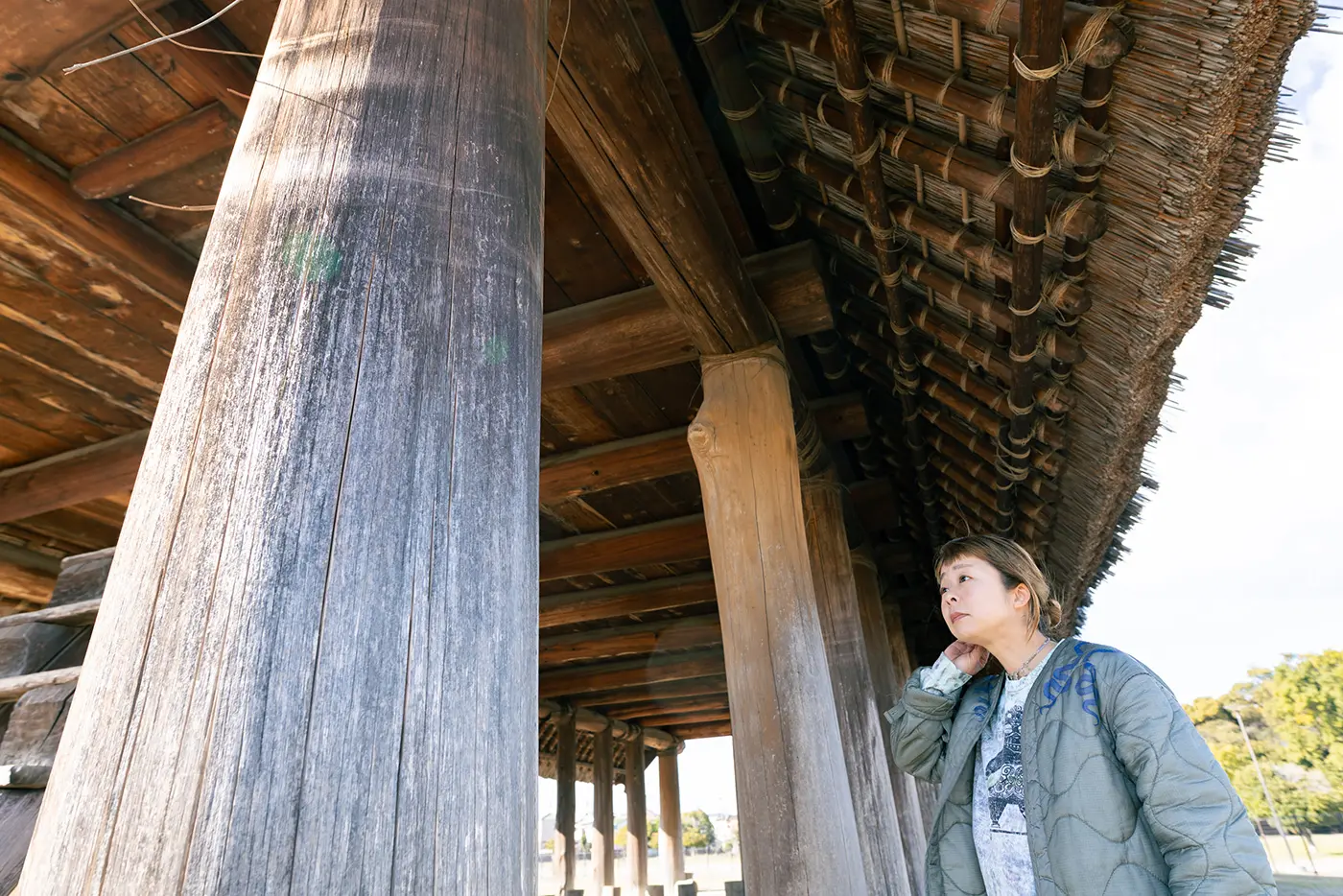
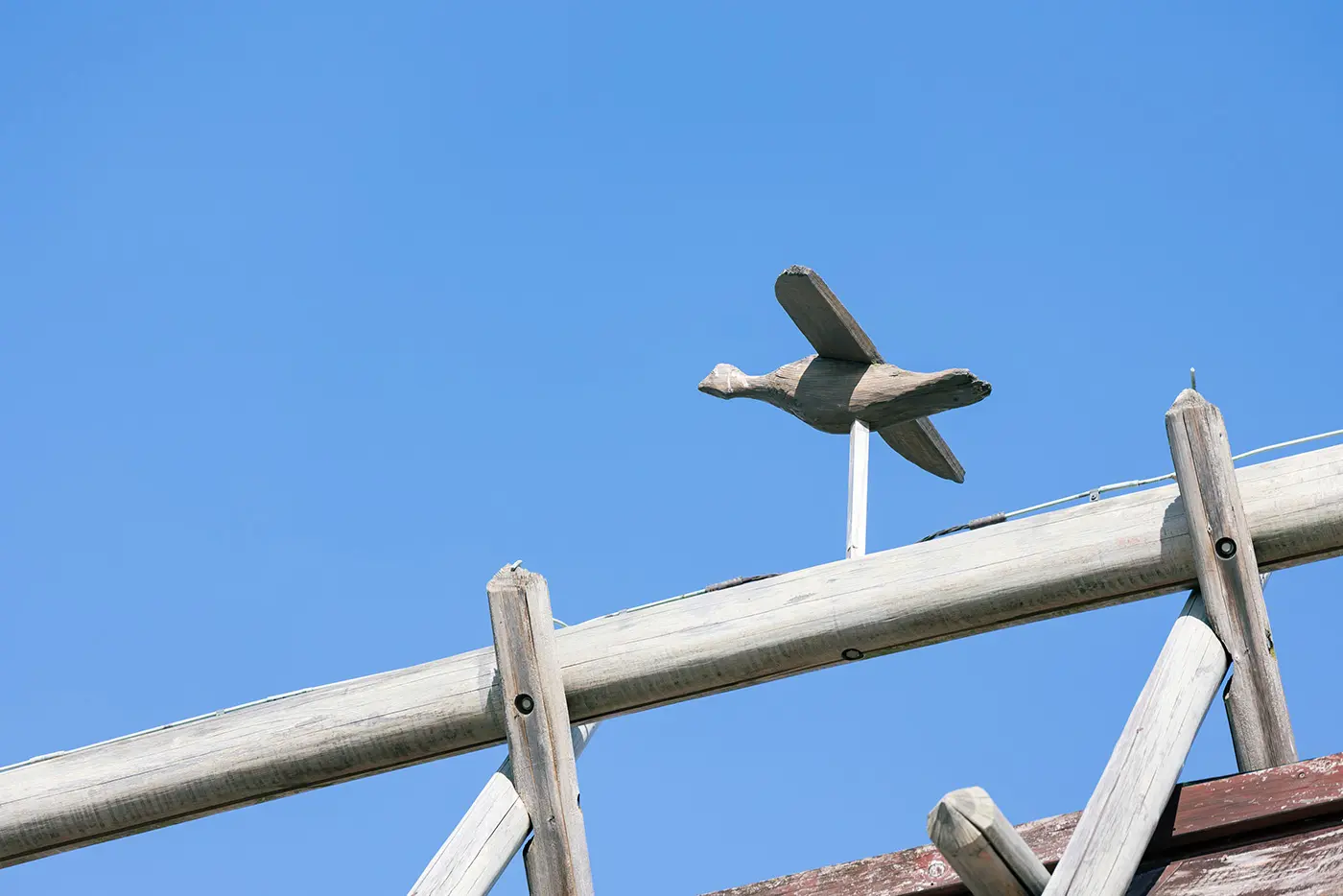
I had seen this building many times since my student days, but listening to the Izumiotsu City Board of Education talk about it again made me realize a lot of things. For example, the bird on the roof. It was actually discovered at an archaeological site, and there is a theory that during the Yayoi period, when rice cultivation began, people would hang bird-shaped wooden objects in the rice fields to attract waterfowl for hunting. It's interesting that it's the opposite idea to a scarecrow.
Learn about the Yayoi period at the Osaka Prefectural Museum of Yayoi Culture, Japan's only museum specializing in the period
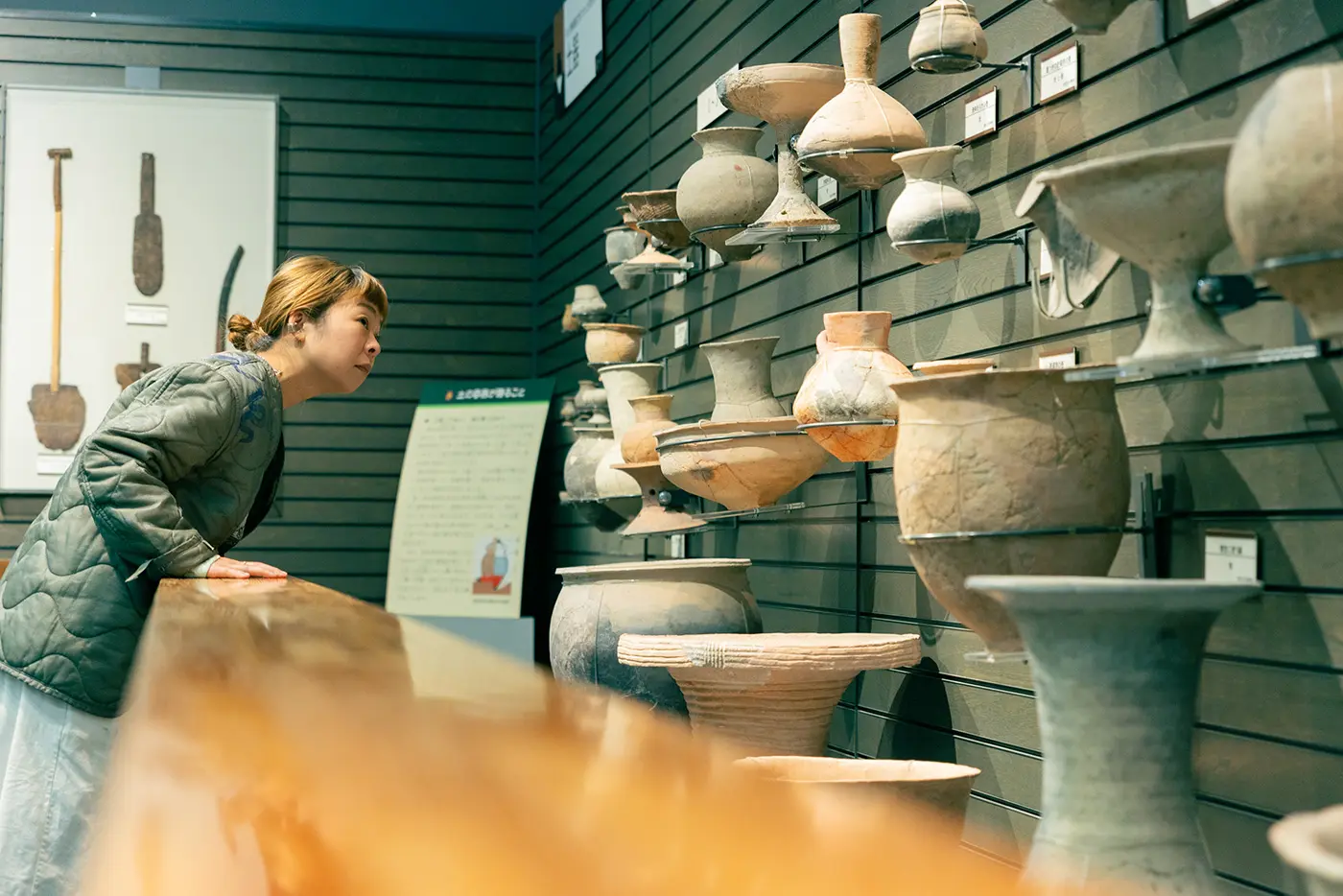
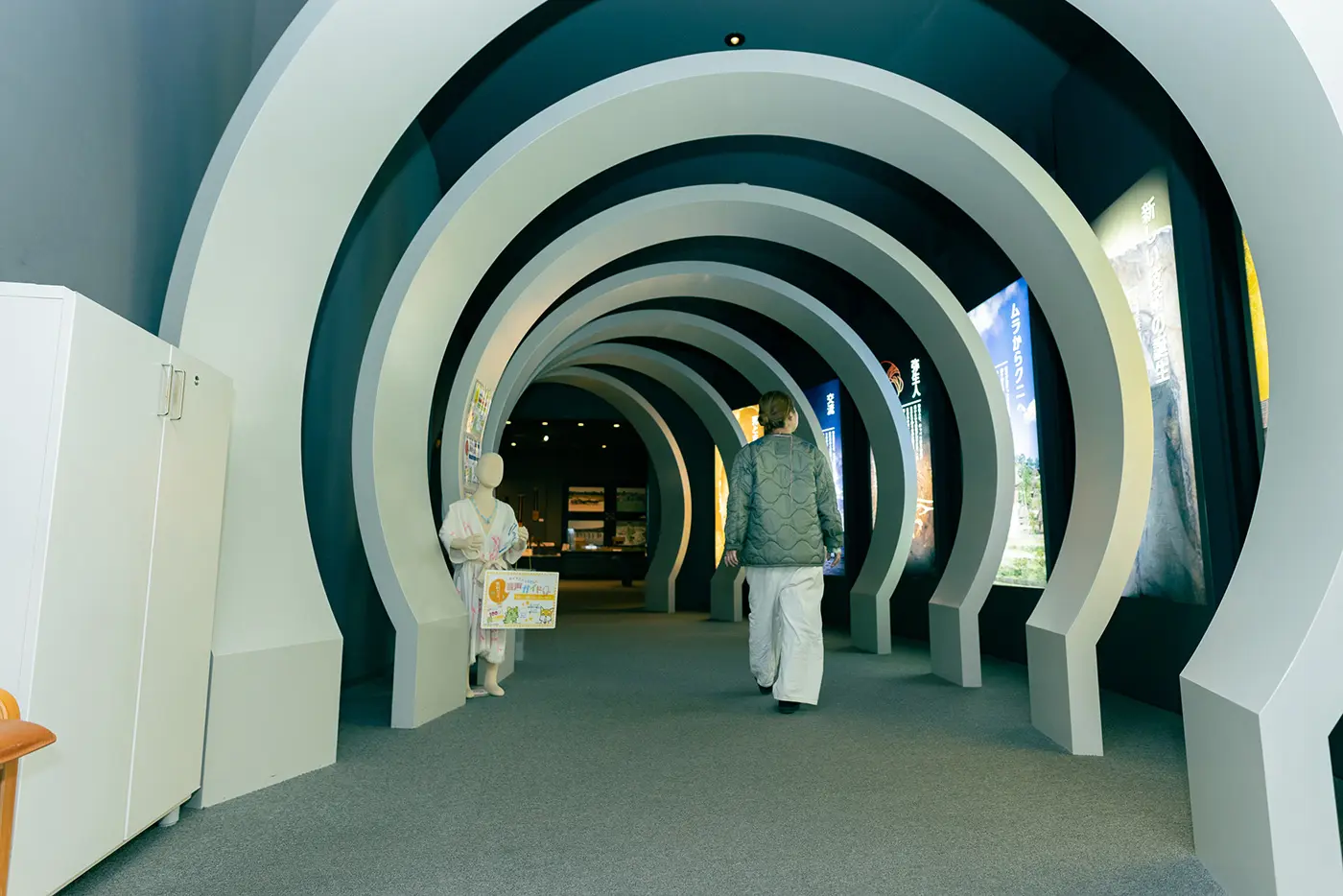
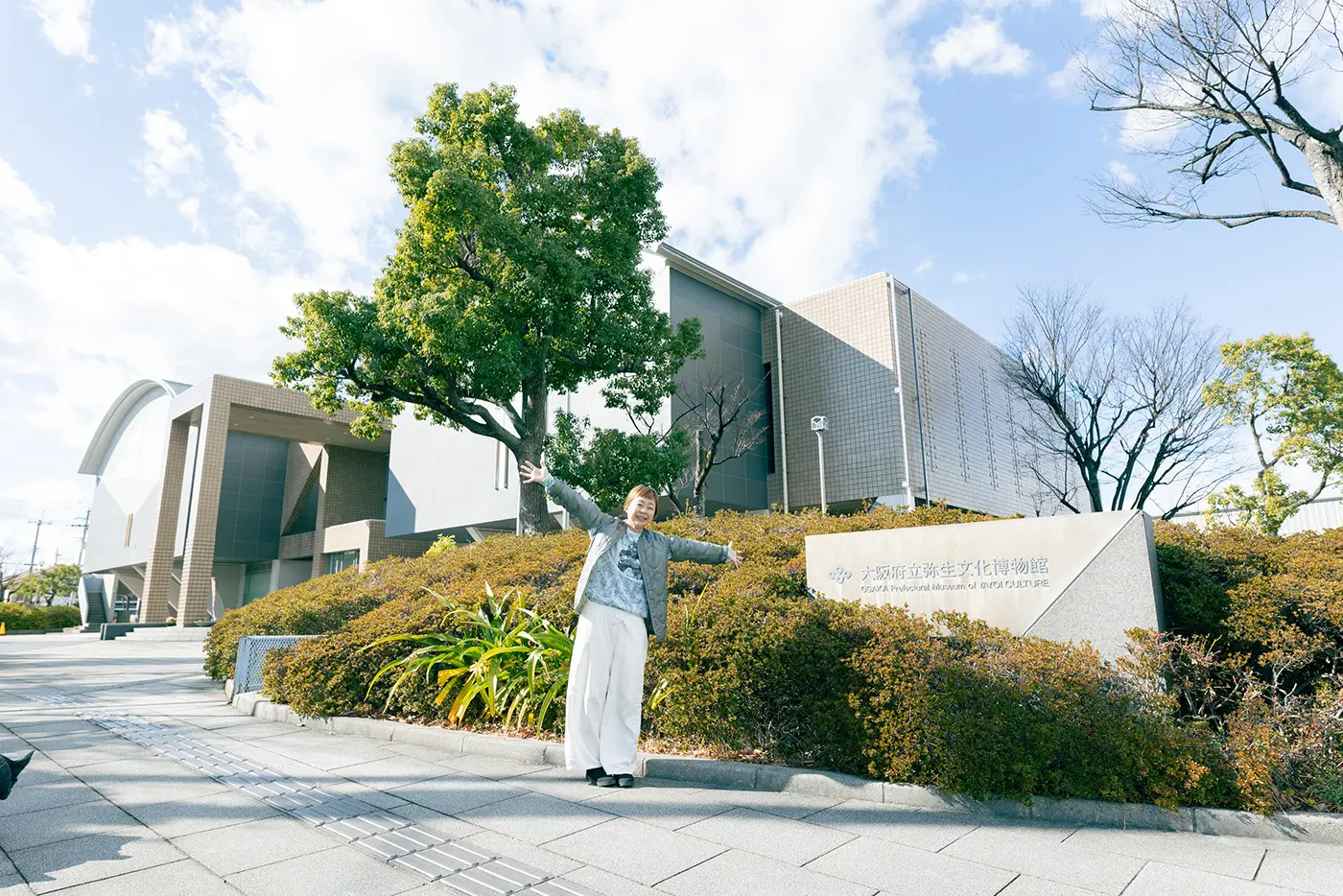
Next, we visited the Osaka Prefectural Museum of Yayoi Culture, which collects, stores, exhibits, and researches information on all aspects of Yayoi culture. As the only history museum in Japan specializing in Yayoi culture, it is a valuable facility that attracts not only local residents but also researchers from all over the country. Recently, the number of visitors from overseas has been gradually increasing.
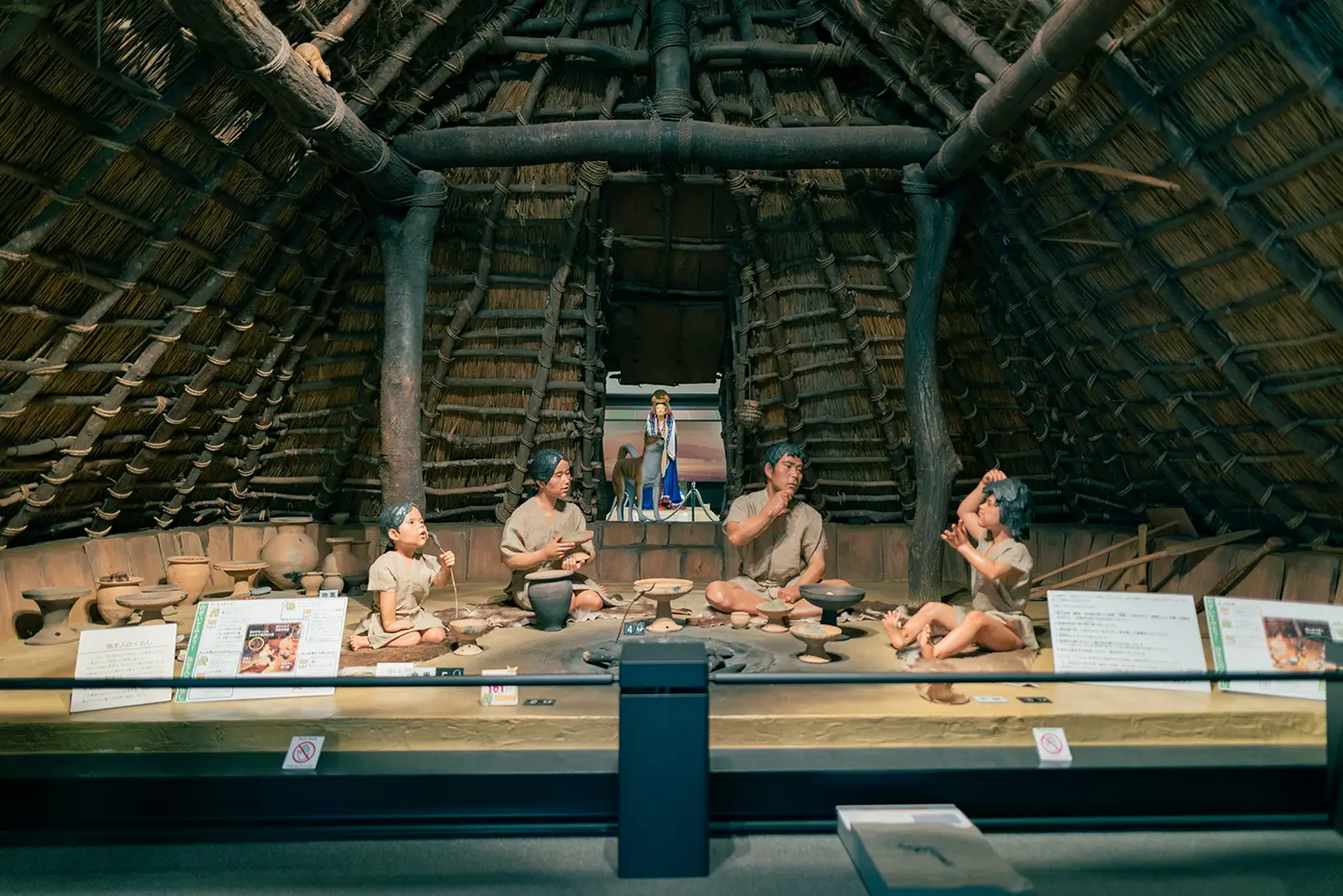
Stepping into the first exhibition room, you'll find a pit dwelling that gives you an insight into the lives of the Yayoi people! Not only the structure of the dwelling, but also tableware, the kantogi clothing of the time, and even how people ate with their hands have all been recreated based on historical documents such as the Gishiwajinden*. Even the dog in the back center is a Yayoi dog that was recreated based on materials found during excavations.
*Wei Zhi Wajinden: A valuable record about ancient Japan and Queen Himiko, written in China around the 3rd century.
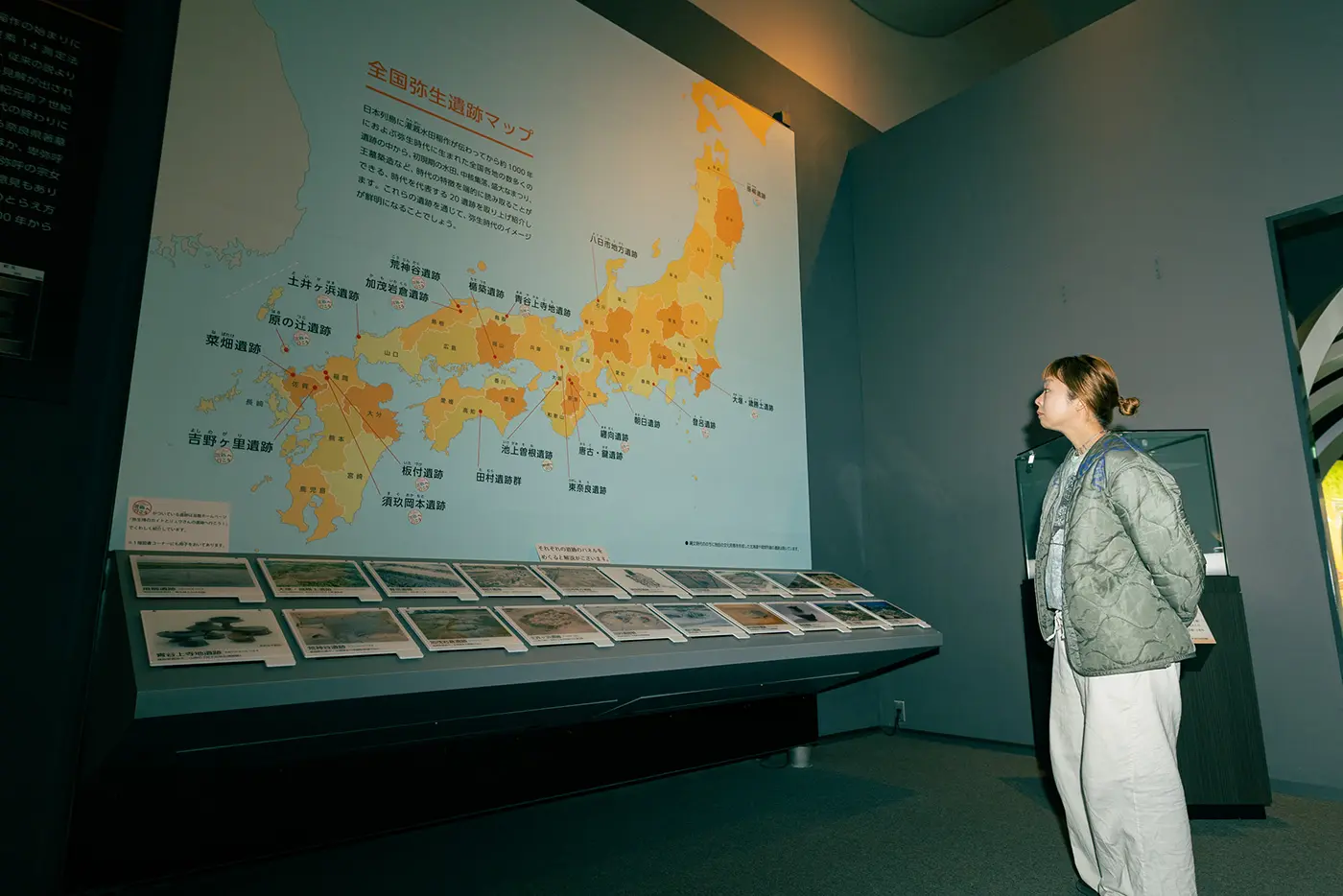
The first exhibition room introduces Yayoi culture based on artifacts excavated from all over Japan and previous research. Visitors can learn how people who came to Kyushu from the continent spread throughout Japan. "As we moved from a peaceful hunter-gatherer society to an agricultural society, kuni were formed and the struggle for territory began. This was a major change, for better or worse," says Watanabe.
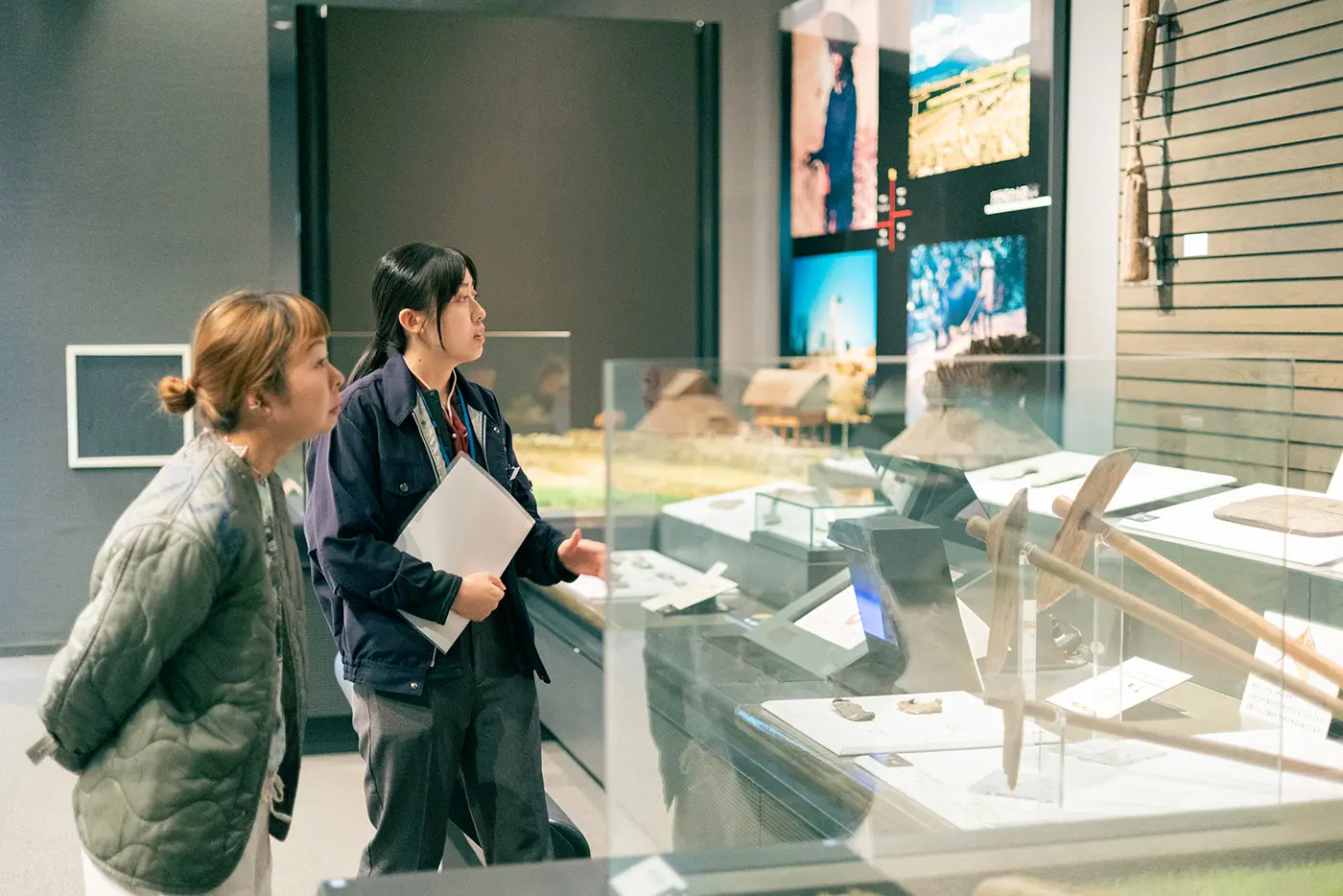
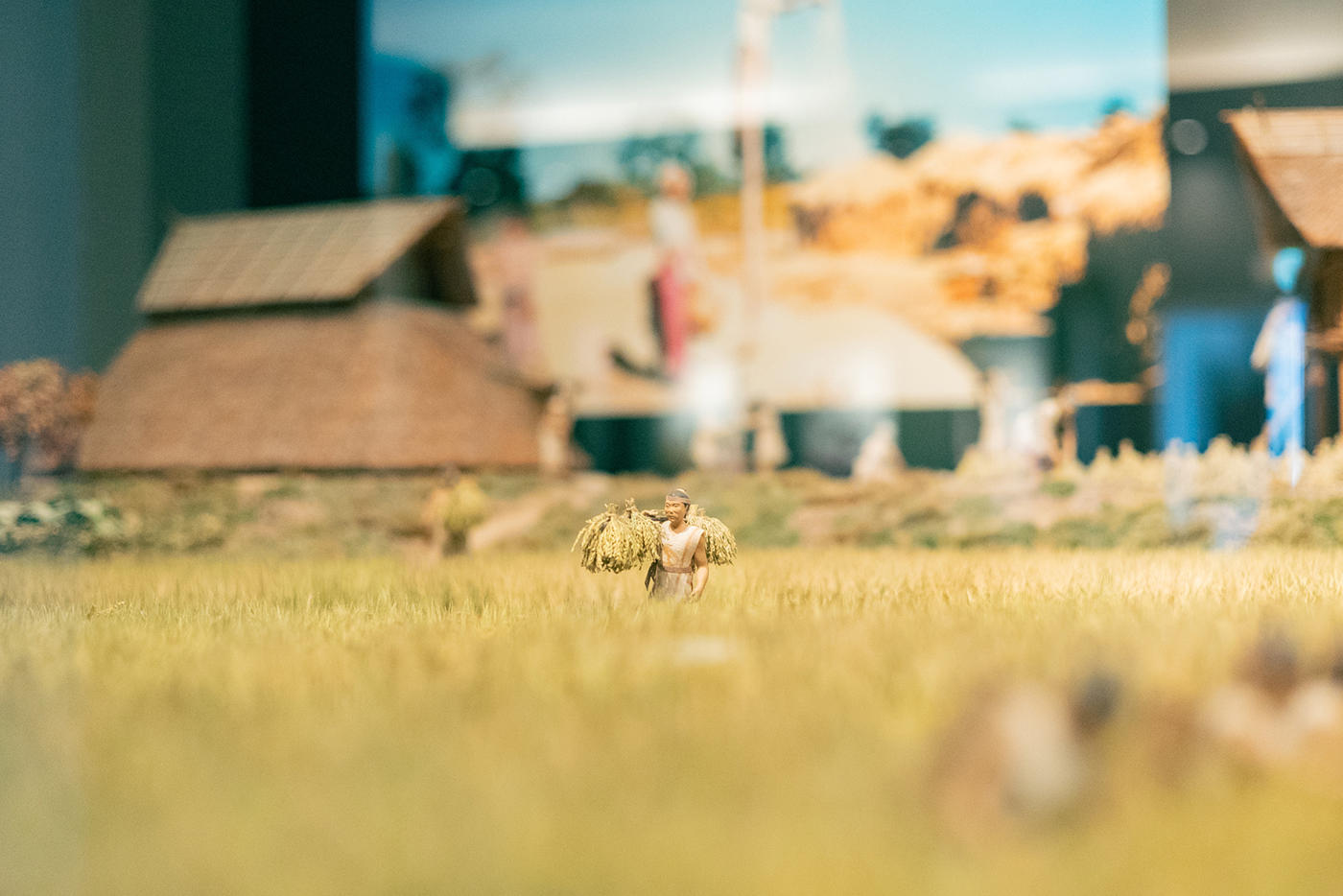
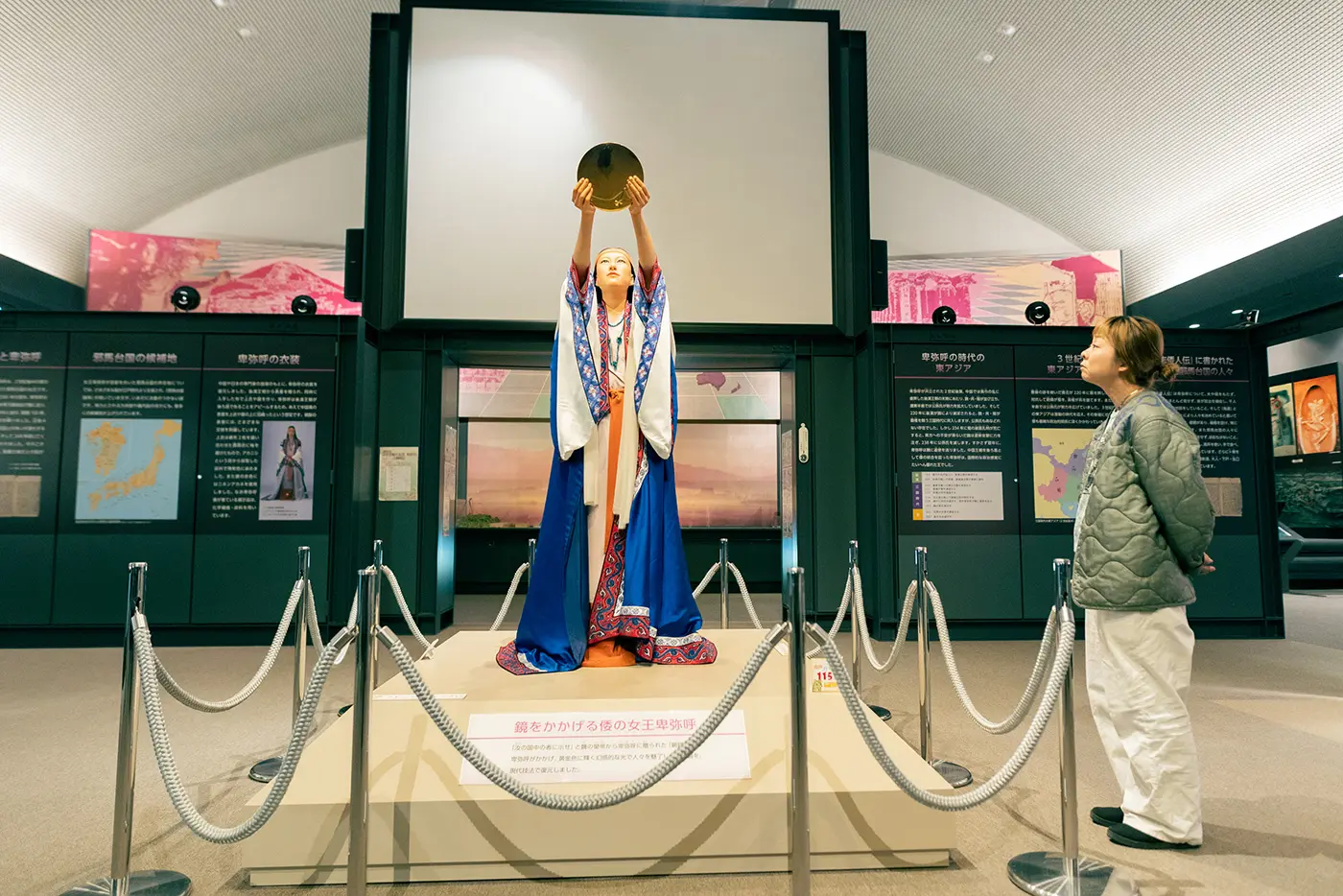
As you walk through the first exhibition room, you'll come across the figure of Himiko, who is said to have been the queen of Yamataikoku from the late 2nd century to the early 3rd century, towards the end of the Yayoi period! This vibrant costume was restored by the Osaka Prefectural Museum of Yayoi Culture under the guidance of Chinese and Japanese experts. In her hand, she holds a bronze mirror that is said to have been given to Himiko by the Emperor of Wei, restored using modern techniques.
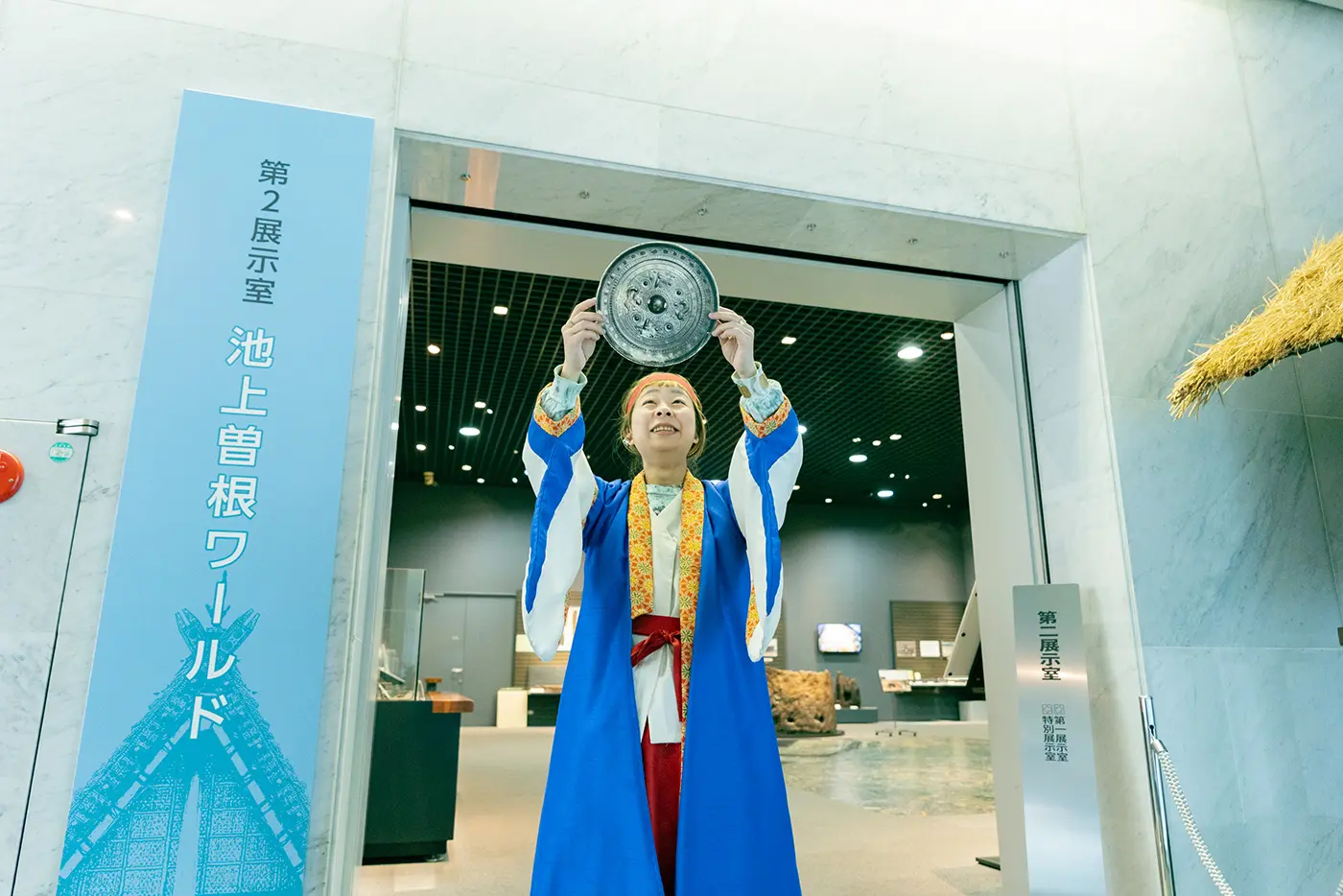
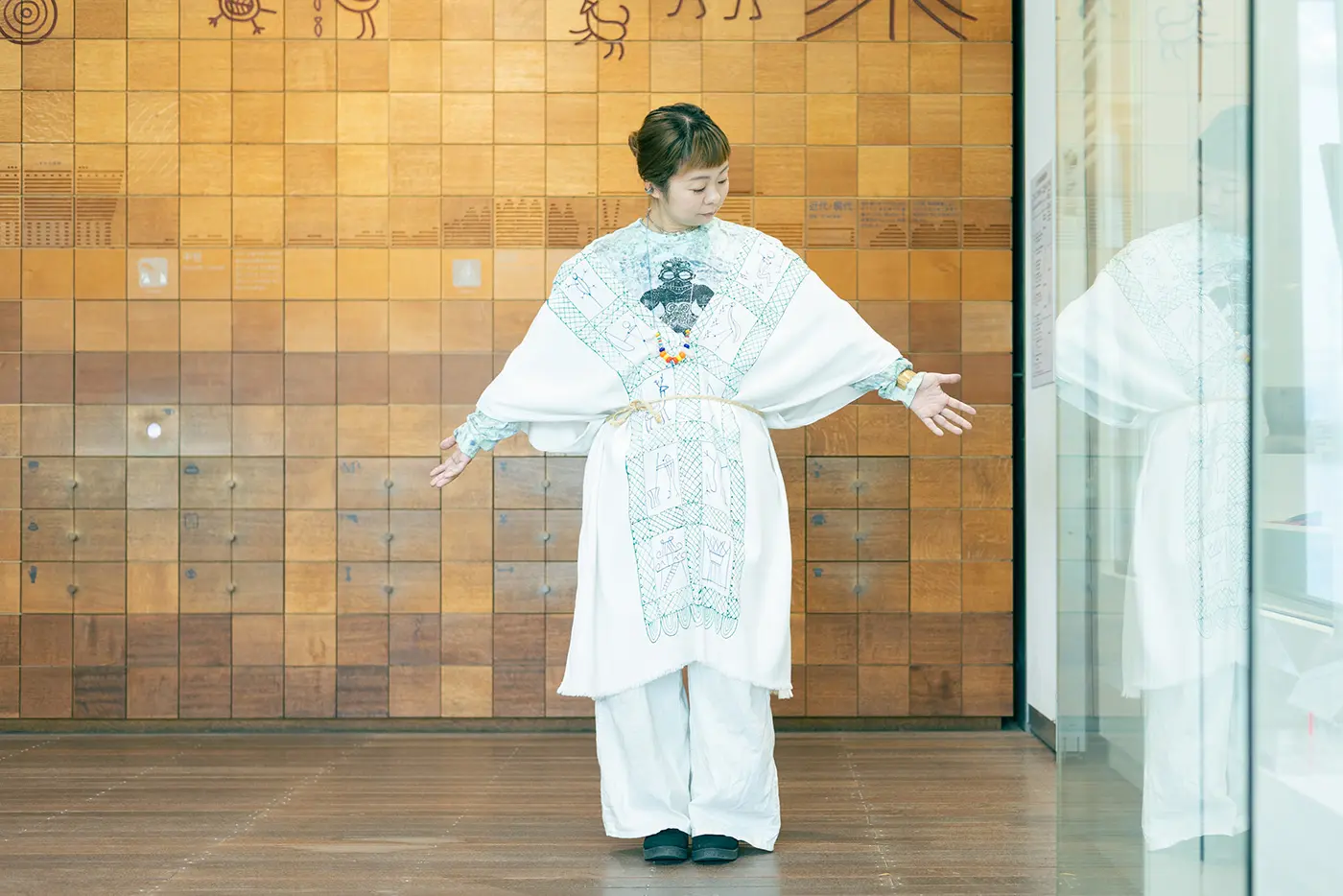
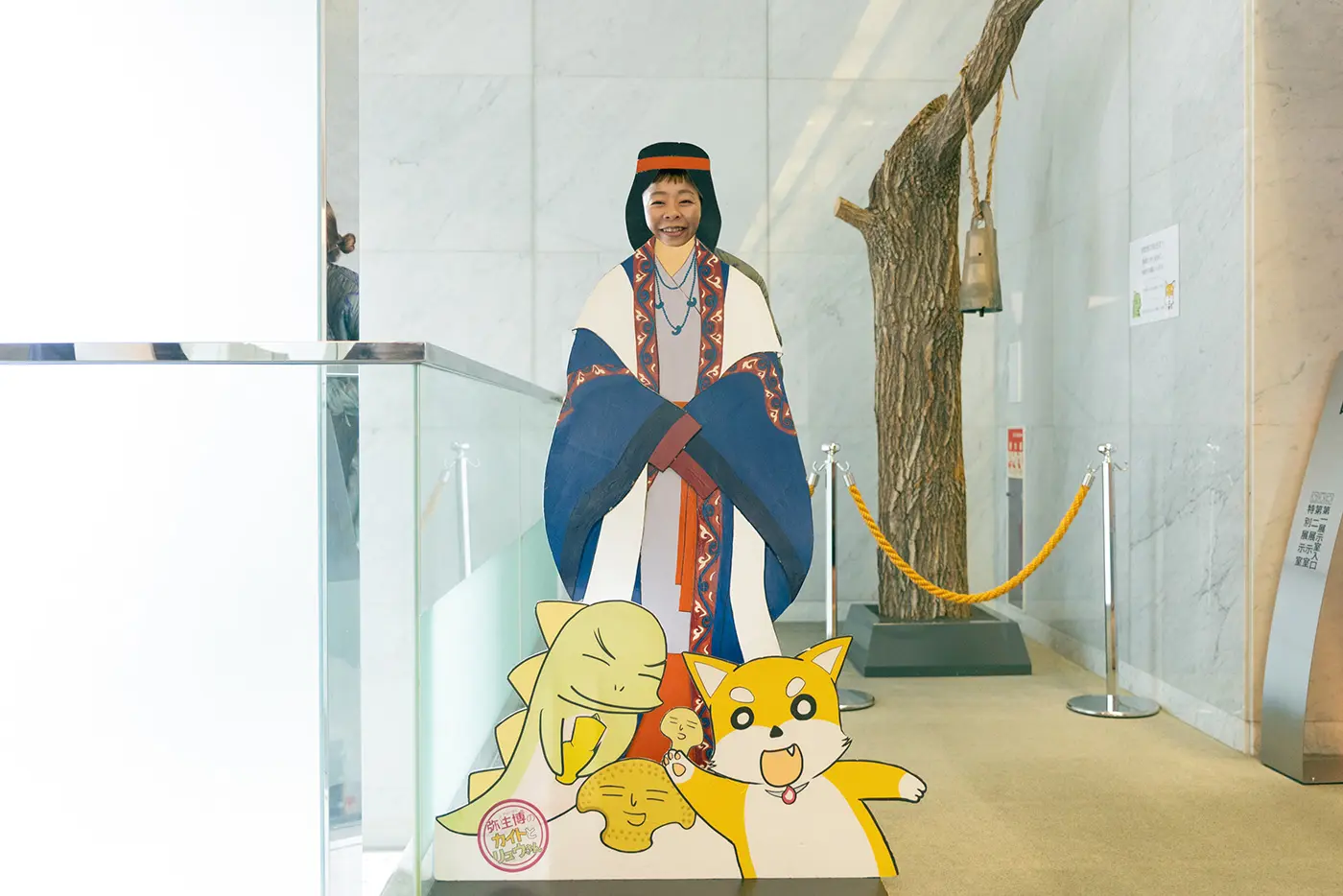
By the way, inside the museum, you can wear Himiko's costume and take photos. Watanabe also took a commemorative photo, imitating the same pose as the statue!
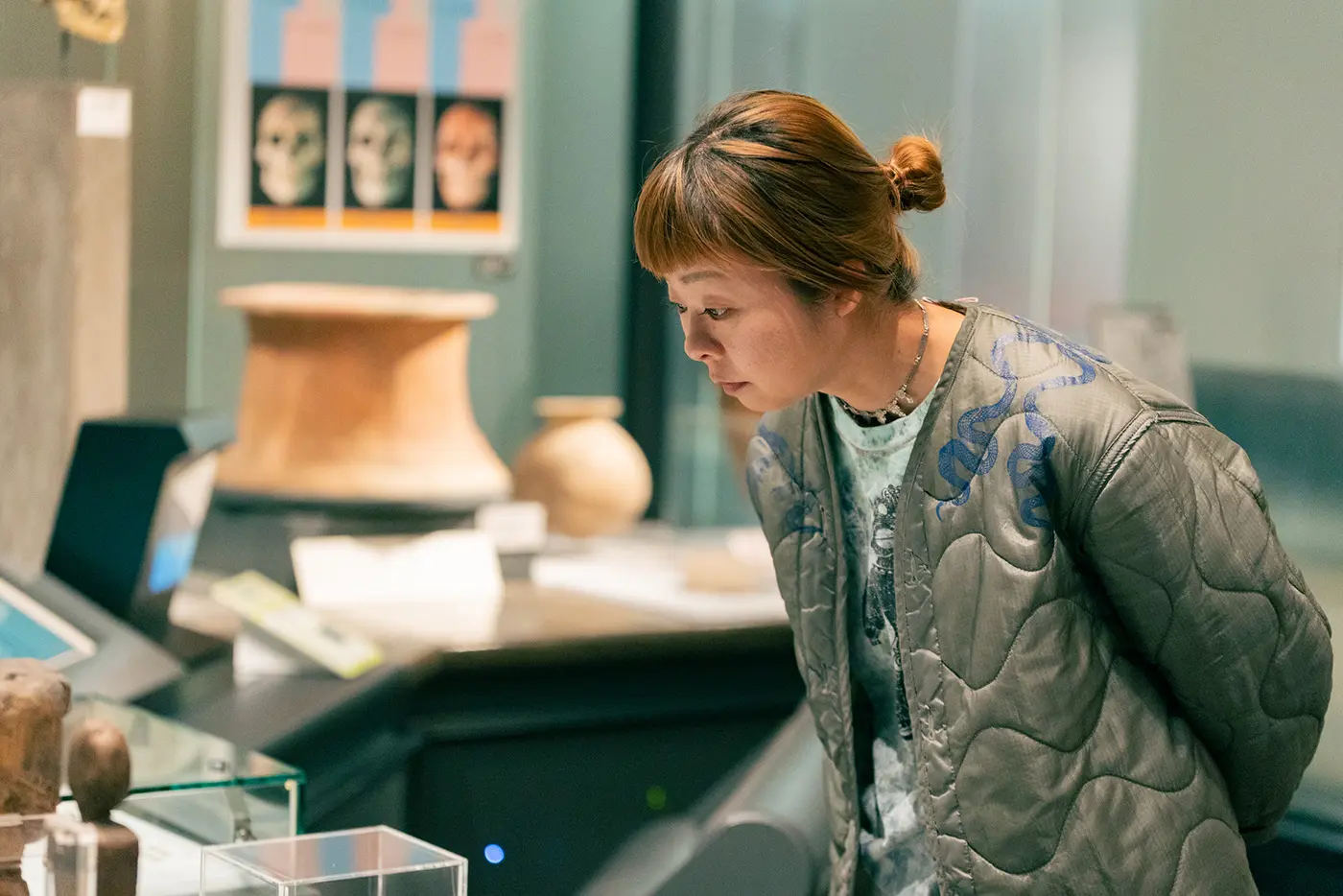
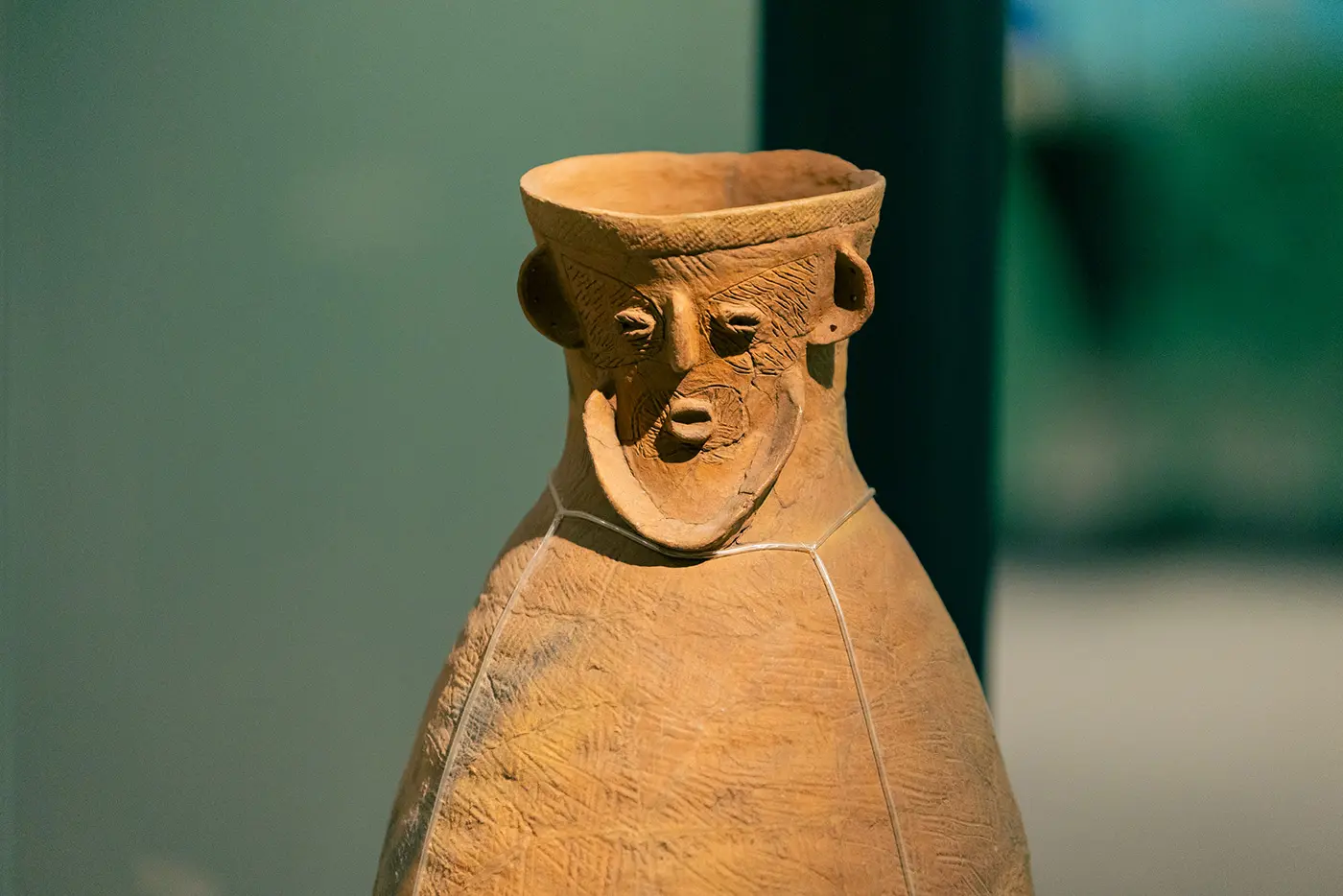
The second exhibition room displays numerous artifacts excavated from the Ikegami-Sone ruins. Pottery and stoneware found at the ruins are on display, along with explanations that unravel the excavation process. Watanabe, who usually specializes in the Jomon period, was fascinated, saying, "At first glance, it looks simpler than Jomon pottery, but the intricate patterns give a sense of the development of culture."
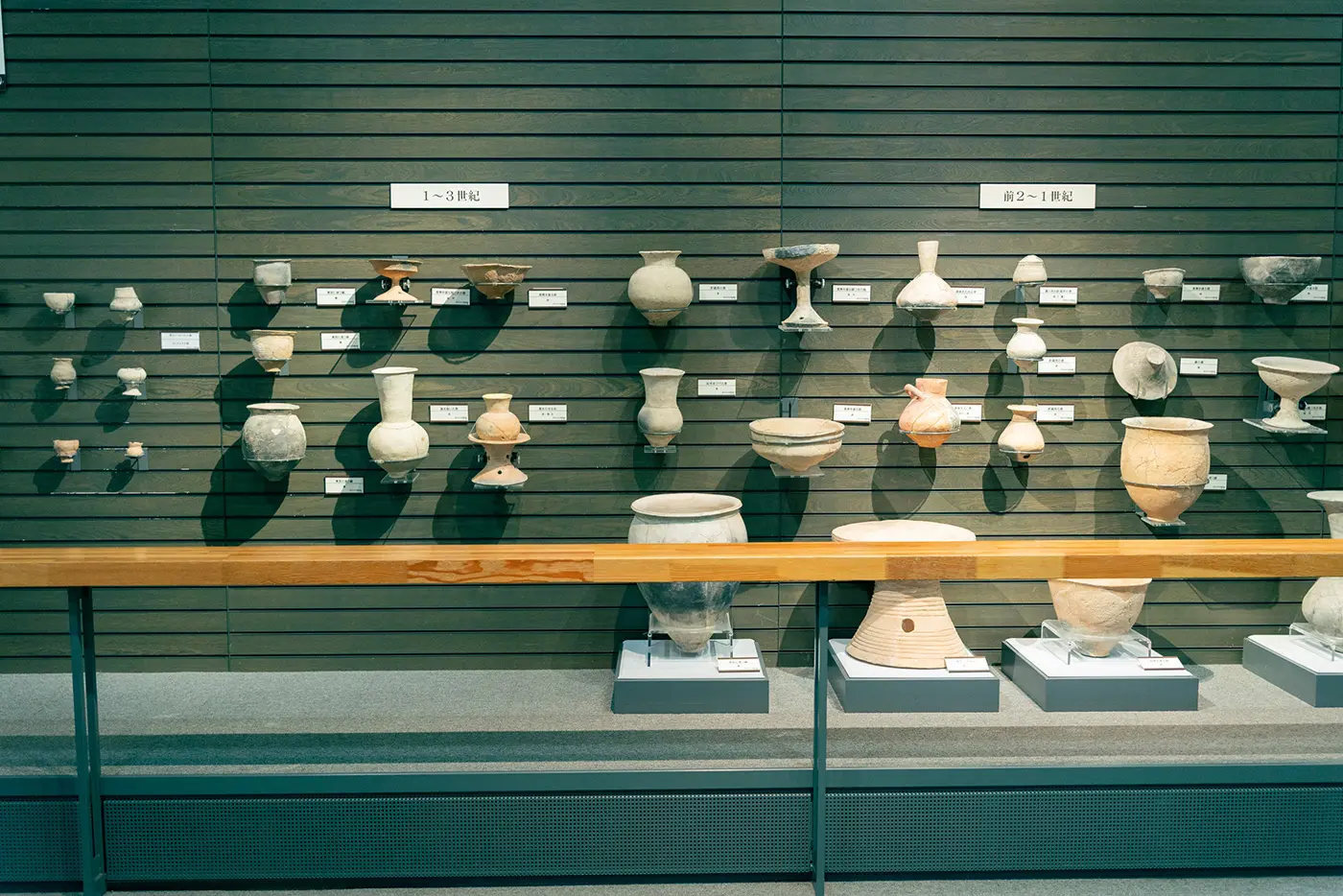
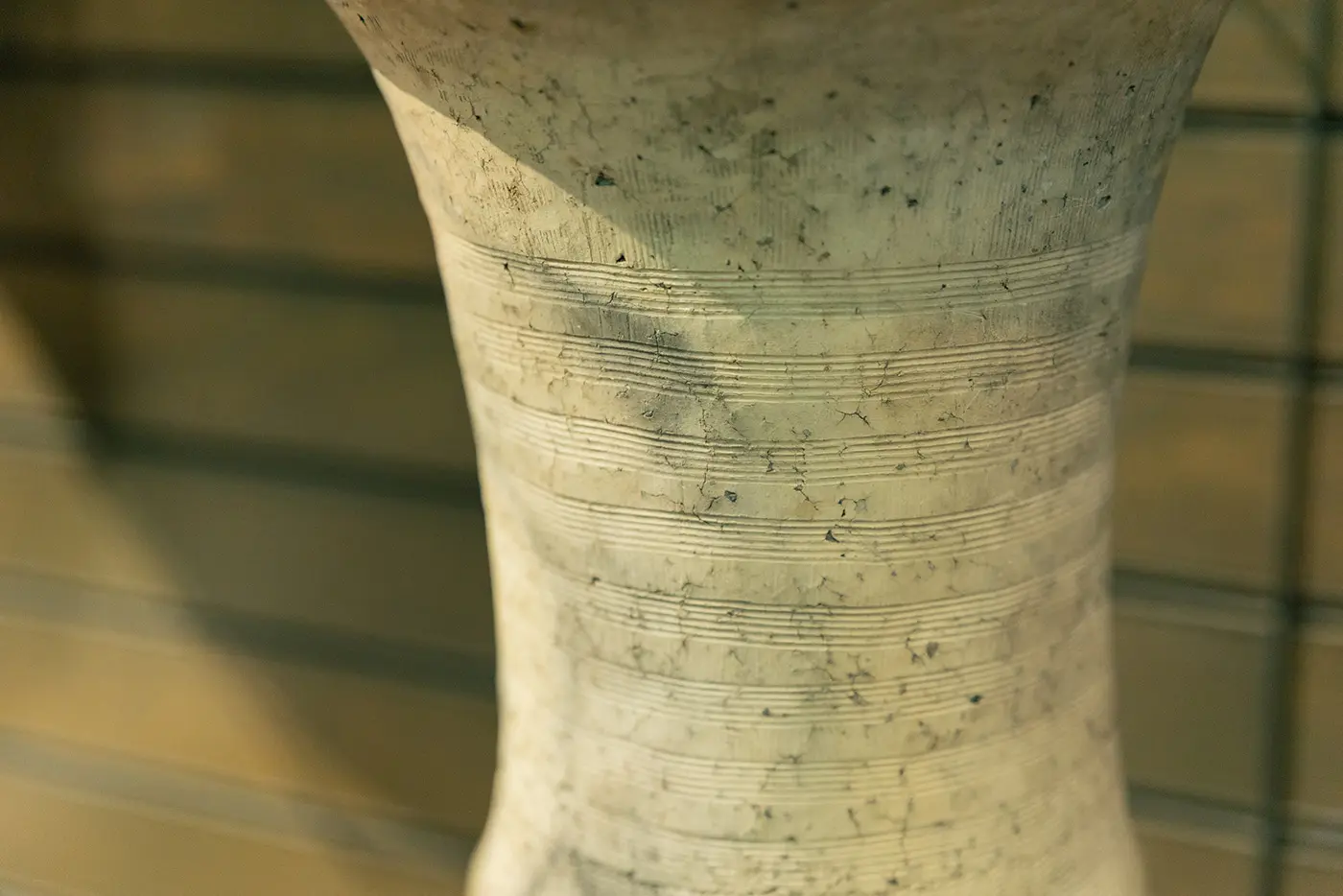
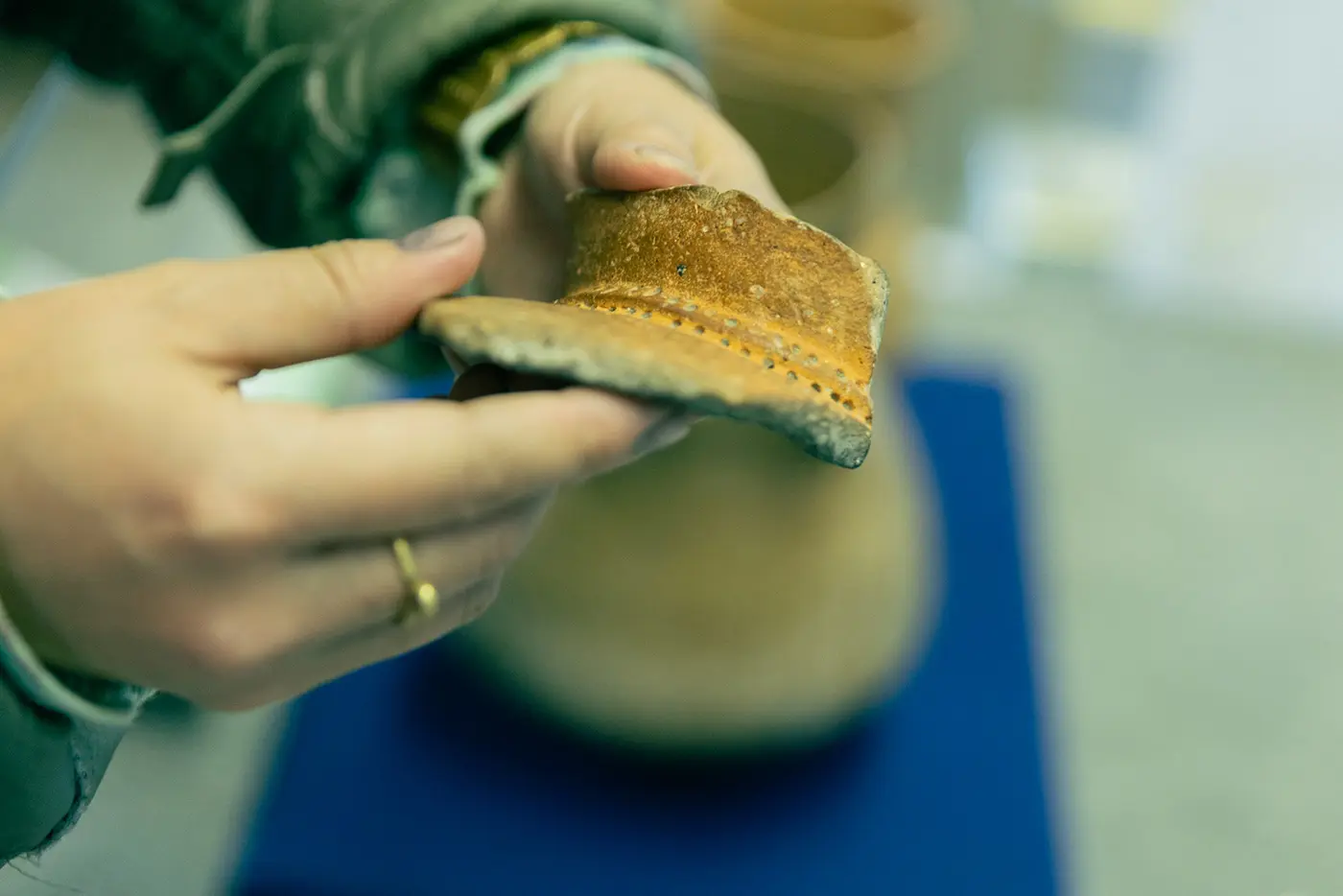
The Osaka Prefectural Museum of Yayoi Culture not only has a permanent exhibition, but also a special exhibition held once a year and a planned exhibition held two to three times a year. Lectures are also held about once a month, so it's also recommended to visit at one of these times.
I knew that Yayoi culture was introduced from China and the Korean Peninsula, but this was the first time I learned that the culture was completely different depending on the region. The more I learn about Yayoi culture, the more fascinating it becomes! It really inspires me to create.
Experience the lifestyle and techniques of the Yayoi period! Izumiotsu City Ikegami-Sone Yayoi Learning Center
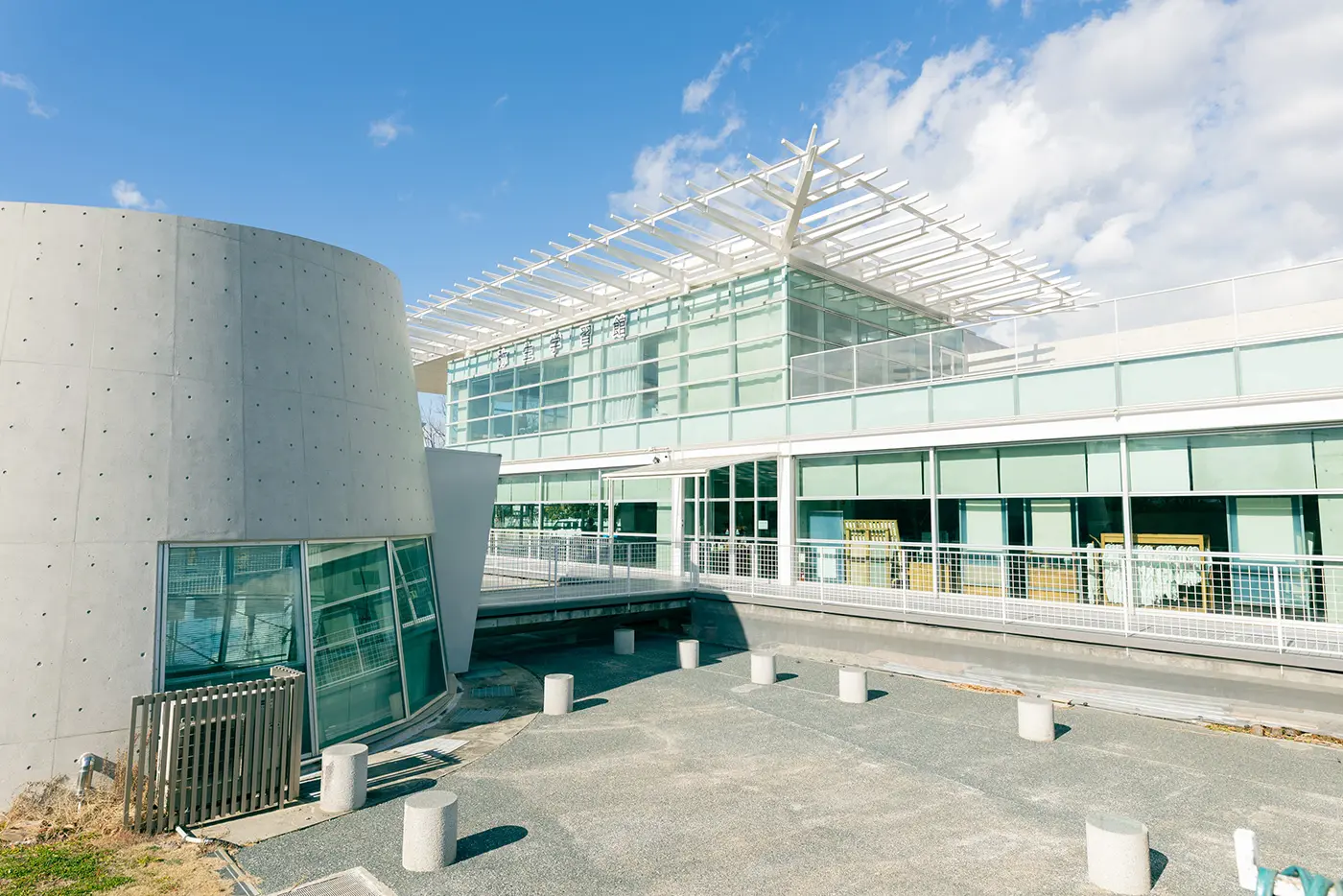
After learning about the changes in Yayoi culture, we arrived at the Izumiotsu City Ikegami-Sone Yayoi Learning Center! It was Watanabe's first time there, and she seemed excited, saying, "I thought there would be lots of explanatory panels because it was a learning facility, but I was looking forward to hearing that it's a facility where you can enjoy using all five senses."
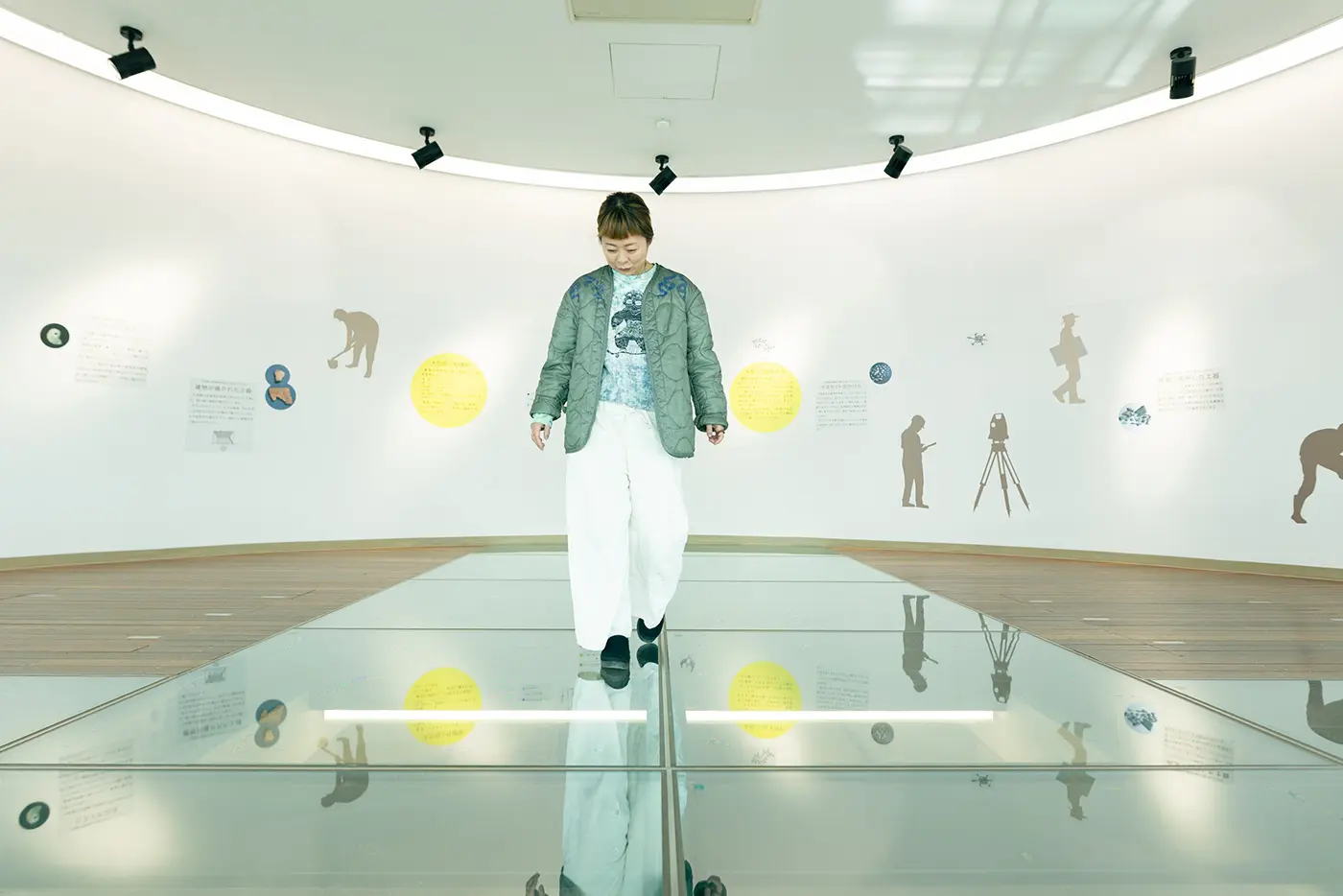
The first thing you should see is the excavation site of the Ikegami-Sone ruins, which can be seen under the glass floor. The excavation site where the "large post-hole building" and "large hollow well" were discovered has been recreated and the items are displayed in the same state as when they were excavated.
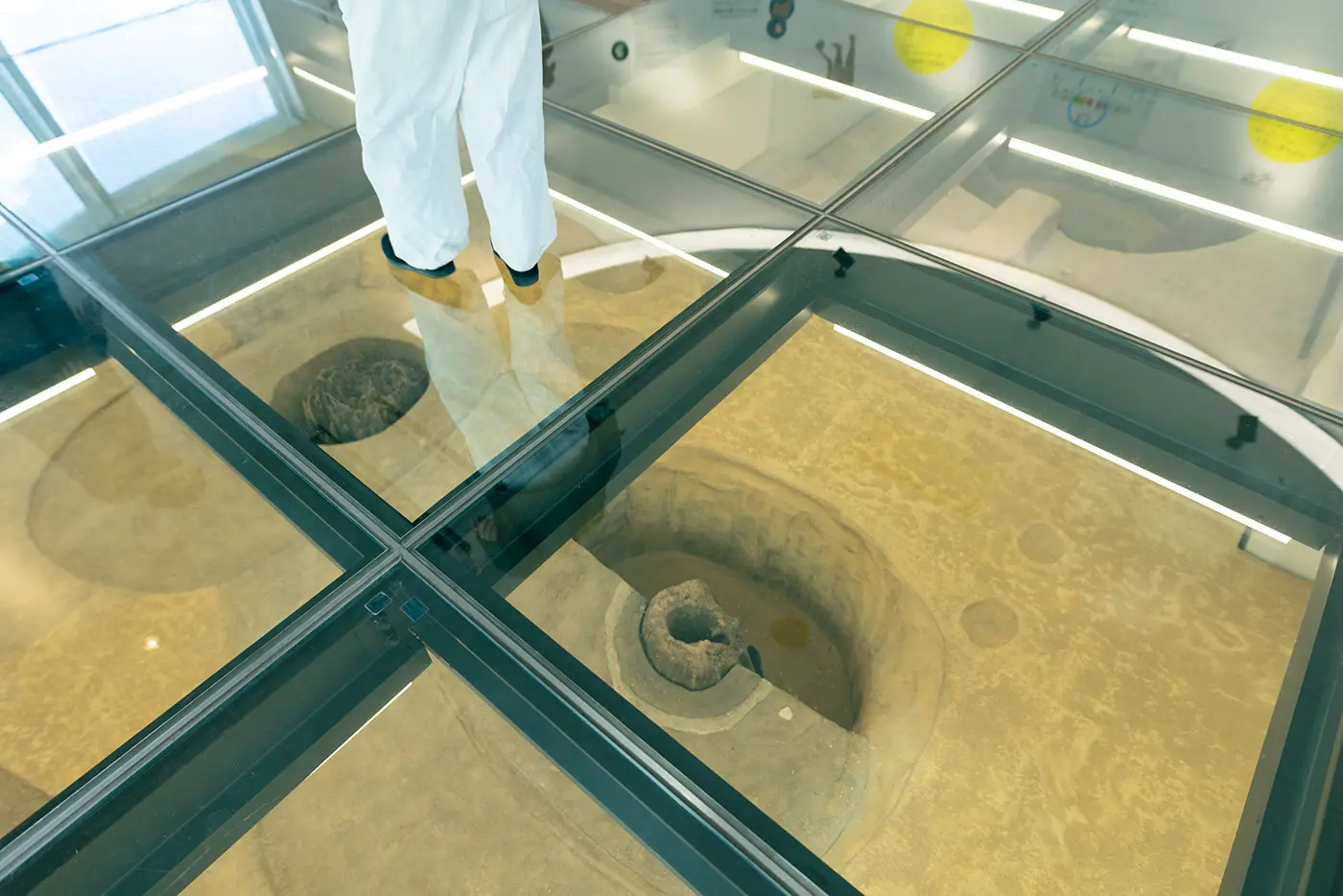
"It's a strange feeling to be able to walk on top of an excavation site!" Watanabe said excitedly. You can learn about the actual investigation procedures that were carried out at the excavation site. Inside the museum, there is also a "Guidance Room" with several drawers hidden in the wall. If you cautiously open the drawers, you will find various devices such as music playing, the ability to touch excavated items, and the ability to see animal bones from the Yayoi period.
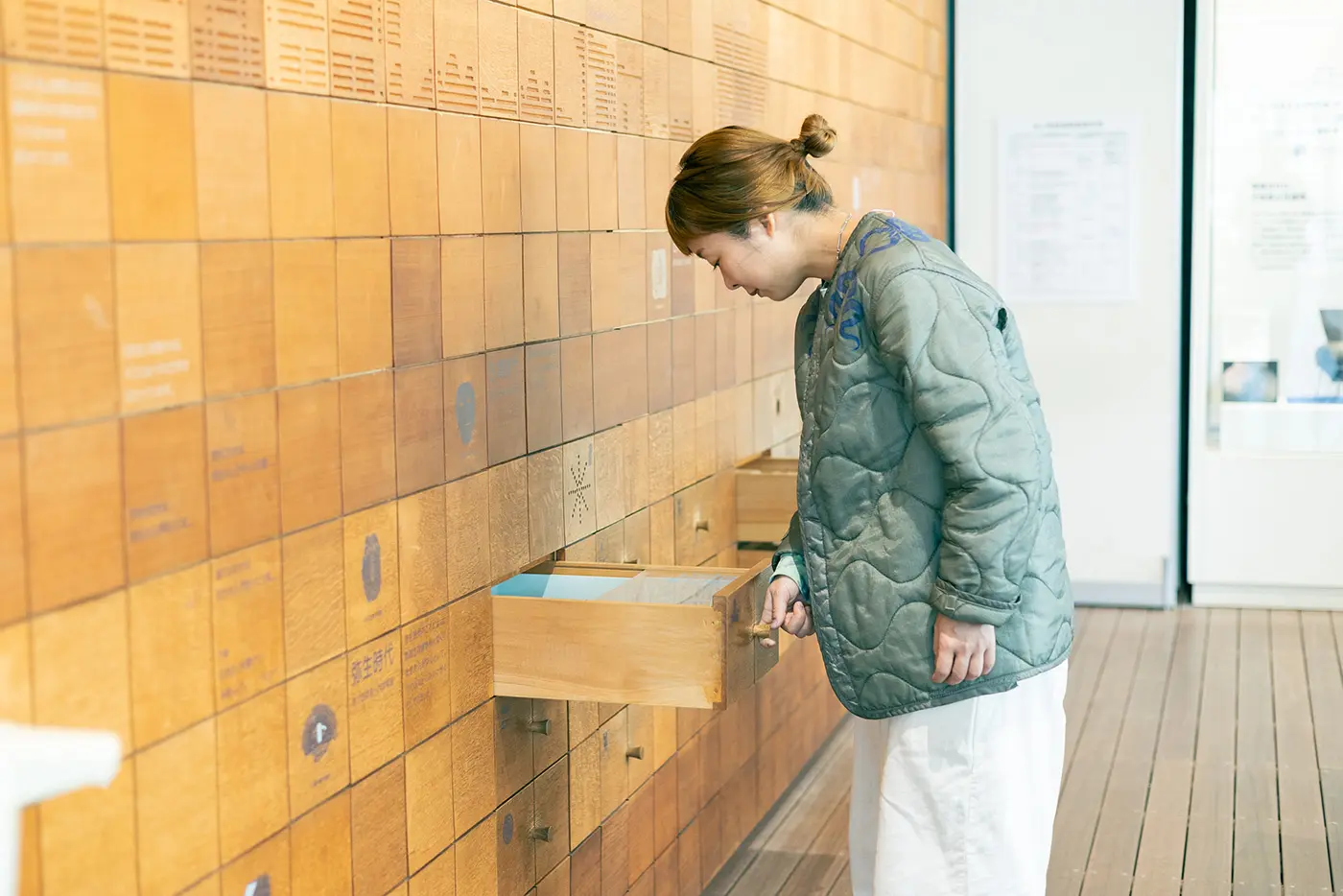
"It's fun that they value hands-on experience and intentionally hide the exhibits," said Watanabe, enjoying opening the various drawers. "By actively encountering and enjoying the exhibits, it seems that both children and adults will become more interested in Yayoi culture."
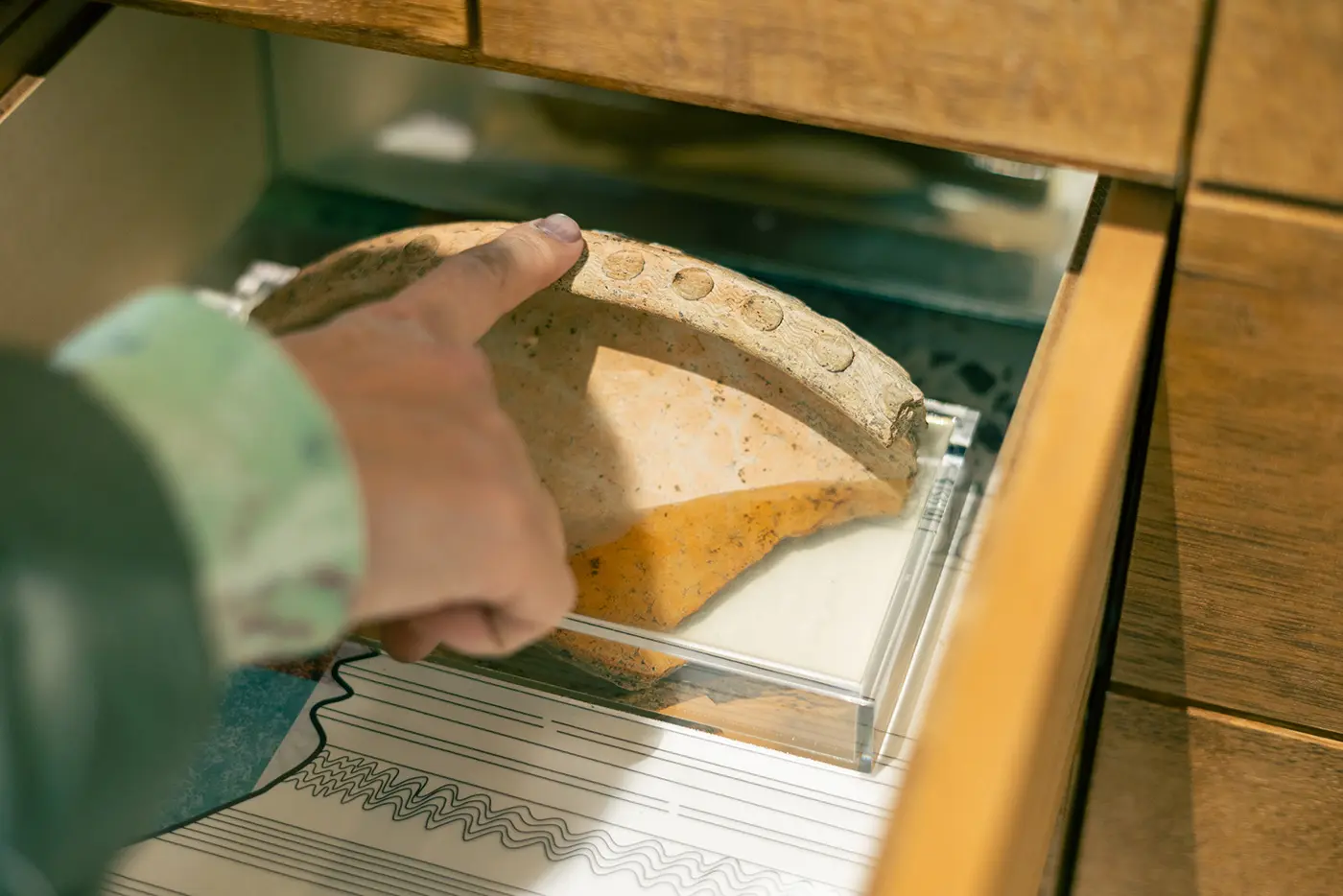
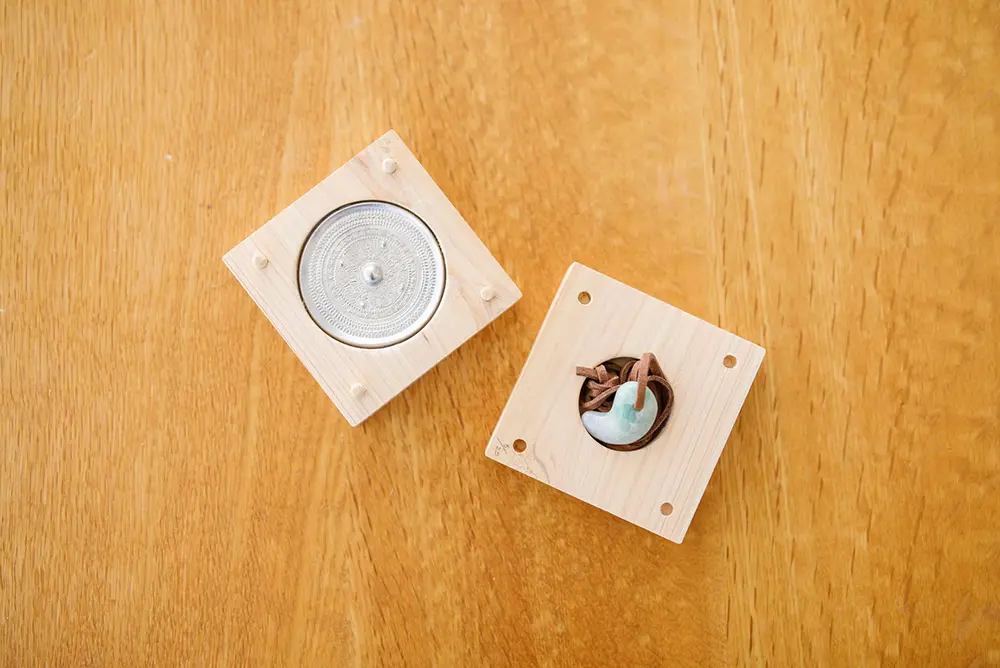
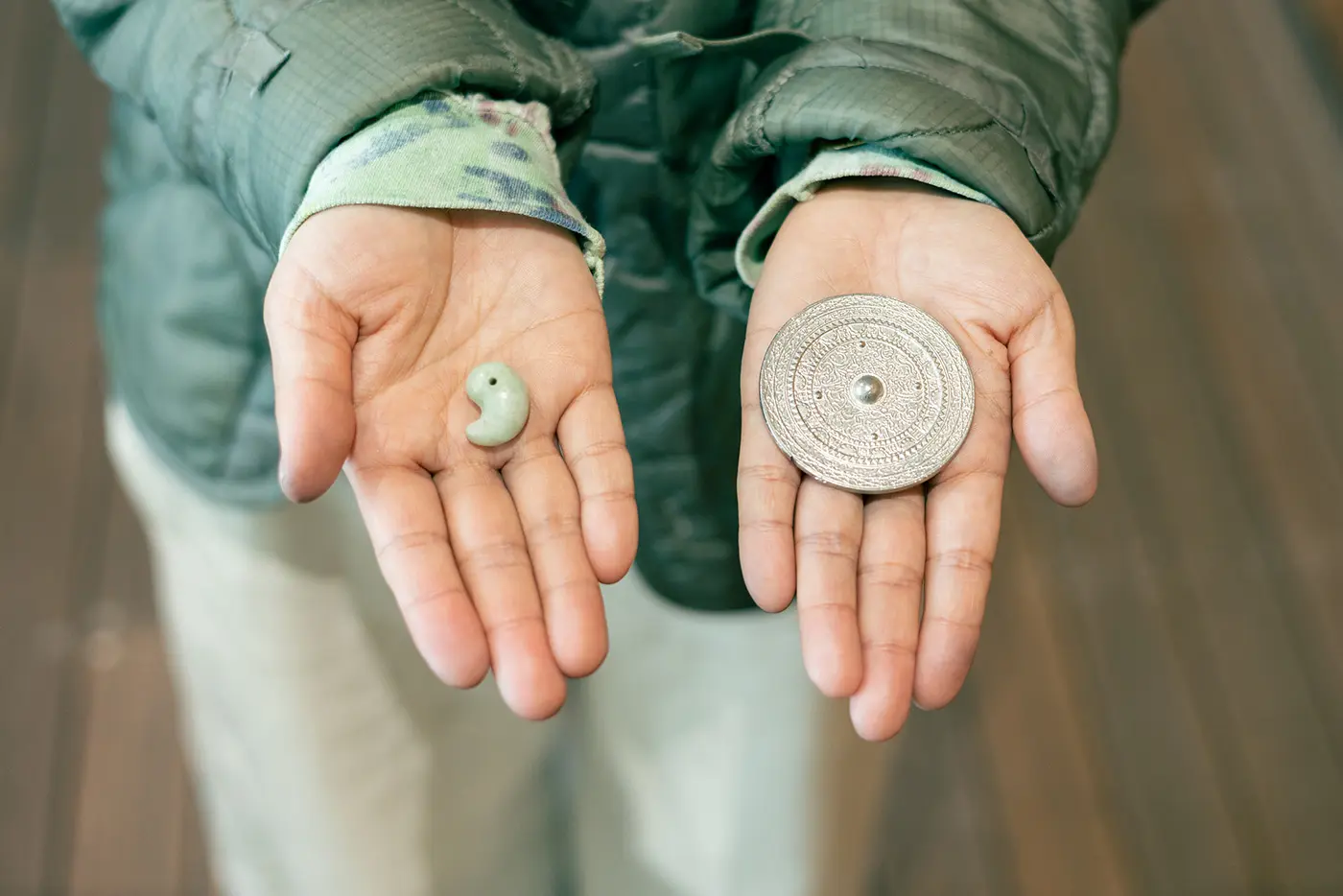
Experience making a magatama made from domestic jade, which is now hard to come by, and a mirror
Don't forget about the workshops that can only be held at the Ikegami Sone Yayoi Learning Center. As an activity that allows you to experience the Yayoi period, workshops are available that anyone can take at any time without making a reservation.
On the other hand, for more authentic experiences with content and processes, there are also workshops that require advance reservations. The one I experienced this time was the special workshop "MIGAKU - Magatama and Mirror Making Experience" (reservations must be made at least three days before the event date). This is a special event where you can actually create magatama and mirrors, which were symbols of power in the Yayoi period. The magatama are made from real jade found in Itoigawa City, Niigata Prefecture. It's a rare opportunity to polish precious jade and create your own original magatama.
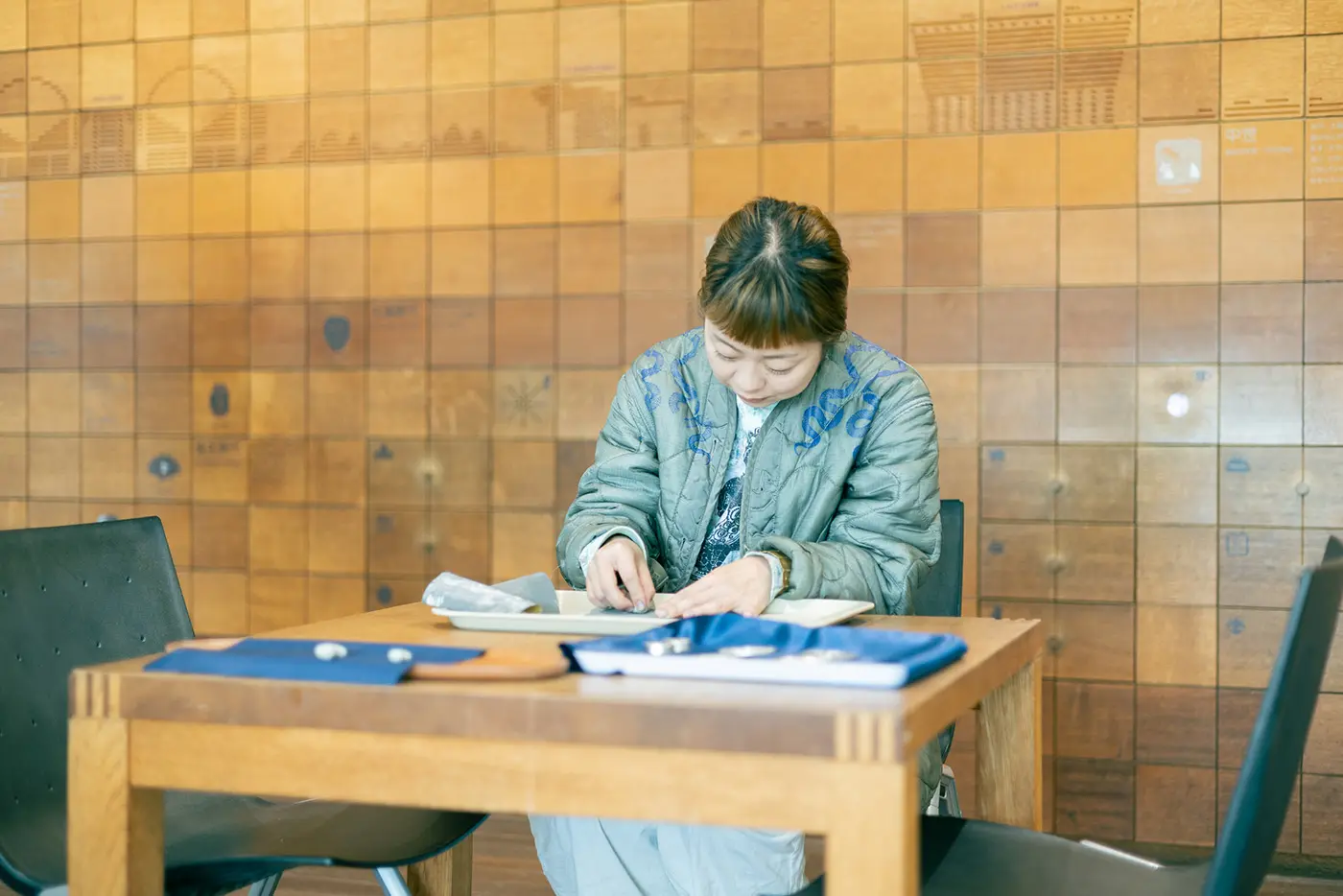
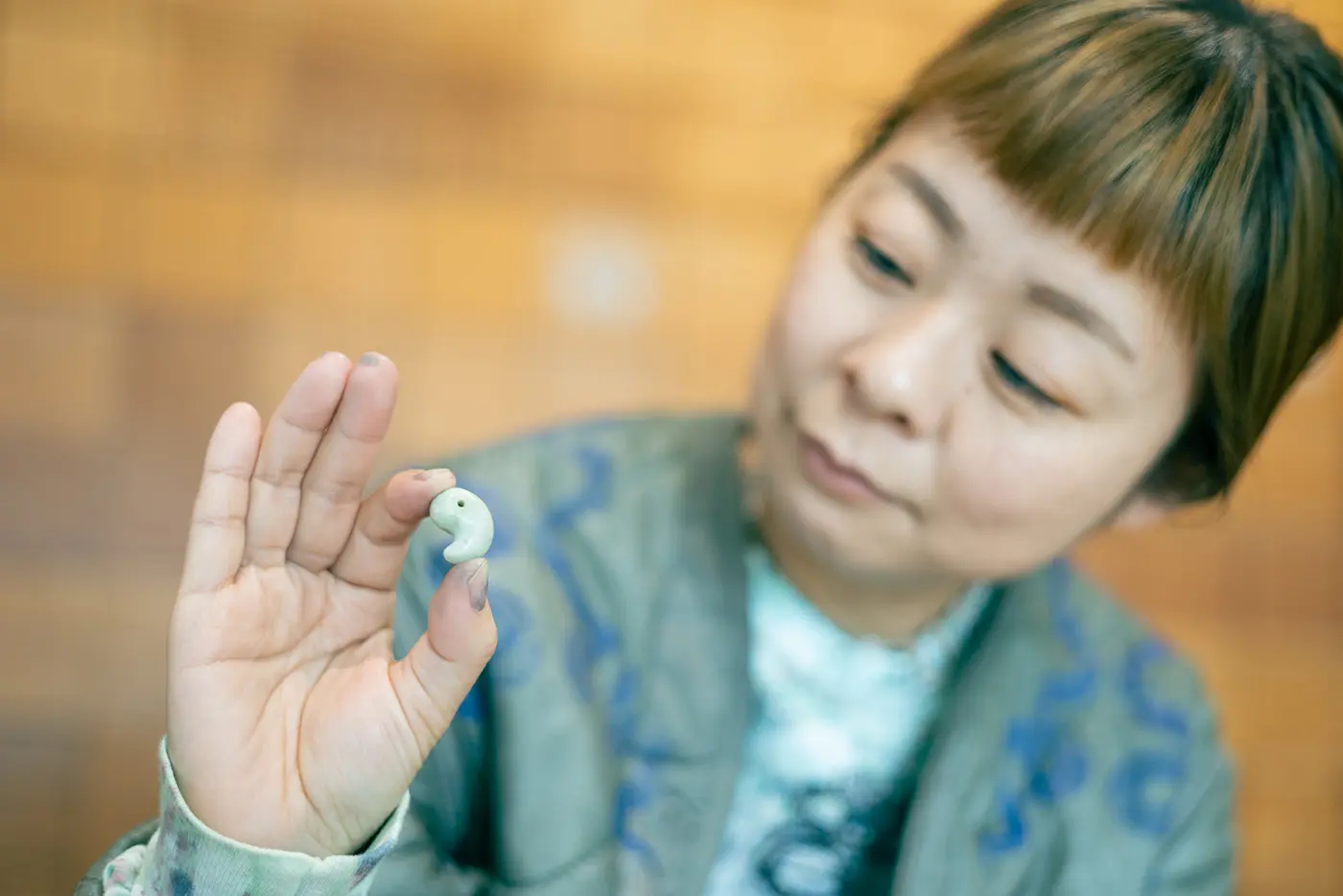
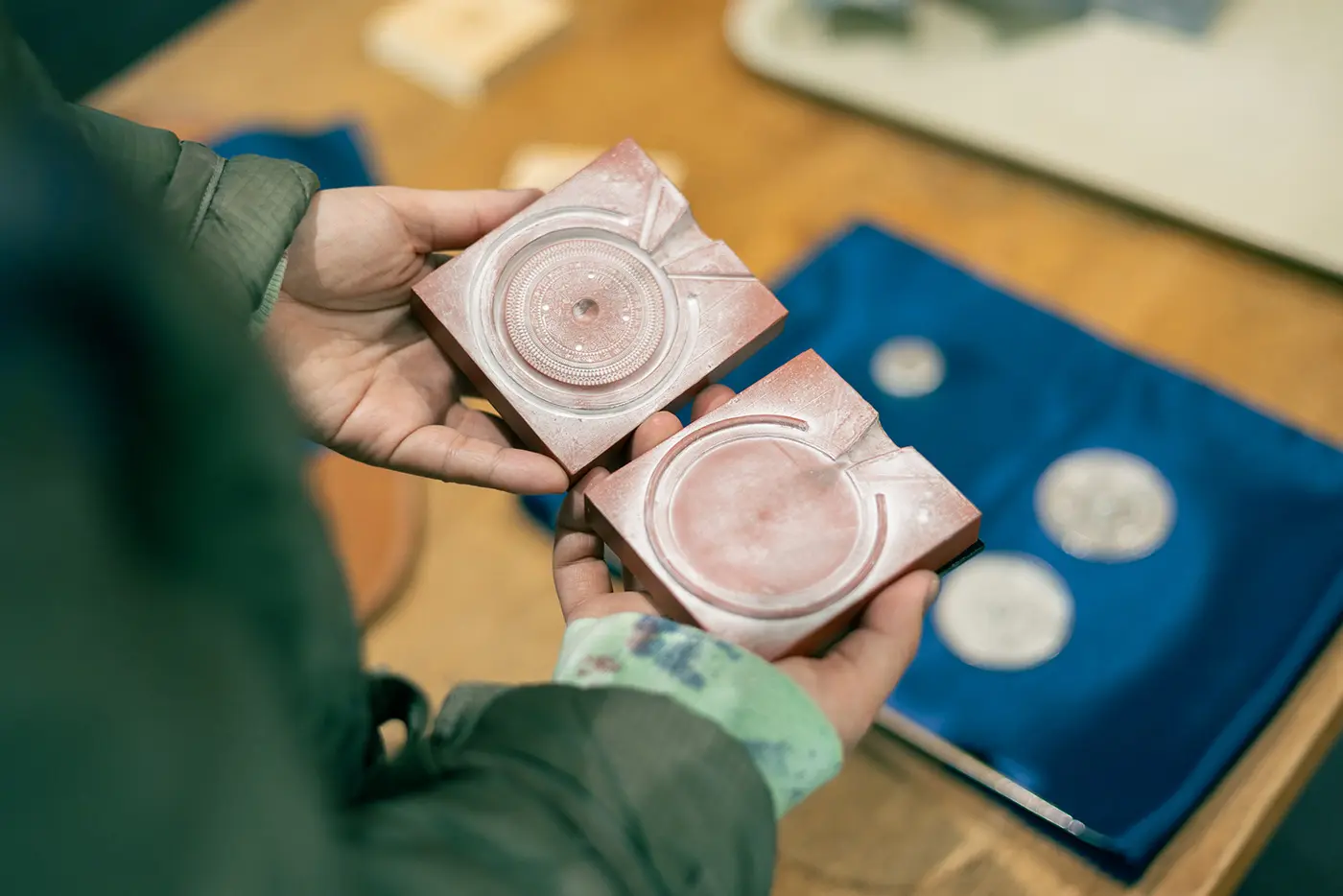
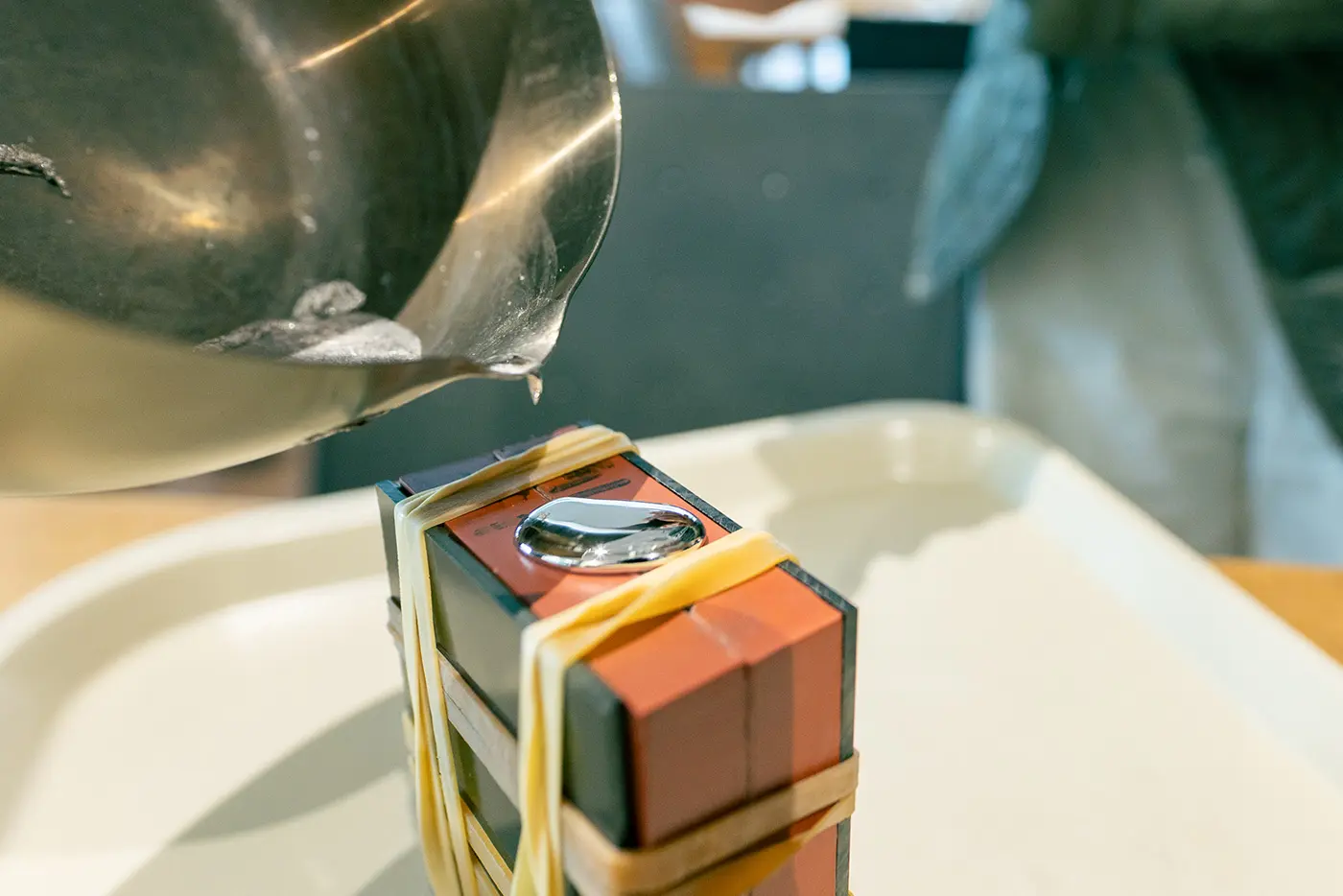
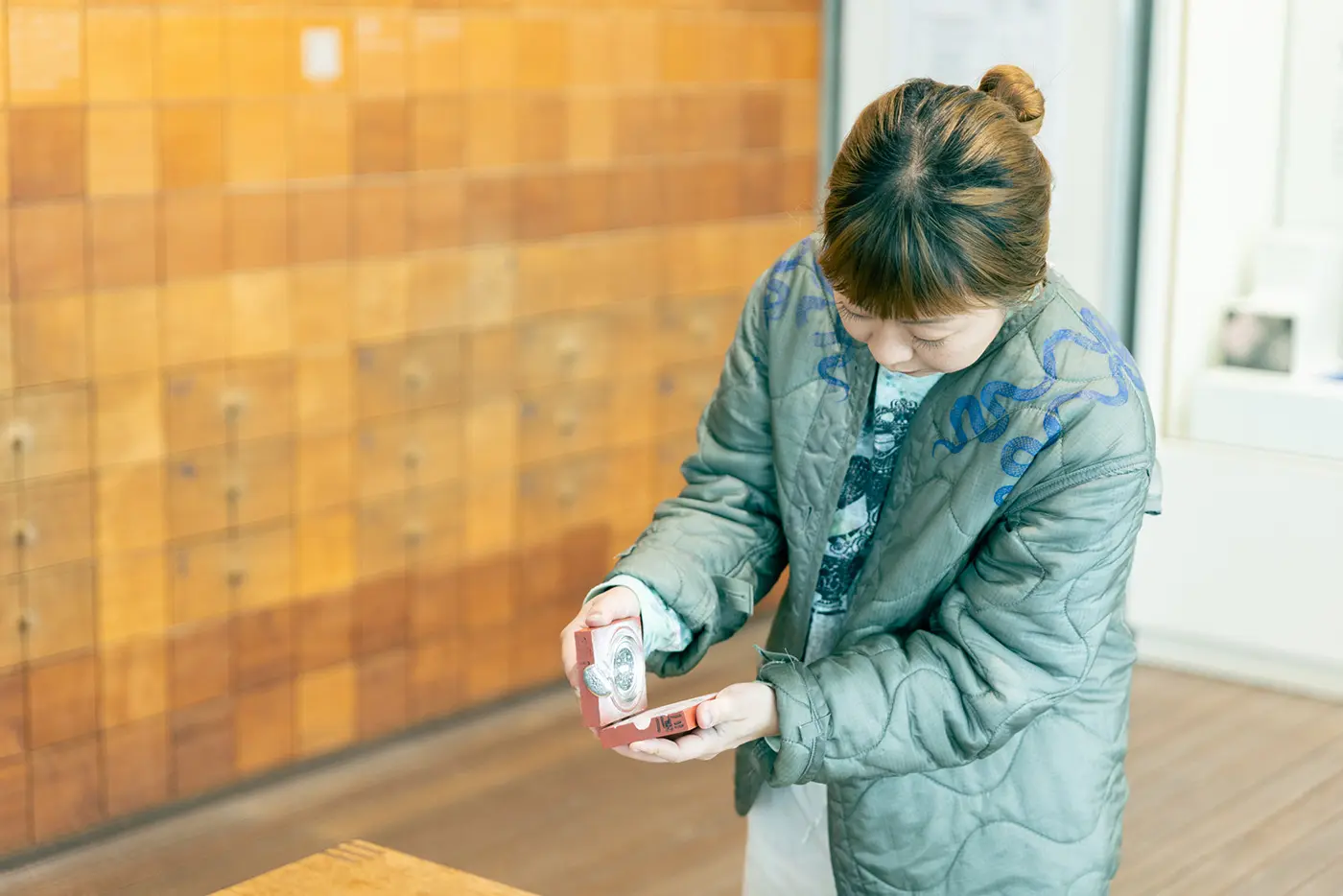
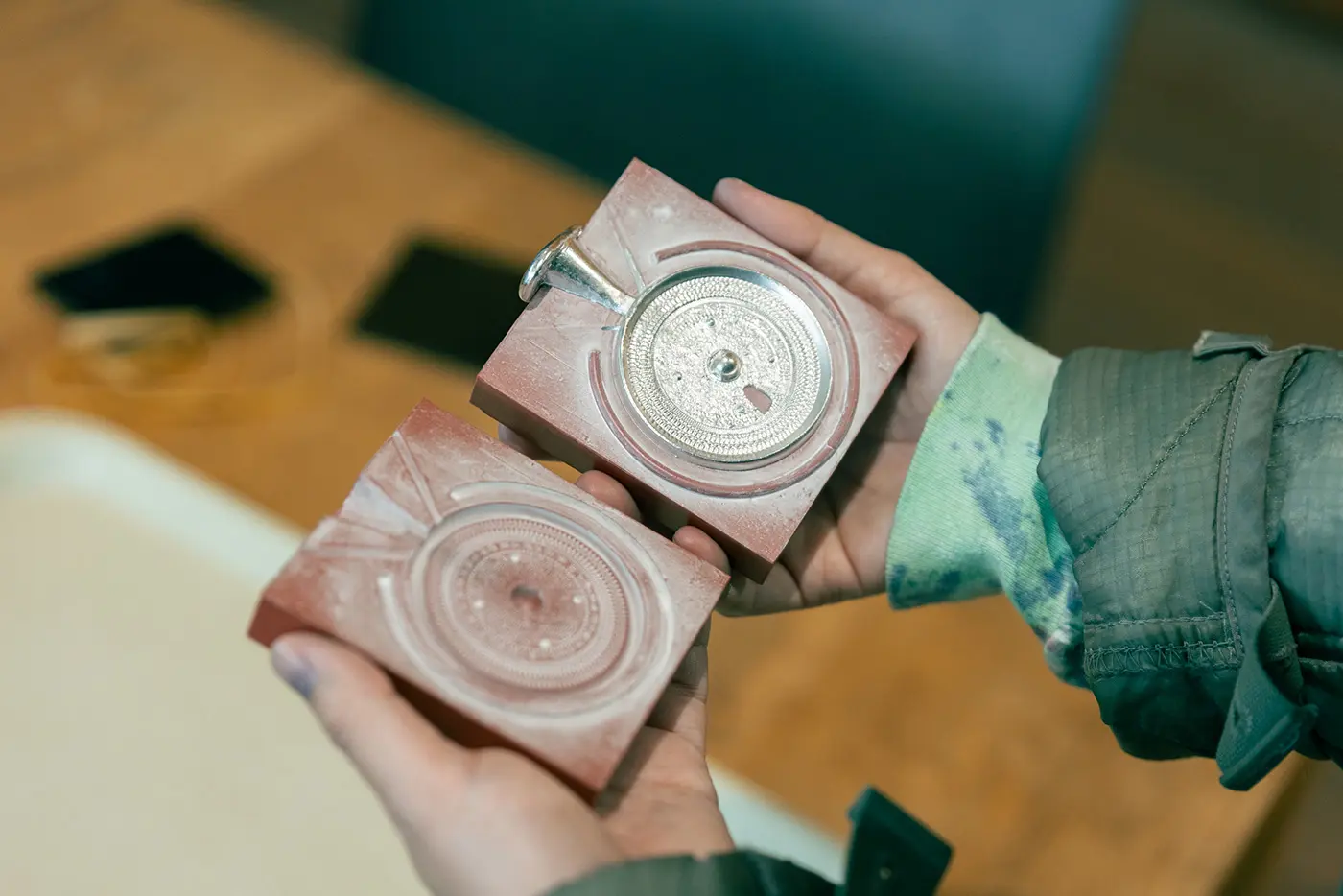
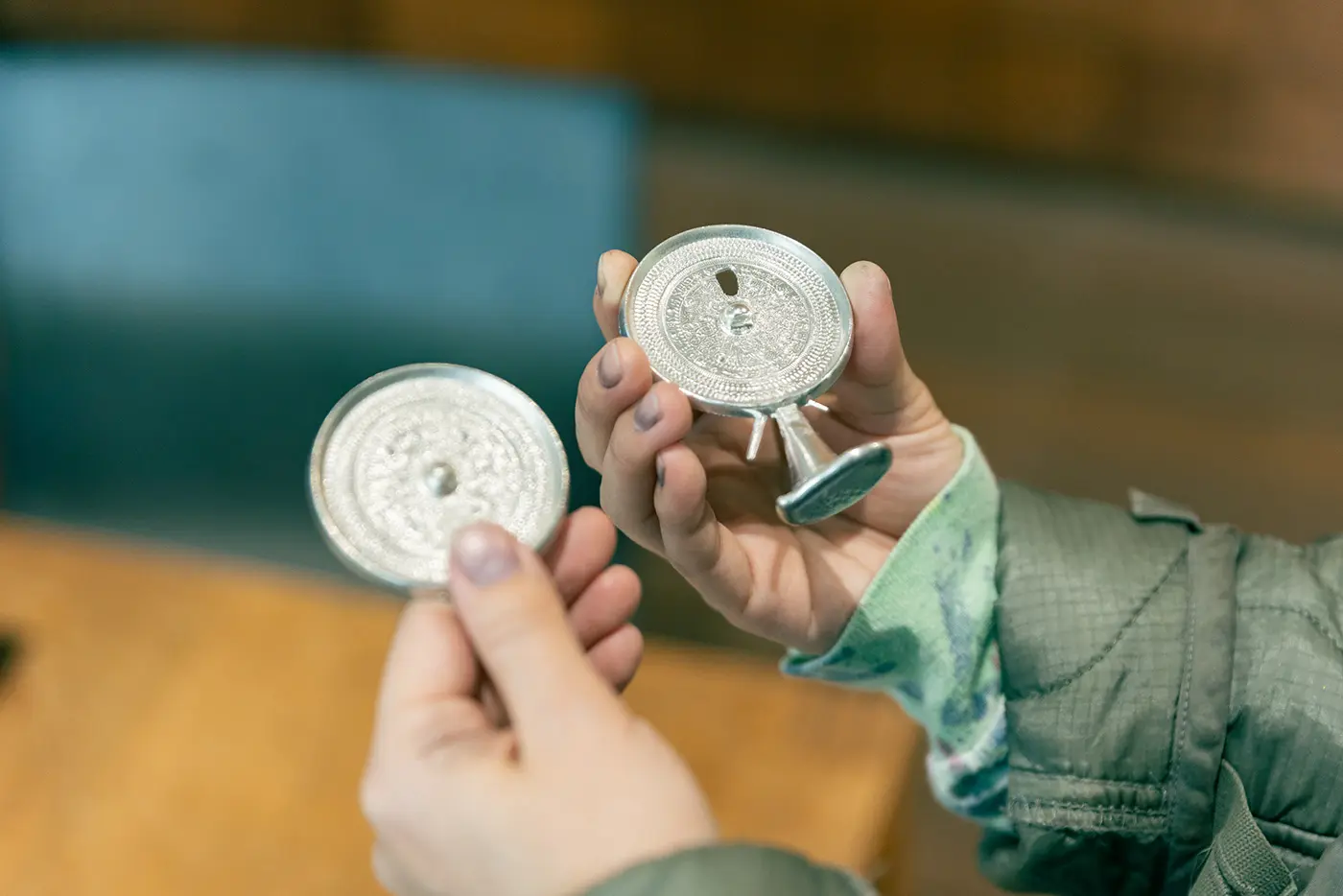
There are also six other experiences on standby at the Atelier, including making Yayoi pottery, clay flutes, and coasters and bracelets using hemp thread. You'll want to come here with friends or family, or even by yourself to experience all the Yayoi culture you can.
The most impressive thing was walking on a glass floor on a recreated excavation site. It's a rare opportunity to walk on a historical site. The magatama-making workshop doesn't only involve making jade magatama like the one I participated in this time, but it also allows you to make simple magatama, so it's recommended to experience it with children. You can also wear a tunic-like garment with Yayoi period patterns, which is sure to be a memorable experience.
Sone Shrine, said to be a place of worship since the Yayoi period
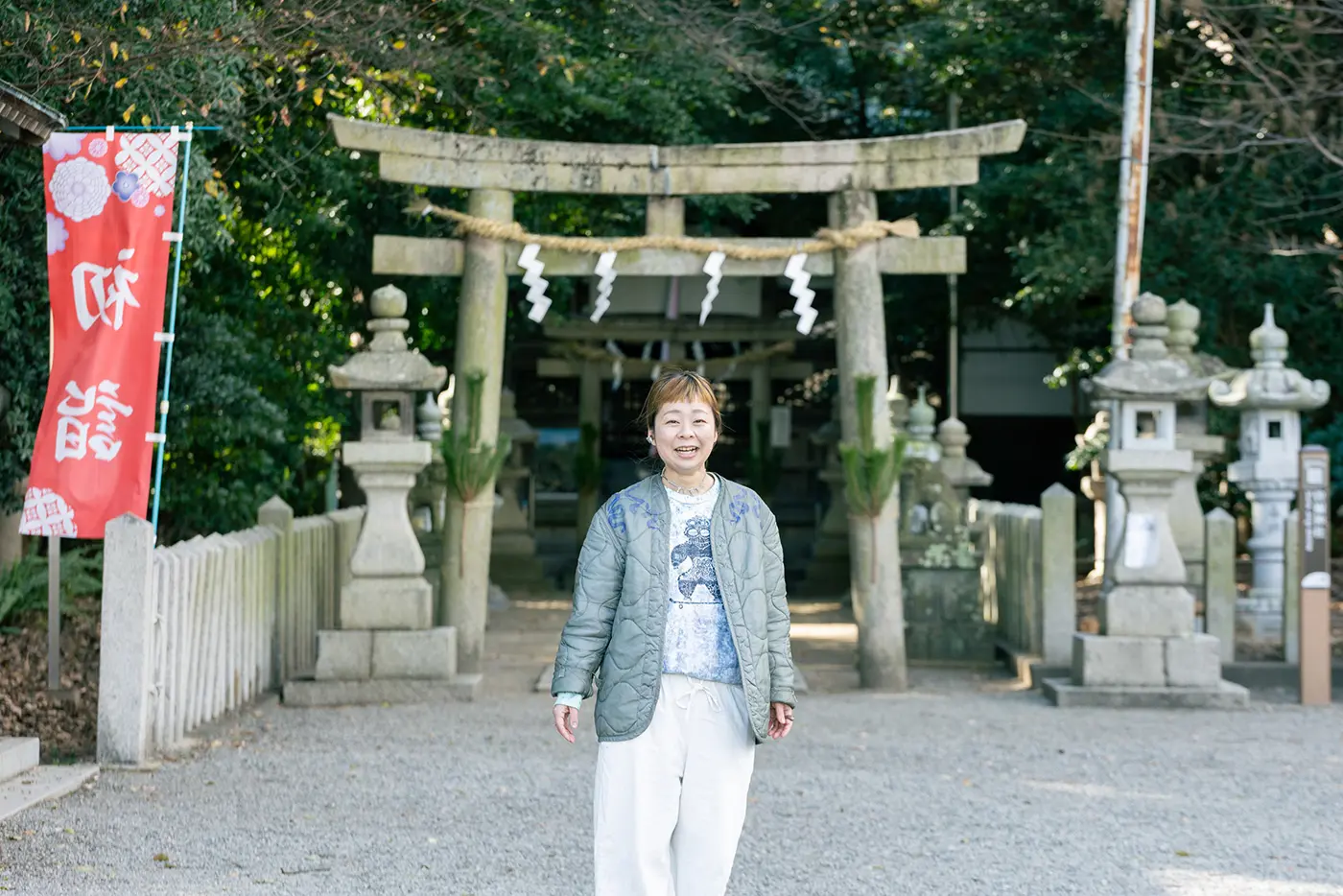
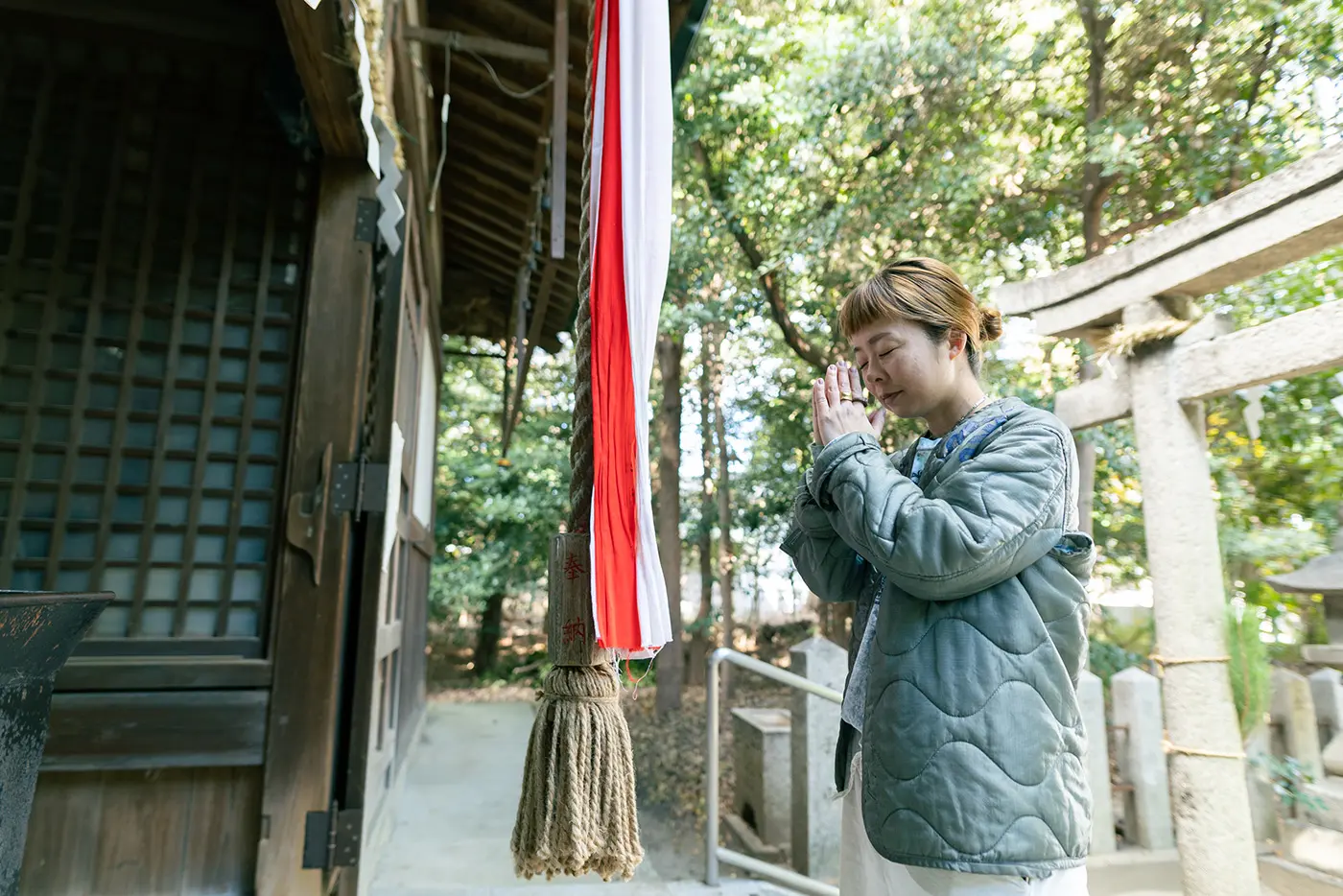
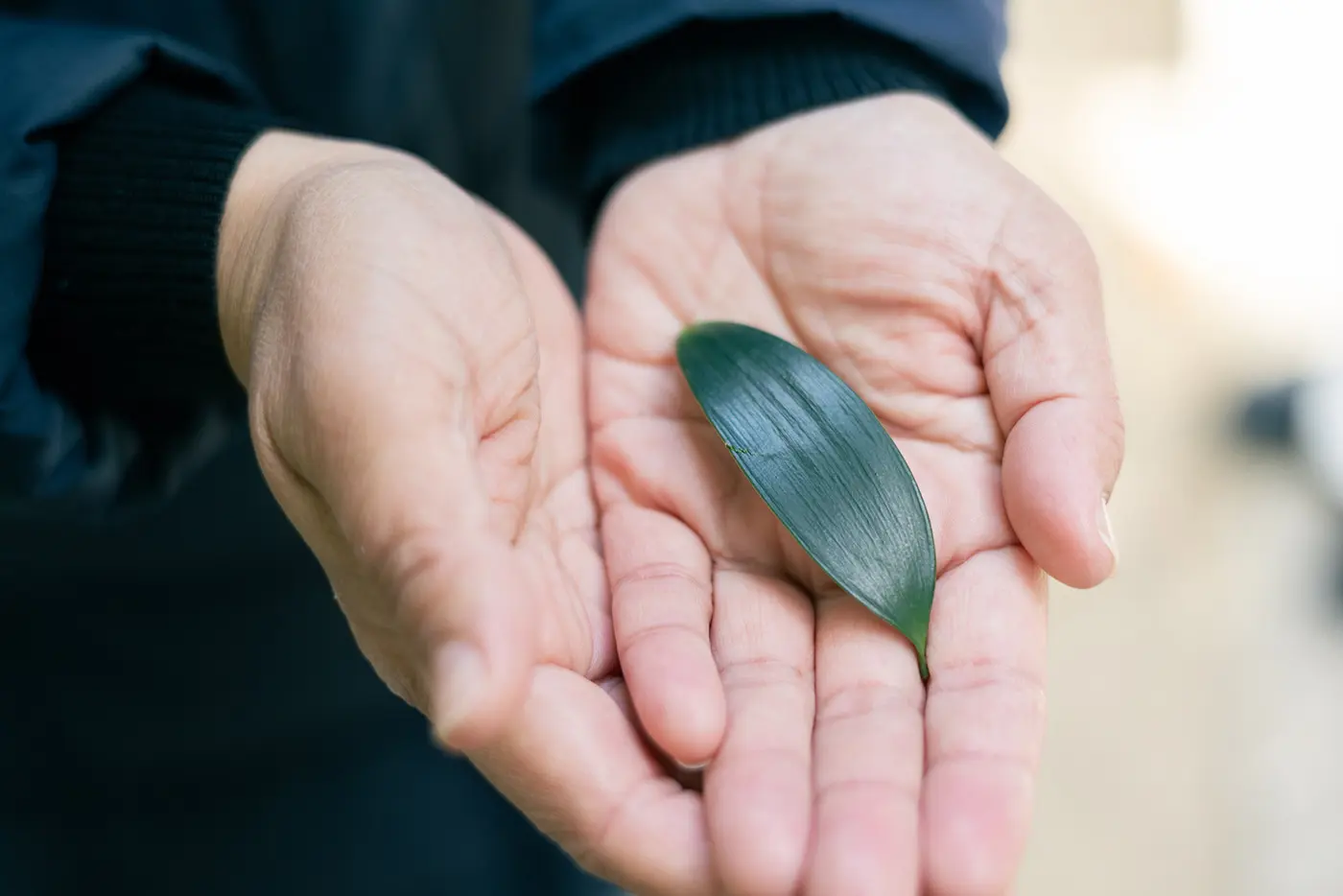
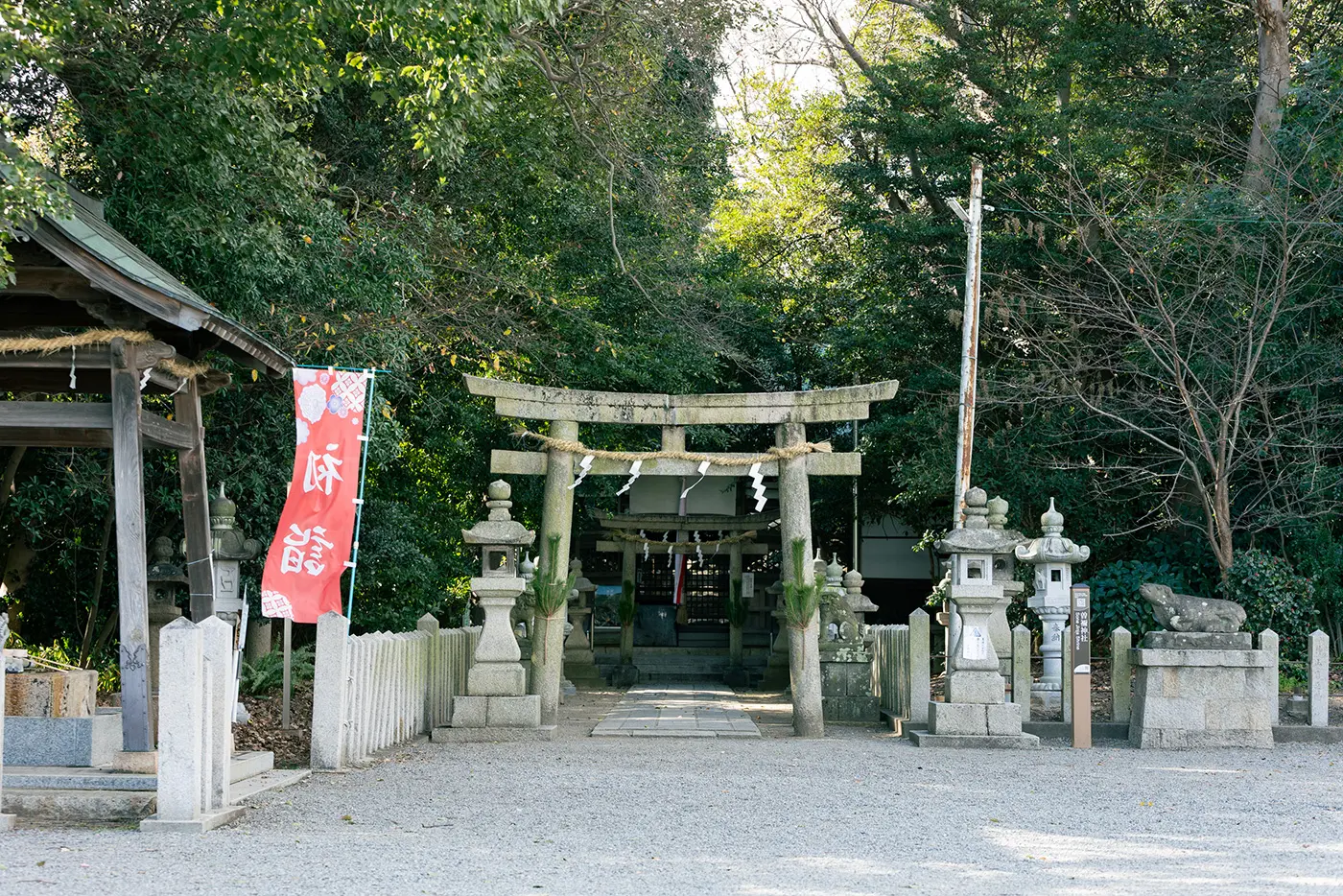
We were nearing the second half of our tour of Izumiotsu City. After fully enjoying the Yayoi culture, we headed to Sone Shrine, which Watanabe had known about since high school, but which she had never visited before. This shrine, dedicated to the ancestors of the Mononobe clan, is small, but you can feel the beauty and power of nature with its magnificent camphor tree estimated to be 500 years old and the Nagi tree, known as the matchmaking tree.
It is believed to have been built during the reign of Emperor Keitai, and Watanabe says, "It is located within the Ikegami-Sone Historic Site, and it may have been a place that has been cherished as a place of prayer since ancient times."
Soba Kusaka: carefully hand-made soba noodles and fresh seafood
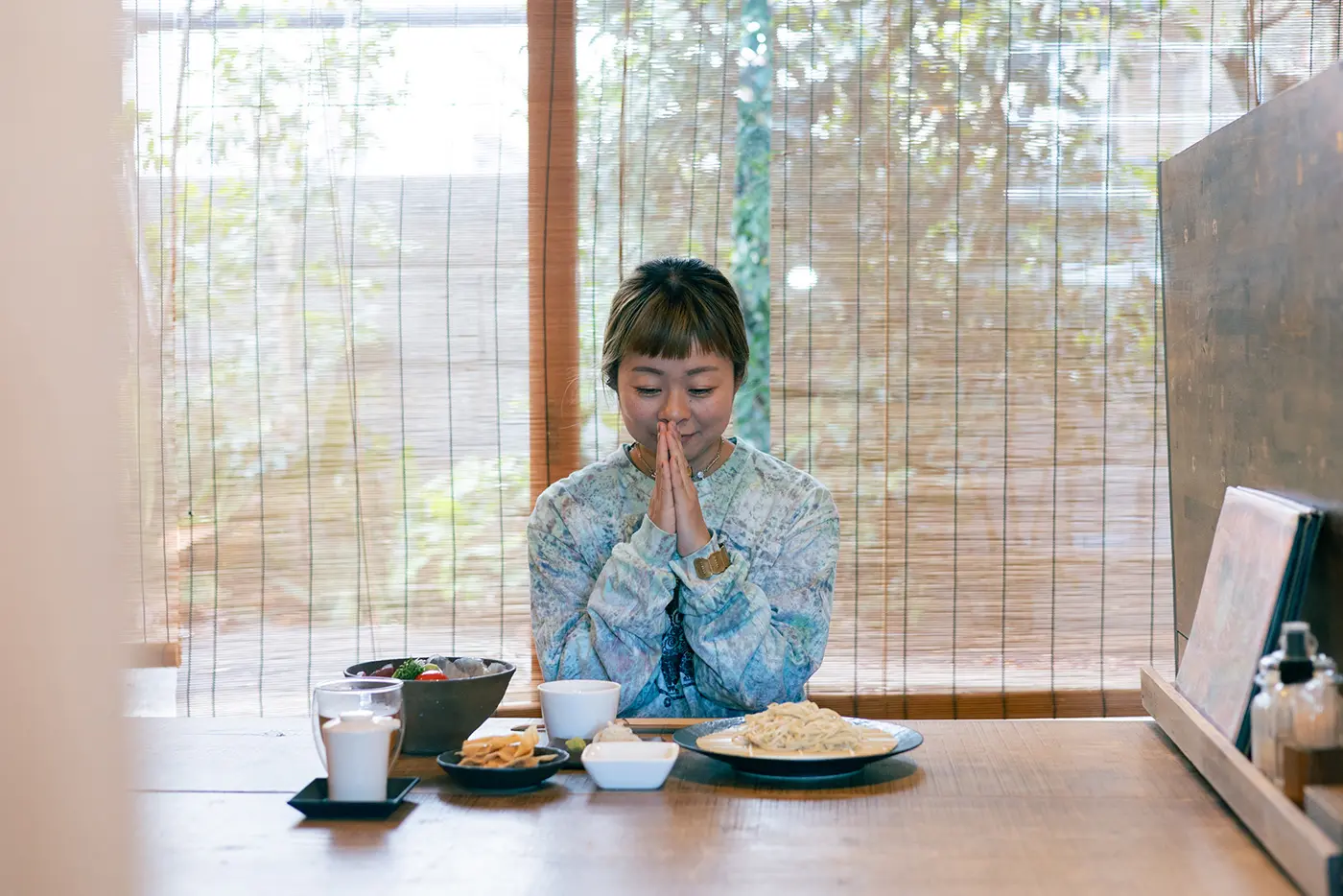
The final stop was Soba Kusaka, a popular spot for locals. The owner is particular about freshness, and the fragrant soba noodles are hand-made using freshly milled flour before opening, along with a wide selection of seafood on the menu. The large door visible from the main street leaves a strong impression, and Watanabe had been interested in the place for some time.
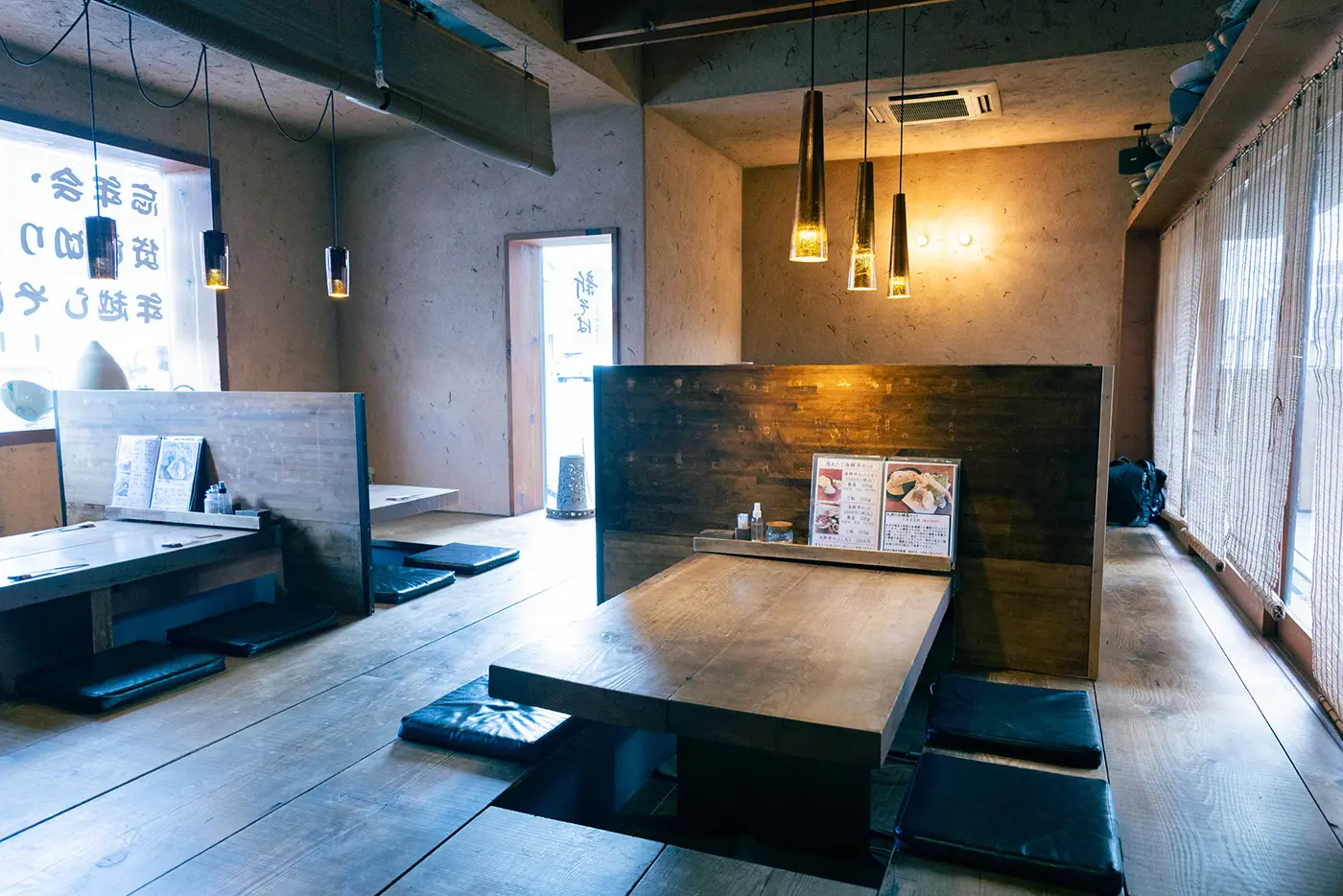
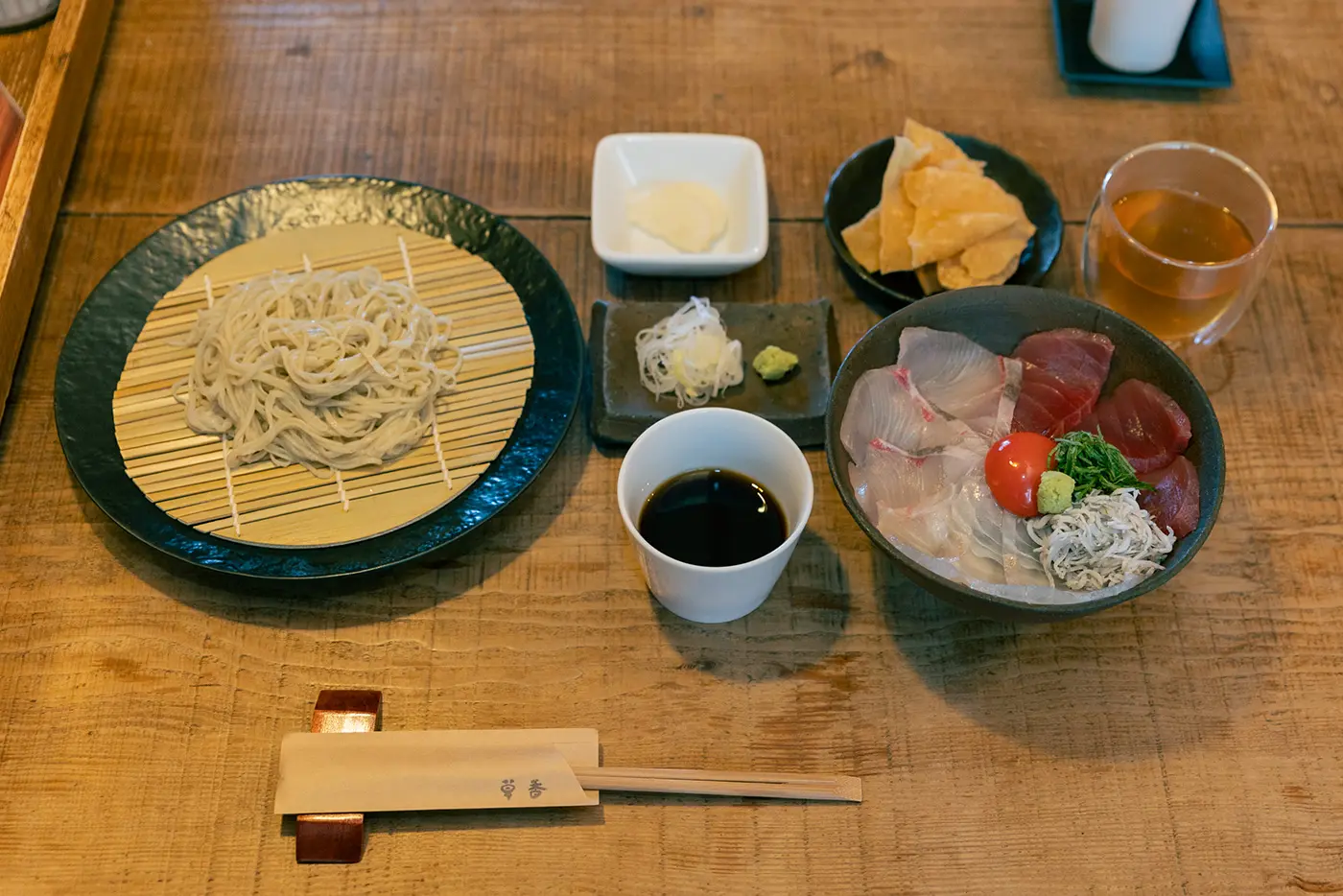
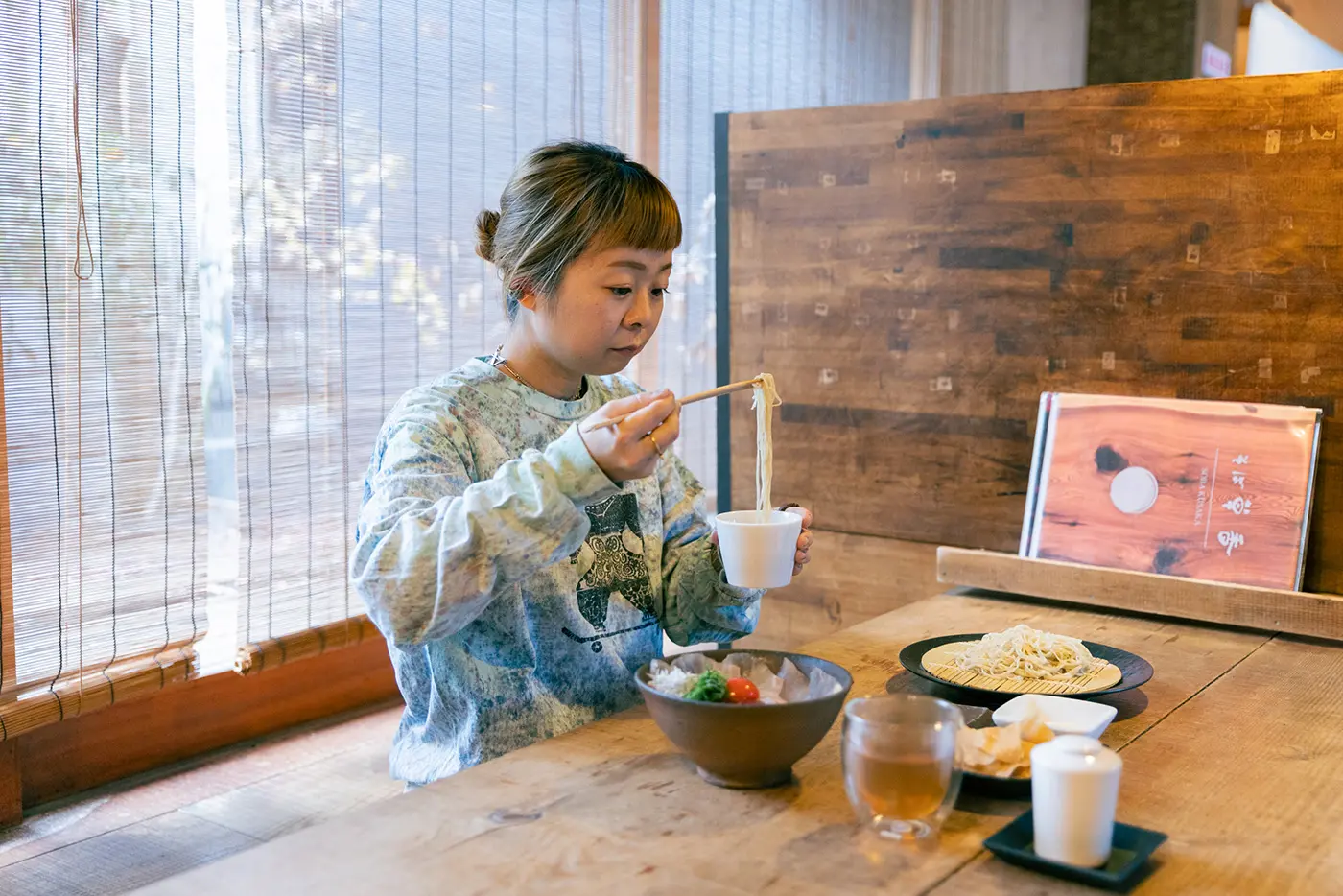
The owner originally trained at a Japanese restaurant that focused on fish dishes. Later, she discovered the deliciousness of the soba noodles served at the restaurant's annex, and while working as the manager, she gained experience making soba noodles before going independent. "Many soba lovers also like alcohol, so after enjoying fish and alcohol, we want you to enjoy soba noodles as a final dish," says the owner, and the restaurant stocks around 15 types of sake. And of course there's soba shochu, but there's even whiskey made from buckwheat flour!
The luxurious combination of fresh soba noodles and a seafood bowl filled both my stomach and my heart. I didn't have the opportunity when I was in high school, but now that I'm an adult, I can enjoy this luxury. The crispy soba rice crackers are the perfect snack to go with alcohol, and the "Angel Tempura Set" using angel shrimp also looks delicious, so I'd like to visit again sometime.
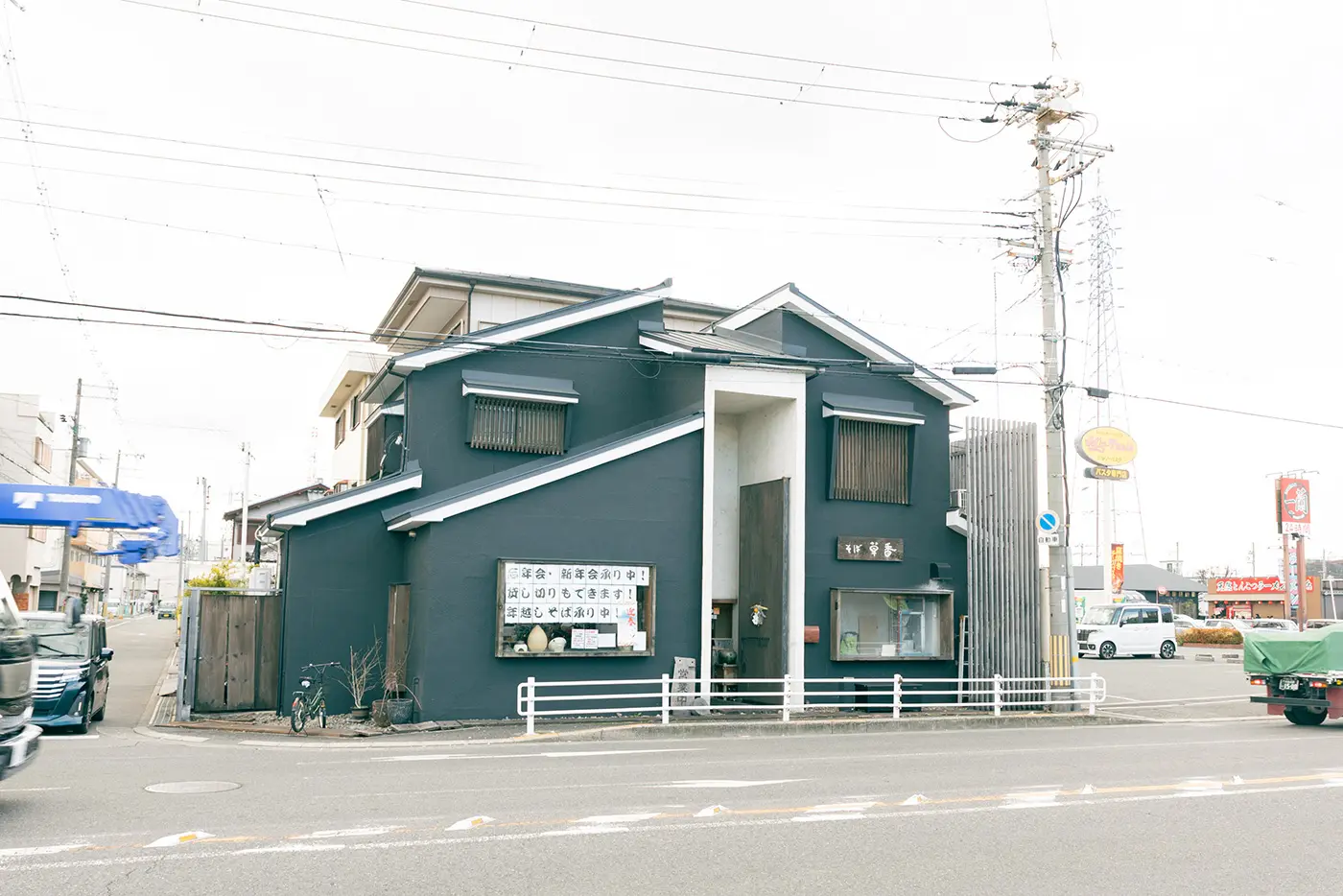
Saturdays, Sundays and public holidays 11:30-14:30 LO/17:00-21:00 LO
The magnificent history of Yayoi culture makes you reflect on your own life
What did you think of your stroll through Izumiotsu City, where you were immersed in Yayoi culture? It's rare to experience a stroll that brings you so close to the history of thousands of years ago.
Seeing, touching and experiencing the buildings and pottery that were actually built here around 2,000 years ago gives you a strange feeling as if you have suddenly traveled back in time and are connected to the past. You can't help but feel that your life is part of a long history and that you are a part of a grand history.
You will be surprised by events that take place far away and new curiosity will emerge. Please come to Izumiotsu City, where you will be invited to have such a special experience.
*The information in this article is current as of February, 2026. As details may have changed, please check the official websites of the facilities and stores for the latest information.
Photo: Yuji Takatsu
Edit: Yuji Takatsu
Direction: Ningen Henshusha
Related Tours
Osaka: Travel back in time 2000 years. Jade magatama and bronze mirror crafts and a tour of ancient historical sites
- Experience crafting jade magatama and mirrors, symbols of power
- Visit the exhibit of creatures, tools, and other artifacts excavated 2,000 years ago
- See the remains of the original ancient foundations and pillars
