 Copy Link
 X
X
 Facebook
 LINE
LINE
 LinkedIn
 Pinterest
 WhatsApp
 KakaoTalk
 NAVER
NAVER
 Weibo
Weibo
 WeChat
 Mail
Mail

During the Sengoku Period, famous warlords fought each other. The final battle of the decisive battle, the Summer Siege of Osaka, took place in Fujiidera City, where legendary generals clashed. This was the Battle of Domyoji. 410 years have passed since then. Guided by Tomohiro Shinoda, also known as "Goto Matabei of Domyoji Tenjin Street Shopping District," we'll explore the town associated with this great battle, introducing you to its rich history and popular gourmet food.
Related Tours
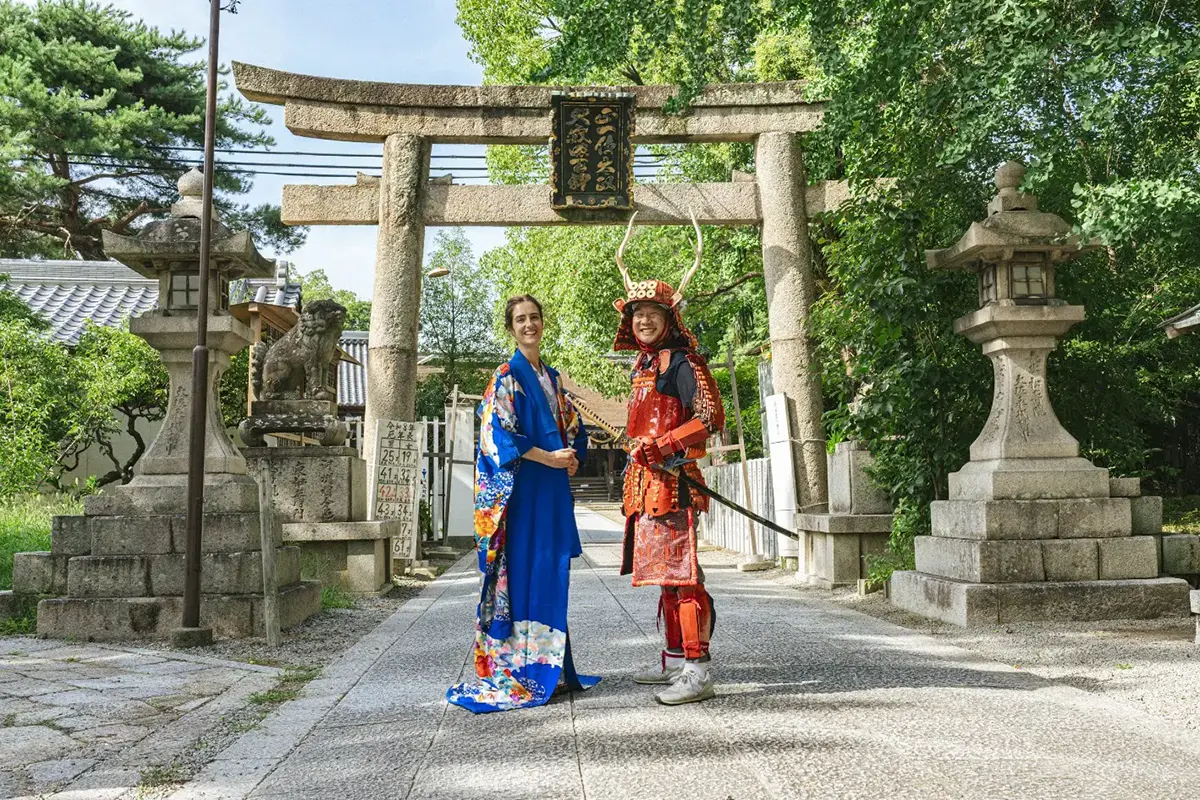
Travel back in time to the Sengoku period with armor and kimono! Samurai experience & photo tour
- Step into the Sengoku period with authentic armor and kimono! Experience becoming a warlord or princess.
- Learn sword stances and samurai movements!
- Take a special commemorative photo in a quintessentially Japanese setting, such as the historic Domyoji Tenmangu Shrine.
Fujiidera City is the smallest city in Osaka Prefecture in terms of area, with a compact area of just 3 square kilometers. However, it is a charming city with many ancient tombs, including the Mozu-Furuichi Kofun Group, a World Heritage Site, as well as historic shrines and temples, and is rich in local specialties.
Domyoji, in particular, has always been the center of the area, and is known as the site of the Battle of Domyoji, which brought the Sengoku period to a close.
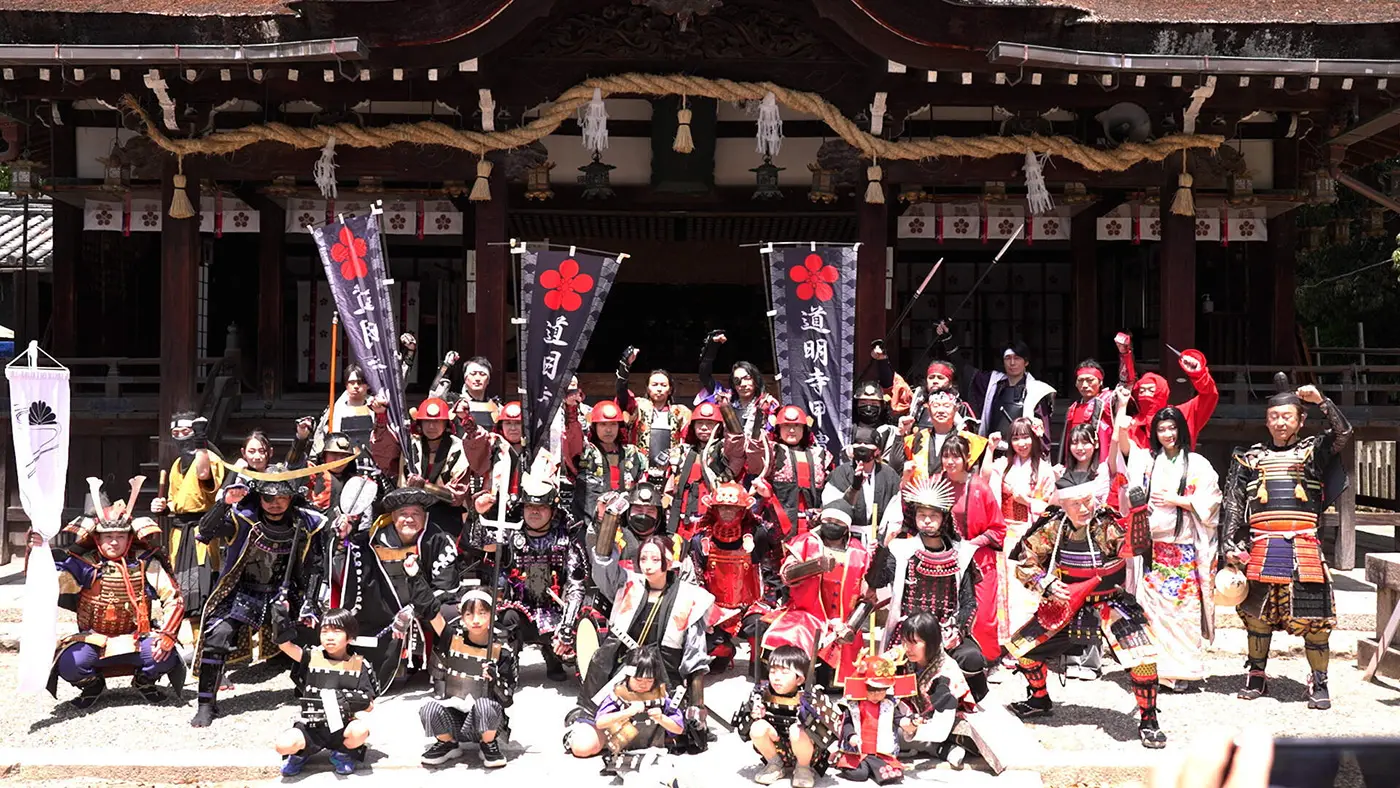
The Battle of Domyoji was a fierce battle fought here on May 6, 1615, between the Toyotomi forces of Goto Matabei and Sanada Yukimura and the Tokugawa forces of Date Masamune, and the Tokugawa forces emerged victorious, bringing an end to an era of chaos. In 2015, 400 years after this "decisive battle," local residents donned handmade armor to commemorate the milestone and held a 400-year festival. Since then, events such as the "Domyoji Historical Procession" and the "Domyoji Historical Costume Grand Prix," in which local residents parade through the town dressed in armor, have become popular.
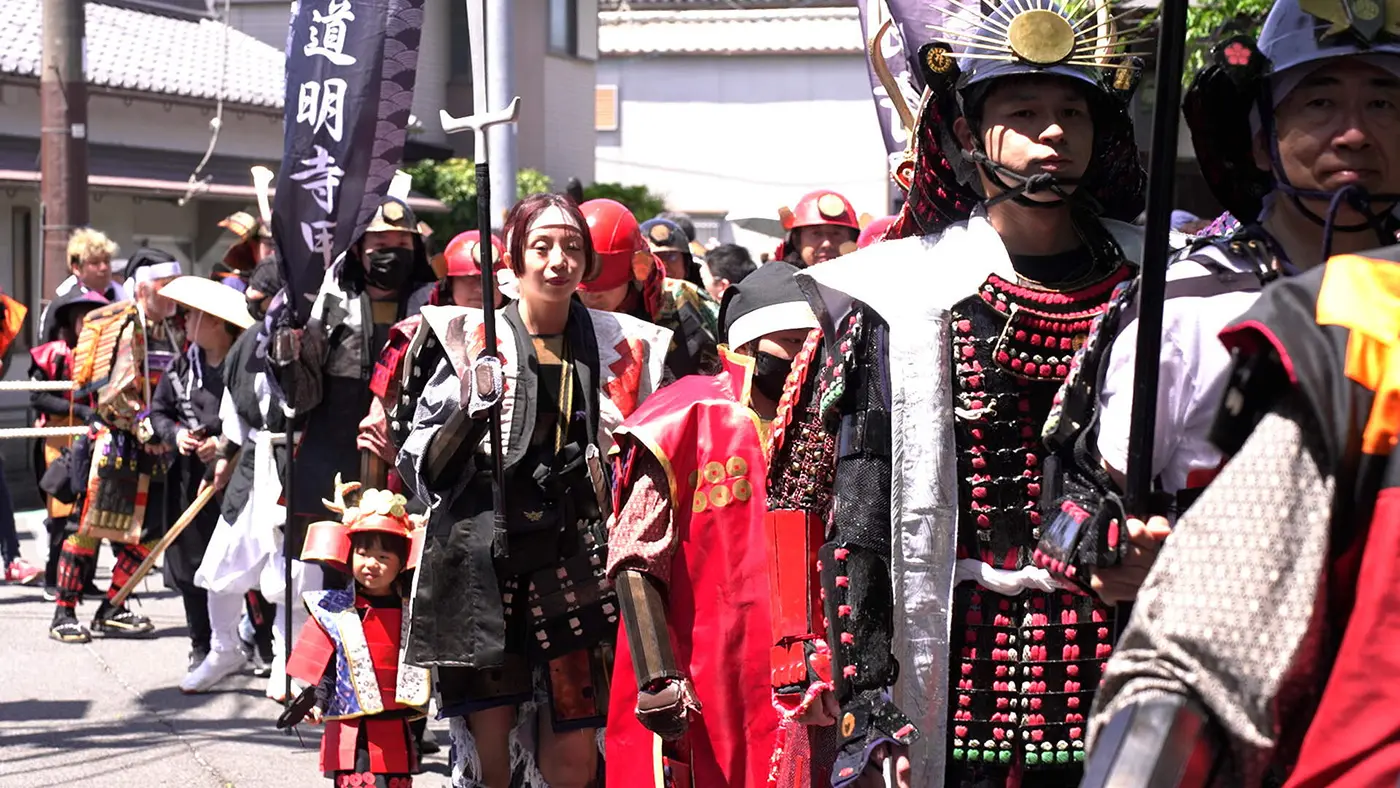
So this time, we asked Tomohiro Shinoda, the second-generation owner of Ajidai Kamaboko, who is knowledgeable about Domyoji and the Battle Festival, to show us around Jackie, an American who loves Japanese culture, history, and Japanese cuisine in general.
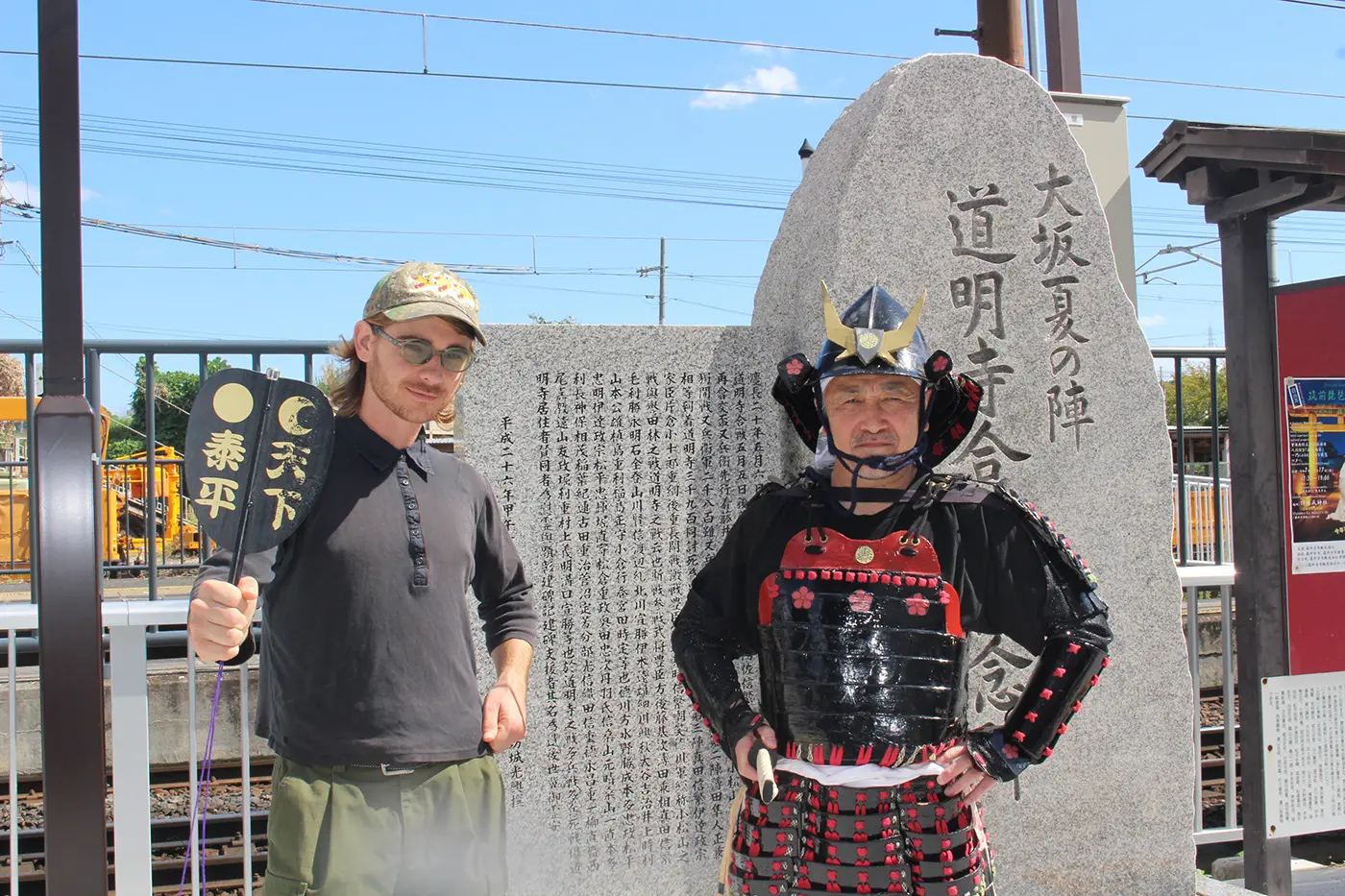
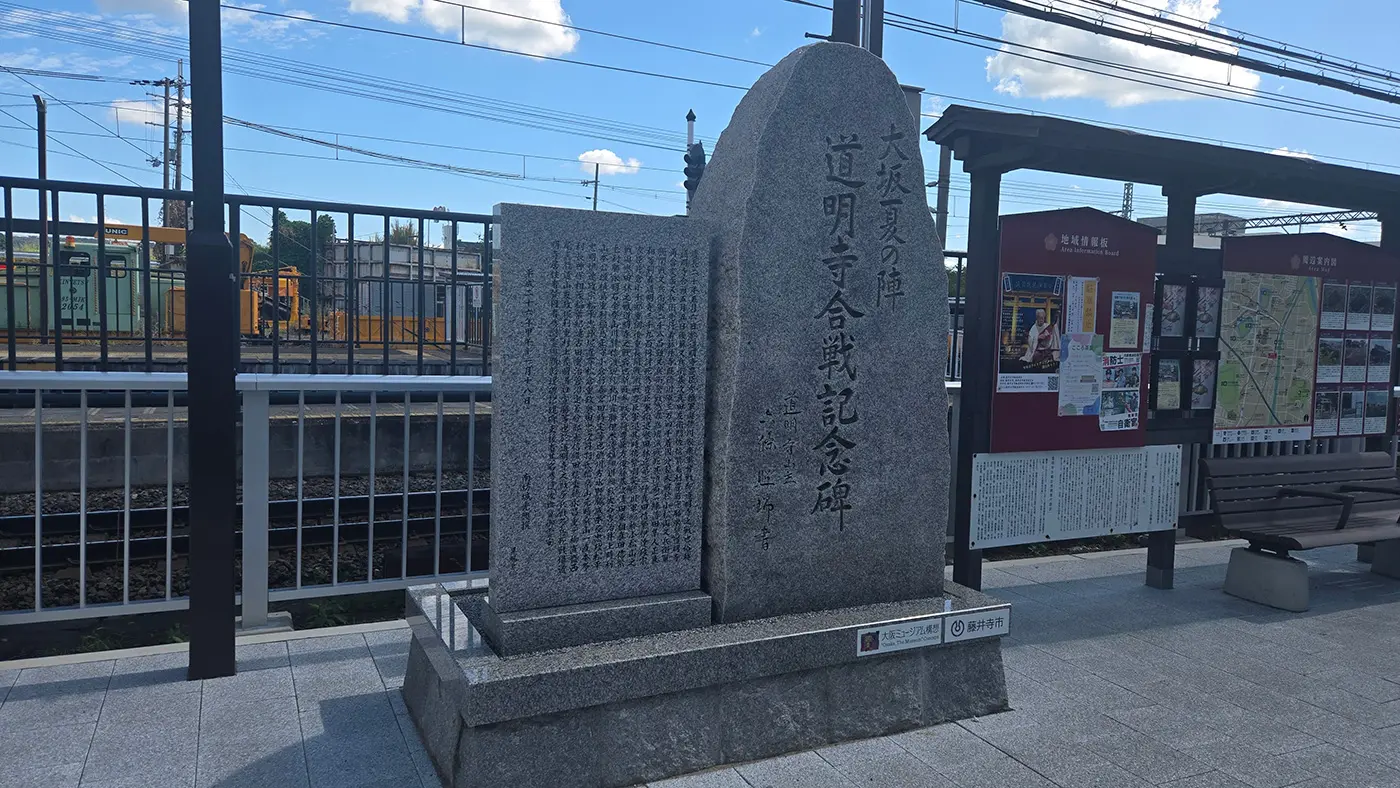
It takes 19 minutes by semi-express train from Osaka Abenobashi Station to Domyoji Station, where the battle took place. As I headed towards the "Osaka Summer Siege Domyoji Battle Memorial Monument" in front of the station, I met Shinoda-san wearing a replica suit of armor.
Guide
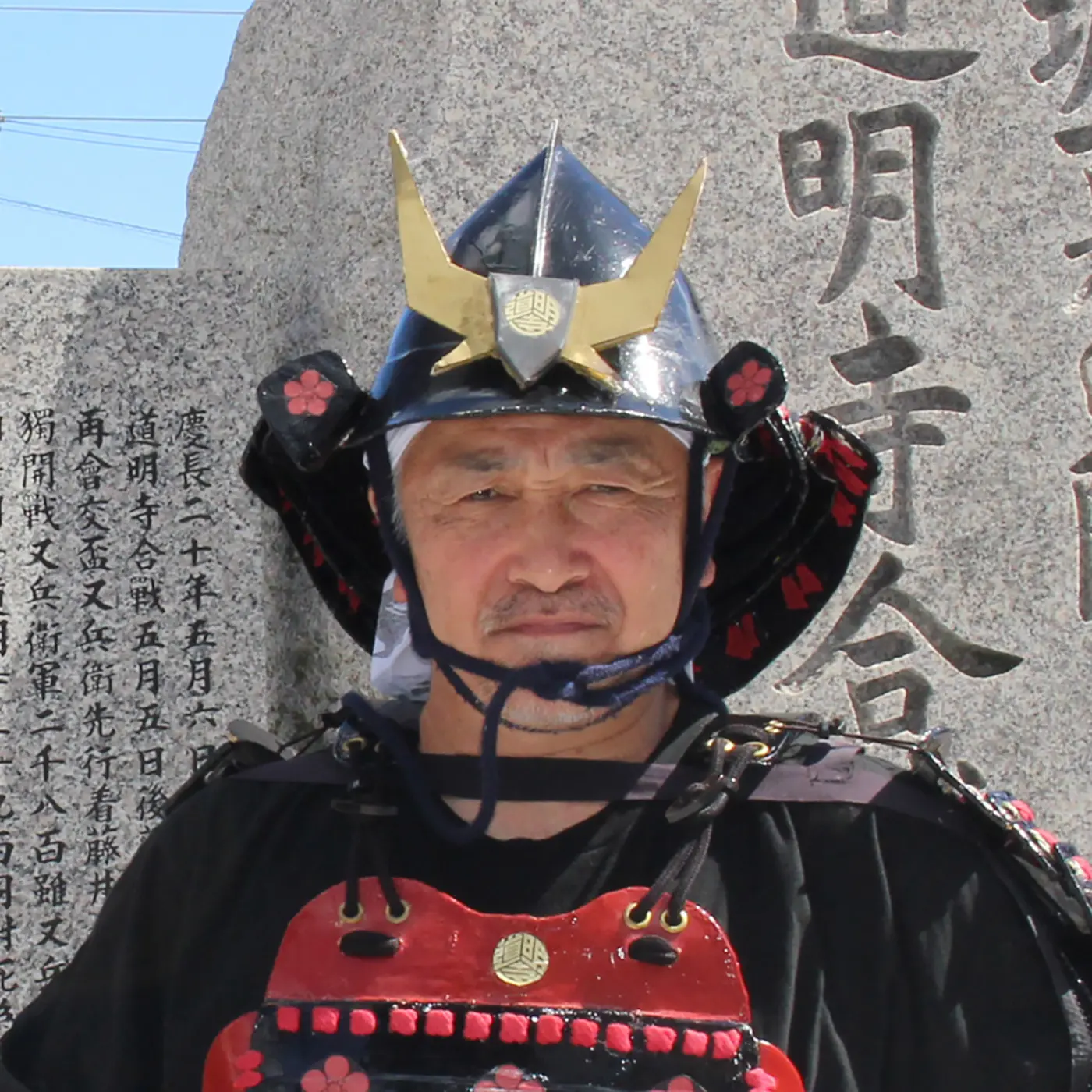
He is the second-generation owner of Ajidai Kamaboko, which was opened by his predecessor in 1970. The kamaboko, chikuwa, and hanpen are all handmade one by one using traditional stone mills and seasoned with unique seasonings, resulting in exceptional flavors. He also serves as chairman of the Domyoji Tenjin Street Shopping District, which planned the Domyoji Battle Festival.
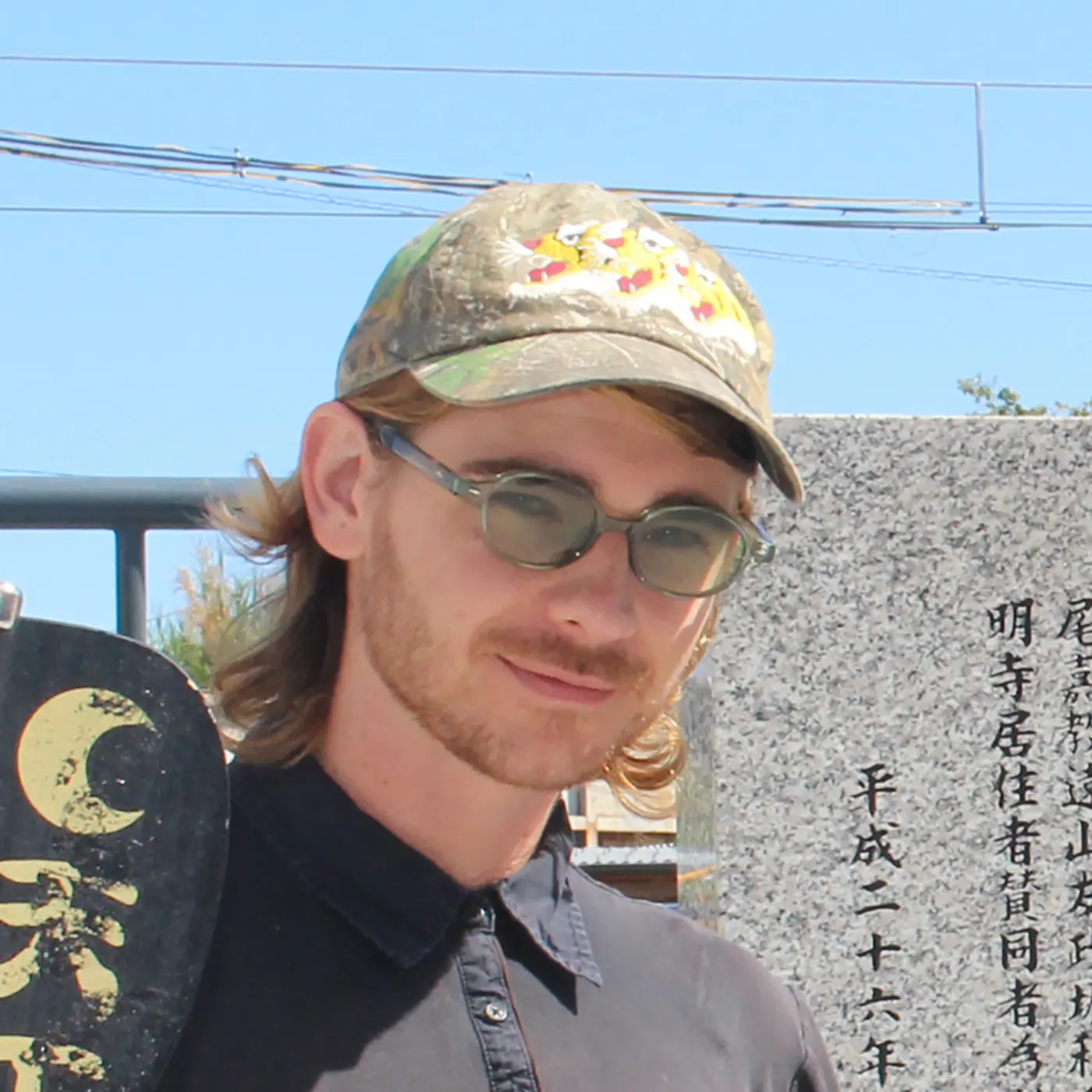
Originally from San Diego, USA, she has many talents, including being a barista, skater, and model, but she also boasts that she "loves Osaka!" and speaks the Kansai dialect naturally.
You can't fight on an empty stomach! Eat your way through Domyoji Tenjin Street Shopping District!
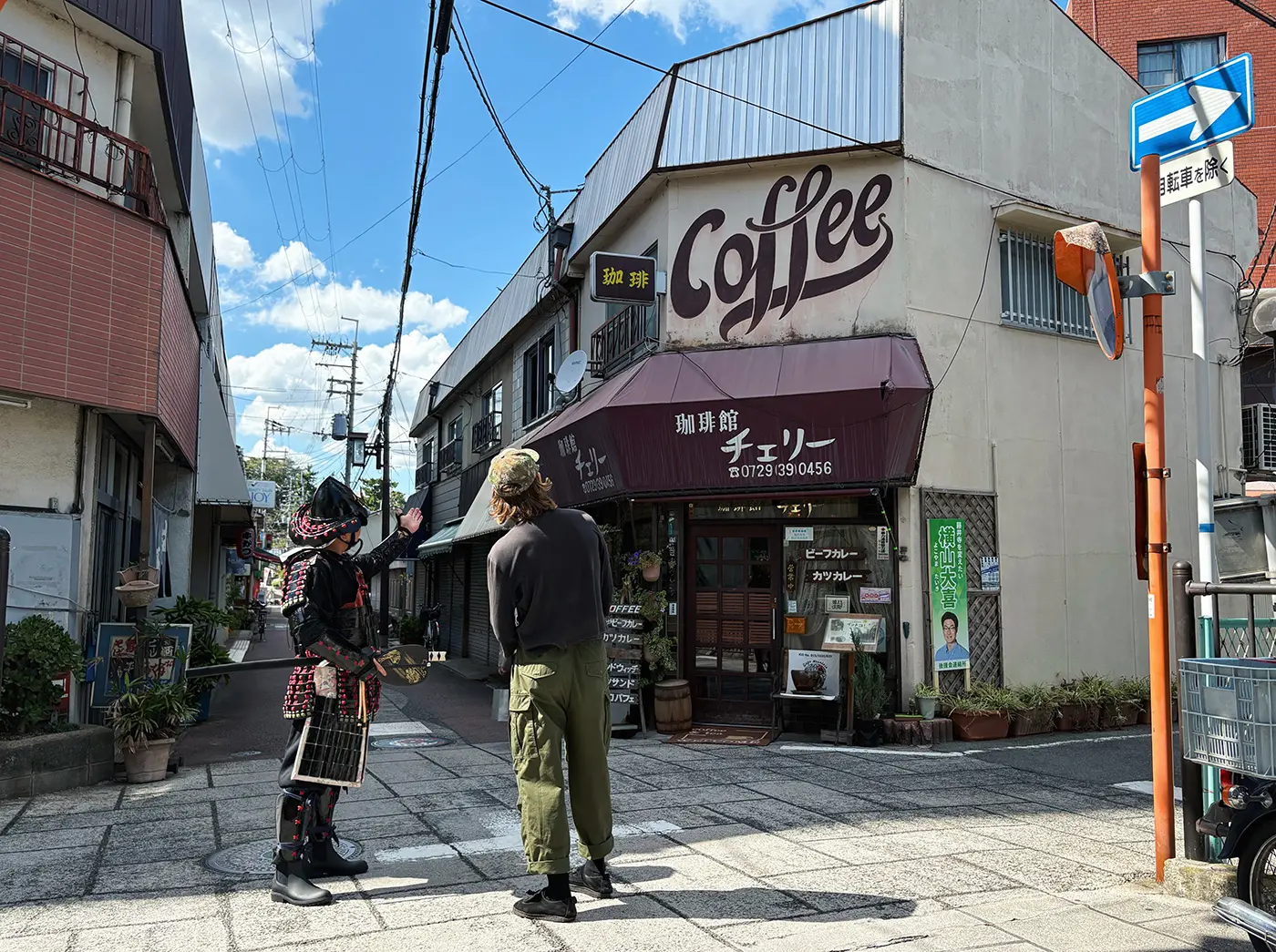
The two hit it off and began walking along Domyoji Tenjin-dori Shopping Street, a 300-meter street that stretches straight west from the station and is lined with about 30 restaurants, grocery stores, retro cafe, and other establishments frequented by local regulars.
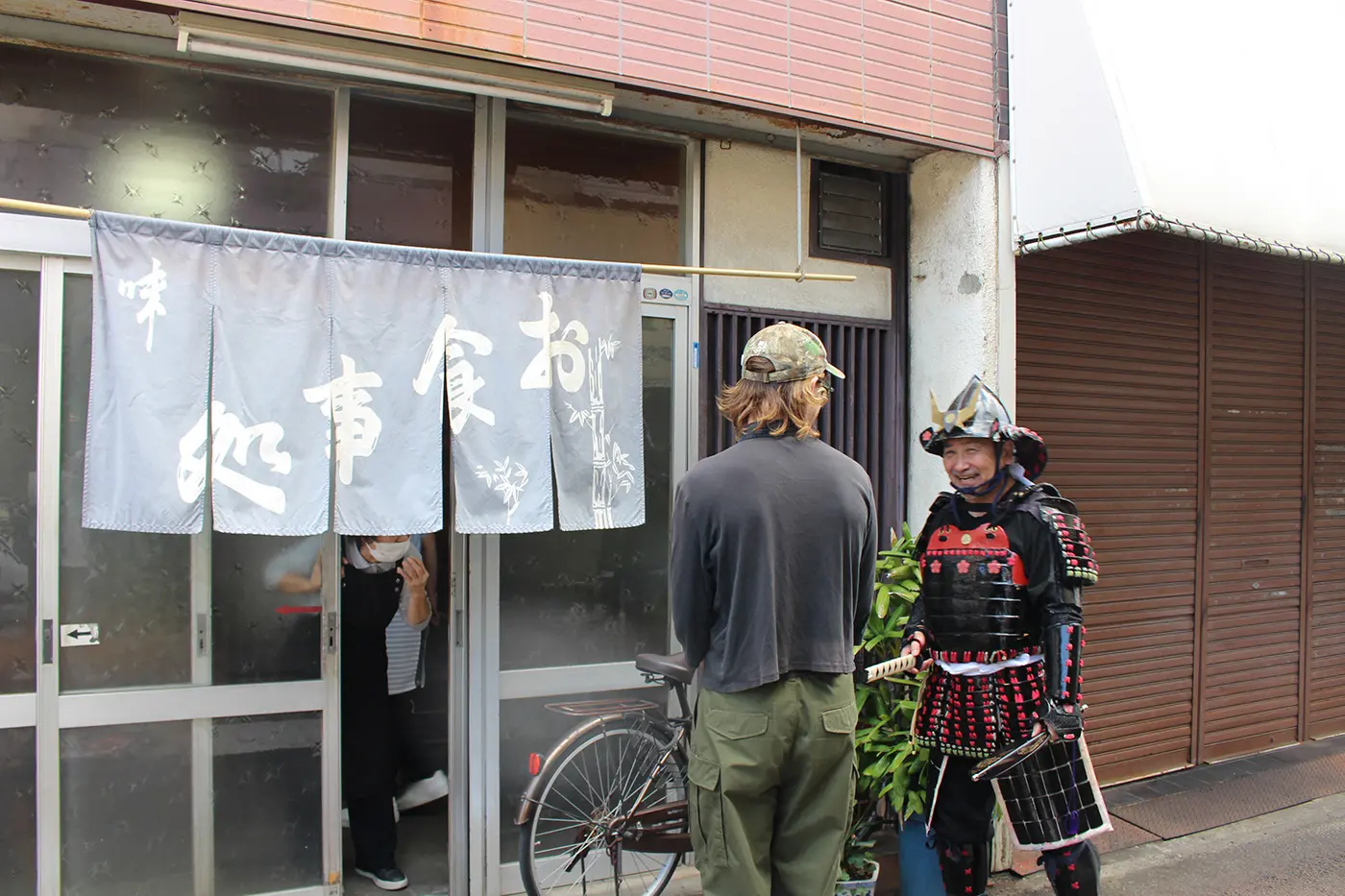
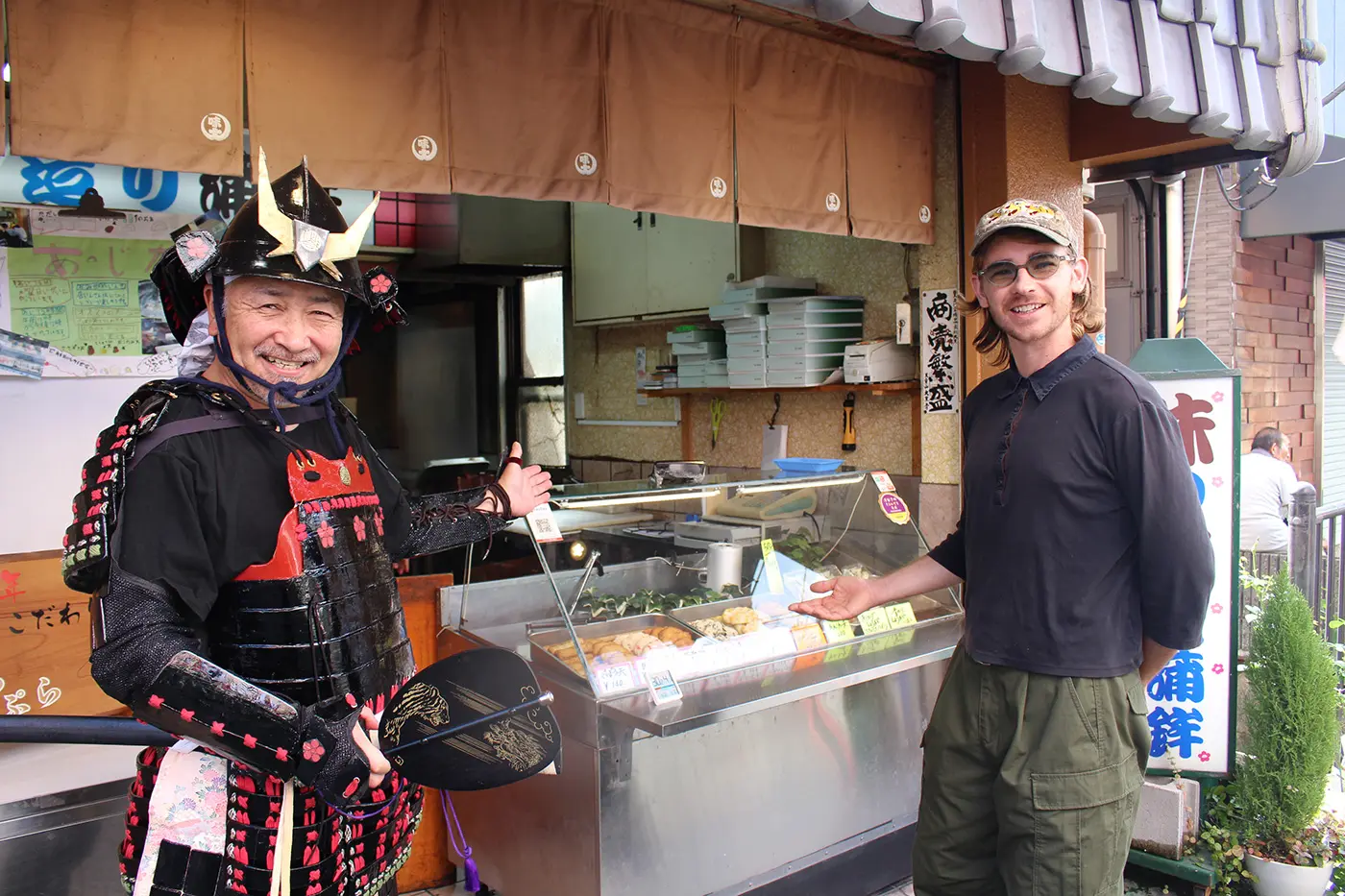
As they walk along the street, Jackie praises the item, saying, "It's so cool!" Shinoda seems pleased as he explains, "This is Goto Matabei's accessory. He was one of the 'Toyotomi Five' who fought hard in the Summer Siege of Osaka, and is a hero on par with Sanada Yukimura." He also explains, "This is a military fan. It's a prop used by military commanders when giving orders."
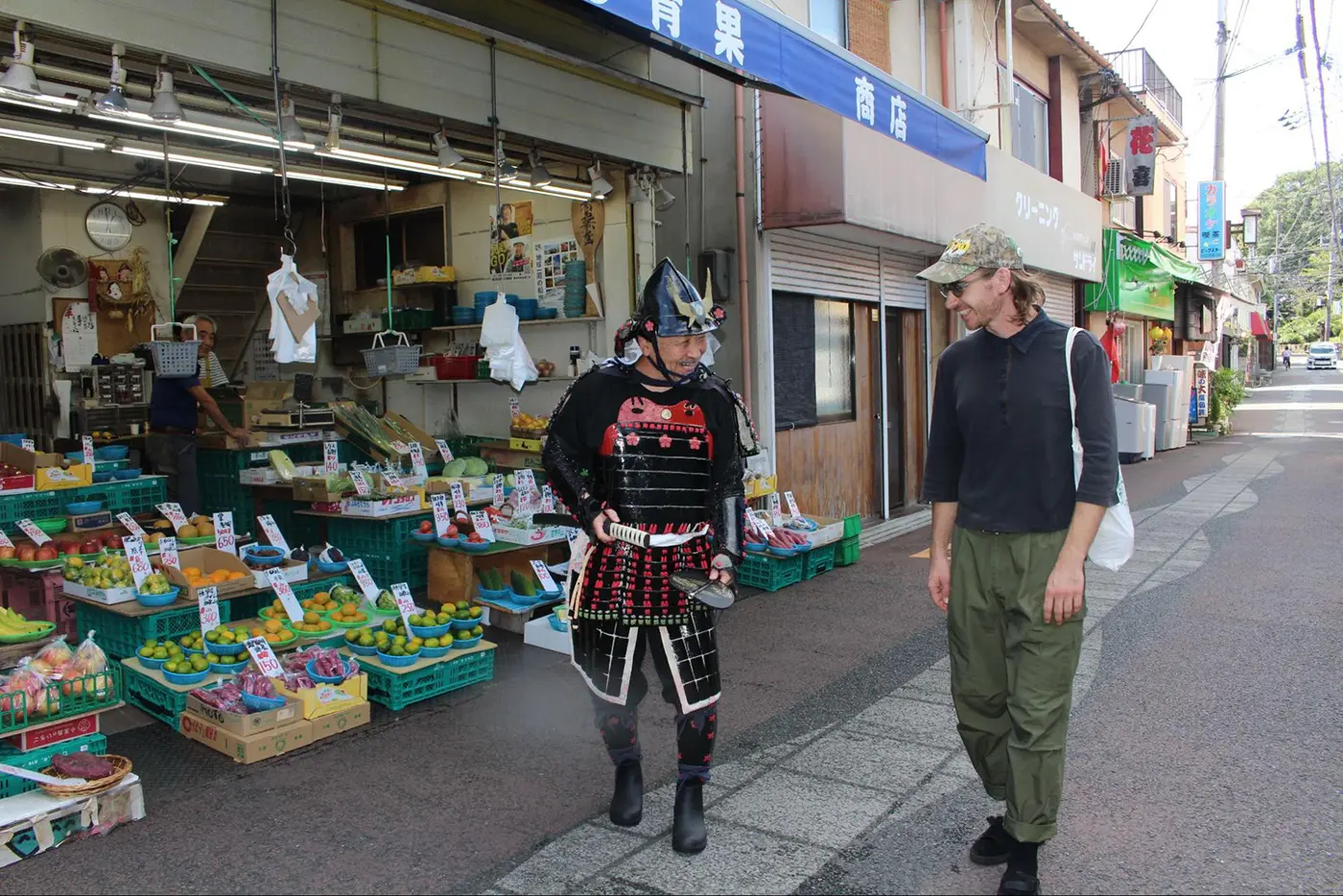
The armor was very realistic and cool. Each warlord had a different detailed design, so if I have the chance, I'd love to see the armor of other warlords as well. The shopping street in front of the station was lined with many interesting shops, and I had the pleasure of greeting and chatting with the shopkeepers in front of the shops.
Delicious and cute! Satisfy your hunger with some eye-catching tempura!
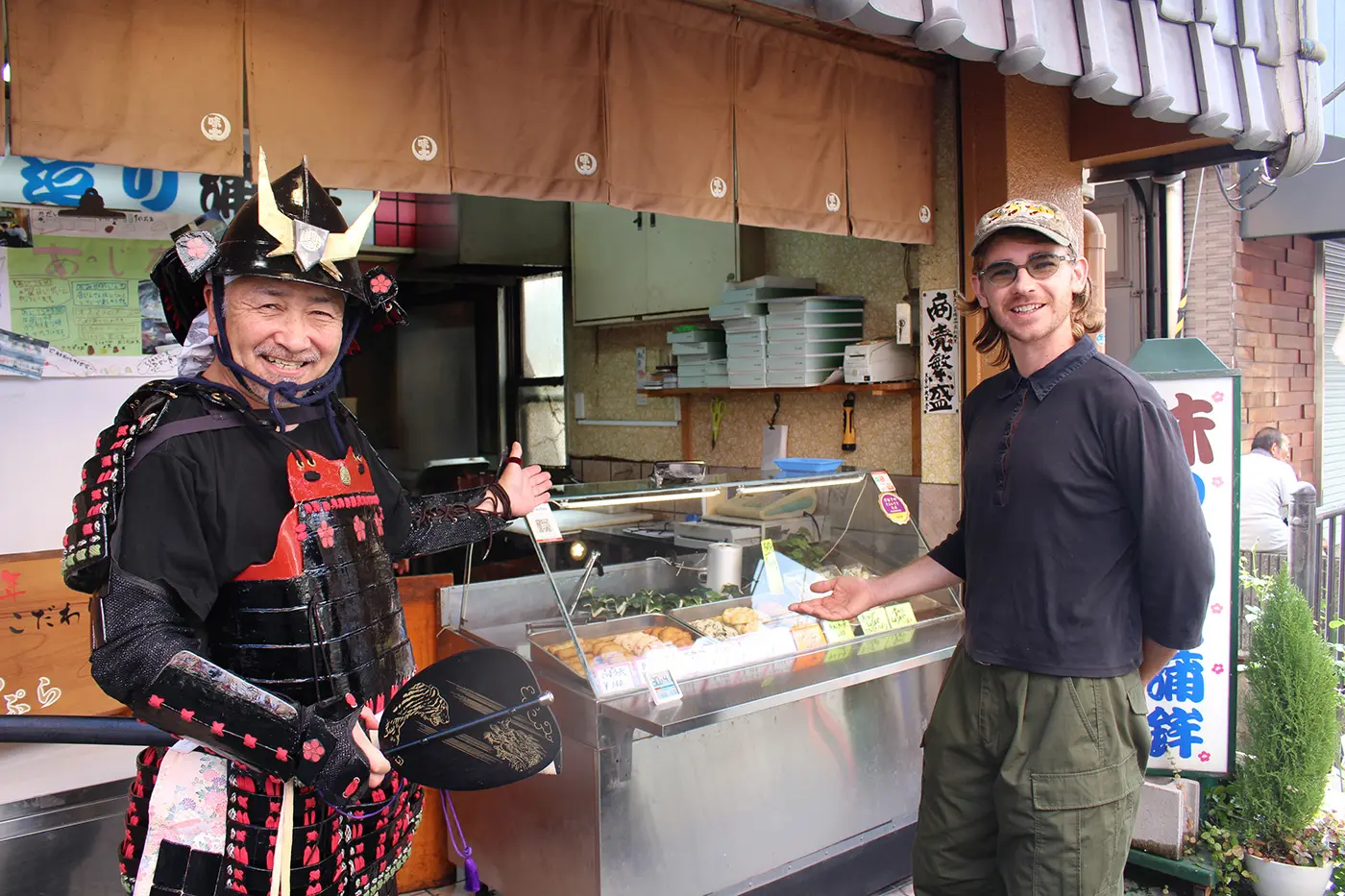
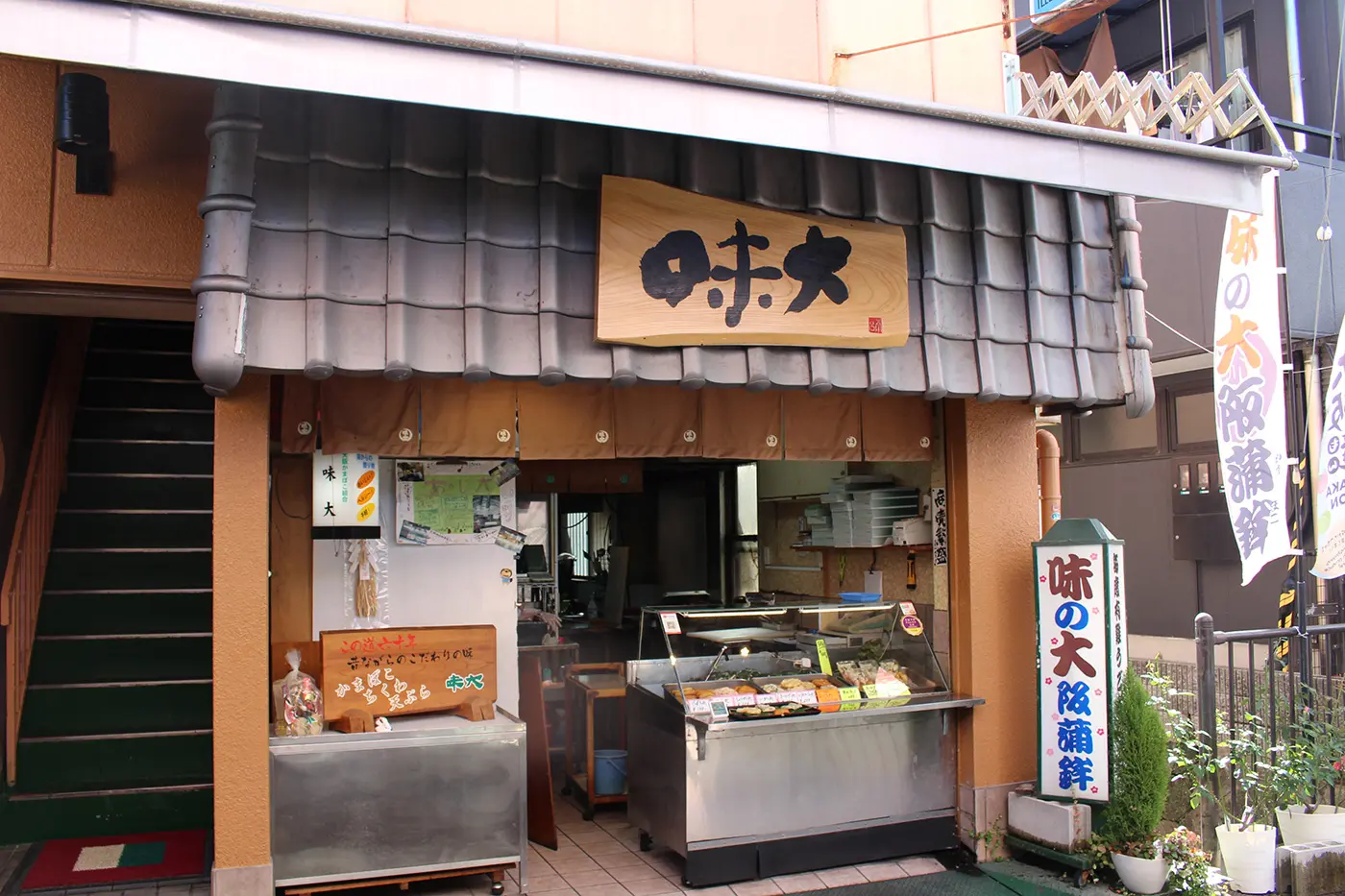
After a few minutes of leisurely walking down the single-street shopping street, we arrived at Ajidai Kamaboko, where Shinoda is the owner. Both of us were beaming with smiles as we stood in front of the display case lined with fish paste products made using the same methods since the shop was founded in 1970.
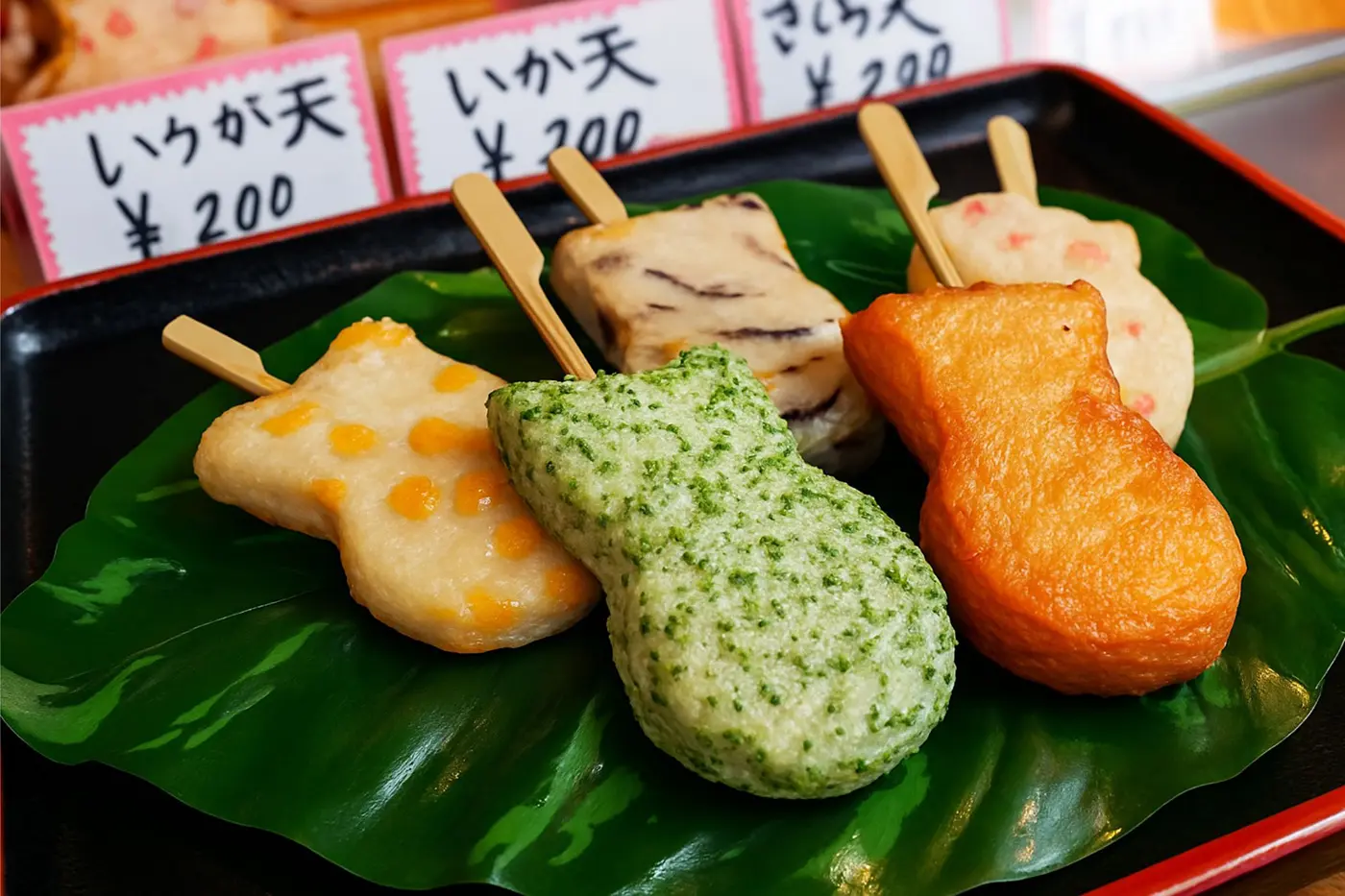
"Please enjoy," Jackie said as he handed him the "KOFUN Tempura," to which he couldn't help but exclaim, "Wow, so cute!" These kofun-shaped tempura were invented by Shinoda to promote his hometown as a "town of kofun," and are a popular item perfect for eating on the go. When you think of tempura, you might imagine vegetables or seafood that are battered and deep-fried, but in Kansai, the term "tempura" also applies to deep-fried fish paste products. Tempura is made with ingredients that go perfectly with fish paste, such as pickled ginger, wood ear mushrooms, and corn, and is so delicious you'll want more of it.
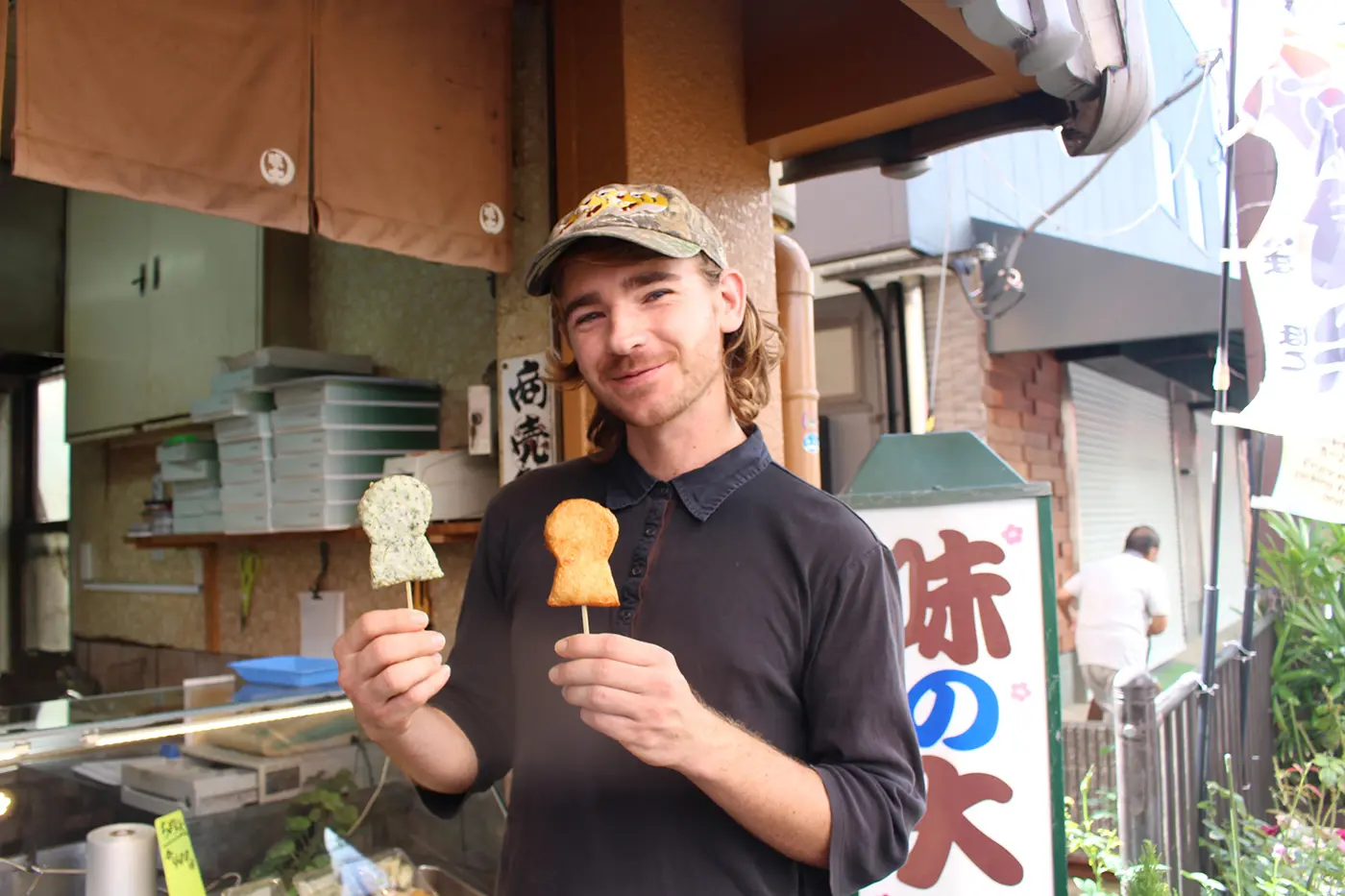
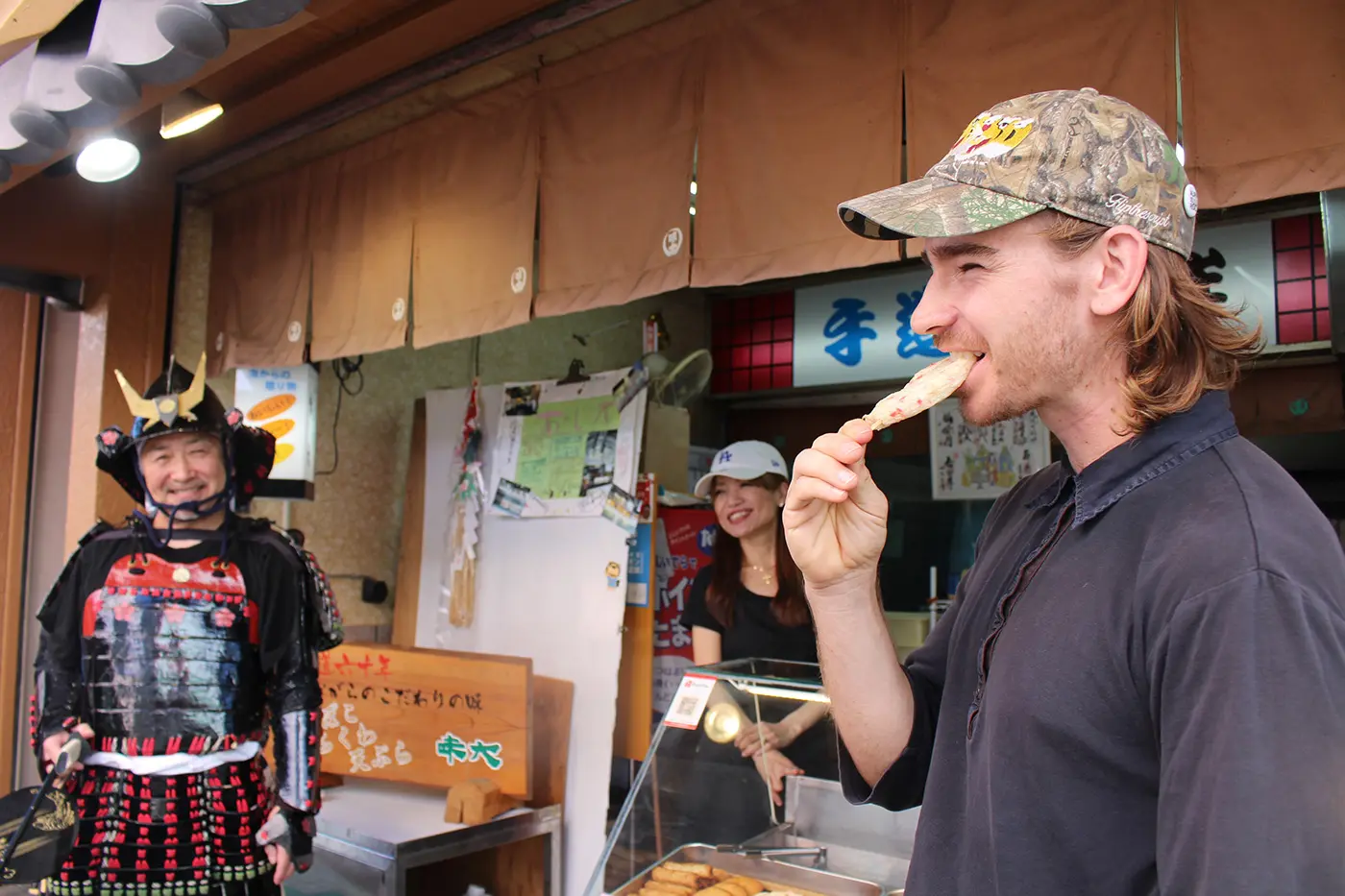
They all look delicious, so it's hard to choose just one... When you eat them, they're slightly warm and fluffy. They're so tasty, you could eat as many as you want. They look cute, too, so I'm sure everyone will love them.
Enjoy the famous "bamboo basket lunch" at this charming old-fashioned cafe!
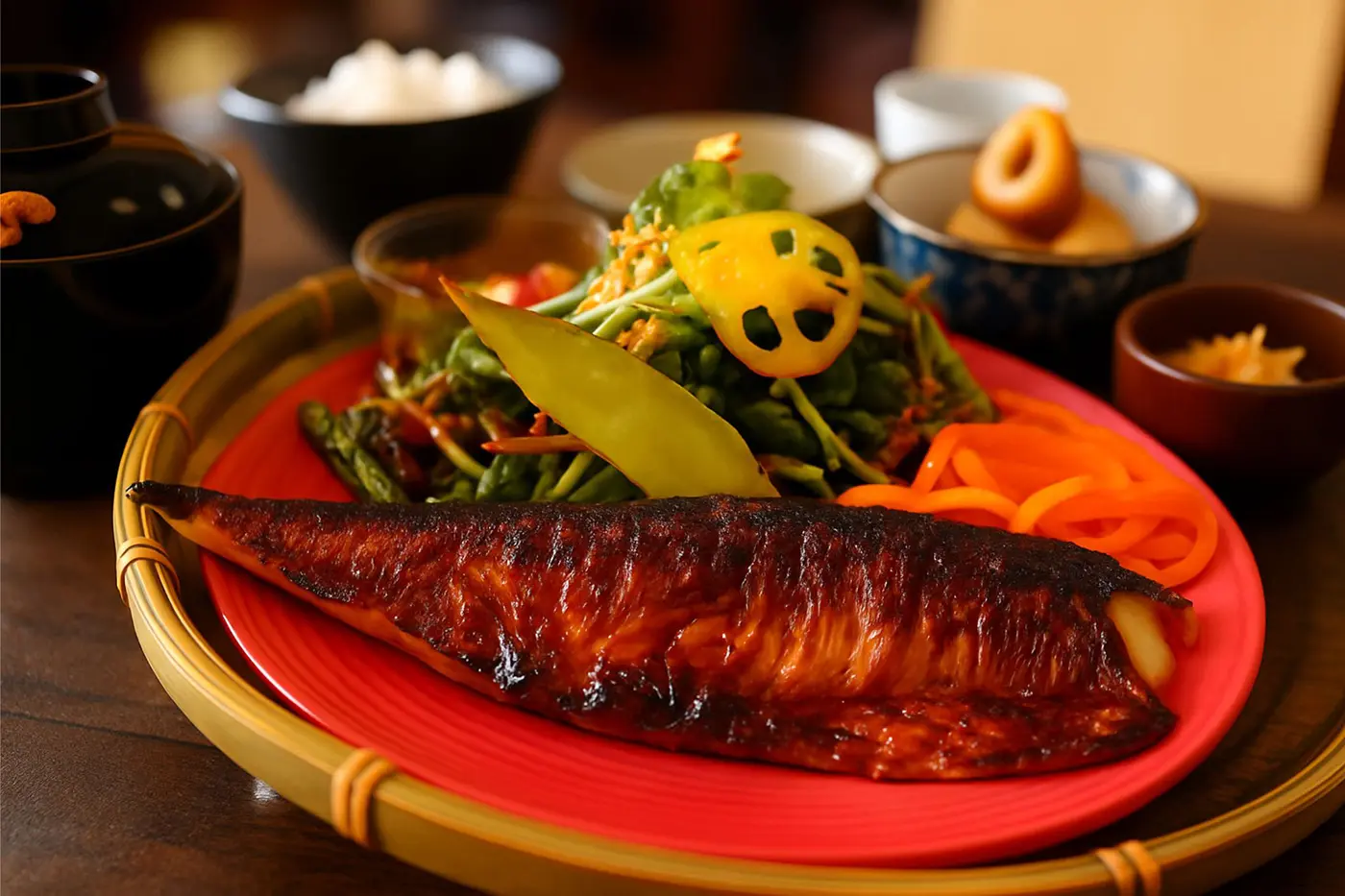
Next, we went to a restaurant for lunch that specializes in grilled mackerel.
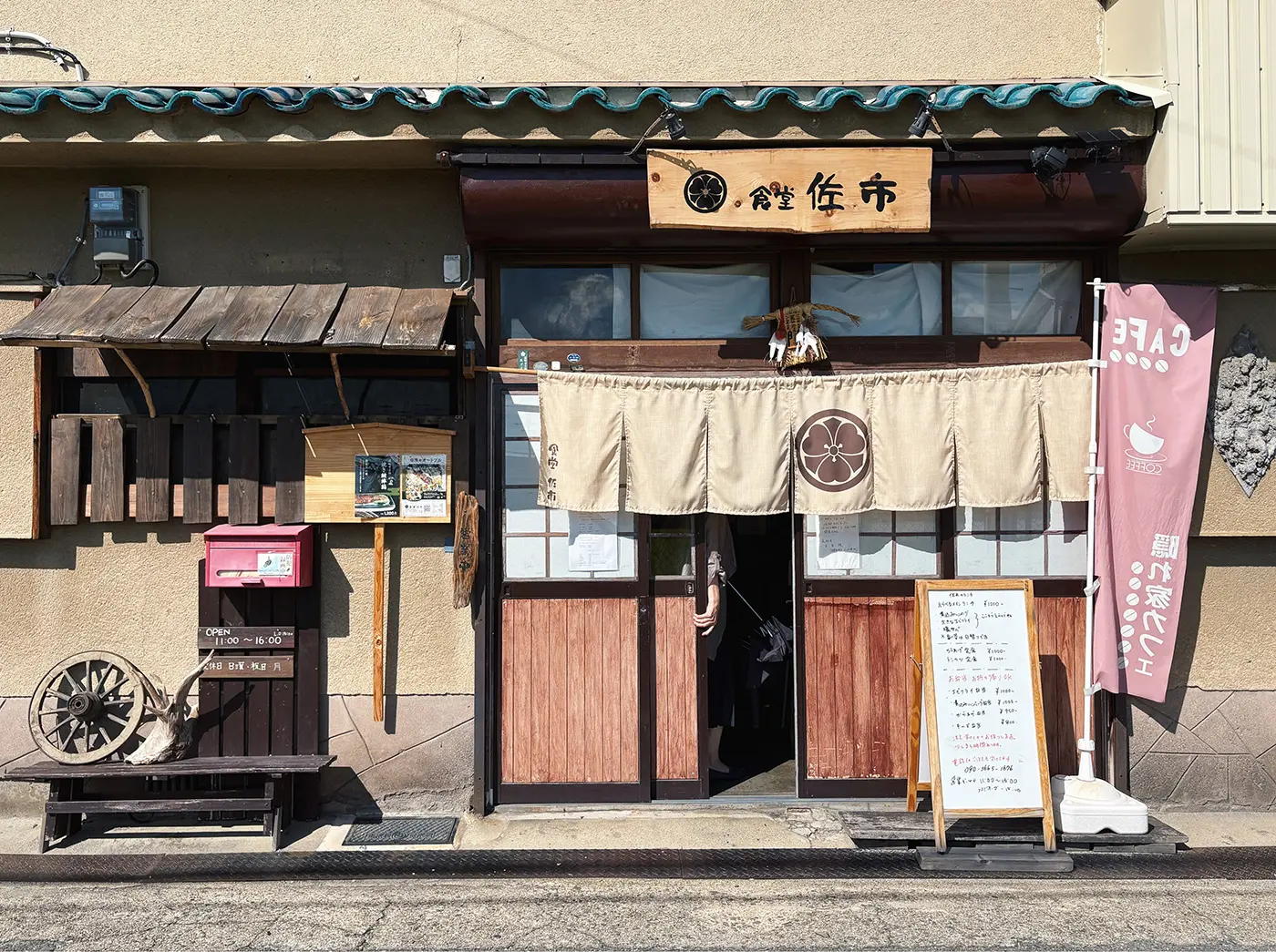
"Shokudo Saichi" is a cafe in an old Japanese house run by the descendants of the "Tenchugumi" (Tenchu-gumi), a group that launched the Sonno Joi (Revere the Emperor and Expel the Barbarians) movement at the end of the Edo period. In order to carry on the spirit of the patriots, the owner renovated the quiet townhouse himself and opened the cafe in 2023.
The restaurant's quaint interior is decorated with Japanese accessories and antique furniture, creating a nostalgic atmosphere. We enjoyed the daily lunch special, which includes a choice of their specialty grilled mackerel as the main dish.
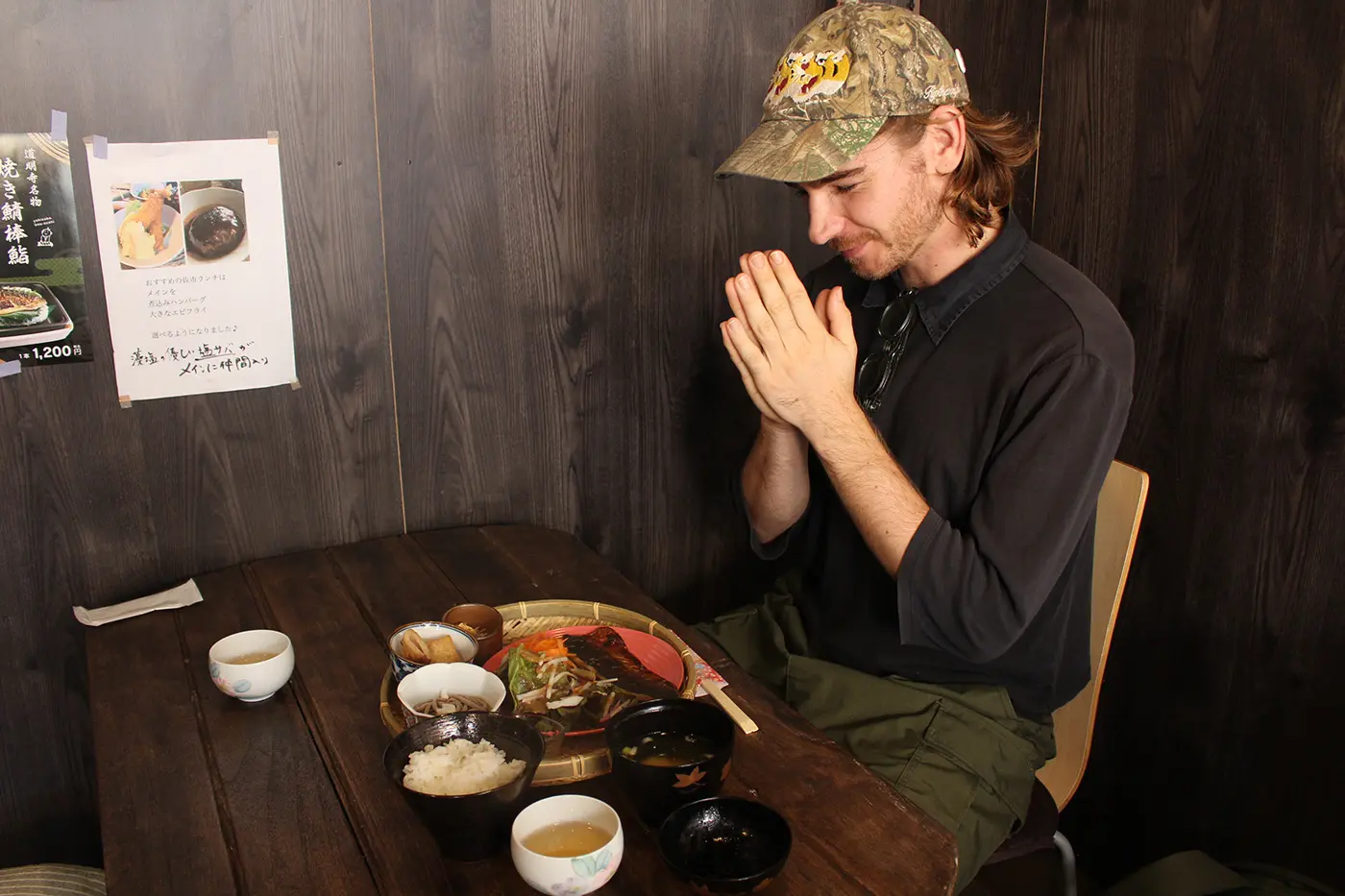
From the wide selection of drinks available, Jackie chose the adorable "Bear Coffee"!
"Wow, she's so cute," I thought, completely captivated by her appearance.
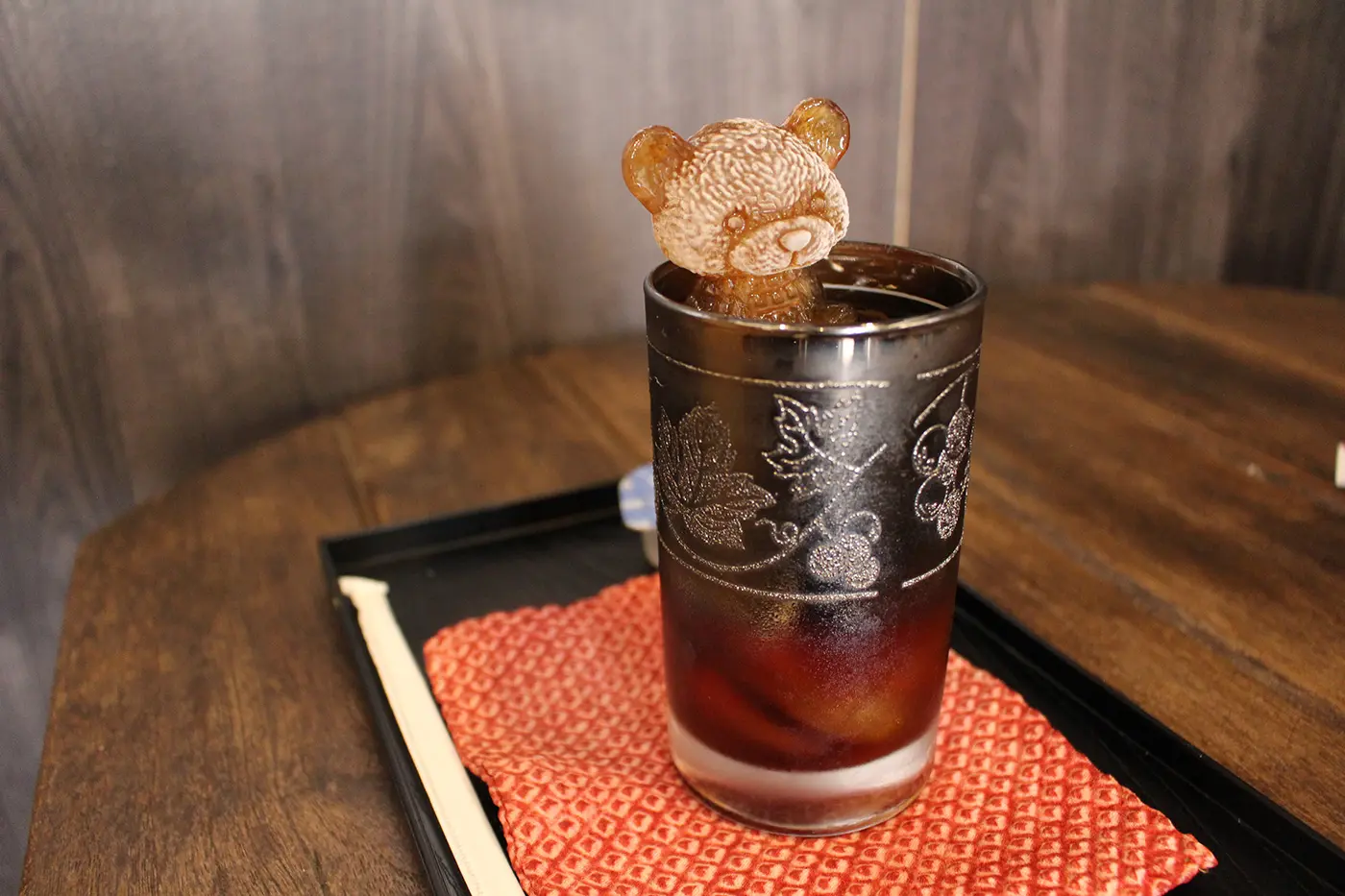
Over a drink after dinner, I asked about the origin of the restaurant's name, and the owner replied, "Wada Saichi is the name of my great-great-grandfather." He was an activist for sonno joi (revere the Emperor and expel the barbarians) at the end of the Edo period, and a member of the Kawachi faction of the Tenchugumi (Central Chugoku Gumi). "Look, here," he said, pointing to a painting hanging on the wall, "his image and name are clearly depicted in the painting from that time," he explained with a smile.
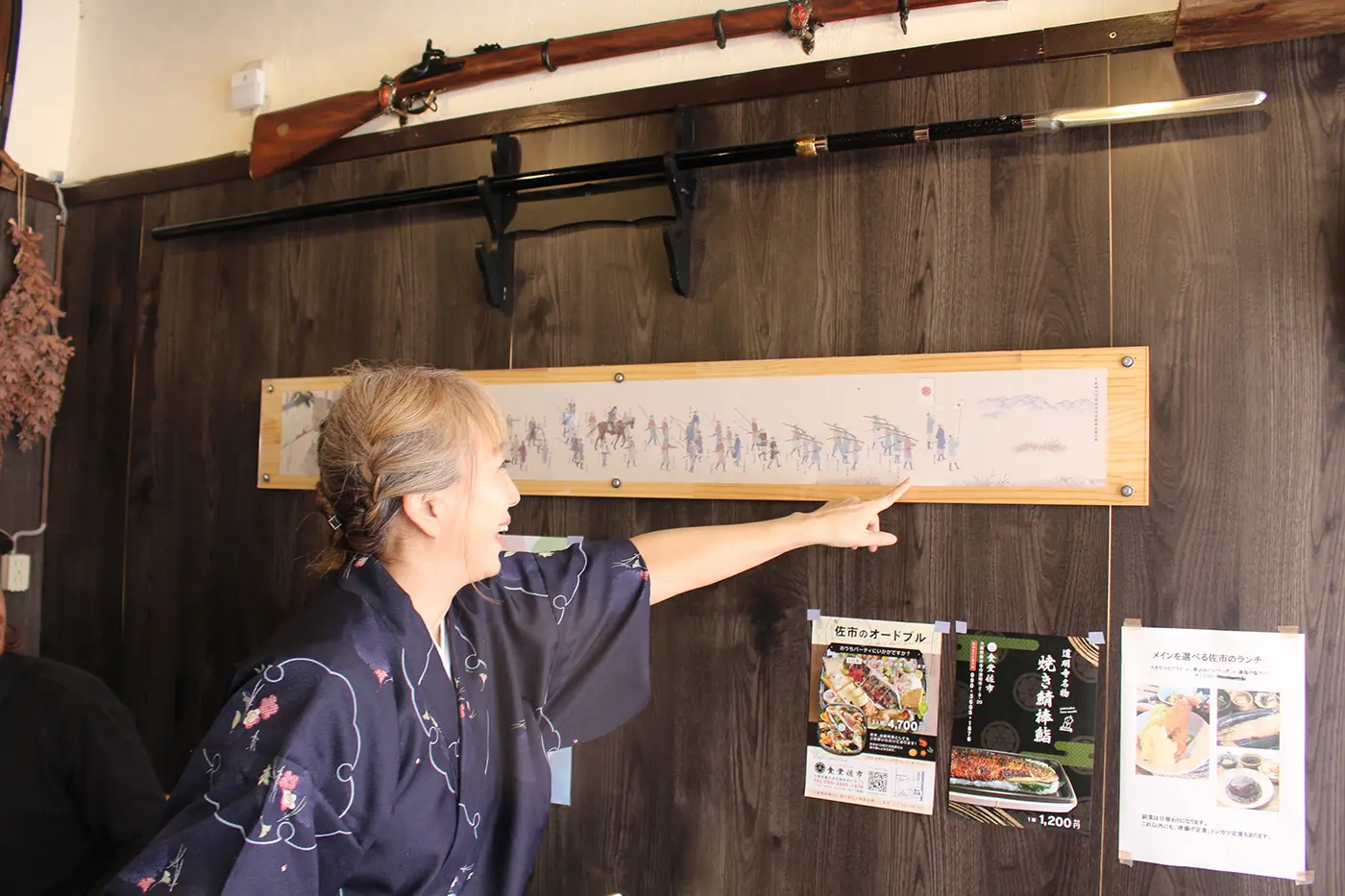
The restaurant had a very Japanese feel and a great atmosphere. Their specialty, grilled mackerel, was very juicy and the saltiness was just right! The side dishes lined up in bamboo baskets were all lightly seasoned and delicious. I was also pleased with how beautifully the food was presented. I also found the stories about the owner's ancestors very interesting.
Visit Fujiidera City's landmarks, Domyoji and Domyoji Tenmangu Shrine in order!
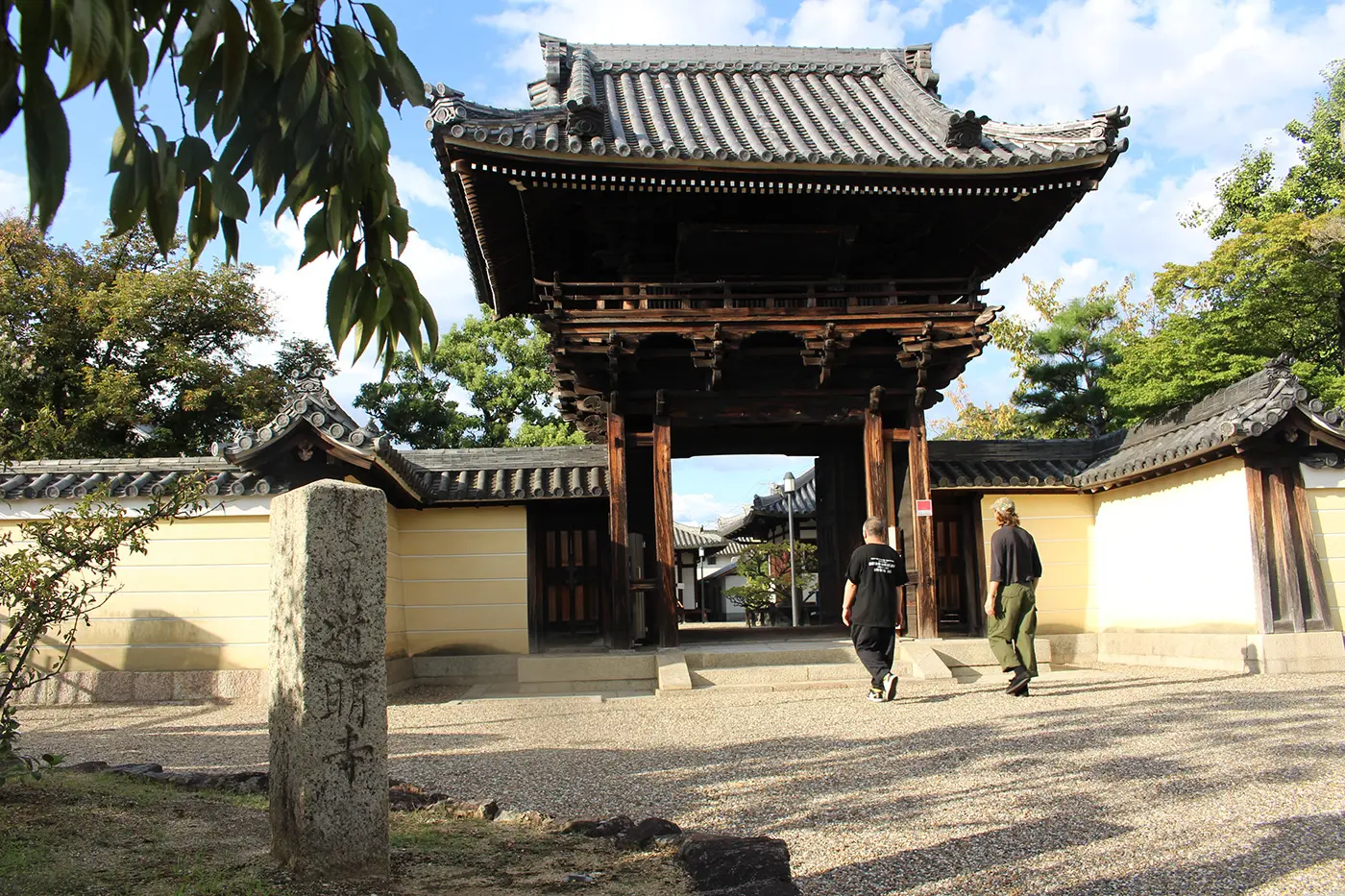
Jackie's stomach and heart were both completely satisfied. On this sunny, sweaty day, he and Shinoda, who had taken off their armor and changed into lighter clothing, headed to Domyoji.
Kansai-style sakura mochi born in a place associated with Michizane
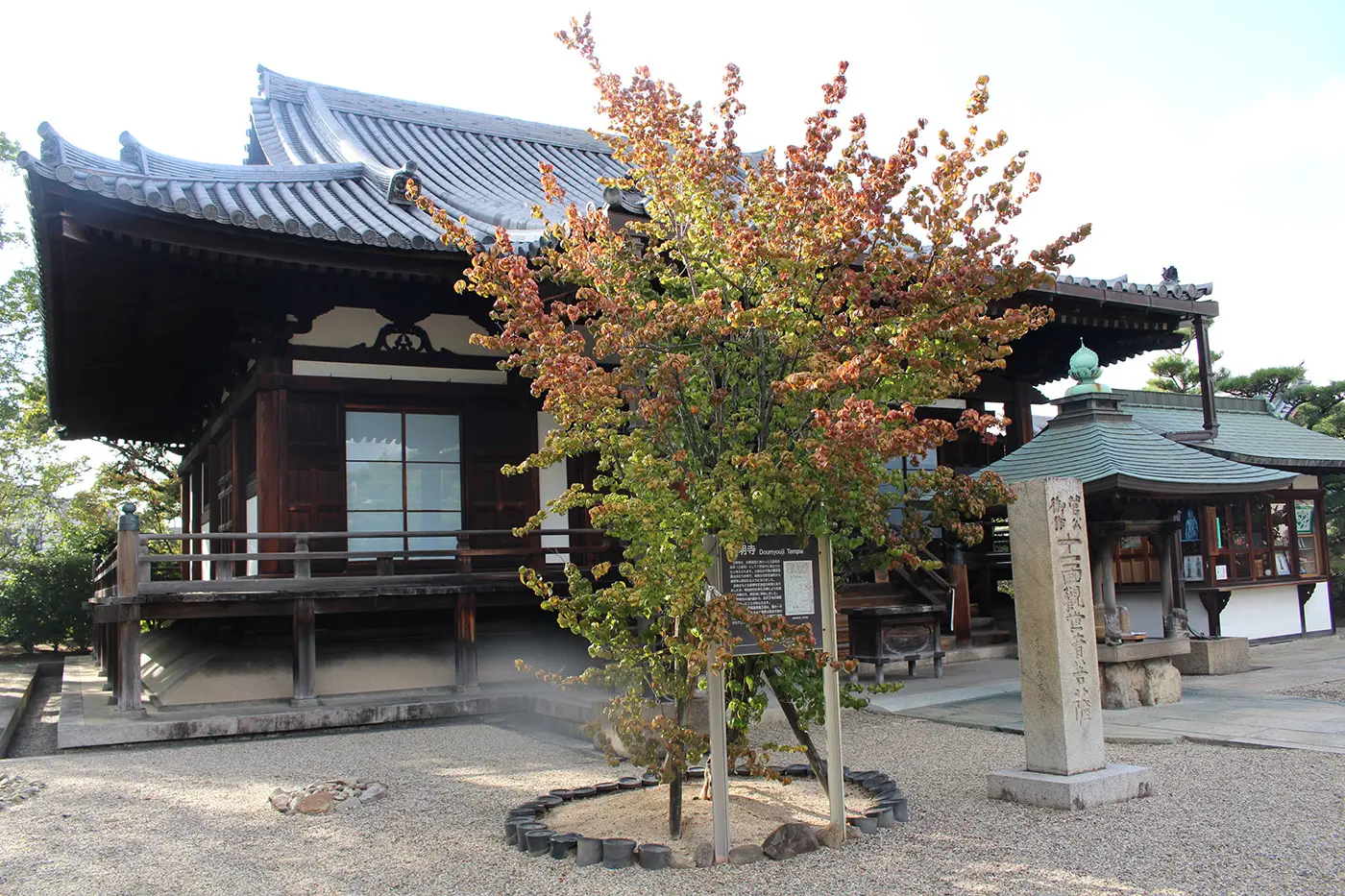
Domyoji is a nunnery built as the clan temple of the Haji clan in 594. When Sugawara no Michizane, a descendant of the Haji clan, was on his way to his new home in Dazaifu, he visited his aunt, Kakujuni, the head priest of Domyoji, to say goodbye. Kakujuni, concerned for his safety, gave him a meal called "Domyoji hoshihi."
Made by steaming, drying and crushing glutinous rice, koji has long been treasured as a convenient, nutritious, preserved food, and there was a time when it was presented annually to the shogun and military commanders as military rations. Toyotomi Hideyoshi was one such presenter, and the "I want you" message written on the washi paper is in Hideyoshi's handwriting.
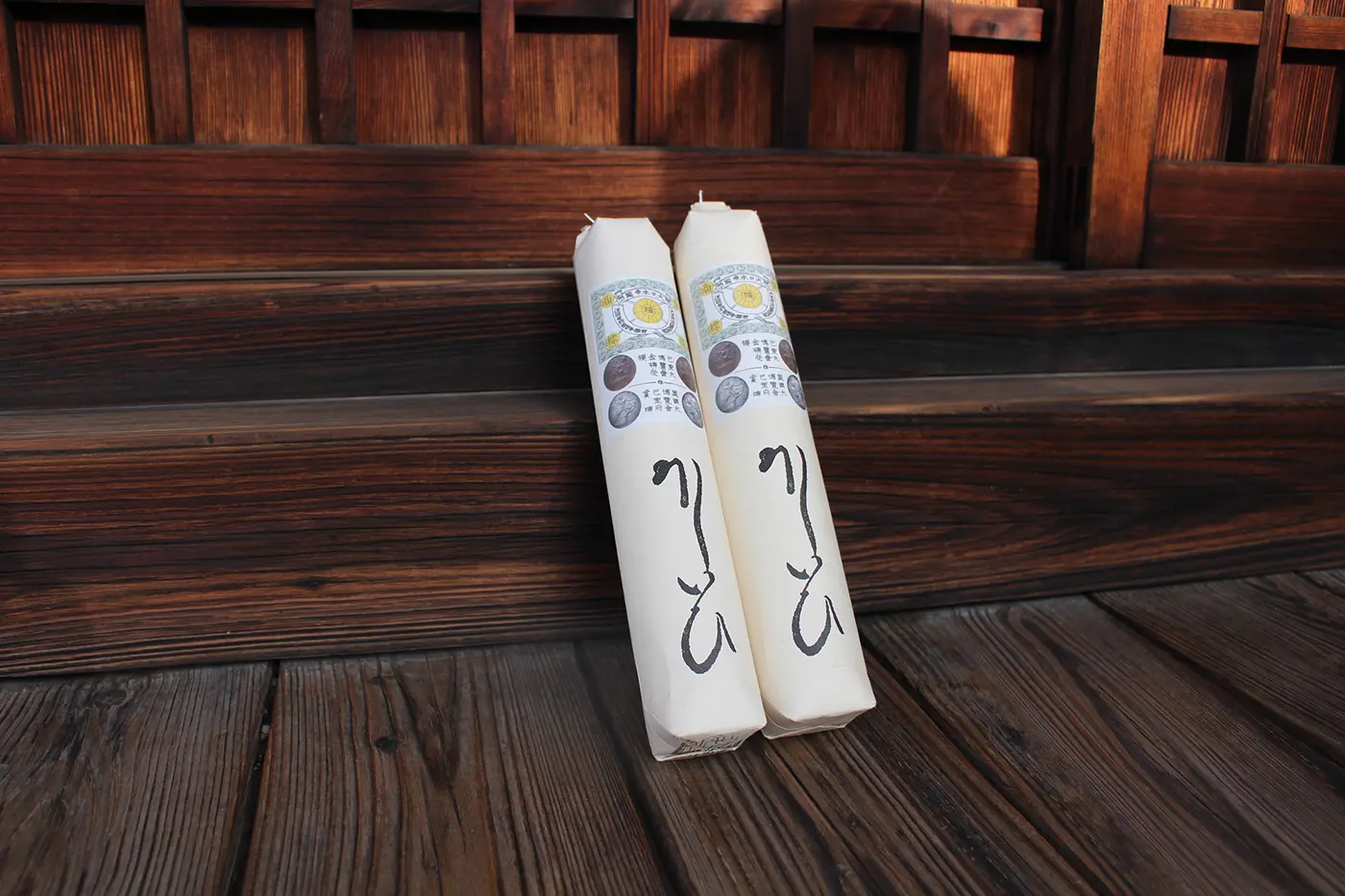
It wasn't until the Meiji period that it began to be sold to the general public. It began to be used as an ingredient in Japanese sweets, and the Kansai-style sakura mochi was born, named after its birthplace, "Domyoji."
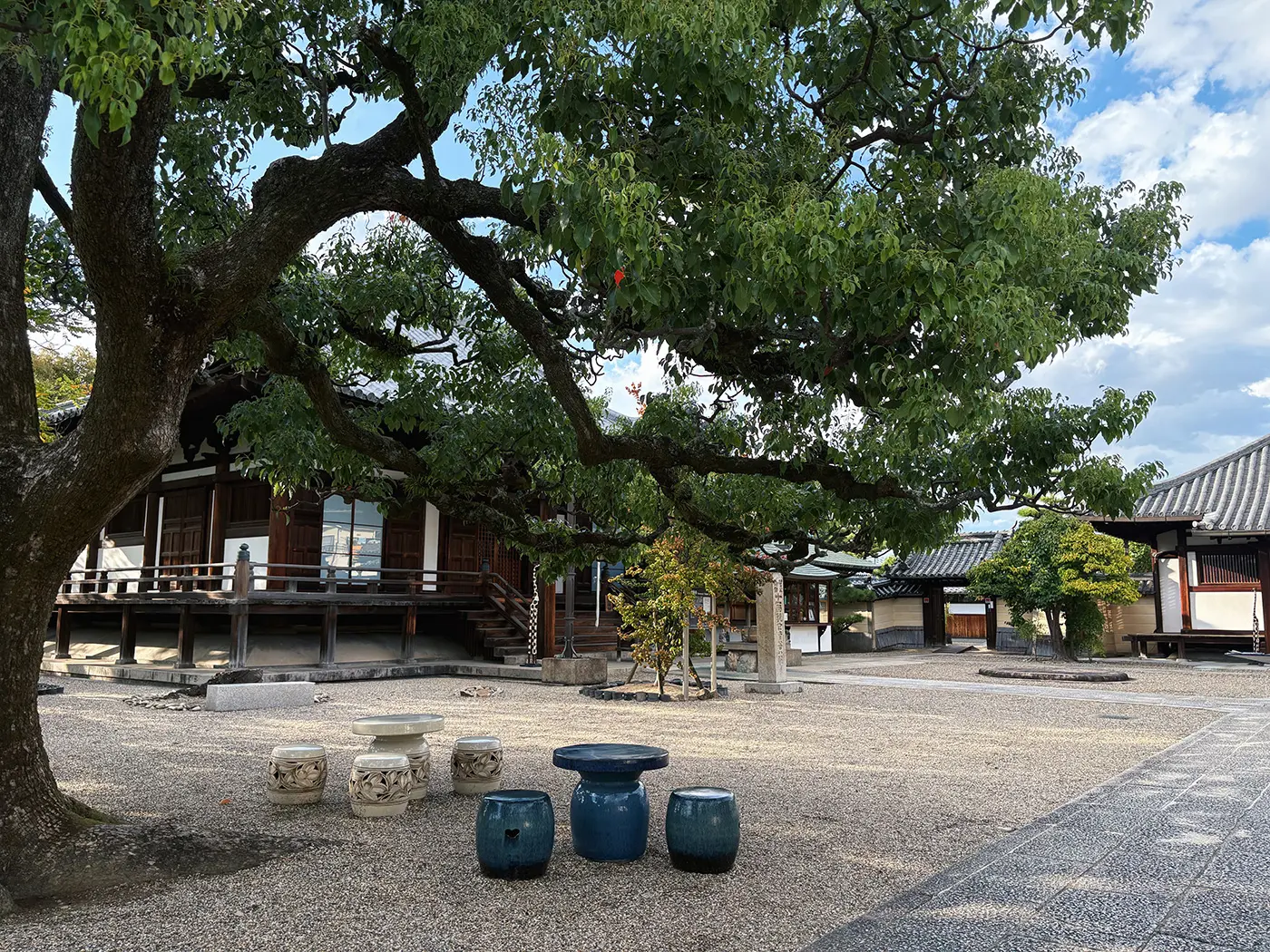
Leaving Domyoji behind, walk for 5 minutes and you will see Tenmangu Shrine.
The area still retains a townscape that evokes the past, making it a nostalgic and peaceful place to stroll around.
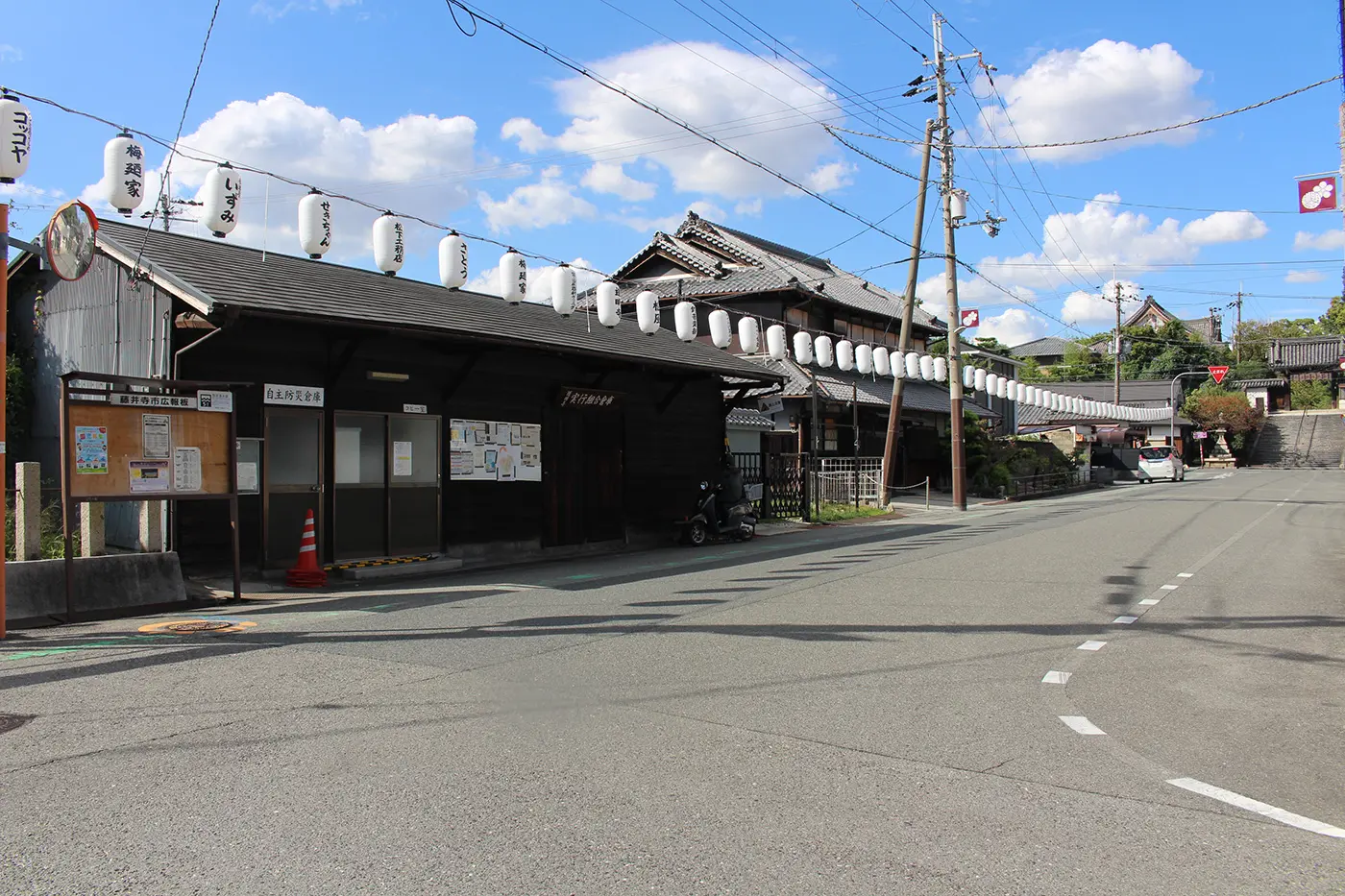
Tenmangu Shrine, known for its god of learning and plum orchard
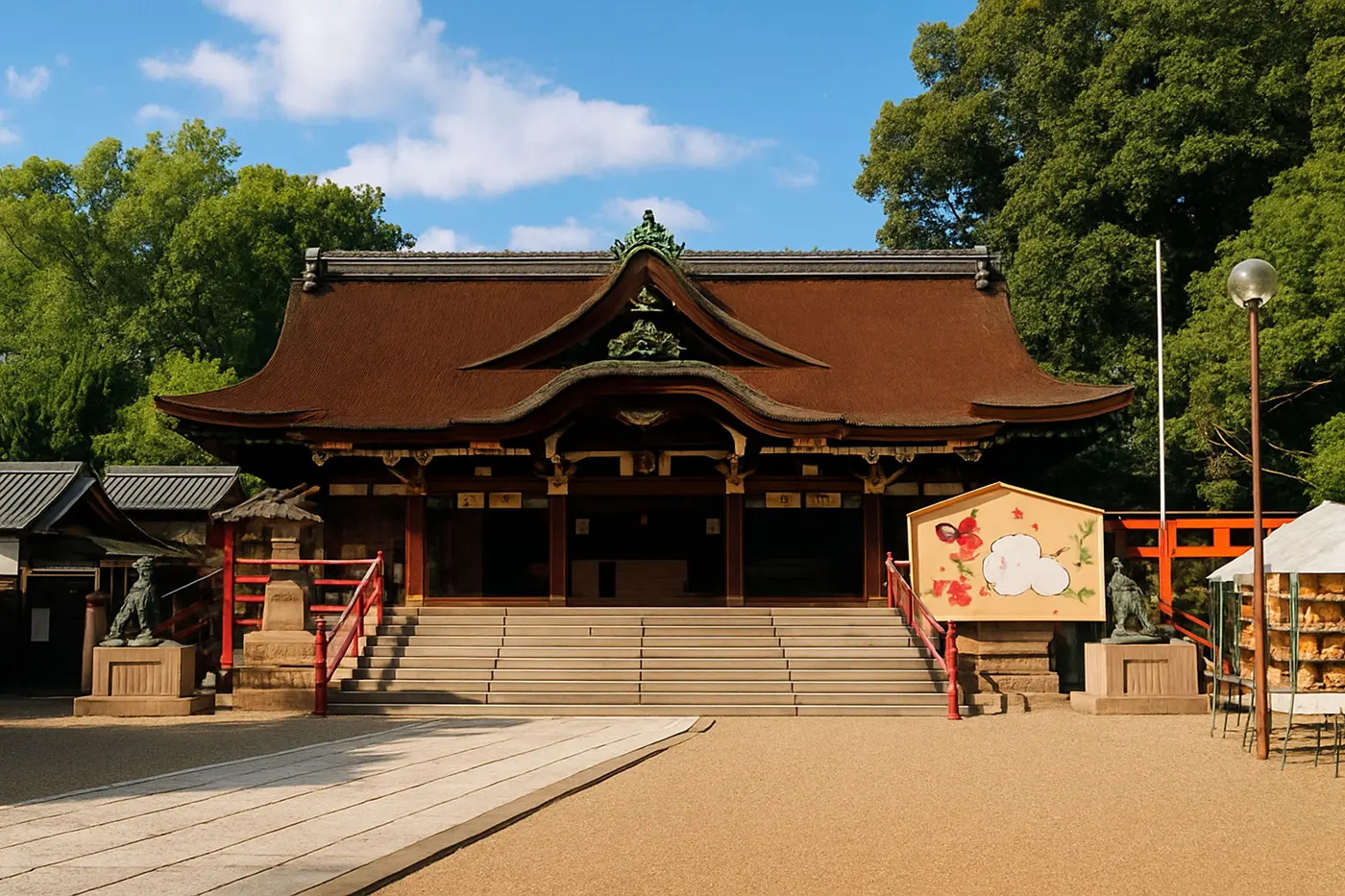
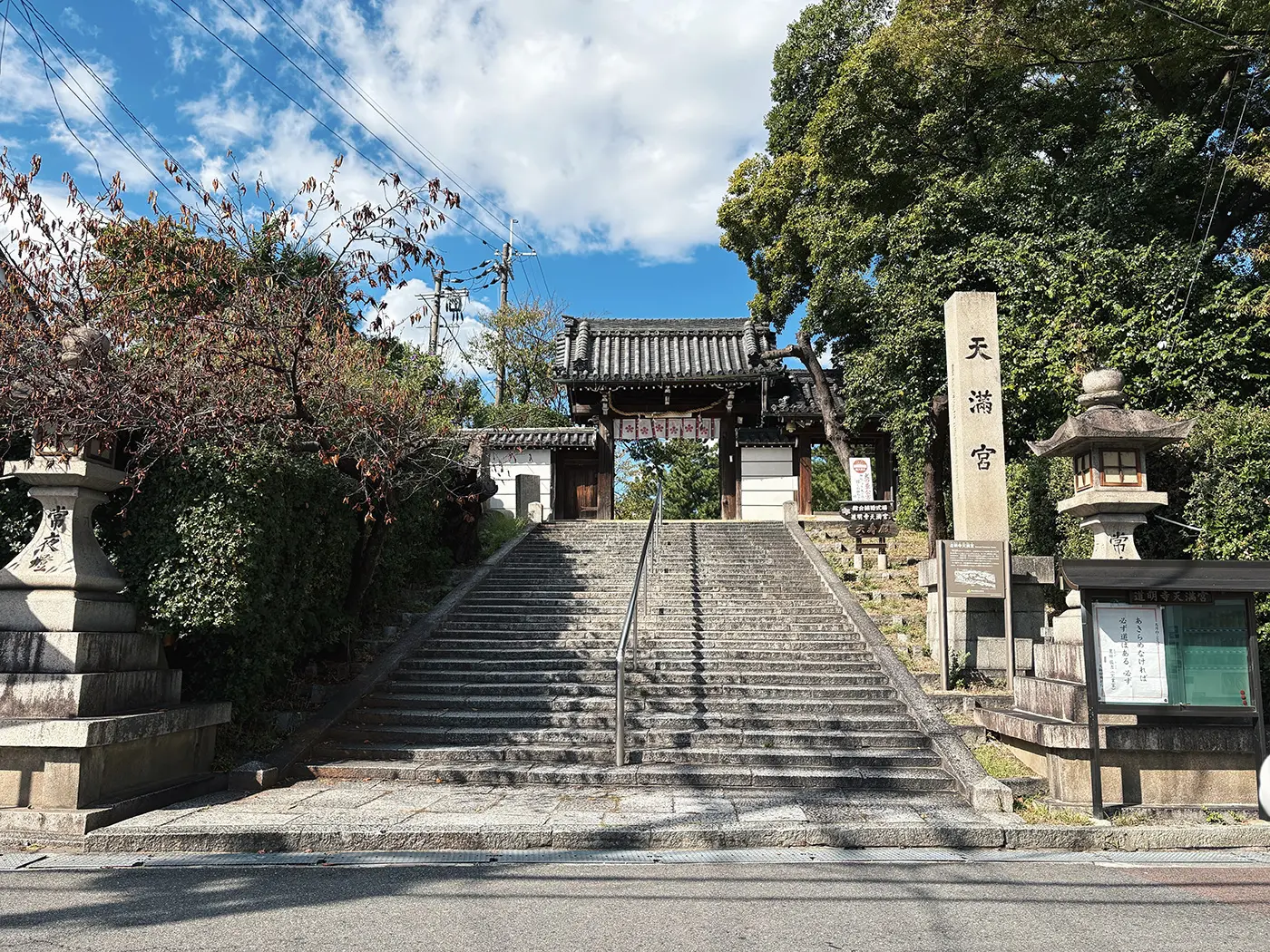
Domyoji Tenmangu Shrine is known as a famous spot for Michizane, the god of learning, and for its plum blossoms.
Its origins date back more than 1,400 years. The area was the base of the ancient Haji clan, and it is said that the shrine first enshrined their ancestral deity, Amenohohi-no-Mikoto, whose name appears in the Nihon Shoki. Later, Michizane, who frequently visited the area, and his aunt Kakujuni, who loved him dearly, were added as deities, and the shrine took on the form it is today.
Due to his outstanding academic knowledge and honest personality, Michizane eventually became a figure worshipped throughout the country as the "god of learning." Many of the items he used and left behind during his lifetime are now considered national treasures, and are quietly passed down along with their history in the treasure museum on the temple grounds.
The plum trees that Michizane loved still bloom in the temple grounds in full bloom in season, and the Plum Festival sees many worshippers visit the plum garden, making it a lively place.
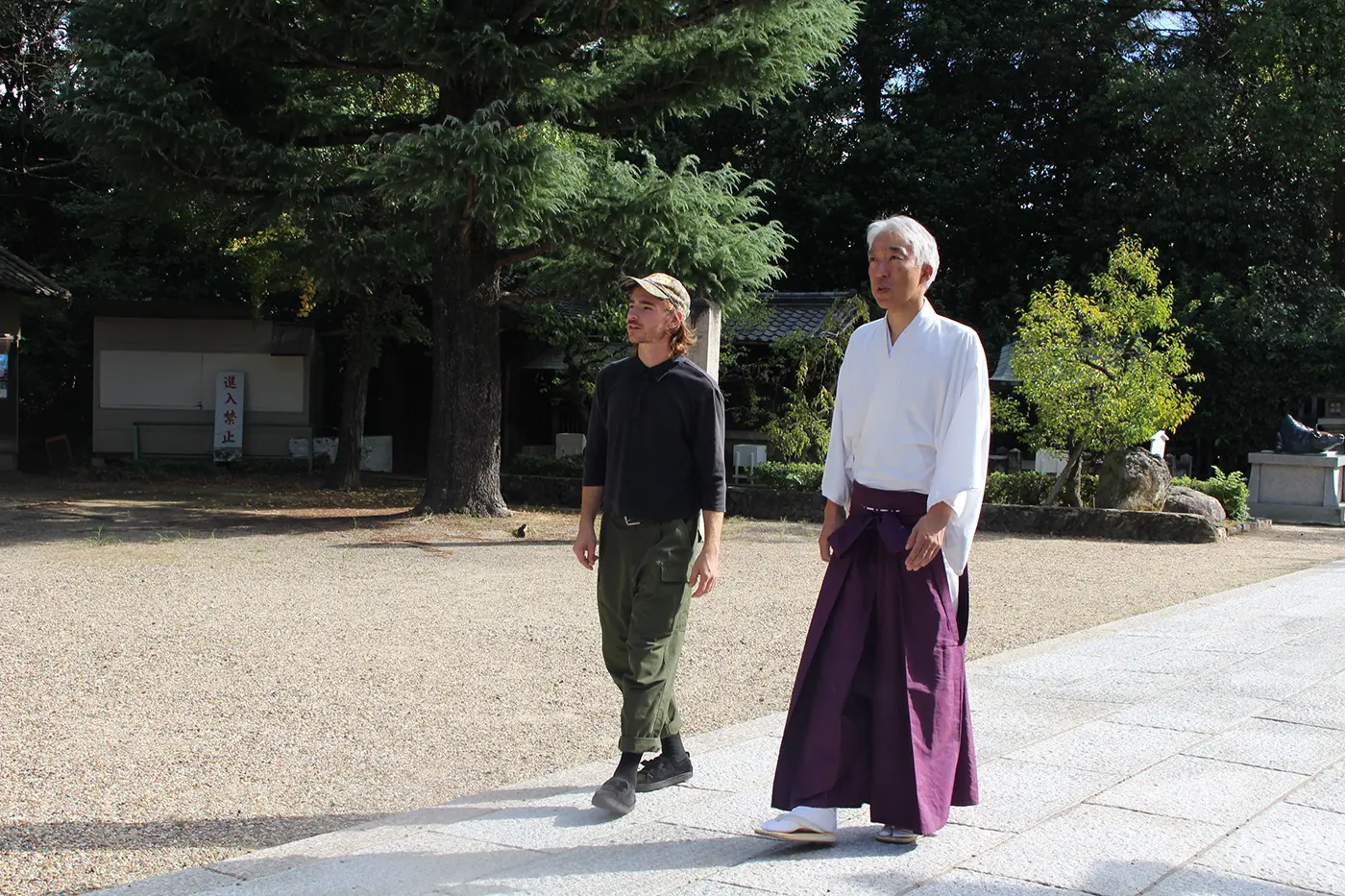
Thanks to Shinoda's introduction, we were able to speak with the chief priest, Minamibojo Mitsuoki. As Tenmangu Shrine is also a popular wedding venue, he is a very knowledgeable and talented man who also holds the title of wedding planner in addition to being the chief priest. He is also one of the initiators of "MONZEN", a local base adjacent to Tenmangu Shrine.
According to Minamibojo, the main hall "was spared from burning during the Battle of Domyoji." He adds, "The battle was not carefully planned, but rather accidental, so there was probably no time to burn down the entire area to stop the enemy from pursuing them. If there had been time, this place would probably have burned down as well."
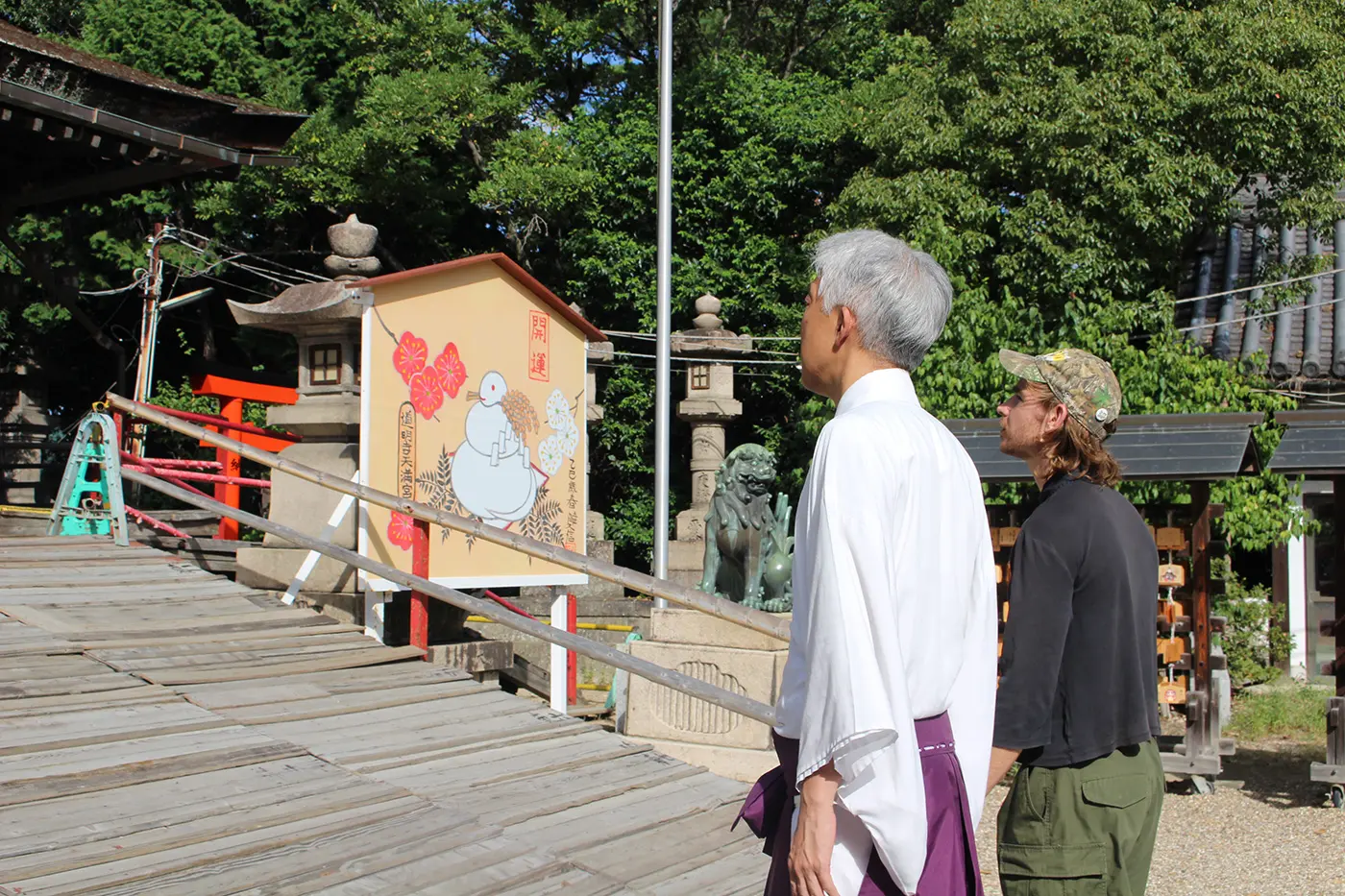
Jackie was also told about other historical facts surrounding the Battle of Domyoji and taught the proper etiquette for visiting the shrine. He listened intently with a deeply moving expression on his face throughout the lecture.
Shrines and temples are often visited by tourists. Each has its own history and traditions, and different customs, making Japanese culture truly profound. I've been living in Japan for six years, but there's still so much I don't know, and it's sobering to learn new things. From now on, I think my attitude when visiting shrines and temples will become even more solemn. I'm glad I was able to learn!
Refresh yourself with a local beer that has a unique and delicious taste!
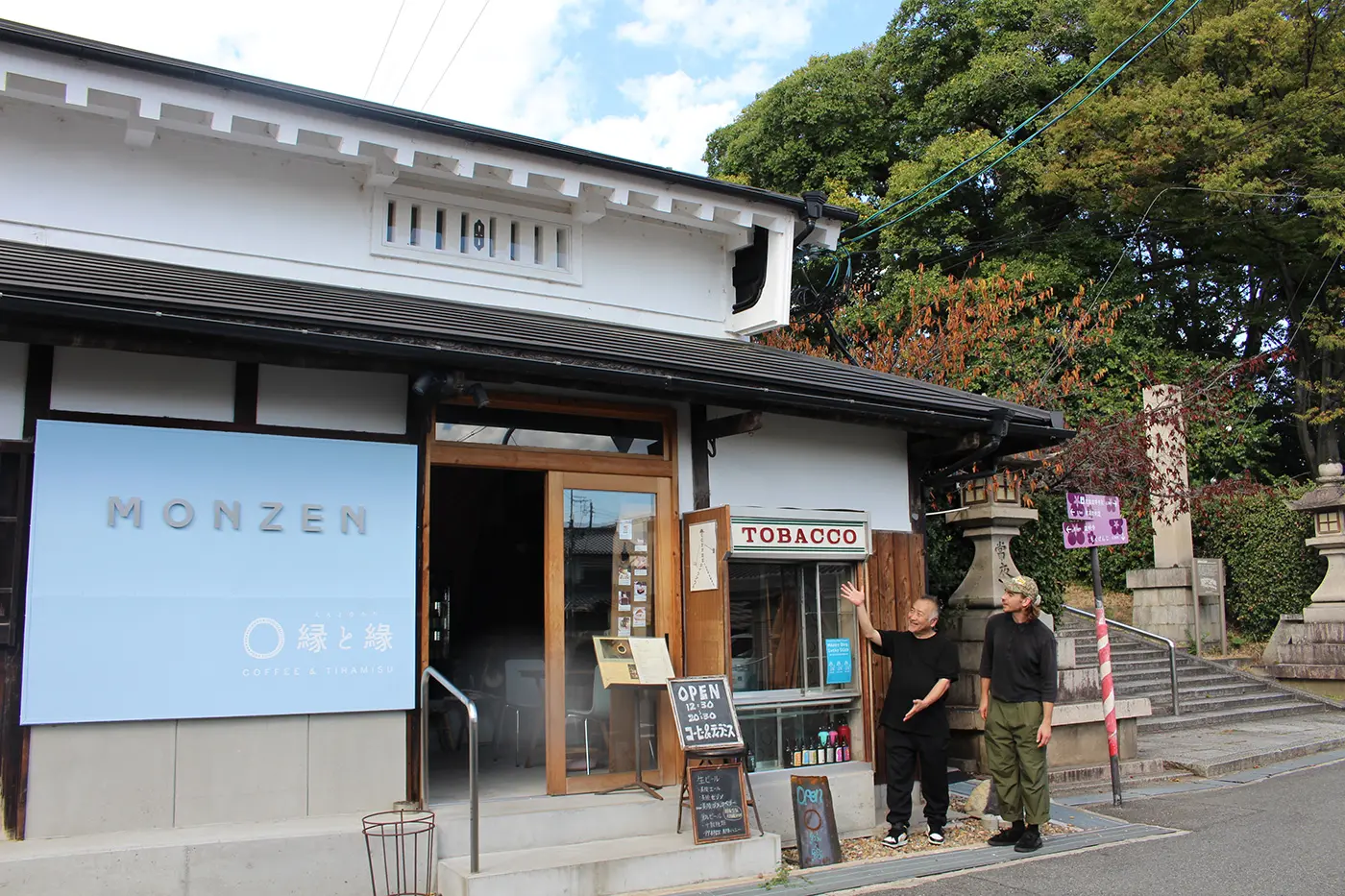
Our final destination for the day was MONZEN, located next to Tenmangu Shrine.
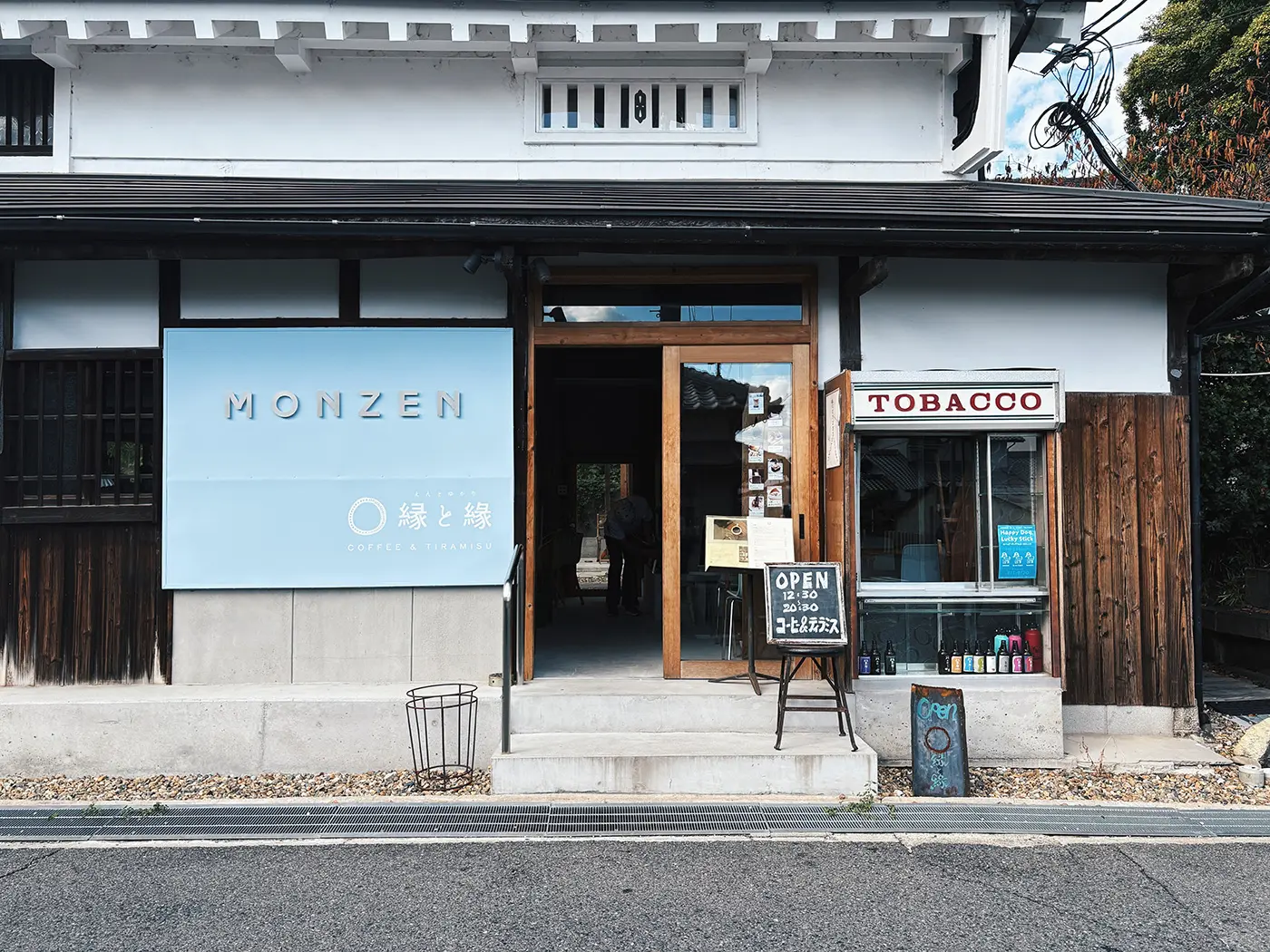
This complex opened in 2022 and allows you to experience the essence of Domyoji through local beer, food, and events. A 96-year-old Japanese house that had been vacant for many years has been renovated and reborn as a hub where local people can enjoy life while also promoting the charm of the town.
The cafe is home to En to En and Domyoji Bakushu, where you can enjoy coffee, tiramisu, and fresh Domyoji beer, making it a must-visit spot on your way to or from Tenmangu Shrine.
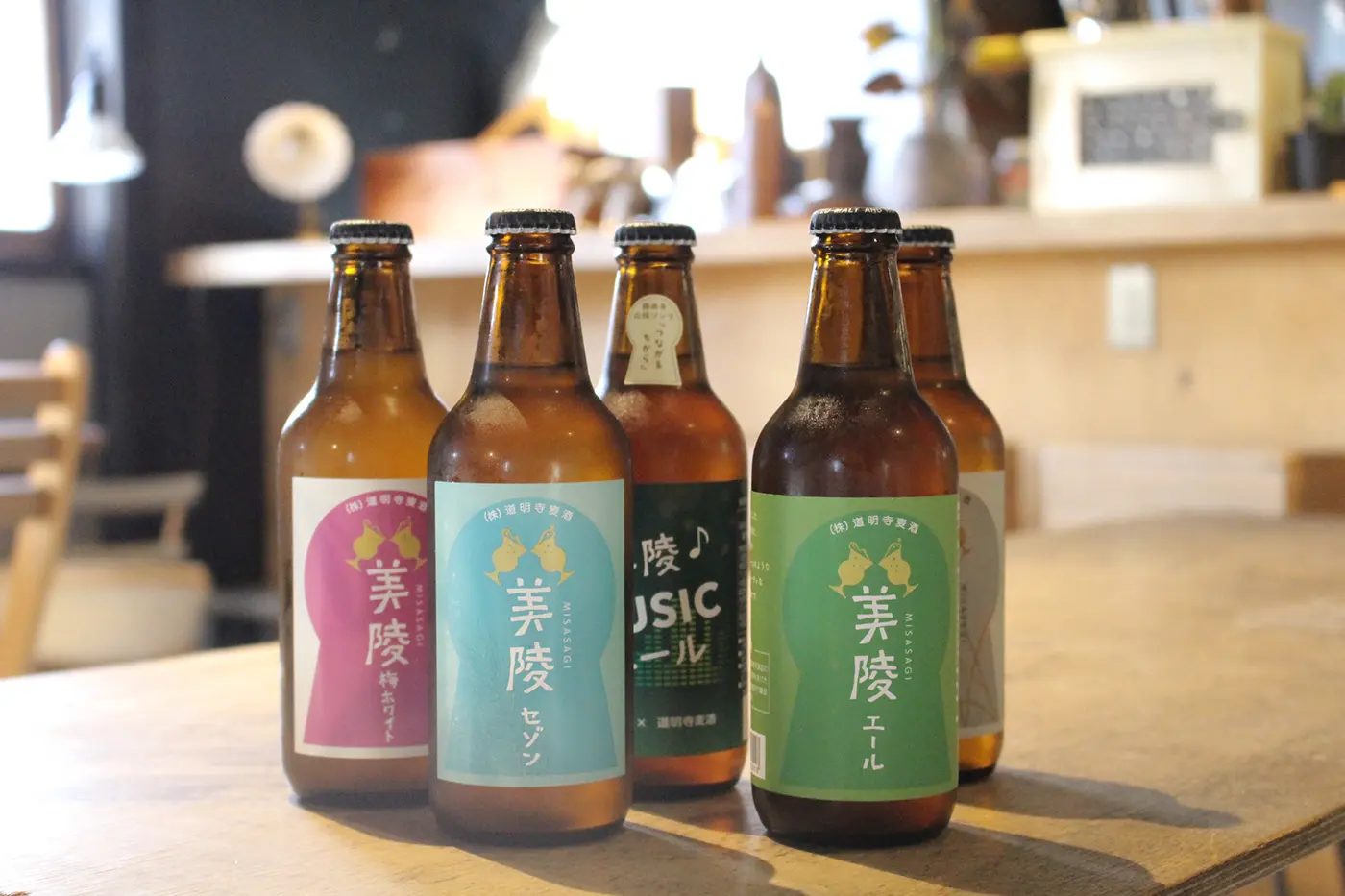
Domyoji Beer's signature brand, Misasagi Beer, has a total of 14 varieties, including seasonal limited flavors. It can be purchased at restaurants outside of Fujiidera City and through mail order, but only MONZEN offers it poured from the tap!
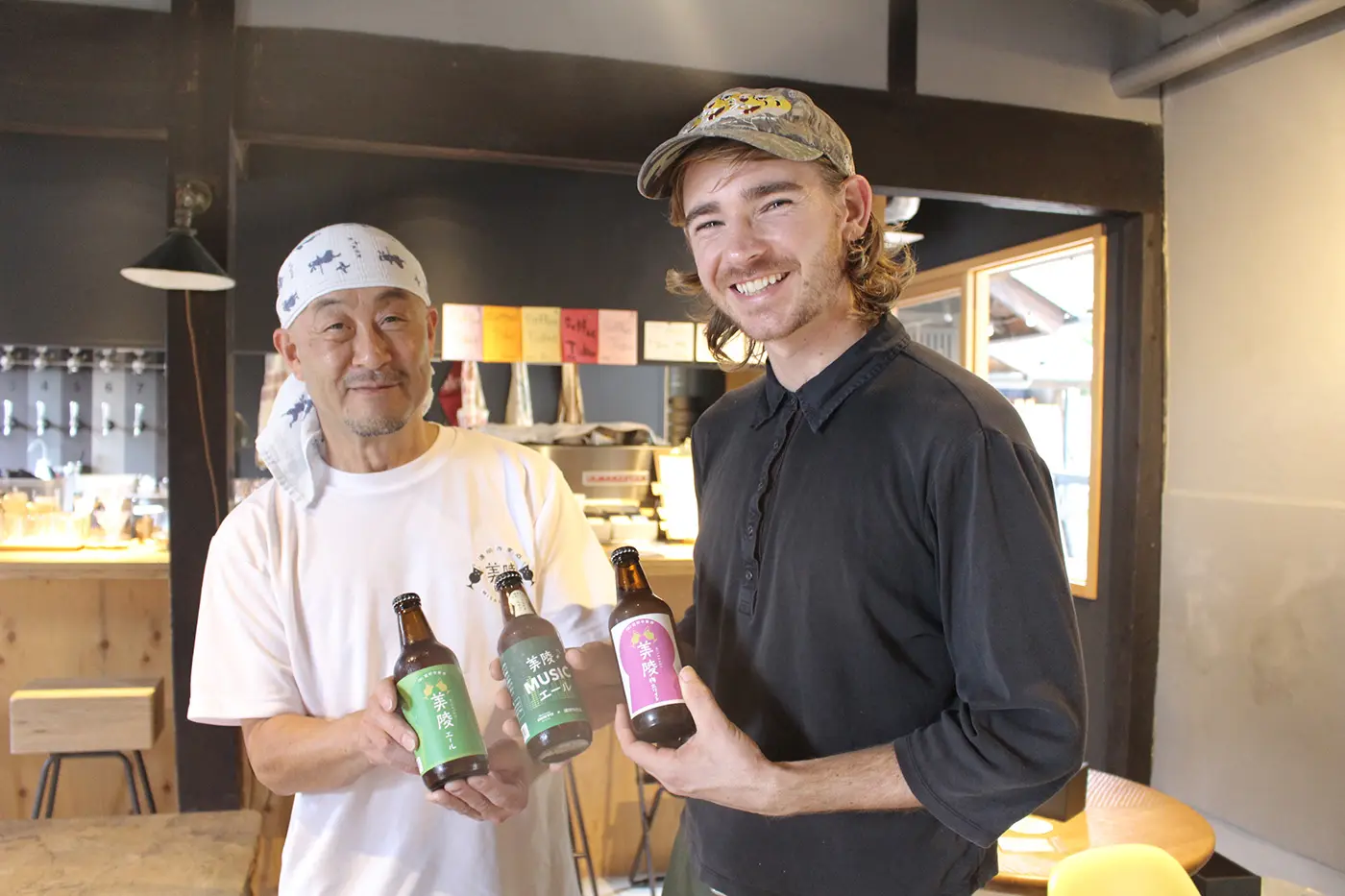
Takehiro Morita, the creator of Domyoji Beer, recommended the interesting beer "Biryo Music Ale," which is made by playing various types of music.
How is it different from other beers? Let's try it and compare!
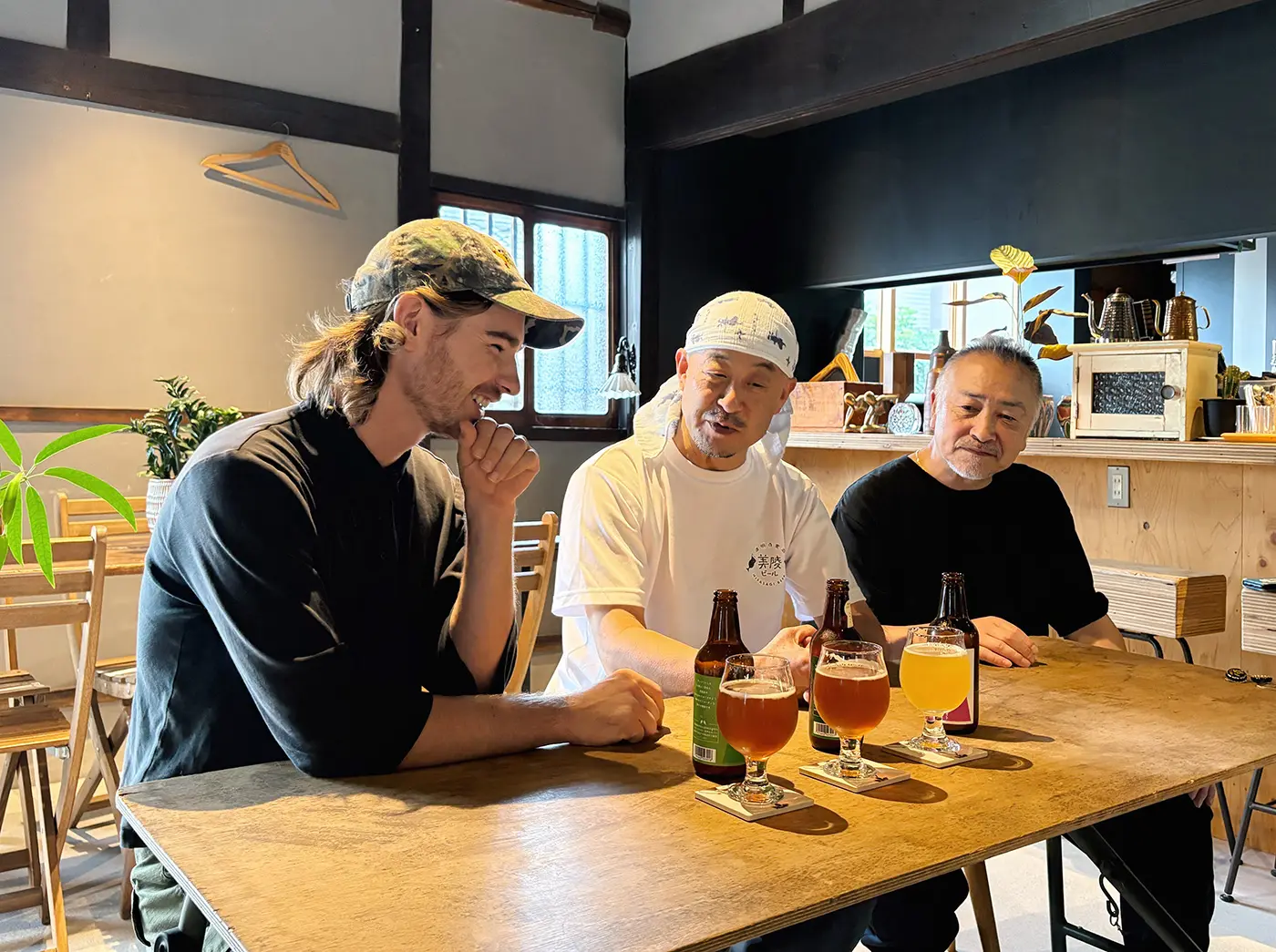
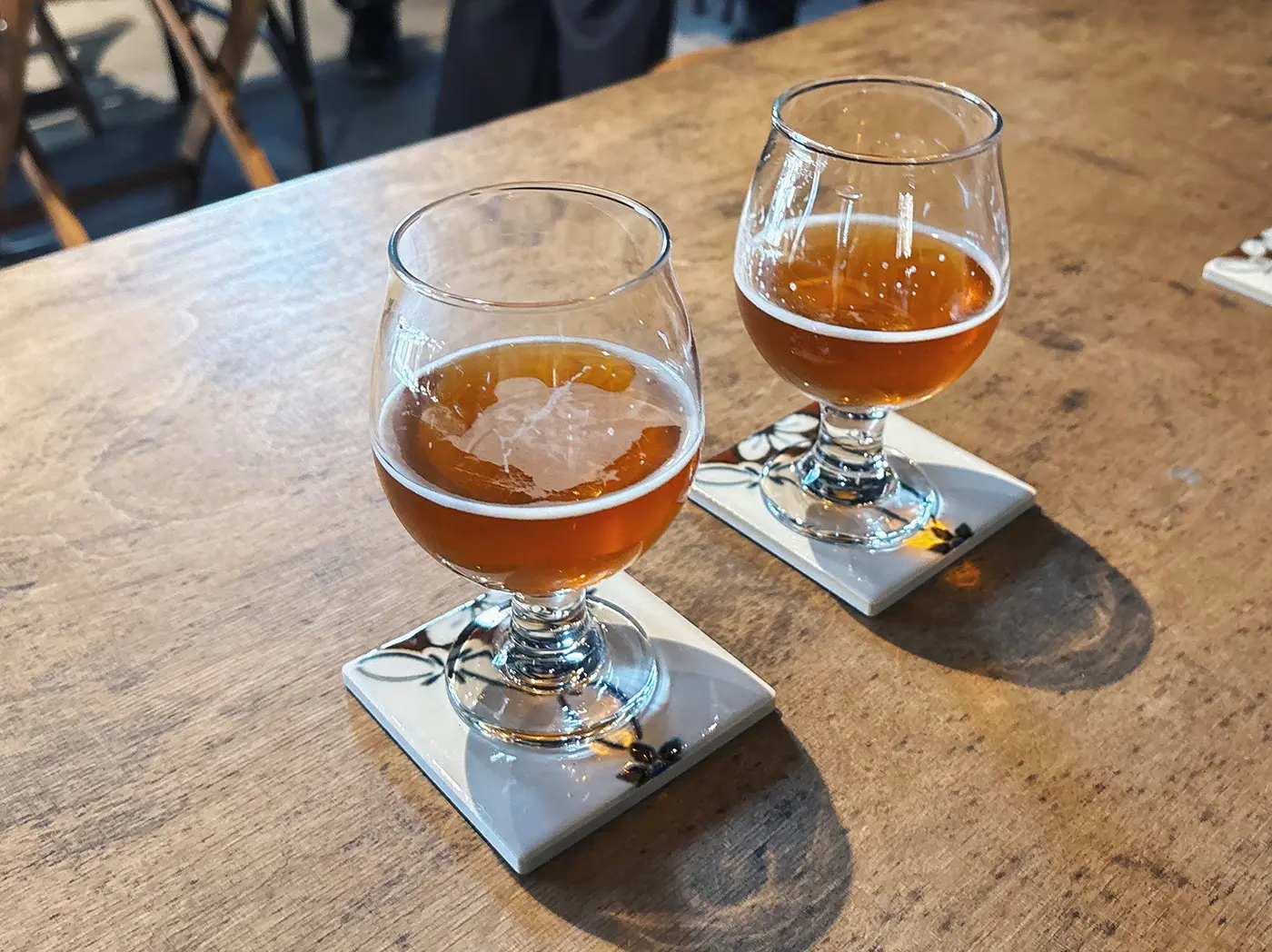
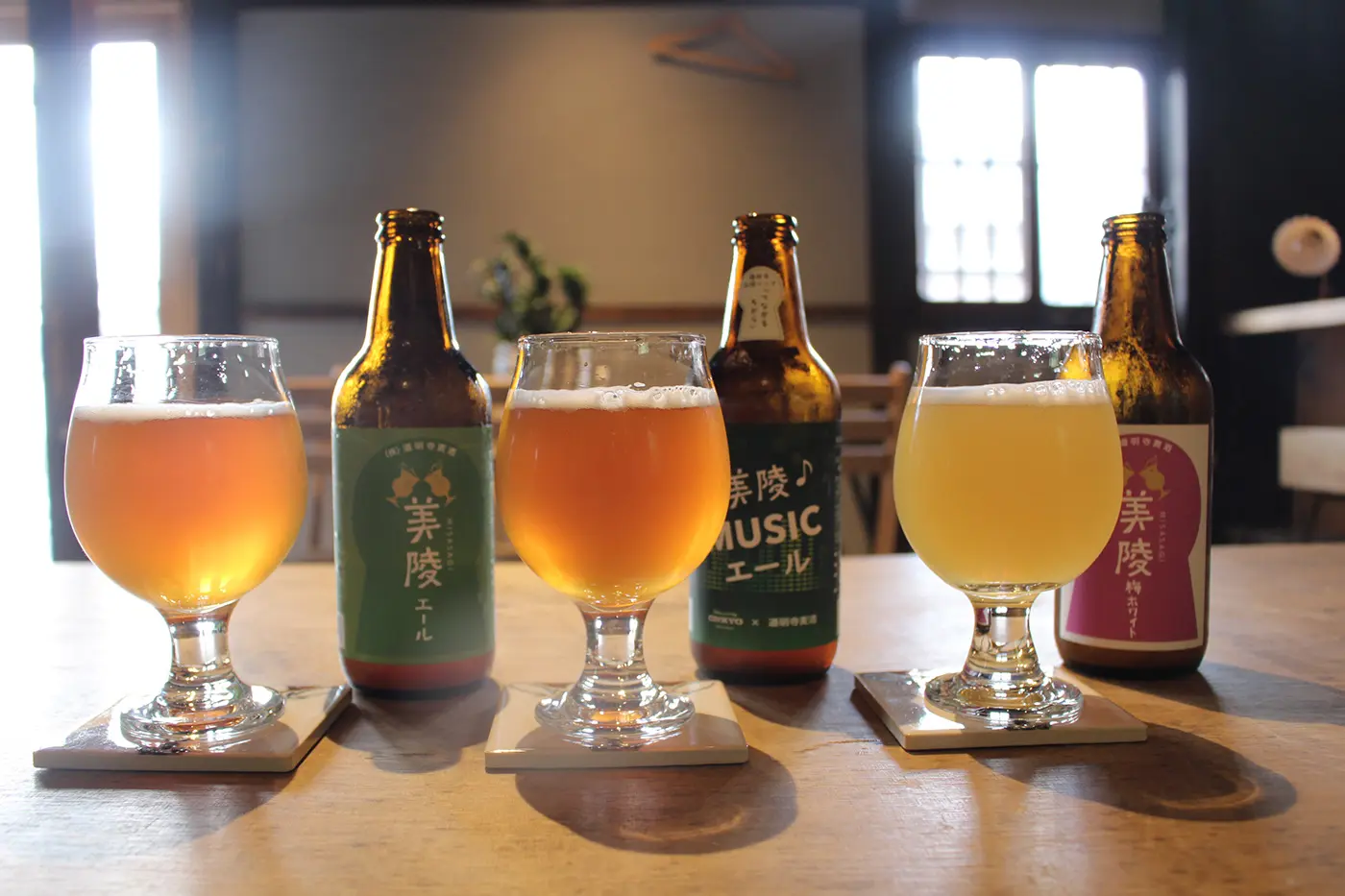
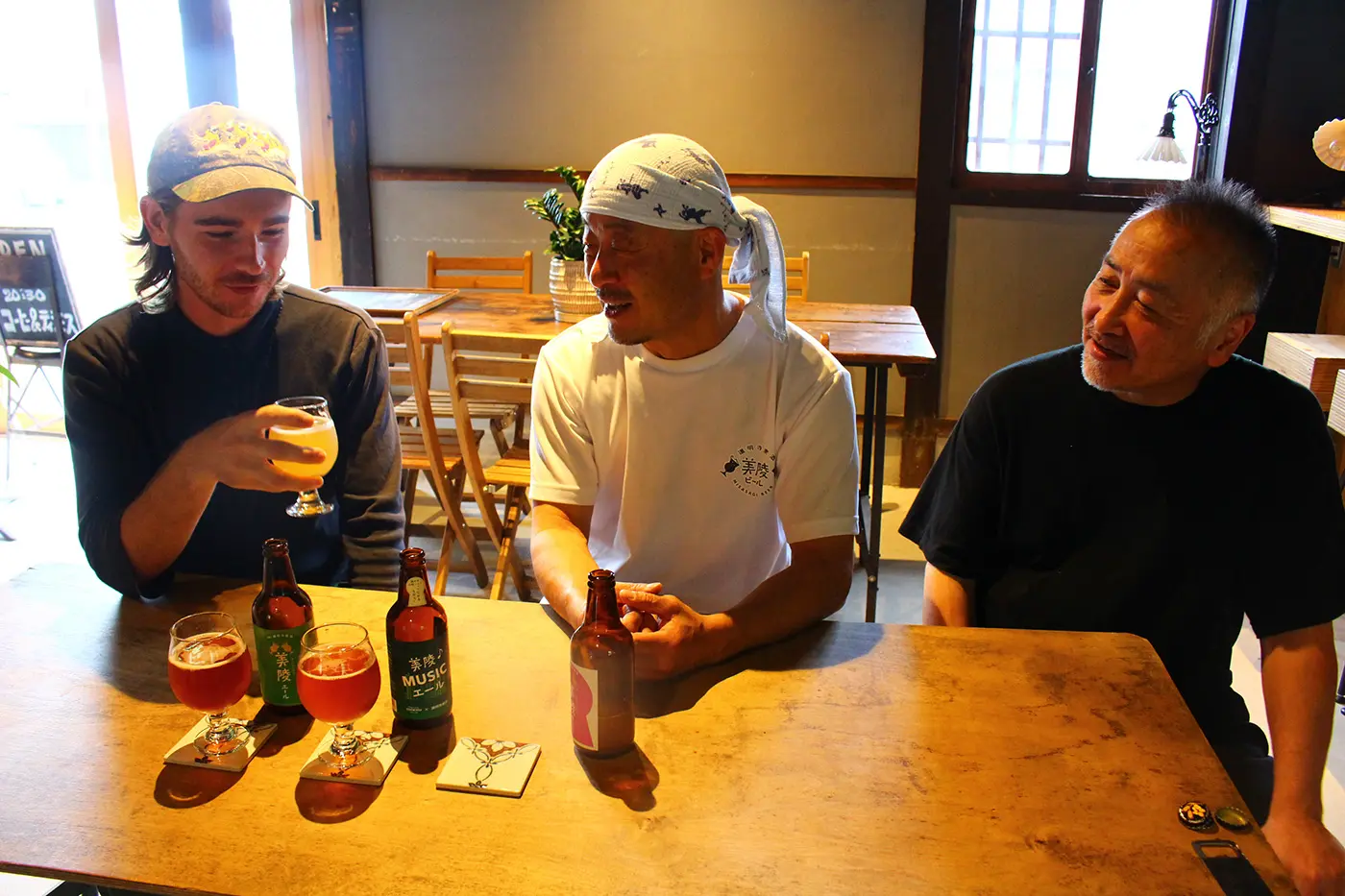
The aftertaste of "Miryo Ale" and "Miryo MUSIC Ale" is a little different. They're both made from the same beer, so the overall taste is similar, but "MUSIC" is cleaner. When I heard that "the ripe plums used in Ume White are picked from the plum orchard at Tenmangu Shrine," I felt grateful, as if I was being given a little share of happiness in addition to the inherent deliciousness.
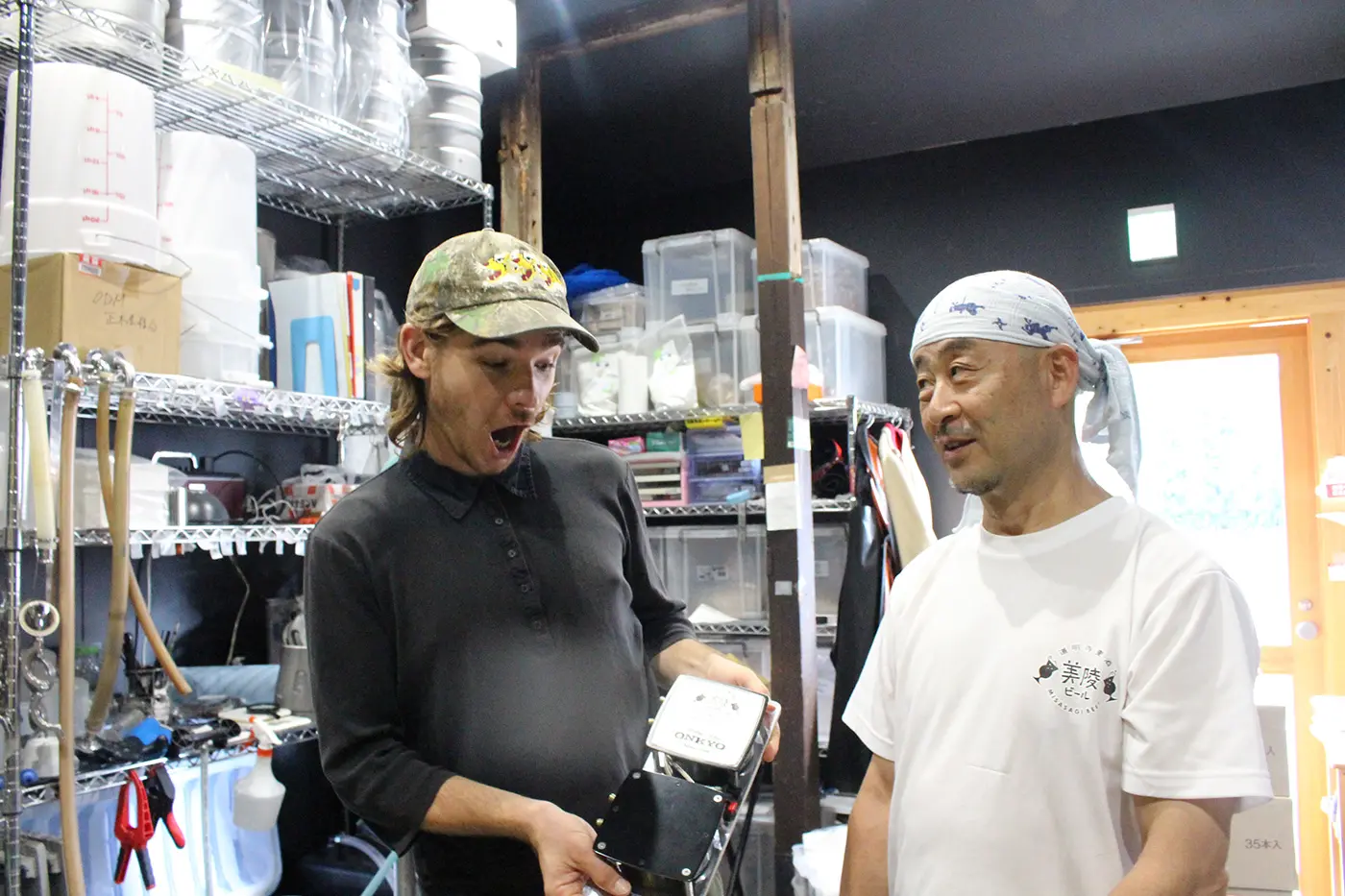
"For Mirei Music Ale, we attach six of these special speakers to the beer tank and use vibrations to transmit music to the beer. Other than playing the Fujiidera City support song (which won the grand prize from a public contest of songs submitted by people with ties to Fujiidera), the process is exactly the same as for Mirei Ale," says Morita.
Just a short walk from Domyoji Station! Explore the filming locations of popular movies
One last photo. This is the spot where we took our commemorative photo with Jackie.
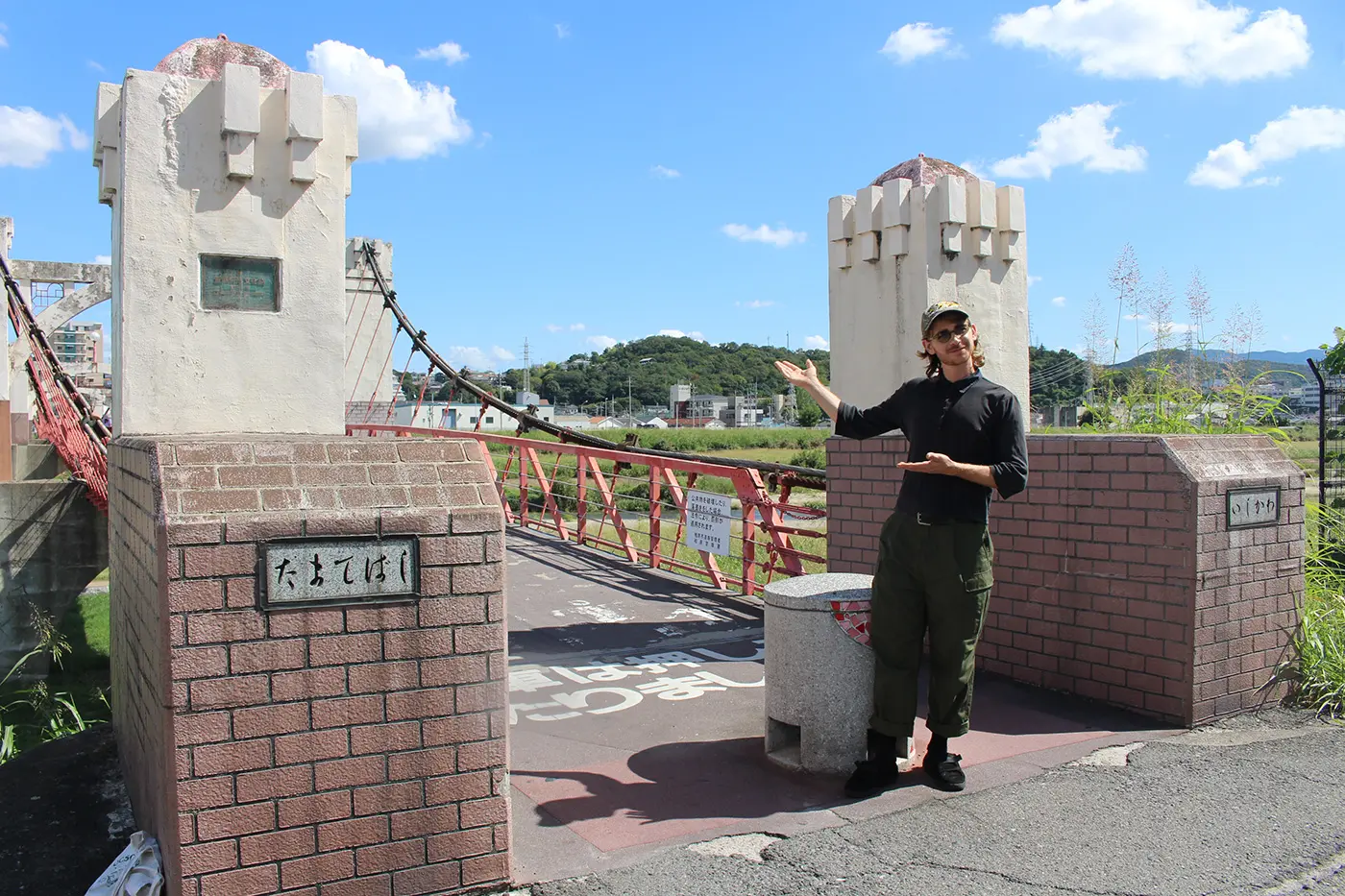
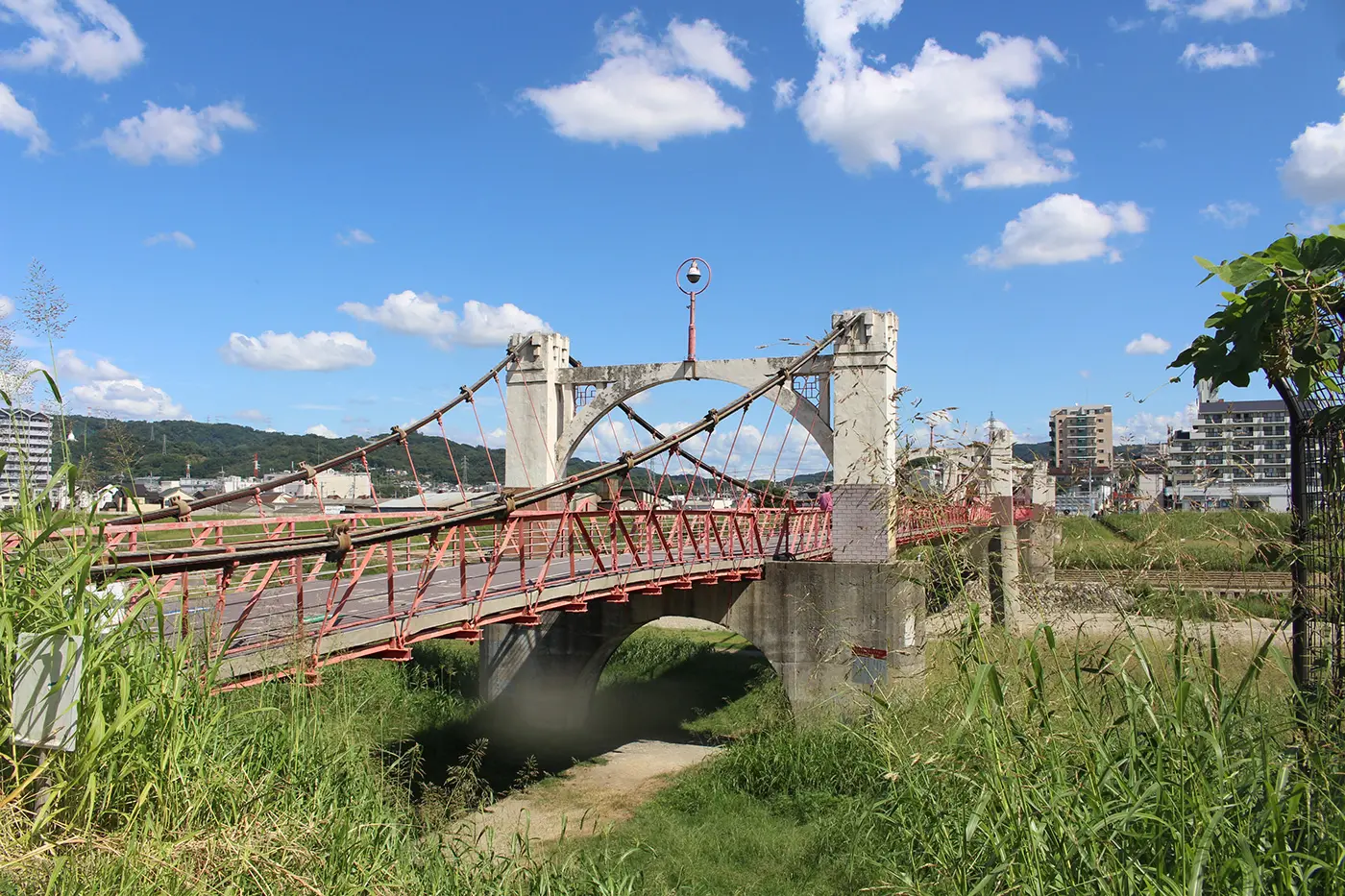
Tamatebashi Bridge, just a few minutes' walk from Domyoji Station, was used as a filming location for the hit movie "National Treasure." Many scenes essential to the movie's plot were shot on this bridge, with the two main characters marking a milestone in their youth and experiencing setbacks and feelings of inferiority. Anyone who has seen the movie will immediately recognize the bridge.
This suspension bridge was once the gateway to the now-defunct Tamateyama Amusement Park, and features a beautiful contrast between the white tower and red railings, reminiscent of the park's entrance gate. It is part of a route used by many local residents, but recently, many fans of the "National Treasure" have been seen on the bridge.
Tamatebashi Bridge is not owned by Fujiidera City but the neighboring city of Kashiwara, but why not stop by while you're in Domyoji?
Knowing the history of Domyoji will add depth and excitement to your visit!
As you walk around Domyoji, you will find battlefields and anecdotes remaining, giving you a real sense that this was indeed a place where a great battle that shook the era to its core took place. However, what lives on in this place today is the peaceful daily life and warm hospitality that people have woven together without being bound by memories of conflict. We encourage everyone to take a stroll around Domyoji, where you can appreciate the gratitude of history as you listen to voices passing on stories and feast your taste buds on local cuisine.
*The information in this article is current as of January, 2026. As details may have changed, please check the official websites of the facilities and stores for the latest information.
Photo: Yukiko Nishimura, Rie Tomimoto
Edited by: Yukiko Nishimura
Direction: Ningen Henshusha
Related Tours
Travel back in time to the Sengoku period with armor and kimono! Samurai experience & photo tour
- Step into the Sengoku period with authentic armor and kimono! Experience becoming a warlord or princess.
- Learn sword stances and samurai movements!
- Take a special commemorative photo in a quintessentially Japanese setting, such as the historic Domyoji Tenmangu Shrine.
